
# Professional Plant Health Care in New Bedford, Massachusetts
If you own property in New Bedford, Massachusetts, your trees face unique pressures from the city's coastal location in Bristol County. As a homeowner in the historic whaling city with a population of about 101,000, you contend with Buzzards Bay's salt-laden winds, dense urban growing conditions, and pests like spongy moth that target your red oaks and other canopy staples. Plant health care in New Bedford, MA, addresses these challenges head-on, preventing decline in species like Norway maple, London plane, honey locust, red maple, white pine, sycamore, pin oak, littleleaf linden, and eastern red cedar.
Southeast Arborist, LLC, based in Plymouth and Cohasset, delivers ISA Certified Arborist-led plant health care programs across South Shore Massachusetts, including your New Bedford property. Our team follows ANSI A300 standards for tree care, using integrated pest management (IPM) to minimize chemical use while maximizing tree vitality. Call us at 508-369-5009 for a custom assessment—whether your red maple in Acushnet Heights shows dieback or your sycamore in Clark's Point bears storm scars.
New Bedford's urban forest stems from 19th-century whaling wealth, which funded street trees and Buttonwood Park's Olmsted-designed landscape with 1890s specimen trees. Yet, every major hurricane through southern New England has battered the waterfront, leaving cumulative salt, wind, and storm damage in neighborhoods like the South End and West End. Aging street trees in the North End and Near North demand proactive care, as spongy moth weakens oak stands in western areas and emerald ash borer looms as a threat.
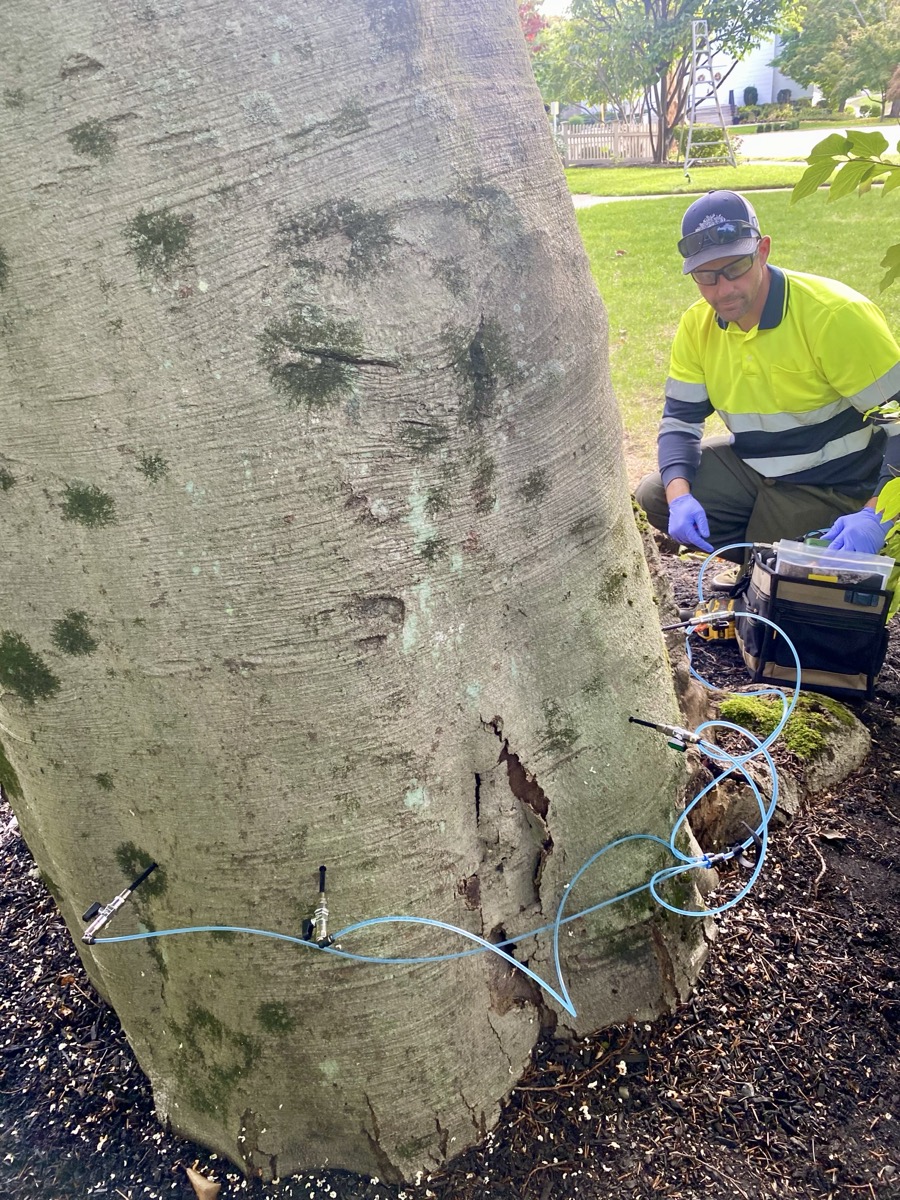
Plant health care in New Bedford, MA, goes beyond reactive pruning. Our programs include deep root fertilization to combat compacted urban soils, trunk injections for emerald ash borer protection, and spongy moth treatments tailored to your lot size. For coastal properties along the Dartmouth border, we manage salt-tolerant species like eastern red cedar against winter moth defoliation. Homeowners in Brooklawn Park benefit from soil care that counters the area's clay-heavy soils, promoting root growth in honey locust and littleleaf linden.
Safety protocols guide every job: our ISA Certified Arborists wear PPE, use calibrated equipment for precise applications, and conduct site-specific risk assessments. This ensures your family's yard remains hazard-free amid New Bedford's nor'easters. Unlike generic services, our PHC targets local issues—preserving Buttonwood Park's heritage while safeguarding your private trees.
Investing in plant health care now avoids costly removals later. A single declining pin oak on a tight West End lot can cost thousands to replace, but our IPM approach extends its life for decades. Contact Southeast Arborist at 508-369-5009 to discuss plant health care for your New Bedford, MA, property. We'll evaluate your red oak's spongy moth stress or your white pine's coastal exposure, crafting a program that fits your budget and timeline.
Why New Bedford Properties Need Plant Health Care
Your trees in New Bedford endure dense urban conditions that stunt root expansion, especially in neighborhoods like the South End and West End where narrow lots and concrete limit soil volume. Red oaks, a dominant species, suffer from spongy moth outbreaks that have defoliated stands in western areas near Acushnet Heights and Brooklawn Park over recent decades. These pests weaken trees, making them vulnerable to secondary issues like Armillaria root rot in the city's alkaline coastal soils.
Buzzards Bay's exposure delivers salt spray and high winds, stressing London plane and sycamore along Clark's Point and the harbor. Hurricane remnants, like those from nor'easters, snap branches on honey locust and pin oak street trees in the North End, where aging infrastructure from the whaling era shows cracks. Emerald ash borer threatens any ash remnants, though less common, while winter moth impacts maples citywide.
New Bedford's soil—often sandy loam near the Dartmouth border turning clayey inland—compacts under foot traffic and construction, starving red maple and white pine of nutrients. White pines in Buttonwood Park, part of the Olmsted legacy, require ongoing care to maintain vigor against needle cast fungi exacerbated by humid summers. Eastern red cedar on coastal edges tolerates salt but succumbs to bagworms without intervention.
Practical advice for your property: Inspect red oaks in fall for spongy moth egg masses—silvery patches on branches signal future defoliation. In the Near North, check Norway maple leaves for tar spot, a fungal disease thriving in humid, shaded urban spots. Littleleaf linden in Brooklawn Park often shows powdery mildew; improve air circulation by thinning lower branches yourself if safe.
Climate amplifies these issues: Winters with freeze-thaw cycles heave roots in pin oak lawns along Acushnet Heights, while summer droughts parch sycamores without supplemental watering. The city's 40 inches of annual rainfall unevenly distributes, leaving urban trees thirsty amid impervious surfaces.
Without plant health care in New Bedford, MA, your investment declines. A spongy moth-hit red oak loses 30-50% canopy in one season, inviting canker fungi. Coastal white pines drop needles from salt burn, reducing property aesthetics and value. Our ISA Certified programs restore balance, using soil tests to adjust pH for honey locust uptake of iron in chlorotic soils.
Homeowners near Fairhaven or Acushnet notice spillover effects—spongy moth from New Bedford woods invades yards. Proactive trunk injections protect against emerald ash borer, which kills untreated trees in 2-4 years. In Buttonwood Park's shadow, preserve your specimen trees mirroring those 1890s plantings.
Address these now: Rake fallen leaves promptly to curb fungal spores on sycamores, and avoid wounding trunks with mowers to prevent eastern red cedar cankers. For urban street trees in the West End, request city coordination for root barriers during PHC visits.
Southeast Arborist's plant health care counters New Bedford's specifics, extending tree lifespans and enhancing curb appeal amid historic charm.
Our Plant Health Care Process in New Bedford
Southeast Arborist starts your plant health care in New Bedford, MA, with a free on-site assessment by an ISA Certified Arborist. We arrive equipped with soil probes, resistographs for internal decay detection, and anemometers to measure wind exposure on your Clark's Point property. This identifies issues like spongy moth on red oaks in Acushnet Heights or salt damage on white pines near the Dartmouth border.
Step 1: Diagnosis. We sample soils—testing pH, nutrients, and compaction—for your Norway maple in the South End. Drones survey canopy density in dense North End lots, spotting winter moth frass on honey locust. Lab analysis confirms pathogens, like Verticillium wilt in red maples.
Step 2: Custom program design. Using IPM, we prioritize cultural, mechanical, and biological controls before chemicals. For emerald ash borer threats, we schedule trunk injections with Arborjet equipment—low-pressure systems deliver systemic insecticides directly into vascular tissue, protecting ash without soil drench risks.
Step 3: Deep root fertilization. Our radial trench method circumvents urban root barriers, injecting slow-release fertilizers 12-18 inches deep around your pin oak's drip line in Brooklawn Park. We amend with mycorrhizae for white pine in Buttonwood Park areas, boosting drought tolerance in sandy loams.
Step 4: Pest management. Spongy moth treatments use targeted BTk sprays during larval hatch (May-June in New Bedford), applied via high-reach sprayers for West End street trees. Hemlock woolly adelgids, if present near Fairhaven, receive soil drenches of imidacloprid. Winter moth gets egg-band barriers or timed insecticides.
Step 5: Disease treatment. Trunk injections combat Dutch elm disease analogs or oak wilt risks, while foliar sprays address sycamore anthracnose in humid springs. We follow ANSI A300 standards, calibrating doses by tree diameter at breast height (DBH).
Step 6: Monitoring and follow-up. Quarterly checks via apps track progress—photos document red oak recovery post-spongy moth. Safety protocols include traffic control for Near North jobs and exclusion zones during injections.
Techniques adapt to New Bedford: For coastal eastern red cedar at Clark's Point, we apply anti-desiccant sprays pre-winter. Littleleaf linden in urban heat islands gets evaporative cooling via misting during soil injections.
Equipment specifics: Macro-injectors for precise chemical delivery minimize runoff into Buzzards Bay. Air-spades excavate without root damage for soil care under London plane sidewalks.
Your role: Water deeply post-fertilization (1 inch weekly) and mulch 3 inches deep, keeping it from trunks to prevent rodent damage on sycamores.
All work complies with Massachusetts pesticide regulations, with records provided. Our Plymouth/Cohasset base ensures rapid response—same-day for urgent spongy moth in Acushnet.
This process revives your trees, preventing removals on tight lots. Call 508-369-5009 for your New Bedford plant health care consultation.
Common Plant Health Care Projects in New Bedford Neighborhoods
In the South End, urban street tree management dominates: pruning red oaks for utility clearance and injecting Norway maples against scale. Homeowners tackle declining honey locusts via deep root fertilization to counter sidewalk compaction.
West End properties focus on spongy moth suppression for oak stands—BTk applications restore canopy after outbreaks. We remove storm-damaged pin oaks on tight lots, replanting with urban-tolerant littleleaf lindens.
North End sees aging London plane care: soil decompaction and anthracnose treatments prevent branch drops over sidewalks. Red maples get winter moth egg bands for defoliation control.
Near North lots require emerald ash borer prophylactics via trunk injections, paired with sycamore pruning for air flow against sooty mold.
Acushnet Heights homeowners preserve white pines with needle cast fungicides and root feeding amid clay soils. Spongy moth hits hard here—our IPM includes pheromone traps.
Brooklawn Park projects emphasize honey locust verticillium management through trunk flares airing and phosphite injections. Eastern red cedars benefit from bagworm hand-picking.
Clark's Point coastal sites demand salt-tolerant species care: wind-pruned sycamores receive cabling, while white pines get anti-salt barrier sprays post-nor'easters.
Along the Dartmouth border, emergency removals follow storms, followed by PHC for surviving red oaks—soil amendments rebuild vigor.
Buttonwood Park vicinity mirrors Olmsted preservation: specimen tree monitoring with resistographs detects decay early in pin oaks, with heritage-appropriate treatments.
Nearby Fairhaven shares spongy moth pressures—we extend services for cross-border oaks. Acushnet lots get hemlock woolly adelgid management if evergreens appear.
These projects follow ANSI A300, using bucket trucks for safe access in dense neighborhoods. Practical tip: In any area, monitor for spongy moth caterpillars in April—hand-remove small populations before calling us.
Southeast Arborist's ISA Certified team handles these routinely, enhancing neighborhood canopies.
Plant Health Care Costs in New Bedford, MA
Plant health care costs in New Bedford, MA, vary by tree size, issue severity, and neighborhood access. A single red oak spongy moth treatment in the South End starts at $150-$300 for BTk spray on a 20-inch DBH tree, scaling to $500+ for multi-tree lots.
Deep root fertilization for a Norway maple in West End runs $200-$400 per session, including soil analysis—annual programs for three trees total $800-$1,200, far less than $2,000+ removal costs.
Emerald ash borer trunk injections cost $10-$15 per inch DBH ($200 for 15-inch ash in North End), with two-year protection. Hemlock woolly adelgid drenches: $250-$450 per tree in Acushnet Heights.
Custom IPM programs for Brooklawn Park honey locusts—combining fertilization and pruning—range $500-$1,500 yearly, based on property size. Coastal Clark's Point white pines need salt mitigation at $300-$600, including cabling.
Factors driving costs: Travel from our Plymouth/Cohasset base adds $50-$100 for Dartmouth border jobs. Dense access in Near North requires specialized gear, upping 10-20%. Tree count discounts apply—five sycamores drop per-tree price 15%.
Value proposition: Untreated spongy moth defoliates red oaks, leading to $3,000-$5,000 replacements in tight lots. Our PHC extends life 10-20 years, boosting property values 5-10% via healthy canopies. Buttonwood Park-style preservation avoids civic fines for hazards.
Compare: Generic sprays cost less upfront but lack ISA precision, risking Buzzards Bay runoff violations. We provide ROI reports—e.g., $1,000 invested saves $4,000 in removals.
Payment plans ease budgets; seasonal bundles save 20%. Free quotes detail line-items.
For cost-effective plant health care in New Bedford, MA, factors like your pin oak's DBH and coastal exposure guide pricing. Call 508-369-5009—our ISA Certified Arborists optimize value for your neighborhood.
When to Schedule Plant Health Care in New Bedford
Schedule plant health care in New Bedford, MA, in early spring (March-April) for spongy moth BTk on red oaks—before larvae hatch amid warming temps. Deep root fertilization follows in May, post-frost, for Norway maples absorbing nutrients in sandy loams.
Summer (June-July) targets winter moth residuals on honey locust and emerald ash borer injections before adult flight. Monitor sycamores for anthracnose—treat at first leaf drop.
Fall (September-October) suits soil care for pin oaks pre-winter heaving in Acushnet Heights clays. Trunk injections for white pines against needle diseases peak here.
Winter inspections (January-February) assess storm damage on Clark's Point eastern red cedars, planning cabling.
Urgency signs: 20% canopy dieback on red maples signals verticillium—call immediately. Spongy moth egg masses on oaks warrant same-week service. Leaning London planes post-nor'easter need 24-hour response.
In South End urban heat, wilting littleleaf lindens indicate compaction—schedule ASAP. Buzzards Bay winds snapping branches? Emergency stabilization first.
Annual timing: Properties near Fairhaven align with regional IPM calendars we provide.
Act on these cues to prevent escalation. Contact Southeast Arborist at 508-369-5009 now for timely New Bedford plant health care.
Frequently Asked Questions About Plant Health Care in New Bedford
What is plant health care for trees in New Bedford, MA? Plant health care encompasses IPM, fertilization, and injections to combat local threats like spongy moth on red oaks and salt on white pines in coastal neighborhoods like Clark's Point.
How do I know if my New Bedford trees need PHC? Look for defoliation on Norway maples, oozing cankers on sycamores, or chlorosis in honey locust—common in West End compaction. Our ISA Arborists diagnose free.
Are your treatments safe for my family's yard in Acushnet Heights? Yes, we use ANSI A300-compliant, EPA-approved products with buffer zones. BTk for spongy moth biodegrades harmlessly, unlike broad-spectrum alternatives.
How effective are emerald ash borer injections in North End? 98% effective for 2 years per application, protecting vascular tissue without soil impact—ideal for urban lots near Dartmouth border.
What's the difference between fertilization and injections for Brooklawn Park pin oaks? Fertilization builds soil health long-term; injections deliver targeted nutrients/pesticides fast for acute issues like winter moth.
Can you handle Buttonwood Park-area heritage trees? Absolutely—our care mirrors Olmsted preservation, using non-invasive tools for littleleaf lindens and eastern red cedars.
How often should I schedule PHC in South End? Annually for monitoring, with treatments 1-2 times based on pests—spongy moth sites need biannual checks.
Do you serve nearby towns like Fairhaven? Yes, our South Shore coverage includes Acushnet and Dartmouth for seamless PHC.
Plant Health Care Throughout New Bedford
Southeast Arborist provides plant health care across New Bedford neighborhoods: South End street trees, West End oaks, North End maples, Near North lindens, Acushnet Heights pines, Brooklawn Park honey locusts, Clark's Point cedars, and Dartmouth border properties. We extend to Fairhaven, Acushnet, and Dartmouth.
Our ISA Certified Arborists from Plymouth/Cohasset ensure ANSI-compliant service. Call 508-369-5009 today for your custom program—protect your trees from local threats.