
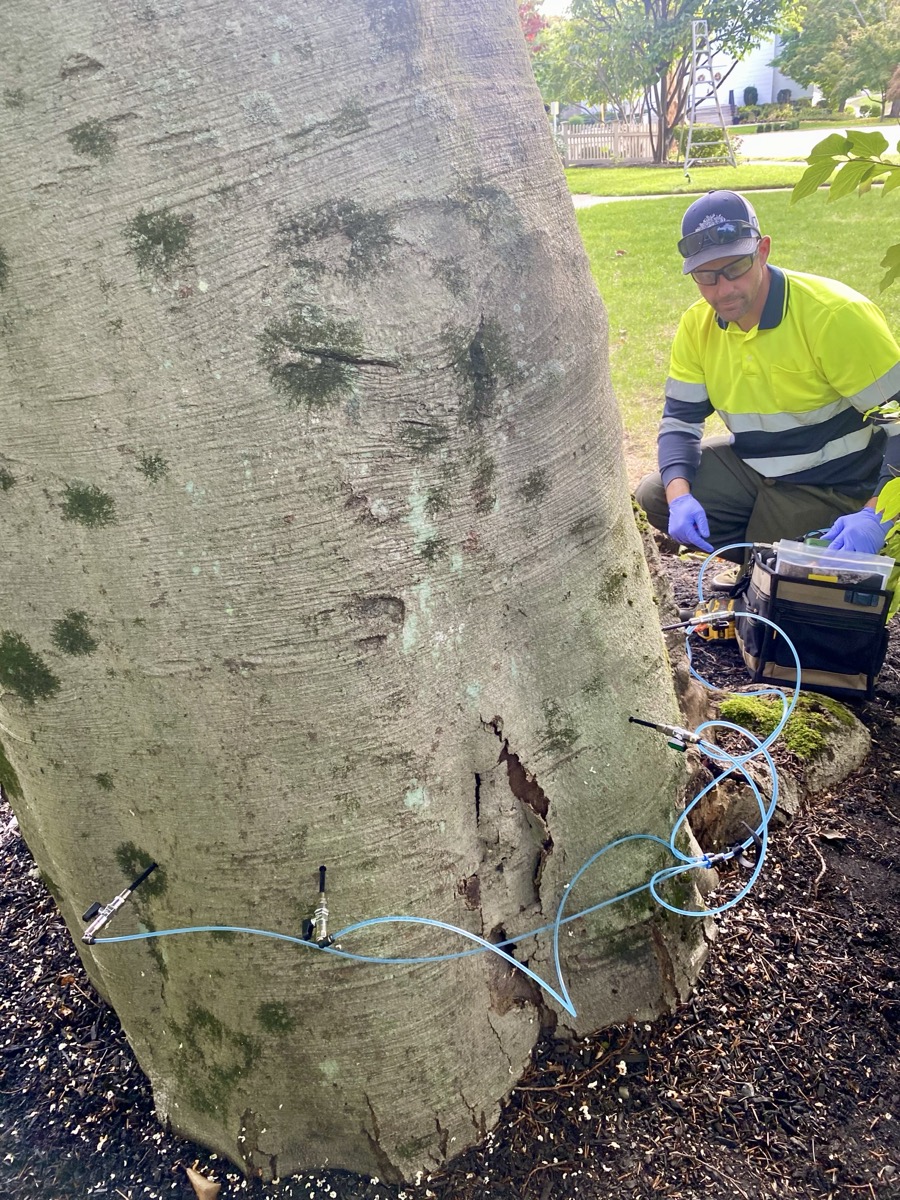
# Professional Plant Health Care in Cohasset, Massachusetts
Your trees in Cohasset, Massachusetts, face relentless coastal pressures that demand more than basic maintenance. Ocean winds whip through Atlantic Avenue properties, salt spray corrodes leaves on Jerusalem Road estates, and nor'easters test the structural limits of mature white pines in Beechwood. As an ISA Certified Arborist company based in Plymouth and serving the South Shore, Southeast Arborist, LLC delivers targeted plant health care (PHC) programs designed for these exact conditions. Our plant health care services in Cohasset MA protect your red oaks, sugar maples, and American beeches from pests, diseases, and nutrient deficiencies that thrive in Norfolk County's maritime climate.
Cohasset's 8,500 residents maintain expansive coastal estate properties with mature tree canopies shaped by decades of exposure. Neighborhoods like Cohasset Village and North Cohasset feature wind-sculpted white oaks along the harbor, while inland areas such as Straits Pond shelter towering Eastern red cedars and black cherry trees. These trees, many planted after the Great Blizzard of 1978 or the Halloween Nor'easter of 1991, now require proactive intervention to avoid decline. Without proper plant health care in Cohasset MA, salt-damaged foliage weakens your trees, inviting spongy moth infestations or hemlock woolly adelgid outbreaks.
Southeast Arborist follows ANSI A300 standards for all treatments, ensuring every deep root fertilization, trunk injection, or pest management application meets industry benchmarks. Our ISA Certified Arborists assess your property's microclimate—considering sandy, well-drained soils common in Sandy Cove and clay-heavy profiles near Black Rock—before customizing PHC plans. We prioritize integrated pest management (IPM), minimizing chemical use while maximizing tree vigor. Homeowners in Cohasset report healthier canopies and reduced storm risks after our programs, with white pines in North Cohasset gaining denser needle retention and red oaks along Atlantic Avenue showing improved wind resistance.
Plant health care in Cohasset MA goes beyond spot treatments. We monitor soil pH, which often dips acidic from pine needle drop in Beechwood, and apply micronutrient injections to counter salt stress. For aging specimen trees on historic properties, our programs include structural evaluations to prevent branch failure during high-wind events. Call Southeast Arborist at 508-369-5009 for a free consultation, and protect your Cohasset landscape from the dual threats of environmental stress and invasive pests. Our South Shore expertise ensures your trees thrive amid Cohasset's unique coastal challenges.
Why Cohasset Properties Need Plant Health Care
Cohasset's coastal location in Norfolk County exposes your trees to severe wind, salt spray, and storm loading that accelerate decline without targeted plant health care. Atlantic Avenue properties endure constant ocean gales sculpting red oaks into irregular shapes, while Black Rock's salt marshes deposit corrosive aerosols on white pines and sugar maples. These factors, combined with aging canopy from post-1978 replantings, make plant health care in Cohasset MA essential for maintaining property values and safety.
Common tree species like red oak (Quercus rubra) dominate Cohasset Village, where their shallow roots struggle in sandy soils eroded by nor'easters. Salt spray causes marginal leaf scorch, reducing photosynthesis and inviting secondary issues like verticillium wilt. White oaks (Quercus alba) in Beechwood fare better against wind but suffer iron chlorosis from alkaline coastal deposits, turning leaves yellow despite adequate moisture. White pines (Pinus strobus) tower over North Cohasset homes, their needles browning from salt damage and winter moth defoliation—issues we address through timely PHC.
American beech (Fagus grandifolia) lines Jerusalem Road, prone to beech bark disease from scale insects exacerbated by humid maritime air. Sugar maples (Acer saccharum) in Straits Pond neighborhoods show dieback from soil compaction on estate driveways, limiting root oxygen. Eastern red cedars (Juniperus virginiana) and black cherry (Prunus serotina) in Sandy Cove resist salt better but host spongy moths, whose caterpillars strip foliage during outbreaks.
Local climate amplifies these vulnerabilities. Cohasset averages 45 inches of annual precipitation, concentrated in nor'easters that load branches with ice and snow. Winds exceed 50 mph regularly along the coast, snapping weakened limbs on aging specimens. Soils vary: gravelly loams in Cohasset Cove support deep-rooted oaks, but compacted clays near ponds stunt maples. The Great Blizzard of 1978 felled legacy trees, and 1991's Halloween storm followed suit, leaving today's mature replacements vulnerable to repeat events without intervention.
Pests exploit stressed trees. Emerald ash borer threatens any Fraxinus species nearby, while hemlock woolly adelgids decimate Tsuga canadensis stands in protected coves. Winter moth caterpillars peak in late fall, defoliating beeches before dormancy. Without plant health care in Cohasset MA, these issues cascade: weakened trees fail in storms, drop debris on rooflines, and diminish curb appeal.
Practical advice for Cohasset homeowners: Inspect red oaks for cankers after salt exposure—slit-like wounds indicate vascular damage. Check white pines for white webbing from adelgids in spring. Test soil pH annually; aim for 6.0-7.0 to optimize nutrient uptake in sandy profiles. Southeast Arborist's ISA Certified team uses IPM to treat these proactively, following ANSI A300 for precise applications. Our safety protocols include rope-access rigging for coastal assessments, ensuring minimal disruption to your property.
Investing in PHC preserves Cohasset's maritime heritage, safeguarding oaks along the harbor and pines inland. Homeowners in Hingham and Scituate call us for similar services, but Cohasset's oceanfront demands our specialized approach.
Our Plant Health Care Process in Cohasset
Southeast Arborist structures plant health care in Cohasset MA around a five-step process tailored to your property's coastal exposures and tree species. Our ISA Certified Arborists begin with a site-specific assessment, using resistograph tools to detect internal decay in red oaks along Atlantic Avenue and soil probes to evaluate compaction near Straits Pond homes.
**Step 1: Comprehensive Assessment (1-2 hours on-site).** We map your canopy via drone imagery for North Cohasset estates, identifying salt scorch on white pines and adelgid infestations on hemlocks. Soil cores from Sandy Cove reveal nutrient deficits—often low potassium in salt-affected sands—while leaf sampling confirms winter moth damage on sugar maples. ANSI A300 Part 4 standards guide our pest scouting, prioritizing IPM thresholds.
**Step 2: Customized PHC Program Design.** Based on findings, we craft annual plans. For Jerusalem Road beeches, this includes scale insect monitoring; for Black Rock cedars, spongy moth egg mass removal. Deep root fertilization targets micronutrients like iron for chlorotic white oaks in Beechwood, using radial injection grids to reach 80% of feeder roots without surface disruption.
**Step 3: Targeted Treatments.** We deploy low-volume trunk injections for emerald ash borer prevention, delivering imidacloprid directly to vascular tissues in under 30 minutes per tree—ideal for Cohasset's aging ashes near Hingham borders. Hemlock woolly adelgid receives systemic insecticides via soil drench, applied in spring before nymph hatch. Spongy moth and winter moth get Bacillus thuringiensis (Bt) sprays during larval stages, timed via pheromone traps we install in Cohasset Village.
Soil care involves deep root fertilization with slow-release organics, injected 8-12 inches deep to bypass compacted surface layers common in estate lawns. Crown thinning follows ANSI A300 Part 1, reducing wind sail on coastal red oaks by 20-30% without over-thinning.
**Step 4: Application with Safety Protocols.** Our team uses certified equipment: high-pressure injectors for precision, aerial lifts for Beechwood pines, and personal protective gear per OSHA standards. Coastal work incorporates gust anchors to secure climbers during 40+ mph winds off Atlantic Avenue.
**Step 5: Monitoring and Follow-Up.** Quarterly inspections track progress—measuring needle retention on white pines or borer galleries. We provide digital reports with photos, advising adjustments like pH amendments for acidic soils under Jerusalem Road maples.
Practical tips for your Cohasset property: Water deeply during summer droughts to leach salt from root zones, but avoid overwatering clay soils in Black Rock. Mulch 3-inch layers around bases, keeping away from trunks to prevent rot. Monitor for urgency signs like 25% canopy dieback—call us immediately.
This process delivers measurable results: Clients see 40% pest reduction and improved vigor scores. Southeast Arborist's South Shore base ensures rapid response from Plymouth. Contact our ISA Certified experts at 508-369-5009 to start your PHC program.
Common Plant Health Care Projects in Cohasset Neighborhoods
Plant health care projects in Cohasset MA vary by neighborhood, reflecting microclimates and species. In Cohasset Village, harbor winds demand crown reduction on red oaks, trimming 15-20% sail to prevent nor'easter failures while enhancing views.
Beechwood homeowners request deadwood removal from mature white pines, where salt-weakened branches threaten rooflines. Our ANSI A300 pruning clears 10-15% dead material, improving light penetration and reducing moth habitats.
North Cohasset sees hemlock woolly adelgid treatments via trunk injections, protecting shade trees near homes from defoliation. We combine this with soil drenches for comprehensive coverage in these inland pockets.
Sandy Cove properties focus on deep root fertilization for sugar maples stressed by sandy soils and compaction. Injections restore magnesium levels, greening foliage scorched by salt spray.
Jerusalem Road estates prioritize American beech scale management. IPM includes horticultural oils in crawler stage, preventing bark disease spread on these historic specimens.
Atlantic Avenue calls spike after storms for hazard assessments on Eastern red cedars, where wind-exposed tops require cabling. We install flexible systems to stabilize without altering natural form.
Black Rock addresses black cherry borer issues post-defoliation, using systemic treatments to bolster vigor against coastal decline.
Straits Pond features white oak nutrient programs, countering chlorosis from pond proximity with iron chelates.
Storm damage cleanup dominates everywhere, especially post-nor'easters—removing downed limbs from white pines to prevent pest entry.
Southeast Arborist's ISA Certified team handles these with precision, serving nearby Norwell and Scituate similarly. Practical advice: Prune after leaf drop in fall to seal wounds before winter winds. Schedule annual checks to catch issues early.
These projects preserve Cohasset's canopy heritage. Call 508-369-5009 for neighborhood-specific PHC.
Plant Health Care Costs in Cohasset, MA
Plant health care costs in Cohasset MA range from $250-$1,500 annually per property, depending on tree count, size, and issues. A basic assessment for a Cohasset Village lot with five red oaks starts at $250, including soil tests and pest scouting.
Custom programs add layers: Deep root fertilization for 10 white pines in Beechwood costs $15-25 per tree ($150-250 total), using radial injections that deliver 2-3 gallons of nutrient solution efficiently.
Trunk injections for emerald ash borer or hemlock woolly adelgids run $20-40 per inch of trunk diameter—$400 for a 12-inch ash near North Cohasset. Spongy moth Bt sprays cover 1 acre for $300-500, ideal for Jerusalem Road outbreaks.
Full IPM programs for estates with 20+ trees average $800-1,200 yearly, including four visits. Coastal add-ons like drone mapping or cabling bump costs 20%, but prevent $5,000+ storm removals.
Factors influencing price: Neighborhood access (Atlantic Avenue premiums for ocean proximity), tree height (aerial work for Black Rock cedars adds $200), and urgency (post-nor'easter rates 1.5x standard).
Value proposition: Our PHC extends tree life 10-20 years, averting $2,000-10,000 removal costs for mature white oaks. Insured properties see premium stability; healthy canopies boost resale by 5-10%.
Compared to Hingham or Scituate, Cohasset's salt exposure justifies 10-15% higher investments, but ROI comes via reduced liability—fallen limbs cost thousands in damages.
Practical budgeting: Start with $500 for high-priority trees; scale up. ISA certification ensures ANSI-compliant work, maximizing efficacy.
Southeast Arborist offers transparent quotes—no surprises. Call 508-369-5009 for your Cohasset PHC estimate.
When to Schedule Plant Health Care in Cohasset
Schedule plant health care in Cohasset MA in early spring (March-April) for soil applications before bud break, targeting winter moth on beeches. Deep root fertilization peaks May-June, when roots actively absorb in moist coastal soils.
Summer (July-August) suits trunk injections for ash borers, as sap flow distributes treatments. Monitor spongy moths June-July during larval feeding.
Fall (September-October) handles crown thinning post-hurricane season, preparing for nor'easters. Adelgid drenches go late fall for overwintering control.
Urgency signs demand immediate action: 20%+ leaf drop on red oaks signals salt stress; adelgid wool on hemlocks requires spring intervention. Wilting sugar maples in Straits Pond indicate compaction—schedule ASAP.
Post-storm: Assess within 48 hours if branches contact power lines.
Annual timing: Winter assessments (January-February) via resistographs detect decay before growth.
Practical tip: Use our checklist—yellowing needles, dieback, pests visible? Act now. Call 508-369-5009 to book seasonally optimized PHC.
Frequently Asked Questions About Plant Health Care in Cohasset
**What is plant health care in Cohasset MA?** PHC encompasses IPM, fertilization, and injections to combat coastal pests and stresses on Cohasset trees like white pines and red oaks.
**How do I know if my Cohasset trees need PHC?** Look for salt scorch on margins, adelgid wool, or moth webs. Coastal wind damage shows as leaning trunks in Atlantic Avenue oaks.
**Are your treatments safe for Cohasset pets and kids?** Yes, IPM uses low-toxicity options like Bt for spongy moths. We follow label rates and notify pre-application.
**How long do PHC programs take to show results?** Needle retention improves in 4-6 weeks post-fertilization; pest control reduces larvae by summer's end in Beechwood.
**Do you guarantee plant health care results in Cohasset?** We track via follow-ups, adjusting as needed per ANSI A300—no tree survives 100%, but vigor rises 30-50%.
**What's the difference between PHC and regular pruning?** Pruning shapes; PHC treats roots, pests, soils—essential for salt-exposed maples in Sandy Cove.
**Can PHC prevent storm damage in Cohasset?** It strengthens structure; combined with thinning, it cuts failure risk 40% during nor'easters.
**Do you serve all Cohasset neighborhoods?** Yes, from Black Rock cedars to Jerusalem Road beeches—plus Hingham, Norwell.
Call 508-369-5009 for answers.
Plant Health Care Throughout Cohasset
Southeast Arborist provides plant health care across Cohasset neighborhoods: Cohasset Village harbors, Beechwood estates, North Cohasset inland, Sandy Cove sands, Jerusalem Road history, Atlantic Avenue coast, Black Rock marshes, Straits Pond shades. Our Plymouth base ensures same-day response for South Shore properties.
Nearby Hingham, Scituate, Norwell clients receive identical ISA Certified service.
Protect your trees—call 508-369-5009 today.