
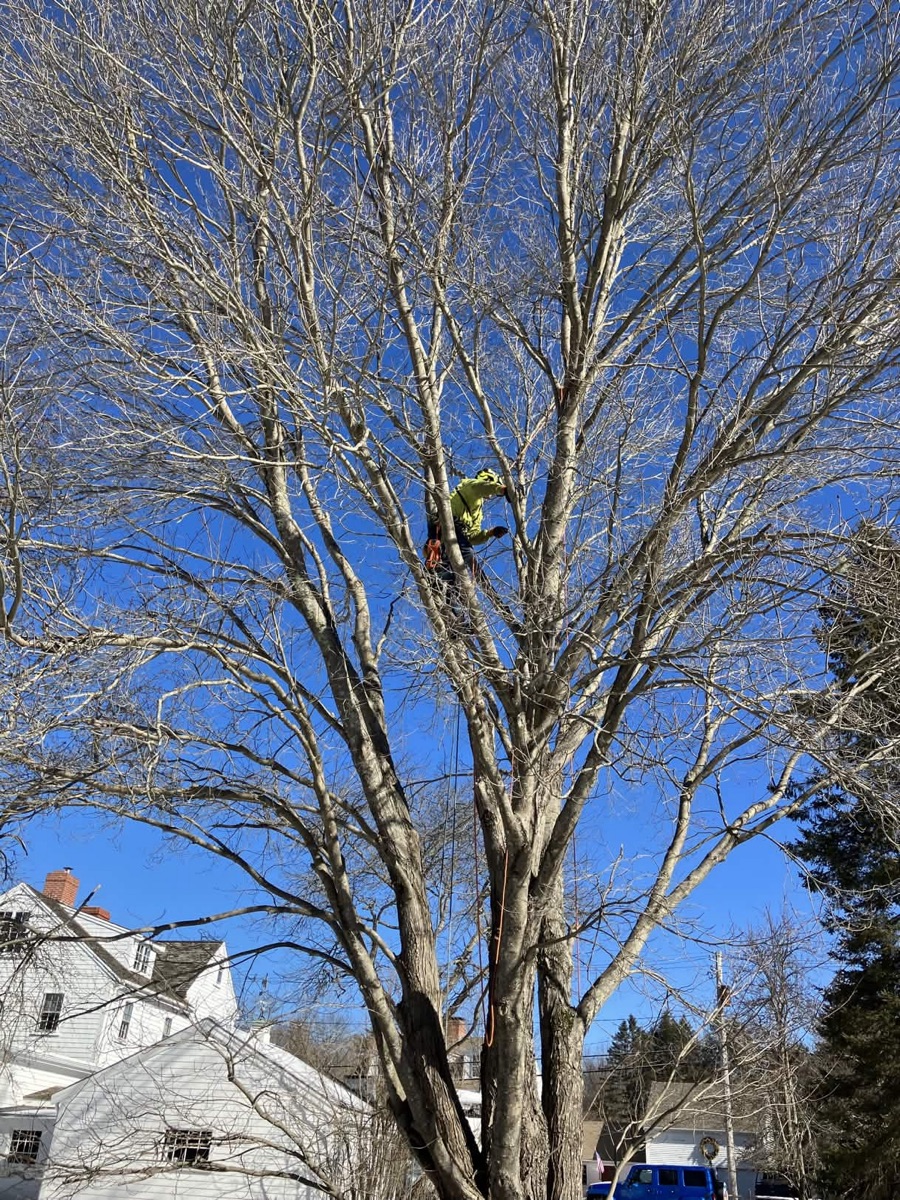
# Professional Tree Pruning in New Bedford, Massachusetts
If you own property in New Bedford, Massachusetts, your trees face unique pressures from coastal winds off Buzzards Bay, dense urban soils, and a legacy of 19th-century whaling-era plantings now showing their age. Tree pruning in New Bedford MA emerges as essential maintenance to protect your home, enhance curb appeal, and extend the life of your urban forest canopy. At Southeast Arborist, LLC, our ISA Certified Arborists deliver ANSI A300-compliant pruning tailored to these conditions, serving the South Shore from our base in Plymouth and Cohasset.
New Bedford's 101,000 residents navigate a historic landscape where red oaks line streets in Acushnet Heights, Norway maples shade West End sidewalks, and London planes anchor Buttonwood Park's Olmsted design. These trees, planted during the city's whaling boom, contend with salt spray from the harbor, spongy moth defoliation in oak stands, and the looming emerald ash borer threat. Without precise pruning—crown thinning to reduce wind sail or deadwood removal to prevent branch failure—your trees risk damaging roofs in North End nor'easters or obstructing utilities in Near North alleys.
Our team specializes in tree pruning New Bedford MA homeowners rely on for safety and health. We perform crown elevation to clear sidewalks in Brooklawn Park, vista pruning for harbor views at Clark's Point, and structural pruning for young honey locusts along the Dartmouth border. Every cut follows ANSI A300 standards, ensuring no over-thinning that stresses sycamores or pin oaks. Safety protocols include traffic control in busy South End streets and bucket truck stabilization on sloped coastal lots.
Consider the 1938 Hurricane that reshaped New Bedford's waterfront—today's storms demand proactive care. Homeowners in Fairhaven-adjacent neighborhoods see white pines leaning from repeated gales; we reduce crowns to lessen leverage. For aging street trees, we remove rubbing limbs on littleleaf lindens, preventing decay entry points common in Bristol County's clay-loam soils. This isn't generic trimming; it's location-specific intervention.
Southeast Arborist serves all New Bedford ZIPs like 02740 with free assessments. Call 508-369-5009 to discuss your red maples in the South End or eastern red cedars at Clark's Point. Proper pruning boosts property values in this competitive market, where well-maintained canopies signal care. Avoid DIY risks—over-pruning Norway maples invites sunscald in your exposed coastal climate. Our certified experts use climbing spurs sparingly on bark-sensitive species, opting for rope-and-saddle techniques.
In Buttonwood Park, preservation pruning sustains 1890s specimen trees; we apply the same precision to your yard. Whether addressing spongy moth-weakened red oaks in western neighborhoods or utility conflicts in dense urban blocks, tree pruning New Bedford MA style means resilience against hurricanes and pests. Schedule now to safeguard your investment—our track record in South Shore MA proves it.
Why New Bedford Properties Need Tree Pruning
New Bedford's coastal position in Bristol County exposes your trees to relentless Buzzards Bay winds, averaging 10-15 mph year-round with gusts exceeding 50 mph during nor'easters. Red oaks, dominant in Acushnet Heights, develop heavy top-heavy crowns that act as wind sails, snapping limbs onto West End homes. Tree pruning in New Bedford MA counters this by thinning the canopy 20-25% per ANSI A300, reducing sail effect without compromising structure.
Norway maples, prevalent along North End boulevards, suffer from dense urban growing conditions—shallow roots in compacted clay-loam soils limit stability. These trees crowd sidewalks, requiring crown elevation to provide 14-foot clearance over streets per city code. Without pruning, co-dominant stems rub, creating entry wounds for fungal pathogens thriving in New Bedford's humid 40-60 inch annual rainfall.
London planes in Buttonwood Park and downtown demonstrate urban tolerance but accumulate storm debris in branch crotches. Spongy moth outbreaks, peaking in western neighborhoods like Near North, have weakened oak stands since the 1980s; defoliated red oaks drop deadwood, posing hazards. Our ISA Certified Arborists remove these during tree pruning New Bedford MA services, inspecting for spongy moth egg masses on pin oaks.
Honey locusts in Brooklawn Park face pod litter and thorny branch overgrowth invading power lines—common in Fairhaven border lots. Pruning pod-bearing branches minimizes mess while elevating crowns for pedestrian safety. Red maples, sensitive to salt spray at Clark's Point, show dieback from coastal exposure; selective thinning improves air circulation, mitigating verticillium wilt in alkaline soils.
White pines along the Dartmouth border lean from prevailing southwest winds, their candles snapping in gales. Crown reduction shortens leaders by one-third, restoring balance. Sycamores in South End parks exfoliate bark hiding defects; deadwood removal exposes cankers early. Pin oaks in Acushnet Heights struggle with chlorosis from high pH soils—pruning opens the interior for targeted treatments.
Littleleaf lindens line Near North streets, their tight crotches failing under ice loads from 20-inch snowfalls. Structural pruning on young trees eliminates these V-shapes. Eastern red cedars at waterfront edges tolerate salt but accumulate wind-thrown debris; vista pruning clears harbor views without topping, which invites decay.
Aging street tree infrastructure amplifies needs—many 19th-century plantings now exceed mature size for tight lots. Emerald ash borer threatens Fraxinus species nearby in Acushnet, prompting preemptive pruning on ash-adjacent maples. Hurricanes like 2023's Lee battered Clark's Point; restoration pruning rebuilds frameworks.
Homeowners gain practical benefits: pruned trees shade patios without overhang risks, boost oxygen in dense neighborhoods, and comply with New Bedford's tree ordinance requiring utility clearance. Inspect your property quarterly—look for codominant leaders on red oaks or rubbing on honey locusts. In this climate, unpruned trees lose 30% more branches in storms. Southeast Arborist addresses these specifics, preventing claims that plague coastal insurers.
Our Tree Pruning Process in New Bedford
Southeast Arborist follows a rigorous, step-by-step tree pruning process in New Bedford MA, anchored by ANSI A300 standards and ISA certification. We begin with a free on-site assessment, evaluating your red oaks in South End for wind resistance or Norway maples in West End for sidewalk clearance. Using resistograph probes, we measure decay in London plane trunks without invasive drilling.
Step one: Hazard identification. Our arborists map deadwood, cracks, and included bark on honey locusts in Brooklawn Park. Drones survey tall white pines along Dartmouth border, spotting defects invisible from ground level. We prioritize removals exceeding 50% live crown compromise.
Preparation includes permits for street trees in North End and notifying utilities for lines over red maples in Near North. Safety setup deploys traffic cones, arrow boards, and spotters in busy Acushnet Heights. Bucket trucks with outriggers stabilize on Clark's Point slopes; for sycamores over 60 feet, we use rope access with climbing saddles to spare bark.
Execution starts with deadwood removal—targeting stubs over 2 inches on pin oaks, cutting flush to the branch collar. Crown thinning follows: we space cuts to retain 60-70% end weight, thinning red maples selectively to avoid sunscald. On littleleaf lindens, we drop subordinate limbs first, preventing tears.
Crown elevation lifts lower branches on eastern red cedars at harbor edges to 8-10 feet, using reduction cuts for natural taper. Vista pruning at Clark's Point windows waterfront views by skewing removals toward the bay, preserving skyline symmetry. Structural pruning on young trees eliminates crossing branches on honey locusts, directing energy to a central leader.
For storm-damaged trees post-nor'easter, restoration pruning removes 25% of broken ends on white pines, deferring heavy work to avoid shock. We clean cuts with saws sterilized between trees, preventing disease spread in spongy moth-stressed oaks.
Equipment shines: Silky chainsaws with low-vibration handles minimize fatigue on long South End jobs. Pole pruners extend 20 feet for Norway maple deadwood. Chippers process London plane limbs on-site, reducing truck traffic in dense neighborhoods. All gear meets OSHA standards, with personal protective equipment including helmets, chaps, and hi-vis vests.
Cleanup exceeds expectations—we rake chips from Brooklawn Park lawns, haul debris to licensed facilities, and leave your property pristine. Post-job reports detail cuts, photos, and follow-up needs, like fertilizing chlorotic pin oaks.
This process delivers value: pruned trees withstand 40% higher winds, per ISA studies. In New Bedford's coastal soils, it prevents root plate upheaval. Homeowners, mark leaners or cracks now—call 508-369-5009 for assessment. Our Plymouth-based team arrives equipped for your specifics.
Common Tree Pruning Projects in New Bedford Neighborhoods
In South End's dense blocks, tree pruning New Bedford MA focuses on utility clearance for Norway maples overhanging Eversource lines—crown reduction keeps clearances at 10 feet minimum. Homeowners here tackle red maple co-dominance threatening rowhouse roofs.
West End street trees like London planes demand deadwood removal amid aging infrastructure; we thin canopies to ease spongy moth stress, preserving shade for historic homes. North End projects elevate honey locust branches over alleys, complying with pedestrian codes while removing storm-rubbed limbs.
Near North sees pin oak structural pruning on young replacements, eliminating V-crotches prone to splitting in ice storms. Acushnet Heights prioritizes red oak crown thinning against wind—western exposures amplify sail effects, so we reduce by 20% targeting upper whorls.
Brooklawn Park residents request vista pruning on sycamores blocking park views; selective side-branching opens sightlines without topping. Clark's Point coastal properties need salt-exposure management on white pines—leader reduction counters lean from Buzzards Bay gales, paired with deadwood cleanup.
Dartmouth border lots feature littleleaf linden elevation for driveway access; we also prune eastern red cedars for harbor panoramas, focusing on lower lateral branches. Buttonwood Park-adjacent care mirrors Olmsted preservation: minimal intervention on 1890s specimens sustains heritage.
Common across neighborhoods: post-nor'easter restoration on all species, removing 30% broken mass. Emerald ash borer prep prunes adjacent maples in Acushnet. Southeast Arborist handles these with ANSI precision—call 508-369-5009 for your area's needs.
Tree Pruning Costs in New Bedford, MA
Tree pruning costs in New Bedford MA vary by factors like tree size, condition, and access. A 30-foot red oak in South End runs $350-550 for crown thinning and deadwood removal—urban density adds $100 for traffic control. Norway maples under 40 feet in West End cost $400-600, including elevation for sidewalk clearance.
Larger London planes in North End, over 50 feet, range $700-1,200; rope access inflates coastal Clark's Point jobs by 20% for slope stabilization. Honey locusts in Brooklawn Park with thorns demand $450-650, factoring glove wear and chipper volume.
Red maples in Acushnet Heights, spongy moth-weakened, hit $500-800 for restoration—decay probing adds $50. White pines along Dartmouth border leaners cost $600-900 for reduction, with drone surveys at $100 extra. Sycamores in Near North, bark-heavy, $550-750.
Pin oaks under utilities in South End: $400-600. Littleleaf lindens in park settings: $450-700 for structural work. Eastern red cedars at harbor: $300-500 for vista pruning.
Base rates start at $150/hour per arborist; two-man crews for big jobs. Travel from Plymouth adds $1/mile beyond 30 miles, but New Bedford falls in our core South Shore zone. Discounts apply for multi-tree projects—five oaks save 15%.
Value proposition: Pruning prevents $5,000 removal costs, per ISA data, and hikes property values 7% in Bristol County. Insurers offer premiums cuts for documented care. Avoid low bids—non-ANSI cuts doom trees, costing more long-term.
Get your quote: Call 508-369-5009. Transparent pricing beats surprises.
When to Schedule Tree Pruning in New Bedford
Schedule tree pruning New Bedford MA in late winter—February-March—before bud swell on red oaks, minimizing sap flow and pest spread. Avoid summer heat stressing Norway maples; fall risks oak wilt vectors.
Urgency signs: Deadwood over 3 inches on London planes, leaning white pines post-storm, or rubbing on honey locusts. Cracks in pin oak crotches signal now-or-fail. Spongy moth defoliation on red oaks warrants immediate deadwood removal June-August.
Nor'easters peak December-March—prune pre-season. Hurricane threats July-September demand reduction on coastal sycamores. Emerald ash borer watch means annual checks on lindens.
Act on visual cues: Wilted red maple tips, bark splits on cedars. Early pruning saves 20% costs. Contact Southeast Arborist at 508-369-5009 for timely slots.
Frequently Asked Questions About Tree Pruning in New Bedford
**What is ANSI A300 tree pruning, and why does it matter in New Bedford?** ANSI A300 sets science-based standards for cuts, prioritizing tree health over aesthetics. In New Bedford's windy climate, it prevents over-thinning red oaks, which invites windthrow—essential for South End stability.
**How often should I prune my trees in New Bedford neighborhoods?** Every 3-5 years for mature Norway maples in West End; annually for young honey locusts in Brooklawn Park. Coastal Clark's Point cedars need biannual checks post-storm.
**Can you prune trees near power lines in North End?** Yes, we coordinate with Eversource for London planes—utility-certified cuts ensure 10-foot clearance without topping, avoiding outages.
**Is tree pruning safe for my Clark's Point coastal white pines?** Absolutely—our ISA arborists use reduction cuts to counter salt-wind lean, retaining natural shape unlike risky topping.
**What about spongy moth damage on Acushnet Heights oaks?** We remove deadwood and thin crowns during tree pruning New Bedford MA services, improving vigor before outbreaks peak in May.
**How do you handle emergency pruning after nor'easters?** 24-48 hour response: Stabilize hanging limbs on red maples, clear Near North streets safely with cranes if needed.
**Will pruning help my sycamores with chlorosis in clay soils?** Thinning boosts airflow for treatments; combine with soil amendments for pin oaks too.
**Do you serve Dartmouth border and Fairhaven?** Yes, alongside all New Bedford—call 508-369-5009 for seamless South Shore coverage.
Tree Pruning Throughout New Bedford
Southeast Arborist provides tree pruning throughout New Bedford—from South End utilities to West End streets, North End elevations, Near North structures, Acushnet Heights oaks, Brooklawn Park vistas, Clark's Point coastals, and Dartmouth border pines. We extend to Fairhaven, Acushnet, and Dartmouth.
Our Plymouth/Cohasset base ensures quick response. ISA Certified Arborists apply ANSI A300 everywhere. Call 508-369-5009 for your free assessment—protect your trees today.