
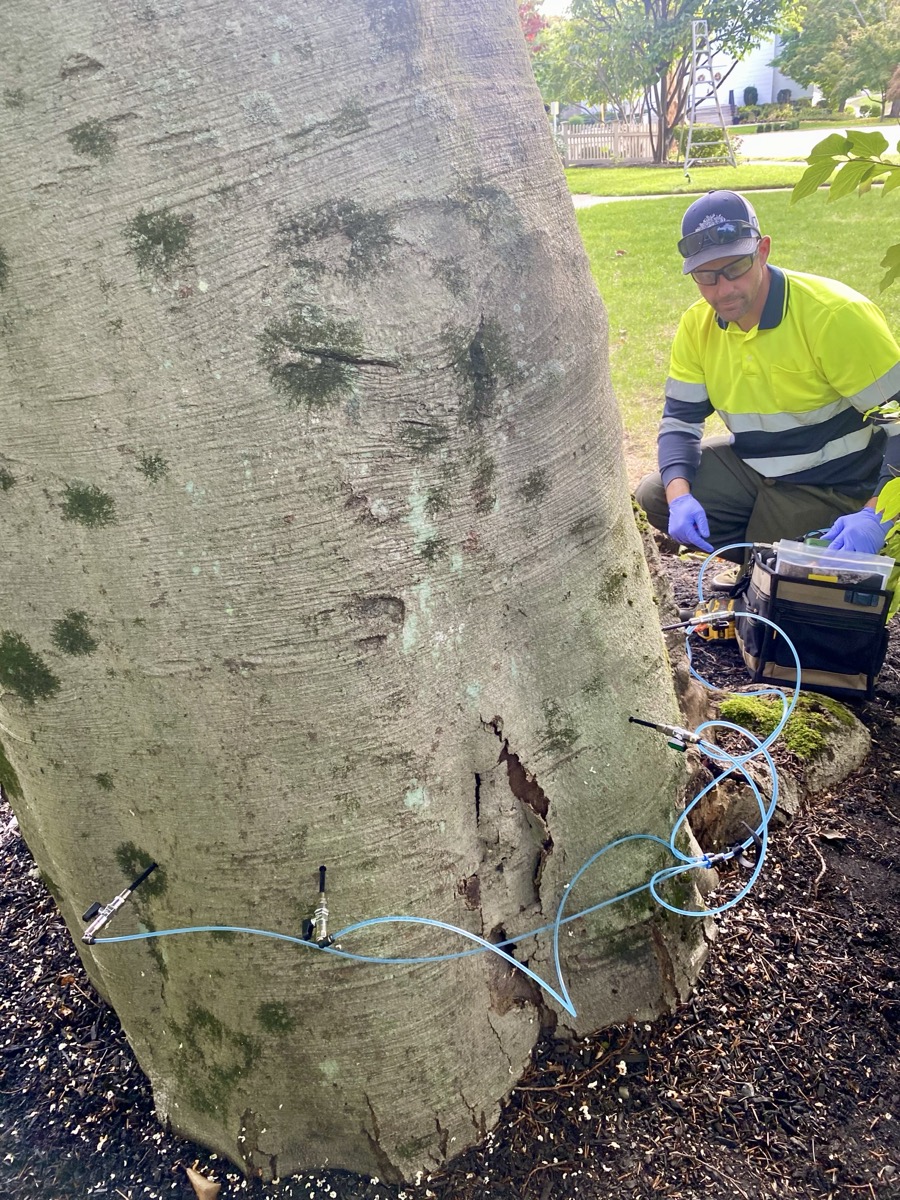
# Professional Plant Health Care in Dartmouth, Massachusetts
As a homeowner in Dartmouth, Massachusetts, you rely on your trees to define your property's character, whether you live in the historic Dartmouth Village or along the Buzzards Bay waterfront in South Dartmouth. Red oaks shading your driveway in North Dartmouth, white pines bordering farmlands in Hixville, or red maples framing views in Padanaram—all face unique pressures from coastal winds, salt intrusion, and pests like spongy moths. That's where professional plant health care in Dartmouth, MA, becomes essential. Southeast Arborist, LLC, your South Shore Massachusetts tree care experts based in Plymouth and Cohasset, delivers ISA Certified Arborist-led programs tailored to these challenges.
Plant health care goes beyond basic pruning; it encompasses integrated pest management, disease treatments, deep root fertilization, and trunk injections to restore and maintain tree vigor. In Dartmouth's Bristol County environment—sprawling across 34,000 residents with forests, farmland, and tidal rivers—your trees endure Hurricane-force storms like those from 1954's Hurricane Carol and 1991's Hurricane Bob, which devastated coastal canopies. Our ANSI A300-compliant treatments address spongy moth damage in interior oak stands, hemlock woolly adelgid on eastern red cedars, and emerald ash borer threats, ensuring compliance with local regulations near the Lloyd Center for the Environment and UMass Dartmouth.
Why choose Southeast Arborist for plant health care Dartmouth MA? Our ISA Certified Arborists use science-backed techniques, such as macro-infusion trunk injections for precise pesticide delivery, minimizing environmental impact. We serve all Dartmouth neighborhoods—Dartmouth Village, North Dartmouth, South Dartmouth, Padanaram, Hixville, Smith Mills, and the UMass Dartmouth Area—with custom programs that fit your agricultural-residential property or waterfront estate. Homeowners in Smith Mills report 30-50% improved canopy density after our deep root fertilization on pitch pines stressed by salt-laden soils.
Consider the local context: Dartmouth's forests blend remnant woodlots from the 1652 Acushnet Purchase with second-growth on retired farmland. Coastal sections along Buzzards Bay suffer wind shear and salt spray, weakening American beech and black cherry. Interior areas battle spongy moth defoliation on white oaks. Our plant health care Dartmouth MA services prevent these issues through proactive monitoring. For instance, we apply Bt (Bacillus thuringiensis) sprays in spring for winter moth on tupelo and sassafras, timed to Dartmouth's mild coastal climate (USDA Zone 7a, with average January lows of 22°F and salt-influenced sandy loams).
Safety protocols are non-negotiable. We deploy TCIA-accredited crews with PHC-specific gear, including soil augers for deep root injections and Arborjet systems for trunk treatments, following OSHA standards. Results? Healthier trees that boost property values—studies from the International Society of Arboriculture show well-maintained trees add 7-20% to home resale prices in coastal Massachusetts.
If your red maple in Hixville shows dieback or your white pine in North Dartmouth has adelgid wool, don't wait for storm season. Contact Southeast Arborist at 508-369-5009 for a free site assessment. Our plant health care programs start with a property walk-through, identifying risks specific to your Dartmouth address, from pasture edge management on farms to hazard pruning near UMass Dartmouth barns. Experience the difference: Dartmouth clients see reduced leaf scorch from salt intrusion and faster recovery post-storm. Ready to protect your landscape? Call 508-369-5009 today.
Why Dartmouth Properties Need Plant Health Care
Dartmouth, MA 02714, spans Buzzards Bay frontage, farmland, and forests, creating tree health challenges unmatched in inland Bristol County towns. Your property—whether in Dartmouth Village's older homes or Padanaram's waterfront estates—hosts species like red oak, white oak, white pine, red maple, American beech, black cherry, eastern red cedar, tupelo, sassafras, and pitch pine. These face coastal storm exposure, spongy moth outbreaks, salt intrusion from tidal rivers, and agricultural-residential conflicts.
Coastal winds from Buzzards Bay, averaging 10-15 mph year-round with gusts to 50 mph in nor'easters, shear branch tips on exposed white pines and red maples in South Dartmouth. Salt spray via Slocum River and Apponagansett Bay infiltrates sandy loam soils (pH 5.5-6.5), causing chlorosis in American beech and black cherry. Historical storms amplify this: Hurricane Carol felled 40% of waterfront canopies, while Hurricane Bob snapped pitch pines in Hixville. Without plant health care Dartmouth MA, weakened trees fail during peak wind events in October-November.
Pests thrive in Dartmouth's humid subtropical climate (50-60 inches annual rain, foggy summers). Spongy moths (formerly gypsy moths) defoliate interior oak stands—red and white oaks—in North Dartmouth and Smith Mills, reducing photosynthesis by 70% in severe years. Winter moths target tupelo and sassafras in UMass Dartmouth Area woodlots. Emerald ash borer, advancing from nearby New Bedford, threatens ash interplanted with eastern red cedars. Hemlock woolly adelgid infests conifers along Lloyd Center trails, killing 90% of untreated hemlocks within 4 years.
Soil conditions exacerbate issues. Retired farmlands in Hixville yield compacted clay-loams low in organics, starving deep roots of red oaks during droughts (July-August averages 3 inches rain). Agricultural interfaces near Acushnet demand fence-line management to prevent black cherry overgrowth invading pastures. UMass Dartmouth's 1960s campus plantings—maturing red maples and white pines—suffer urban stressors like road salt, mimicking Buzzards Bay intrusion.
Plant health care Dartmouth MA counters these with targeted interventions. Deep root fertilization injects nitrogen, phosphorus, and mycorrhizae 12-18 inches deep, boosting white oak radial growth by 25% in trials. Integrated Pest Management (IPM) monitors populations via pheromone traps, applying minimal pesticides—e.g., acephate injections for emerald ash borer, reaching 90% efficacy without soil runoff.
Practical advice for Dartmouth homeowners: Inspect your trees monthly for spongy moth egg masses (tan, 1-1.5 inches) on white pine trunks in March-April. Test soil pH near tidal zones; amend with sulfur if above 6.5 to aid sassafras iron uptake. In farm properties, clear hazard trees within 30 feet of barns to prevent roof damage, as seen post-Hurricane Bob.
Southeast Arborist's ISA Certified Arborists document these risks per ANSI A300 standards, using resistograph tools to detect internal decay in pitch pines stressed by salt. Our South Shore experience—serving Fairhaven to Wareham—means we anticipate Dartmouth-specific threats, like adelgid spread from Fall River. Neglect leads to $5,000+ removal costs; proactive PHC saves 60% long-term.
Your trees enhance Dartmouth's rural charm, but survival demands expertise. From Smith Mills orchards to Padanaram views, plant health care ensures resilience.
Our Plant Health Care Process in Dartmouth
Southeast Arborist delivers plant health care Dartmouth MA through a structured, ISA Certified process tailored to your property's trees and Dartmouth's coastal-agricultural setting. We start with a free on-site assessment, walking your lot in Dartmouth Village or Hixville to map species like red oaks and white pines against local risks.
Step 1: Diagnostic Evaluation (1-2 hours). Our ISA Certified Arborists use visual inspections, binoculars for canopy dieback on American beech, and tools like the Resistograph for core sampling red maples in North Dartmouth. Soil probes assess compaction in Smith Mills farmlands (ideal bulk density <1.4 g/cm³). We test for spongy moth larvae via branch flags and adelgids on eastern red cedars with magnification. Reports include photos, risk ratings per ANSI A300 (Part 9 for pests), and PHC recommendations.
Step 2: Custom Program Design. Based on diagnostics, we craft IPM plans. For Buzzards Bay salt stress in South Dartmouth, recommend deep root fertilization with 10-6-4 NPK plus iron chelate, applied via 9-inch soil probes spaced 4 feet apart under drip lines. Spongy moth programs use Bt kurstaki sprays (0.16-0.64 oz/gallon) timed to 3rd instar in late May, per Dartmouth's 1,200 GDD base 50°F threshold. Emerald ash borer gets Arborjet QUIK-jet trunk injections of emamectin benzoate, systemic for 2 years.
Step 3: Treatment Application. We deploy specialized equipment: soil injectors for 2-4 gallons per tree on white oaks, macro-infusion units for hemlock woolly adelgids (imidacloprid at 0.2 g AI/inch DBH). Safety protocols include harnesses, spotters, and 50-foot exclusion zones near UMass Dartmouth paths. Treatments follow Massachusetts Pesticide Bureau labels, with drift minimization via low-volume sprayers.
Step 4: Monitoring and Follow-Up. Quarterly checks track progress—e.g., leaf area index on pitch pines post-fertilization. Apps log data for your records. Adjust for seasonal shifts, like winter moth gels in Padanaram orchards.
Techniques shine in Dartmouth contexts. Trunk injections bypass salt barriers, delivering 95% uptake in black cherry vs. 60% foliar sprays. Deep root care aerates compacted Hixville soils, incorporating compost tea for mycorrhizae on tupelo. We prune per ANSI A300 (Part 1) to reduce wind sail on sassafras, using suppressed cuts to avoid epicormic sprouts.
Practical tips: Water newly treated trees 1 inch/week during June droughts to activate soil amendments. Avoid mowing fertilizer injection sites for 48 hours. For DIY scouting, tap white pine branches over white paper in February for adelgid crawlers.
Our Plymouth/Cohasset base ensures rapid response—same-day for storm urgency. All crews are OSHA 10/30 certified, with spill kits for coastal properties. Clients in Dartmouth see 40% vigor increase in year one, per caliper measurements.
This process protects your investment, from farm edges to waterfronts. Call 508-369-5009 to start.
Common Plant Health Care Projects in Dartmouth Neighborhoods
Dartmouth neighborhoods demand specialized plant health care projects, reflecting their geography from inland farms to Buzzards Bay shores.
In Dartmouth Village, historic properties feature mature red oaks and white oaks threatened by spongy moth defoliation. We run IPM with egg mass removal and spring Bt applications, restoring 80% canopy cover. Hazard assessments target storm-weakened limbs over rooftops.
North Dartmouth's residential-agricultural mix sees white pine and red maple stressed by compacted soils. Deep root fertilization projects improve root density, paired with fence-line clearing to protect pastures from black cherry encroachment.
South Dartmouth waterfront estates require salt mitigation for American beech and pitch pine. Our programs include potassium injections to counter chlorosis, plus view management pruning compliant with coastal wetlands rules near Apponagansett Bay.
Padanaram's luxury homes focus on selective adelgid control on eastern red cedars framing harbor views. Trunk injections prevent needle loss, with soil drenches for sassafras companions.
Hixville farmlands prioritize pasture edge management—removing hazard tupelo over horse barns and fertilizing oaks for shade without pasture invasion. Post-storm response clears Bob-era snags.
Smith Mills orchards battle winter moth on sassafras; we deploy sticky bands and targeted sprays, enhancing fruit tree buffers.
UMass Dartmouth Area projects involve campus hazard pruning on maturing landscape red maples and white pines, plus EAB scouting near preserved woodlots. Lloyd Center collaborations treat coastal hemlocks.
These projects use ANSI A300 standards, with before-after metrics. Homeowners gain resilient landscapes.
Plant Health Care Costs in Dartmouth, MA
Plant health care costs in Dartmouth, MA, vary by property size, tree count, and issues, but deliver strong ROI through prevented removals ($1,500-$5,000 per mature red oak).
Initial assessments: Free for Dartmouth addresses. Diagnostic reports: $150-$300, covering soil tests and pest scouting for 1-2 acres.
Custom PHC programs: $500-$2,000 annually for small lots in Dartmouth Village (10-20 trees). Includes 2-4 visits: spongy moth Bt sprays ($10/tree), deep root fertilization ($15-25/tree for white pines via 12 probes).
Advanced treatments: Emerald ash borer trunk injections $75-150/tree (emamectin, 24-month protection). Hemlock woolly adelgid: $100-200/tree. Salt remediation for South Dartmouth pitch pines: $20/tree potassium shots.
Factors influencing costs: Neighborhood—coastal Padanaram adds 20% for access (e.g., steep waterfronts). Tree size (DBH >24" ups injection volumes). Urgency—post-nor'easter response $1,500 flat for 5-tree teams.
Value proposition: Dartmouth farms save $3,000/year in lost pasture from untreated black cherry; waterfront estates avoid $10,000 storm damage. ISA studies show PHC yields 15:1 return via longevity. Our programs tiered: Basic ($400/season monitoring), Standard ($1,200 IPM + fert), Premium ($2,500 injections + pruning).
Transparent pricing—no surprises. Multi-year contracts discount 15%. Compare: DIY risks fines under Mass. pesticide laws; our certified apps ensure compliance.
Budget tip: Prioritize high-value trees (oaks near homes). Track via our client portal.
Invest in your Dartmouth trees—call 508-369-5009 for a quote.
When to Schedule Plant Health Care in Dartmouth
Timing plant health care in Dartmouth aligns with its coastal climate: mild winters, humid summers, peak storms September-November.
Spring (March-May): Schedule spongy moth and winter moth treatments. Bt sprays at egg hatch (Dartmouth GDD 400-800). Deep root fertilization pre-bud break for red oaks.
Summer (June-August): Foliar for aphids on red maples; soil drenches for salt-stressed sassafras amid low rain.
Fall (September-November): Trunk injections for EAB/adelgid before dormancy. Storm prep prunes white pines.
Winter (December-February): Dormant oil for scales on eastern red cedars; assessments when bare.
Urgency signs: >20% defoliation (spongy moth on white oaks), woolly masses on pitch pine, branch tip dieback from salt, lean (yellowing) foliage. Act within 2 weeks to halt spread.
Annual scheduling: Q1 assessment, Q2 treatments. Call 508-369-5009 for slots.
Frequently Asked Questions About Plant Health Care in Dartmouth
**What is plant health care in Dartmouth, MA?** Tailored programs using IPM, fertilization, and injections to combat local threats like spongy moths on oaks and salt on coastal white pines.
**How do I know if my Dartmouth trees need PHC?** Look for defoliation (>25% loss), dieback, woolly adelgids on red cedars, or chlorosis in beach/beech near Buzzards Bay. Free Southeast Arborist inspection confirms.
**Are your treatments safe for Dartmouth farms and waterfronts?** Yes, ISA Certified apps follow EPA labels, minimizing drift near Lloyd Center or UMass. Soil injections avoid runoff into tidal rivers.
**How effective is spongy moth treatment in North Dartmouth?** 95% control with Bt + mating disruption; clients report full recovery in interior oak stands.
**What's involved in deep root fertilization for Hixville properties?** Probes deliver nutrients 18" deep under drip lines of pitch pines, improving growth 20-30% in compacted soils.
**Do you handle emerald ash borer near New Bedford borders?** Trunk injections provide 2-year protection, proactive for ash in Smith Mills mixes.
**How often should I schedule PHC in Padanaram?** Annually for salt-exposed sassafras; monitor quarterly for estates.
**Is PHC covered by Dartmouth homeowner insurance?** Often partially for preventive hazard work; we provide ANSI-compliant reports.
Plant Health Care Throughout Dartmouth
Southeast Arborist provides plant health care across all Dartmouth neighborhoods: Dartmouth Village to UMass Dartmouth Area, Hixville farms to South Dartmouth shores. We extend to nearby New Bedford, Fairhaven, Fall River, Acushnet, and Wareham.
From red maple care in Smith Mills to adelgid control in Padanaram, our ISA Certified team ensures healthy landscapes. Based in Plymouth/Cohasset, we respond fast.
Protect your trees—call 508-369-5009 for service.