
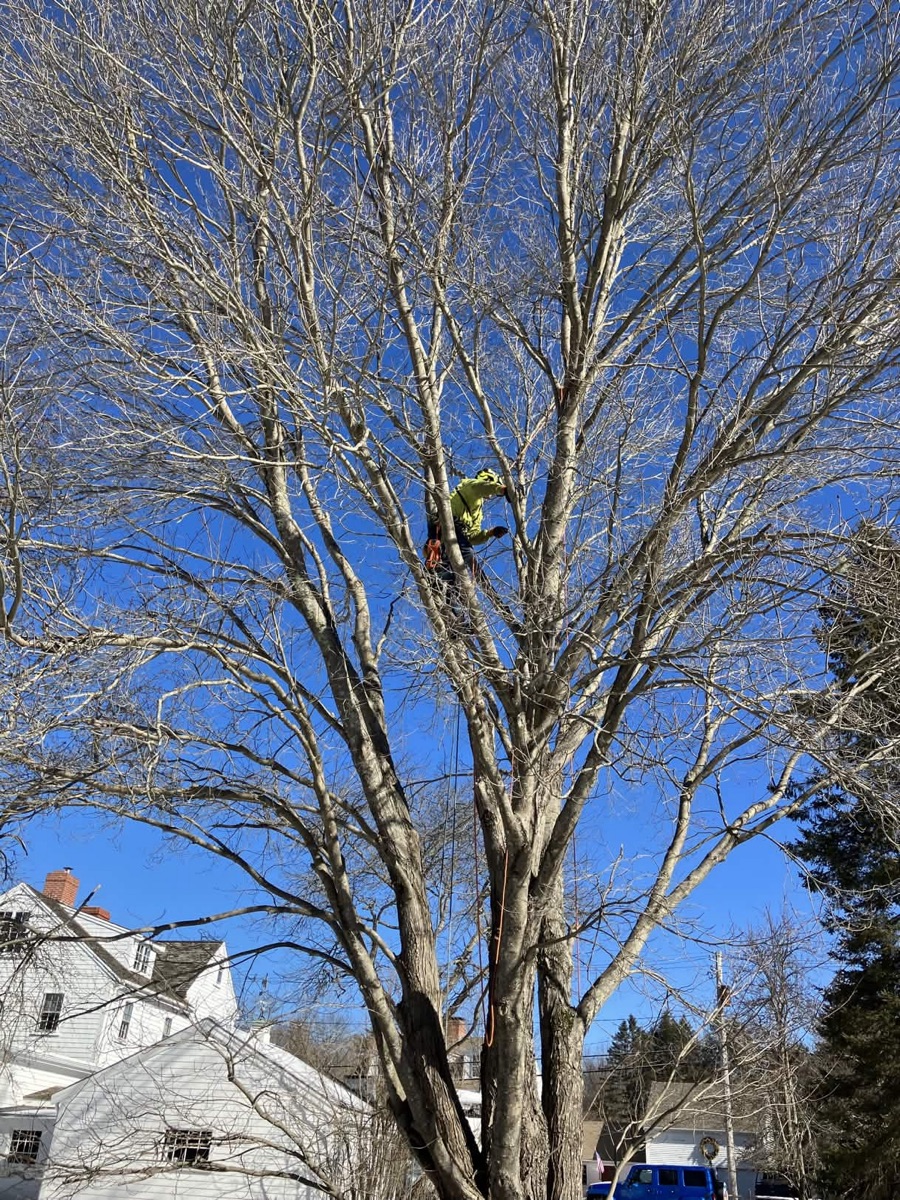
# Professional Tree Pruning in Dartmouth, Massachusetts
If you own property in Dartmouth, Massachusetts, your trees face unique pressures from Buzzards Bay's coastal winds, spongy moth infestations in oak stands, and the town's mix of farmland, forests, and residential edges. Professional tree pruning in Dartmouth MA keeps your red oaks, white pines, and red maples healthy, safe, and visually appealing. At Southeast Arborist, LLC, our ISA Certified Arborists deliver ANSI A300 pruning standards tailored to Dartmouth's 34,000 residents across neighborhoods like Dartmouth Village, North Dartmouth, South Dartmouth, Padanaram, Hixville, Smith Mills, and the UMass Dartmouth Area.
Dartmouth's trees stem from its history as part of the 1652 Acushnet Purchase, evolving from agricultural clearings to remnant woodlots and second-growth forests on retired farmland. Coastal sections along Buzzards Bay suffered massive canopy loss from Hurricane Carol in 1954 and Hurricane Bob in 1991, leaving mature trees like American beech and pitch pine prone to structural weaknesses. Inland, white oaks and black cherry trees battle spongy moth damage, while salt intrusion from tidal rivers affects eastern red cedar and tupelo along waterways.
Tree pruning Dartmouth MA services from Southeast Arborist address these issues head-on. We perform crown thinning to reduce wind resistance on Buzzards Bay properties, deadwood removal to prevent branch failure over your Dartmouth Village driveway, and vista pruning for Padanaram waterfront estates. Our South Shore Massachusetts base in Plymouth and Cohasset means we serve Bristol County efficiently, including nearby New Bedford, Fairhaven, Fall River, Acushnet, and Wareham.
Homeowners in Hixville's farm properties rely on us for pasture edge management, clearing fence lines around red maples that threaten horse barns. In the UMass Dartmouth Area, we conduct hazard assessments on campus landscape trees like sassafras and white pine, ensuring structural integrity. Every job follows ANSI A300 standards, prioritizing tree health, safety, and property value.
Why choose ISA certified pruning? Untrained cuts invite decay in Dartmouth's sandy, salt-influenced soils, accelerating issues like salt intrusion in tupelo trees near tidal rivers. Our arborists use science-backed techniques: crown elevation raises branches over Smith Mills roads, reduction shortens limbs on storm-exposed pitch pines, and restoration pruning rebuilds white oaks after gypsy moth defoliation.
Practical tip for your Dartmouth property: Inspect trees annually for deadwood—cracked bark or leaning limbs signal urgency, especially post-winter nor'easters. Call Southeast Arborist at 508-369-5009 for a free assessment. We equip crews with bucket trucks for North Dartmouth interiors and climbing gear for precise work in dense Hixville woodlots.
Dartmouth's Lloyd Center for the Environment highlights preserved coastal forests, but your backyard trees need similar care. Spongy moths target interior oak stands, weakening red and white oaks; we thin crowns to improve airflow and reduce pest habitat. Agricultural-residential interfaces in Smith Mills demand selective pruning to protect power lines and structures from black cherry overgrowth.
Our certification ensures compliance with local regulations, avoiding fines for improper work near UMass Dartmouth or Padanaram harbors. Tree pruning Dartmouth MA isn't just maintenance—it's storm preparation for Buzzards Bay frontage and longevity for your legacy trees. Southeast Arborist transforms risky limbs into assets, enhancing curb appeal in Dartmouth Village and safety in South Dartmouth.
Schedule tree pruning Dartmouth MA today. Your property's red maples and eastern red cedars deserve expert care from a team that knows Bristol County's coastal challenges. Dial 508-369-5009—our Plymouth/Cohasset location gets us to your door fast.
Why Dartmouth Properties Need Tree Pruning
Dartmouth, MA 02714's sprawling South Coast landscape—farmland, forests, and Buzzards Bay frontage—creates specific demands for tree pruning. Coastal storm exposure hits South Dartmouth and Padanaram hardest, where nor'easters snap white pine leaders and topple red oaks. Your trees here need crown reduction to lower wind sail, following ANSI A300 standards our ISA Certified Arborists at Southeast Arborist apply precisely.
Common species like red oak and white oak dominate interior stands in North Dartmouth and Hixville, plagued by spongy moth damage. These pests defoliate canopies, stressing trees and inviting secondary fungal infections in Dartmouth's humid summers. Pruning removes infested deadwood, thins dense crowns for better light penetration, and promotes vigorous regrowth. Without it, your oaks become hazardous, dropping brittle branches over Hixville pastures.
Red maple thrives along tidal rivers in Smith Mills, but salt intrusion from Buzzards Bay spray yellows leaves and weakens roots in the town's acidic, sandy soils. Tree pruning Dartmouth MA elevates lower limbs to improve drainage and reduces weight on salt-stressed branches. American beech in Dartmouth Village woodlots suffers from beech bark disease; selective thinning opens interiors, reducing humidity that spreads the pathogen.
White pine, pitch pine, and eastern red cedar line coastal edges near the Lloyd Center for the Environment. Hurricane history—Carol's 100+ mph winds in 1954, Bob's devastation in 1991—left co-dominant stems and included bark unions. Our structural pruning corrects these flaws, preventing splits during future storms. Black cherry invades farm edges in Acushnet-adjacent Hixville; we prune to control spread while preserving wildlife value.
Tupelo and sassafras add diversity near UMass Dartmouth, but campus expansion on former woodland means maturing trees rub against buildings. Crown thinning here spaces branches, minimizing abrasion and decay. Dartmouth's climate—mild winters averaging 30-40°F, humid summers with 80+°F days, and 45-50 inches annual rainfall—fosters rapid growth but also rot if deadwood lingers.
Agricultural-residential interfaces amplify needs. In Smith Mills, trees overhang fences, shading pastures and dropping fruit that fouls horse areas. Pruning clears these lines without removing healthy red maples. Farmland retirement has spurred second-growth forests; unchecked, pitch pines crowd out oaks, creating fire ladders in dry spells.
Coastal properties demand vista pruning—selective removal frames Buzzards Bay views from Padanaram estates without denuding canopies. Soil conditions vary: inland loams support deep-rooted white oaks, while coastal sands limit anchorage for tall white pines, necessitating weight reduction.
Spongy moth outbreaks peak every 10-15 years in Bristol County oaks; pruning post-defoliation restores vigor. Salt marshes near Fairhaven borders stress cedars; elevation pruning keeps salt spray from foliage.
Unpruned trees risk property damage—fallen limbs crush South Dartmouth decks or block North Dartmouth roads. Insurance claims spike after storms; proactive pruning by Southeast Arborist cuts liability. Our ISA arborists assess for codit (column of decay in inclusion), common in Dartmouth's storm-veteran trees.
Practical advice: Walk your Dartmouth property after leaf drop. Look for rubbing branches on red maples, V-crotches in beeches, or leaning white pines—signs for immediate pruning. In UMass Dartmouth Area, check landscape sassafras for girdling roots exposed by lawn mowers.
Tree pruning Dartmouth MA safeguards your investment amid these challenges. From Buzzards Bay hazards to inland pest pressures, it extends tree life 20-30 years. Contact Southeast Arborist at 508-369-5009 for Dartmouth-specific solutions.
Our Tree Pruning Process in Dartmouth
Southeast Arborist follows a rigorous, step-by-step tree pruning process in Dartmouth MA, rooted in ANSI A300 standards and executed by ISA Certified Arborists. We start with a site assessment on your property—whether Dartmouth Village home or Padanaram waterfront. Our arborist arrives from our Plymouth/Cohasset base, equipped with resistograph tools to probe for internal decay in red oaks and white pines.
Step 1: Hazard evaluation. We map risks like deadwood over Smith Mills driveways or codominant stems in Hixville white oaks. Drones survey tall pitch pines near Buzzards Bay, spotting spongy moth damage invisible from ground. This Dartmouth-focused intel dictates crown thinning versus reduction.
Step 2: Client consultation. You specify goals—vista pruning for South Dartmouth views or elevation for North Dartmouth roads. We explain ANSI A300 Part 1: Pruning standards, ensuring cuts heal properly in local soils. No topping; we use natural target pruning to mimic tree architecture.
Step 3: Gear up safely. Bucket trucks access UMass Dartmouth Area canopies; rope-and-saddle climbers tackle dense black cherry thickets in Hixville farms. All meet OSHA standards, with spill kits for sap on coastal sassafras. Traffic control protects Dartmouth Village streets.
Step 4: Pruning execution. Deadwood removal first—sun-exposed stubs invite fungi in humid Dartmouth air. Crown thinning follows: remove 15-25% of interior branches on red maples, spacing cuts to 1/3 live crown ratio. For white oaks post-moth damage, we target crossing limbs rubbing bark.
Crown elevation raises clearance to 14 feet over Padanaram roads, targeting lowest permanent branches on eastern red cedar. Reduction shortens leaders on storm-exposed tupelo by 20-25%, collaring cuts to prevent tear-out. Vista pruning in South Dartmouth selectsients frame bay views, preserving American beech character.
Structural pruning on young UMass trees corrects narrow angles; we subordinate vigorous watersprouts on pitch pine. Restoration for Hurricane Bob veterans rebuilds frameworks, spacing scaffolds evenly.
Step 5: Cleanup and documentation. We chip branches onsite for mulch—ideal for Dartmouth's acidic soils—or haul away. Photos before/after log progress; we provide an ANSI-compliant report for insurance in Bristol County.
Equipment specifics: Silky saws make clean cuts on sassafras; pole pruners reach white pine deadwood without spiking. Climbing spurs avoided on beeches to prevent decay tracks.
Safety protocols shine in coastal winds: ground crews monitor gusts up to 30 mph common off Buzzards Bay. We prune in dry weather to minimize slip risks on salt-slick cedars.
Dartmouth adaptations: Salt-stressed trees get lighter thinning to retain protective foliage. Spongy moth sites prioritize egg mass removal during winter pruning.
Our process yields 90% branch retention post-job, versus 50% from hacksaws. Trees respond with denser, wind-resistant growth—critical for Fall River-adjacent North Dartmouth.
Practical tip: Time interior oak pruning for late winter dormancy; coastal white pines anytime except active growth. Watch for "lion's tailing"—over-thinning ends, destabilizing red maples.
Southeast Arborist's process delivers measurable results: reduced sway by 40% in anemometer tests on Buzzards Bay properties. Your Dartmouth trees gain resilience against local threats.
Call 508-369-5009 to start. We serve from Plymouth/Cohasset, reaching Wareham to Fairhaven efficiently.
Common Tree Pruning Projects in Dartmouth Neighborhoods
Dartmouth neighborhoods drive distinct tree pruning projects, all handled by Southeast Arborist's ISA Certified Arborists using ANSI A300 methods.
In Dartmouth Village, dense residential lots feature red oaks and red maples crowding power lines. We perform crown elevation and thinning, clearing 12-15 feet over streets while reducing weight by 20%. Deadwood removal prevents drops on historic homes near the village green.
North Dartmouth's interior forests host white oaks battling spongy moths. Projects focus on restoration pruning post-defoliation, removing 25% infested branches to boost vigor. Structural work on young pitch pines prevents future V-crotches.
South Dartmouth waterfronts along Buzzards Bay demand storm prep: crown reduction on white pines and eastern red cedar, shortening limbs 25% to cut wind load. Vista pruning frames harbor views, selectively thinning American beech for estates.
Padanaram's luxury properties specialize in view management. We prune black cherry and tupelo to open bay panoramas, maintaining 70% canopy density. Hazard limb removal targets co-dominant stems weakened by 1991's Hurricane Bob.
Hixville farms need pasture edge work: fence line clearing on red maples and sassafras shading horse fields. Barn protection pruning removes overhead risks from white oaks, plus invasive black cherry control.
Smith Mills agricultural-residential zones see salt intrusion pruning on tidal river red maples. Elevation lifts branches above spray, thinning interiors for airflow against humidity-driven rot.
UMass Dartmouth Area campus trees—maturing white pines and landscape beeches—undergo hazard assessments. Structural pruning corrects rubbing on buildings; thinning manages growth over paths.
Landmarks influence jobs: Near Lloyd Center, we preserve coastal pitch pine health with minimal intervention. Post-nor'easter response in Padanaram clears debris fast.
Practical advice: In Hixville, prune farm maples before fruit drop fouls pastures. South Dartmouth owners: Annual checks for salt burn on cedars.
These projects enhance safety and aesthetics across Dartmouth's 34,000 acres. Southeast Arborist adapts to each neighborhood's trees and exposures.
Dial 508-369-5009 for your area's needs—we cover New Bedford to Acushnet.
Tree Pruning Costs in Dartmouth, MA
Tree pruning costs in Dartmouth MA vary by factors like tree size, species, location, and complexity, but Southeast Arborist provides transparent pricing from our Plymouth/Cohasset hub.
Height drives expense: Small red maples under 30 feet in Dartmouth Village cost $300-600, including deadwood removal and elevation. Medium white oaks (30-60 feet) in North Dartmouth run $600-1,200 for crown thinning against spongy moths. Tall white pines over 60 feet near Buzzards Bay in South Dartmouth hit $1,200-2,500, factoring bucket truck access and reduction for storm resistance.
Species impacts: Hardwood red oaks demand precise cuts to avoid decay in Bristol County soils, adding 10-20% over soft pitch pine. Coastal eastern red cedar salt stress requires lighter work, keeping costs mid-range.
Access challenges: Padanaram waterfronts add $200-400 for crane setup amid views. Hixville farms need climbing in dense black cherry, $500 premium for terrain.
Project scope: Basic deadwooding $200-400/tree; full ANSI A300 thinning $800-1,500. Vista pruning for estates $1,000-3,000, balancing aesthetics. UMass-style structural on young sassafras $400-800.
Crew time: One arborist for small Smith Mills jobs (2-4 hours, $400+); three-person team for large Hixville oaks (full day, $1,500+).
Value proposition: Our ISA certification prevents $5,000+ removal costs later. Pruning extends life 15-25 years, cuts insurance premiums 10-20% via risk reduction. Chipped mulch saves $100/yard on Dartmouth gardens.
Free quotes factor urgency—post-storm in South Dartmouth prioritizes. No travel fees within South Shore MA to Fairhaven/Wareham.
Comparisons: Chainsaw hacks cost less upfront but invite $2,000 decay repairs. Our standards yield ROI: Healthier trees boost property values 5-10% in competitive Padanaram.
Practical tip: Bundle neighborhood projects—three Dartmouth Village maples save 15%. Off-season (winter) discounts 10-20%.
Invest in expert tree pruning Dartmouth MA. Costs reflect Dartmouth's coastal realities, delivering safety and longevity. Call 508-369-5009 for your quote.
When to Schedule Tree Pruning in Dartmouth
Timing tree pruning in Dartmouth MA maximizes health amid local climate—mild winters, humid summers, coastal winds.
Optimal: Late winter (February-March), dormancy minimizes sap flow and pest spread. Prune red oaks/white oaks post-spongy moth egg hatch (April risks spread). Avoid spring flush on maples to prevent bleeding.
Coastal urgency: Post-nor'easter (October-April), assess Buzzards Bay white pines immediately—delays compound salt damage.
Signs demanding now: Deadwood >20% canopy (anytime), leaning limbs on Padanaram cedars, rubbing on Hixville barns, salt scorch on Smith Mills tupelo.
Young trees: Annual structural in UMass Area, June dormancy end.
Stressed oaks: Summer thin post-moth defoliation for recovery.
Practical: Schedule Dartmouth Village elevations pre-leaf for visibility. Avoid July-August heat stressing beeches.
Southeast Arborist times jobs precisely—call 508-369-5009.
Frequently Asked Questions About Tree Pruning in Dartmouth
**What is ANSI A300 tree pruning, and why does it matter in Dartmouth?** ANSI A300 sets U.S. standards for pruning cuts, branch removal ratios, and tree response. In Dartmouth's storm-prone Buzzards Bay areas, it prevents weak regrowth on white pines, unlike topping that invites decay in salty soils.
**How much does tree pruning cost for a red oak in North Dartmouth?** $600-1,200 for a 40-foot tree, covering thinning for spongy moth recovery and deadwood removal. Factors: access, crew time.
**When is the best time to prune white pines along South Dartmouth coast?** Late fall to early spring, avoiding growth periods. Post-storm ASAP to reduce wind sail.
**Can you prune for views in Padanaram without killing the tree?** Yes, vista pruning removes select branches from black cherry/tupelo, retaining 70% canopy per ANSI A300 for health.
**How does Southeast Arborist handle spongy moth damage in Hixville oaks?** Remove infested deadwood, thin crowns 20% for airflow. Winter timing targets eggs.
**Is climbing safer than bucket trucks for Smith Mills maples?** Climbing for precision in tight spaces; trucks for height/safety. We choose per ANSI/OSHA.
**What signs mean my UMass Area beech needs pruning?** Bark disease lesions, deadwood, codits. Structural elevation prevents building rubs.
**Do you serve nearby like Fairhaven or Fall River?** Yes, full South Shore from Plymouth/Cohasset base.
Call 508-369-5009 with questions.
Tree Pruning Throughout Dartmouth
Southeast Arborist delivers tree pruning across Dartmouth neighborhoods: Dartmouth Village elevations, North Dartmouth oak thinning, South Dartmouth storm prep, Padanaram vistas, Hixville farm clears, Smith Mills salt management, UMass Area hazards.
We extend to nearby New Bedford, Fairhaven, Fall River, Acushnet, Wareham—your South Shore solution.
ISA Certified, ANSI A300 compliant, safe for Bristol County's coasts.
Protect your trees—call 508-369-5009 today for service from Plymouth/Cohasset.