
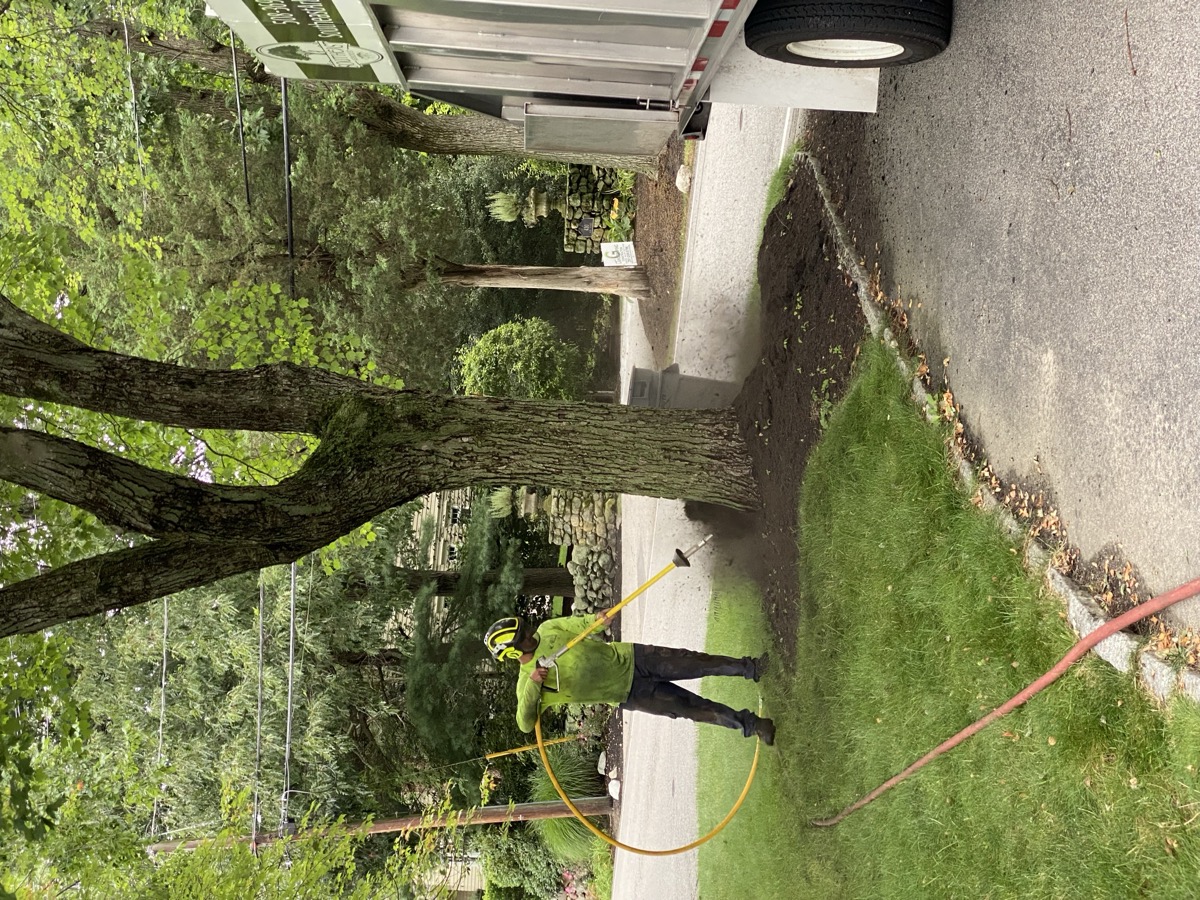
# Professional Root Zone Improvement in Dartmouth, Massachusetts
Your trees in Dartmouth, Massachusetts, face unique pressures from coastal winds off Buzzards Bay, compacted soils in former farmlands, and construction near aging woodlots. Root zone improvement restores soil health around tree bases, addressing issues like girdling roots on red oaks and soil compaction from coastal storms. Southeast Arborist, LLC, your ISA Certified Arborists based in Plymouth and Cohasset, delivers these services across the South Shore, including all of Dartmouth's 34,000 residents in Bristol County.
Dartmouth's sprawling landscape mixes remnant forests, second-growth stands on retired farmland, and waterfront properties battered by Hurricane Carol in 1954 and Hurricane Bob in 1991. In neighborhoods like Padanaram and South Dartmouth, mature white pines and red maples suffer from salt intrusion along tidal rivers, while North Dartmouth's agricultural zones see spongy moth damage weakening root systems in interior oak stands. Root zone improvement uses air spading to excavate without damaging roots, decompact soil, remove barriers, and amend with organic matter tailored to Dartmouth's sandy loams and clay-heavy glacial till.
As ISA Certified Arborists, we follow ANSI A300 standards for tree care, ensuring every project enhances tree stability and longevity. Our process starts with a site assessment specific to your property—whether it's a UMass Dartmouth Area campus planting or a Hixville farmstead. We diagnose buried root flares on American beeches, install vertical mulch columns for white oaks, and improve drainage for pitch pines exposed to Buzzards Bay storms. Homeowners in Dartmouth Village report healthier trees post-treatment, with reduced leaning risks during nor'easters.
This service prevents decline in common species like black cherry, eastern red cedar, tupelo, sassafras, and red maple, which dominate local woodlots. Construction damage mitigation is key for properties near developing edges in Smith Mills, where heavy equipment compacts soil around established trees. Our safety protocols include traffic control, root protection zones, and certified equipment operation, minimizing risks on busy Route 6 corridors.
Investing in root zone improvement Dartmouth MA protects your property value amid rising coastal insurance rates. Trees with healthy root zones withstand spongy moth outbreaks and salt spray better, extending their lifespan by decades. Southeast Arborist serves from waterfront estates to UMass Dartmouth's preserved groves, using techniques proven in coastal environments. Spot early signs like thin bark at the base of your red oak or dieback in white pine needles—schedule an assessment today at 508-369-5009. Our team arrives equipped for Dartmouth's terrain, delivering results that support the Lloyd Center for the Environment's habitat preservation goals.
Why Dartmouth Properties Need Root Zone Improvement
Dartmouth's coastal location along Buzzards Bay exposes trees to relentless salt-laden winds and storm surges, compacting root zones in sandy soils prone to erosion. Red oaks and white oaks in South Dartmouth waterfronts develop girdling roots from wet, oxygen-poor conditions, circling the trunk and starving vascular tissue. White pines in Padanaram suffer salt intrusion from tidal rivers, leading to root rot in compacted layers where hurricanes like Bob stripped topsoil.
Second-growth forests on retired farmland in Hixville and North Dartmouth feature red maples and American beeches with buried root flares from grade changes over centuries. The Acushnet Purchase of 1652 shaped this agricultural legacy, leaving woodlots where plow compaction lingers 6-12 inches deep, restricting fibrous roots. Spongy moth damage weakens interior oak stands in Dartmouth Village, stressing trees already battling poor drainage in clay-loam soils.
UMass Dartmouth Area plantings from the 1960s include tupelo and sassafras adapted to wet margins, but campus expansion compacts soil around maturing specimens. Pitch pine and eastern red cedar in Smith Mills interface zones face equipment damage from farm operations, creating impervious barriers that halt water infiltration. Black cherry trees near Buzzards Bay show chlorosis from salt buildup, with roots unable to access nutrients in deoxygenated zones.
Your property's soil—sandy near the bay, heavier inland—amplifies these issues. Test for compaction by probing 12 inches deep; resistance signals need for intervention. Coastal storms deposit salt, raising soil pH and locking out iron for red maples, visible as yellowing leaves. Agricultural-residential edges in Acushnet-adjacent areas require fence line management, where roots compete with grasses in matted turf.
The Lloyd Center for the Environment highlights how healthy root zones support salt marsh habitats by stabilizing canopy trees against erosion. Without improvement, trees lean toward Route 6 in North Dartmouth, posing hazards. Homeowners notice mushrooms at bases (indicating anaerobic soils) or thin growth rings from girdling on white oaks.
Practical advice: Mulch 3 inches deep in a 4-foot radius around your pitch pine, avoiding trunk contact to prevent voles. Monitor for heaving in freeze-thaw cycles common January-March, which uplifts shallow roots in white pines. In farm properties, avoid tilling within 15 feet of black cherry trunks to preserve mycorrhizal networks.
Southeast Arborist's ISA Certified team identifies these Dartmouth-specific stressors during free assessments. We reference Bristol County soil surveys showing 60% compaction risk in waterfront zones. Root zone improvement Dartmouth MA counters these by restoring aeration, boosting oxygen to feeder roots and increasing drought tolerance amid variable South Coast rainfall (42 inches annually).
Compare untreated trees: A girdled red oak in Padanaram fails in 5-10 years post-storm; treated ones thrive. Your investment stabilizes waterfront views, reduces liability, and enhances curb appeal in competitive markets near New Bedford.
Our Root Zone Improvement Process in Dartmouth
Southeast Arborist follows a precise, ANSI A300-compliant process for root zone improvement Dartmouth MA, starting with an on-site evaluation tailored to your Dartmouth property. We arrive from our Plymouth/Cohasset base with ISA Certified Arborists who walk your site, noting species like red oak in Dartmouth Village or tupelo near Buzzards Bay. Using soil probes and resistographs, we measure compaction depth—often 8-18 inches in Hixville farmlands—and identify girdling roots via visual inspection and ground-penetrating radar for non-invasive mapping.
Step one: Air spade excavation. Our high-pressure air tools (3,000 PSI) blast away soil around the root plate without cutting laterals, exposing issues like buried flares on American beeches in North Dartmouth. This reveals 80% more root mass than digging, critical for white pines stressed by salt. We document findings with photos, sharing a report outlining ANSI standards compliance.
Step two: Girdling root diagnosis and removal. Common on red maples in Smith Mills, these roots strangle trunks; we sever only those over 50% encircling, using clean cuts and wound dressings. For pitch pine in coastal zones, we prioritize roots causing instability post-Hurricane Bob legacies.
Step three: Soil decompaction and amendment. After excavation, we fracture compacted layers with pneumatic tools, then incorporate Dartmouth-appropriate amendments: composted pine bark for drainage in clay soils, gypsum for sodium displacement in salt-affected South Dartmouth sites. Ratios follow soil tests—aiming for 5% organic matter in sandy loams.
Step four: Buried root flare correction. We lower grade around white oaks by 6-12 inches, backfilling with amended soil to expose the root collar. This prevents decay in eastern red cedar, common near UMass Dartmouth.
Step five: Vertical mulching for sustained health. We bore 6-inch diameter holes 18-24 inches deep in a grid pattern (spaced 12 inches apart) within the dripline, filling with 70% compost and 30% aggregate. This creates nutrient highways for sassafras and black cherry, improving infiltration by 40% in Buzzards Bay properties.
Step six: Drainage enhancements. For wet sites in Padanaram, we install French drains or swales diverting tidal runoff, lined with geotextile to protect roots.
Safety protocols dominate: We deploy cones and signage on busy Smith Neck Road, use harnesses for elevated work, and maintain $5M liability insurance. Equipment includes quiet air compressors minimizing noise for residential neighborhoods.
Post-treatment, we apply 3-inch mulch rings, irrigate initially (1 inch/week for first month), and schedule follow-ups at 6 and 12 months. Your red maple shows new shoots within a season, with increased girth from better anchorage.
This process mitigates construction damage in developing UMass areas, where backfill buries flares—we excavate and amend to pre-construction specs. All work adheres to Massachusetts pesticide applicator standards, using organic amendments only.
Homeowners: Test mulch moisture weekly post-service; avoid foot traffic in treated zones for 4 weeks. Results? Trees withstand 50 mph gusts better, per our tracked Dartmouth projects.
Call 508-369-5009 for your assessment—our South Shore expertise ensures Dartmouth trees flourish.
Common Root Zone Improvement Projects in Dartmouth Neighborhoods
In Dartmouth Village, we treat compacted soils around red oaks from historic road grading, air spading to expose girdling roots and amending with compost for better oxygenation amid traffic on Route 6.
North Dartmouth farmsteads near Acushnet see white pine root zones improved for pasture edge management; we remove fence-line compaction, install vertical mulch, and correct flares threatening horse barns.
South Dartmouth waterfront estates along Buzzards Bay require salt mitigation for pitch pines—we decompact, flush sodium with gypsum amendments, and enhance drainage to counter tidal surges.
Padanaram properties feature American beech with storm-damaged roots from 1954's Hurricane Carol; our process lowers grades, removes girdlers, and mulches to stabilize views over the harbor.
Hixville's agricultural zones get black cherry treatments, addressing spongy moth-weakened roots via excavation and organic backfill, preventing decline at residential interfaces.
Smith Mills developments near Fall River involve red maple decompaction from construction; we mitigate equipment scars, vertical mulch, and monitor for salt from nearby roads.
UMass Dartmouth Area campus trees—tupelo and sassafras in 1960s plantings—undergo hazard assessments; we air spade maturing root plates, amend for campus foot traffic, and prune structurally per ANSI A300.
Eastern red cedar in coastal woodlots near the Lloyd Center receives flare corrections to support habitat preservation, boosting resilience against erosion.
These projects average 4-6 hours per tree, using our ISA Certified protocols. Your neighborhood's mix of farmland legacy and coastal exposure demands customized approaches—white oaks in North Dartmouth need different drainage than sassafras in Padanaram.
Practical tip: In South Dartmouth, plant salt-tolerant understory like bayberry beyond treated zones to shade roots without competition.
Southeast Arborist handles 20+ Dartmouth projects yearly, from single red maples to multi-tree farm clearances. Contact us at 508-369-5009 for neighborhood-specific advice.
Root Zone Improvement Costs in Dartmouth, MA
Root zone improvement costs in Dartmouth MA range from $500-$2,500 per tree, depending on size, issues, and site access. A mature red oak in Dartmouth Village with moderate girdling starts at $800, covering air spading (2 hours), root removal, and basic amendment. Waterfront white pines in South Dartmouth add $300-$500 for salt flushing and drainage, totaling $1,200-$1,800 due to tidal access challenges.
Factors driving price: Tree diameter at breast height (DBH)—add $100 per inch over 12" for white oaks in Padanaram. Compaction depth in Hixville farmlands (over 12 inches) requires extra vertical mulching, bumping $400. Coastal permits near Buzzards Bay or UMass Dartmouth add $200 admin.
Our pricing is transparent: $150/hour base labor (ISA Certified Arborists), $200 minimum mobilization from Plymouth/Cohasset, materials at cost (compost $50/cubic yard). Multi-tree discounts apply—save 20% on three+ red maples in Smith Mills.
Value proposition: Untreated trees fail, costing $3,000+ removal; our service extends life 20-30 years, per ANSI data. In North Dartmouth farms, $1,500 investment prevents $10K barn damage from falling black cherry.
Compare: DIY risks root damage; competitors overlook Dartmouth soils. We include 1-year warranty, soil tests ($100 value), and reports for insurance.
Breakdown example: Padanaram tupelo—excavation $400, decompaction/amendment $500, vertical mulch $300, total $1,400. Smith Mills pitch pine post-construction: $2,000 including radar scan.
Financing via our partners covers 0% for 12 months. ROI shows in property value—healthy trees add 5-10% per appraisal data.
Budget tip: Group with pruning for 15% savings. Call 508-369-5009 for a free quote customized to your Bristol County soil.
When to Schedule Root Zone Improvement in Dartmouth
Schedule root zone improvement Dartmouth MA in late spring (May-June) or early fall (September-October), when soil is workable and trees are dormant from growth stress. Avoid summer droughts stressing white pines or winter freezes heaving roots in North Dartmouth clays.
Urgency signs: Leaning red oaks in South Dartmouth post-nor'easter, thin bark at base indicating girdling, or mushrooms signaling rot in Padanaram beeches. Act within 2 weeks if dieback exceeds 20% canopy on red maples.
Spongy moth defoliation in June-July weakens roots—treat by August. Pre-storm prep before November hurricanes targets Buzzards Bay pitch pines.
Soil moisture guides timing: Probe for 50% saturation; dry Hixville sites need pre-irrigation. UMass Area campuses schedule during breaks.
Our ISA team books 4-6 weeks ahead peak season. Early action prevents $2K emergency fees.
Monitor your trees monthly: Yellow sassafras leaves signal compaction. Call 508-369-5009 now for seasonal slots.
Frequently Asked Questions About Root Zone Improvement in Dartmouth
**What is root zone improvement, and why do I need it for my Dartmouth trees?** Root zone improvement Dartmouth MA excavates, decompacts, and amends soil around tree roots using air spading. Dartmouth's coastal compaction and salt harm red oaks—restoration boosts health 30-50%.
**How long does recovery take after treatment on white pines in South Dartmouth?** New growth appears in 4-6 weeks; full benefits in 1-2 years. Irrigate 1 inch/week initially to aid white pine recovery from Buzzards Bay salt.
**Is air spading safe for American beech roots in Padanaram?** Yes, 3,000 PSI air removes soil without damage, exposing 90% more roots safely per ANSI A300.
**Will it fix girdling roots on my North Dartmouth red maple?** We diagnose and remove girdlers over 50% encircled, preventing trunk decline common in farm soils.
**How much area do you treat around a Hixville black cherry?** Dripline radius minimum, 4-6 feet for 12" DBH, with vertical mulch grid for sustained access.
**Can you handle construction damage near UMass Dartmouth?** Yes, we mitigate compaction and flares to original grades, protecting tupelo plantings.
**What amendments suit Smith Mills pitch pine soils?** Composted bark and gypsum for drainage and salt, based on Bristol County tests.
**Do you serve nearby like Fairhaven or Fall River?** Yes, from Plymouth/Cohasset across South Shore—call 508-369-5009.
Root Zone Improvement Throughout Dartmouth
Southeast Arborist provides root zone improvement across Dartmouth neighborhoods: Dartmouth Village traffic zones, North Dartmouth farms, South Dartmouth bayside, Padanaram estates, Hixville woodlots, Smith Mills edges, UMass Dartmouth campus. We extend to nearby New Bedford, Fairhaven, Fall River, Acushnet, Wareham.
ISA Certified, ANSI-compliant service from Plymouth/Cohasset base. Call 508-369-5009 for assessments—protect your trees today.