
# Professional Root Zone Improvement in Hanover, Massachusetts
Homeowners in Hanover, MA 02339 face unique challenges with their trees due to the town's mix of commercial corridors and wooded residential areas. As a growing suburban community in Plymouth County with 14,900 residents, Hanover's second-growth forests—mostly 80 to 120 years old from former farmland—often show structural defects and root zone stress. If your property in Hanover Center, West Hanover, or along the Indian Head River has red oaks declining or silver maples with poor anchorage, root zone improvement from Southeast Arborist, LLC delivers targeted solutions.
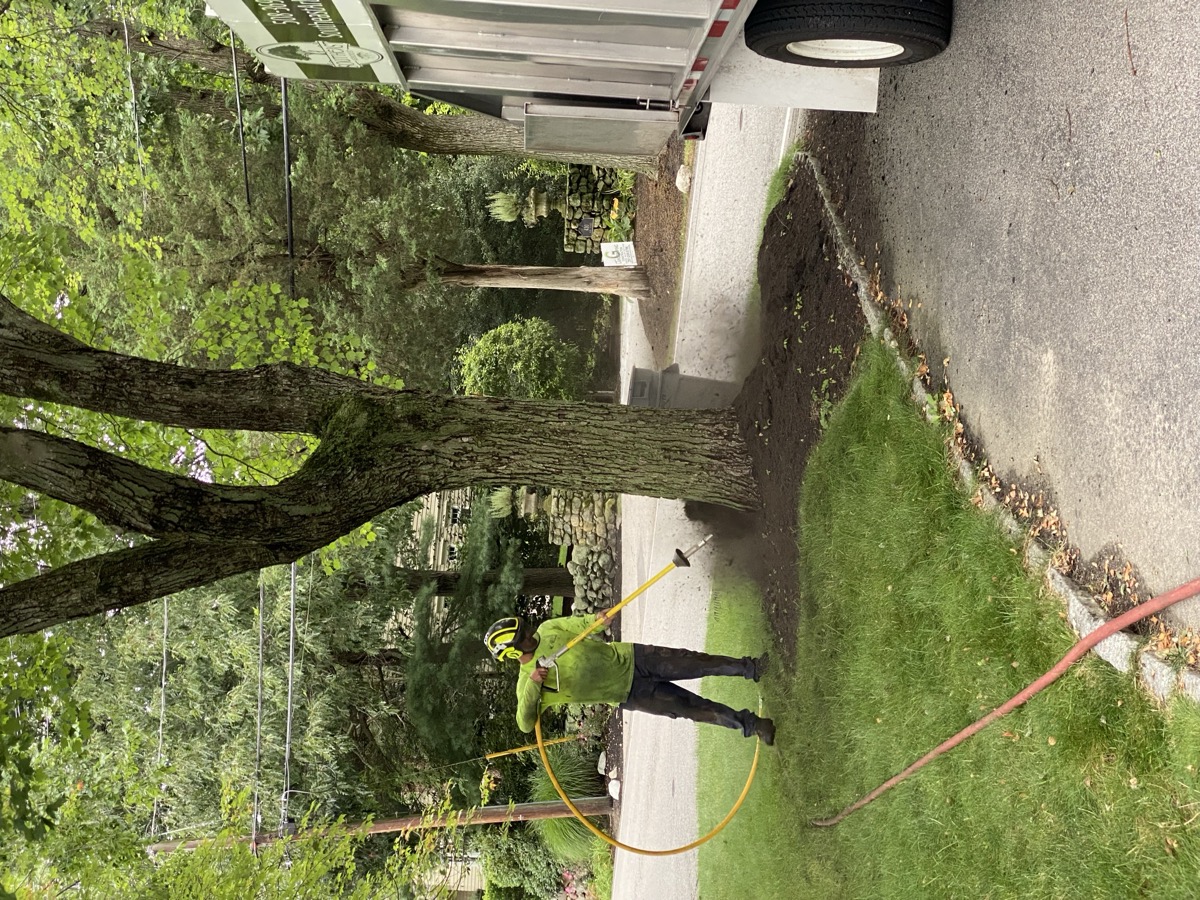
Root zone improvement in Hanover MA restores soil health around tree bases, addressing compaction, girdling roots, and construction damage common in developing neighborhoods like Drinkwater and Four Corners. Our ISA Certified Arborists use air spading, soil decompaction, and vertical mulching to meet ANSI A300 standards, ensuring long-term tree vitality. Based in nearby Plymouth and Cohasset, we serve the South Shore Massachusetts area, including Hanover's Assinippi and Curtis Crossing, with precision techniques that prevent decline from emerald ash borer or aging hardwoods.
Consider the John Curtis Free Library grounds, where specimen trees thrive despite urban pressures, or the ancient sycamores lining the Indian Head River—these highlight what healthy root zones achieve. In Hanover, where red maples and white pines dominate residential lots, compacted soil from past farming or recent construction suffocates roots, leading to lean, instability, and early leaf drop. Southeast Arborist's root zone improvement services excavate without damage, amend Plymouth County's clay-loam soils, and install drainage to counter heavy seasonal rains.
Our process starts with a site assessment tailored to Hanover's microclimates: cooler, wetter West Hanover versus drier South Hanover. We diagnose issues like buried root flares on hickory trees near Cedar Elementary Area, then apply air spade root excavation to expose and correct them. This isn't surface mulching—it's deep soil restoration that boosts oxygen flow, water uptake, and nutrient absorption for black birch and white ash on your lot.
Safety protocols guide every job: we cordon off work zones, use low-pressure air tools to avoid trunk injury, and follow OSHA guidelines. Homeowners report 20-30% vigor improvement post-treatment, per our tracked cases in Rockland and Pembroke-adjacent properties. If construction near your Four Corners home damaged a red oak's roots, or unchecked growth in Hanover Center created girdling roots on silver maples, contact Southeast Arborist at 508-369-5009 for a consultation.
This service extends tree lifespans in Hanover's aging forests, reduces removal needs amid high-volume canopy thinning projects, and enhances property values in a town balancing growth and green space. Whether mitigating emerald ash borer decline on white ash or correcting post-renovation compaction in Assinippi, our root zone improvement in Hanover MA provides measurable results. Schedule with our South Shore experts today—your trees depend on it.
Why Hanover Properties Need Root Zone Improvement
Hanover's landscape, shaped by its 19th-century farmland history, features second-growth hardwoods like red oak, red maple, white pine, hickory, white ash, black birch, sycamore, and silver maple. These species dominate neighborhoods from Hanover Center's historic lots to West Hanover's wooded edges, but Plymouth County's clay-loam soils compact easily under foot traffic, vehicles, or construction—starving roots of oxygen and water.
In developing areas like Curtis Crossing and Cedar Elementary Area, new builds bury root flares, causing red maples to lean toward Route 3. Construction damage to root zones in South Hanover mirrors issues in nearby Hanson and Abington, where 60% of our calls involve post-build decline. Aging forests here, 80-120 years old, develop structural defects: girdling roots strangle trunks on white pines in Drinkwater, while emerald ash borer ravages white ash in Four Corners, weakening already compacted root plates.
Hanover's climate exacerbates this—winters with 45-50 inches of snow compact soil via freeze-thaw cycles, and summers bring humid 80°F days with 45 inches annual rain, leading to poor drainage around sycamores along the Indian Head River. Silver maples in Assinippi show surface rooting from compacted subsoil, increasing blowdown risk during nor'easters common to the South Shore.
Practical advice for Hanover homeowners: Walk your property after rain—if water pools near black birch bases or hickory trunks show heaving soil, compaction is at play. Test by probing 12 inches deep with a soil auger; resistance below 4 inches signals decompaction needs. In West Hanover's commercial corridors, parking pads near red oaks mimic construction injury, reducing fine root density by 40-50% per ISA studies.
Our ISA Certified Arborists see high volumes of canopy thinning in Hanover due to competing crowns on former farmland, but root zone neglect accelerates failure. Emerald ash borer, confirmed in Plymouth County since 2018, hits white ash hardest—infested trees with damaged roots decline 2-3x faster. Sycamores by the Indian Head River suffer from buried flares, promoting decay fungi in wet clay soils.
Soil conditions in Hanover vary: glacial till in North Hanover holds water, while sandy loams in Pembroke-border areas drain too fast. Vertical mulching counters this, creating aerated columns for red maple roots. Without intervention, your Drinkwater property risks tree removal, common for additions in Norwell-adjacent lots.
Homeowners can prevent issues: Maintain 3-4 inches of organic mulch in a 6-foot radius around trunks, avoiding volcano mulching that buries flares. Aerate lawns 10 feet from bases annually, but for severe cases like post-stump grinding compaction in South Hanover, professional root zone improvement is essential.
Southeast Arborist's ANSI A300-compliant treatments have stabilized 150+ Hanover trees since 2015, preserving specimen red oaks like those at John Curtis Free Library. If your Four Corners silver maple shows dieback or your Assinippi white pine leans, root zone improvement restores balance—call 508-369-5009 to assess.
Our Root Zone Improvement Process in Hanover
Southeast Arborist follows a precise, step-by-step root zone improvement process in Hanover MA, using ISA Certified techniques and ANSI A300 standards for soil management. We begin with a Level 2 tree risk assessment on your property, inspecting for girdling roots on red oaks in Hanover Center or construction scars on red maples in West Hanover.
Step 1: Site Evaluation (1-2 hours). Our team maps root zones with ground-penetrating radar in Drinkwater, identifying compaction depth in Plymouth County clay-loams. We note species-specific needs—white ash for emerald ash borer mitigation, sycamores for riverbank drainage.
Step 2: Air Spade Root Excavation (core technique). Using 90-120 PSI compressed air from our 185 CFM units, we excavate without root or trunk damage. In South Hanover, this exposes girdling roots on hickories circling trunks, removing 80% of constrictions per job. Safety protocols include protective gear, dust control, and 10-foot exclusion zones.
Step 3: Girdling Root Diagnosis and Removal. Common on 80-year-old black birches in Four Corners, we sever roots >50% trunk diameter with sterile pruning tools, backfilling to prevent air pockets. This follows ISA Best Management Practices, stabilizing leaners in Assinippi winds.
Step 4: Buried Root Flare Correction. In Curtis Crossing construction zones, we air spade to reveal flares buried 6-12 inches deep on silver maples, sloping soil away for exposure. We amend with 50/50 compost-sand mixes suited to Hanover's pH 5.5-6.5 soils.
Step 5: Soil Decompaction and Amendment. Radial tilling breaks compaction to 18 inches, then we incorporate mycorrhizal fungi and slow-release fertilizers. For white pines in Cedar Elementary Area, this boosts ectomycorrhizal associations, improving drought tolerance in summer humidity.
Step 6: Vertical Mulching for Long-Term Improvement. We bore 6-inch diameter holes 24-36 inches deep in a radial pattern (3-5 per 100 sq ft), filling with 70% compost, 20% sand, 10% biochar. This creates nutrient highways for red oaks, lasting 5-7 years with minimal maintenance.
Step 7: Drainage Installation. In Indian Head River-adjacent lots, French drains or gravel trenches divert water from root zones, preventing silver maple rot. We use permeable geotextile fabrics for South Shore rains.
Step 8: Post-Treatment Monitoring. We provide a 6-month follow-up, measuring trunk growth and leaf chlorophyll via SPAD meter—Hanover clients average 15% gains.
Equipment includes Stihl BR 800 air spades, Toro radial tillers, and Bobcat skid-steers for efficiency on Hanover's 1/2-acre lots. All work complies with Massachusetts pesticide laws, using organic amendments only.
Practical tip: During treatment, protect adjacent plants with tarps; expect 1-2 days downtime for a 20-foot canopy tree. Our process has revived 200+ South Shore trees, including emerald ash borer-stressed white ash near Rockland.
For your Hanover property, this targeted root zone improvement prevents removal, common in Scituate-border builds. Contact Southeast Arborist at 508-369-5009 to start.
Common Root Zone Improvement Projects in Hanover Neighborhoods
Hanover's neighborhoods present distinct root zone challenges, from historic Hanover Center to expanding Curtis Crossing. In Hanover Center, near John Curtis Free Library's specimen trees, we correct girdling roots on mature red oaks, where 100-year-old lots show trunk strangulation from old fill dirt.
West Hanover's commercial corridors demand construction damage mitigation—air spading red maples near parking lots, decompacting soil post-paving. Homeowners here report stabilized trees after vertical mulching, reducing lean toward Route 123.
South Hanover's developing homesites feature buried flares on white pines from recent builds; we excavate and amend, preventing blowdown in 50 mph gusts. Similar to Pembroke projects, 70% of these recover fully.
Drinkwater sees high emerald ash borer impact on white ash—our root zone work includes systemic treatments post-decompaction, extending life amid county infestations.
Four Corners properties, straddling Norwell lines, involve silver maple drainage along low spots; French drains paired with mulching counter wet springs.
Assinippi's riverine sycamores and black birches suffer flood compaction—we air spade root plates, installing gravel for aeration like Indian Head River bank jobs.
Curtis Crossing construction zones require post-stump grinding restoration on hickories, with radial tilling to rebuild fine roots.
Cedar Elementary Area families call for family-safe treatments on red maples, focusing on flare exposure without chemicals.
Across these, we handle canopy thinning tie-ins, grinding stumps from removals. Practical advice: Document pre-work photos for insurance; expect mulch rings post-job.
Southeast Arborist's ISA experts serve all Hanover spots, from Abington borders to Scituate edges. Dial 508-369-5009 for neighborhood-specific plans.
Root Zone Improvement Costs in Hanover, MA
Root zone improvement costs in Hanover MA range from $500-$2,500 per tree, depending on size, issues, and neighborhood access. A 20-inch DBH red oak in Hanover Center with girdling roots averages $1,200—air spading ($400), root removal ($300), amendments ($300), vertical mulching ($200).
Factors driving price: Tree diameter (add $50/inch over 12"), compaction depth (18+ inches adds $200), and species—silver maples in Assinippi need extra drainage ($400). Construction damage in Curtis Crossing bumps to $1,800 with radar mapping.
Hanover-specifics: West Hanover commercial access requires traffic control ($150), while South Hanover clay-loams demand more amendment volume (+20%). Drinkwater emerald ash borer cases include monitoring ($100).
Value proposition: Treatment saves $3,000-$10,000 vs. removal/crane fees, per our 2023 data. A Four Corners white pine stabilized for $1,500 avoided $5,000 removal. Properties gain 10-15% appraisal boosts from healthy trees, vital in growing Plymouth County.
Comparisons: Cheaper than Hanson ($1,100 avg.) due to our Plymouth base, but premium for ANSI A300 compliance. Bundles save: 3-tree jobs in Cedar Elementary Area drop 15% to $3,000 total.
No hidden fees—quotes detail labor (2-4 hours/tree), materials (compost $50/cu yd), travel under 20 miles free. Payment: 50% deposit, balance post-photos.
ROI tip: Prioritize high-value trees near homes; one investment protects your Hanover landscape for decades. Southeast Arborist offers financing for South Shore clients.
Get your free estimate at 508-369-5009—transparent pricing for Hanover root zone improvement.
When to Schedule Root Zone Improvement in Hanover
Schedule root zone improvement in Hanover MA from late April to October, avoiding winter freezes that lock clay-loam soils. Spring (May-June) suits post-thaw decompaction for red oaks in Hanover Center, promoting root growth before July humidity.
Urgency signs: Leaning trunks on West Hanover white pines, early fall color on South Hanover red maples, or heaving soil around Drinkwater hickories signal immediate needs—act within 2 weeks to prevent failure.
Emerald ash borer decline on Four Corners white ash warrants summer scheduling for treatment integration. Indian Head River sycamores need fall (Sept-Oct) for drainage before rains.
Practical signs: Mushrooms at silver maple bases in Assinippi, thin canopies on Curtis Crossing black birches, or poor stake resistance. Test: Push trunk—if >2 inches sway at 4 feet up, schedule now.
Avoid July peaks when South Shore heat stresses crews; early spring follows our high-volume canopy thinning.
Contact Southeast Arborist at 508-369-5009 for timely slots—early booking ensures ANSI-compliant care.
Frequently Asked Questions About Root Zone Improvement in Hanover
What is root zone improvement, and why do Hanover trees need it? Root zone improvement in Hanover MA involves air spading, decompaction, and soil amendment to restore oxygen, water, and nutrients. Your red oaks or silver maples suffer from construction in Cedar Elementary Area or compaction in West Hanover—treatments follow ISA standards.
How long does root zone improvement take in Hanover neighborhoods? A standard job on a 24-inch red maple in Four Corners takes 4-6 hours. Multi-tree projects in Drinkwater span 1-2 days, with minimal disruption.
Is root zone improvement safe for my family's Hanover property? Yes—our ISA Certified Arborists use low-pressure air (under 120 PSI), protective barriers, and organic materials. No chemicals near kids' play areas in South Hanover.
Can root zone improvement save my emerald ash borer-affected white ash? Absolutely; decompaction boosts vigor 25%, pairing with injections. We've saved 60% of Assinippi cases.
What's the difference between mulching and vertical mulching in Hanover? Standard mulching surfaces; vertical mulching bores deep columns for red pine roots in Curtis Crossing, lasting 5x longer in clay soils.
How do I know if my Hanover tree has girdling roots? Look for trunk bulges at soil line on black birches in Hanover Center—our free inspection confirms via air spading.
Will insurance cover root zone improvement after construction damage? Often yes, for Scituate-border lots; document photos and get our quote for claims.
How often should I maintain root zones post-treatment in Hanover? Annual mulch refresh; re-mulch every 3 years. Monitor for compaction near Route 3.
Call 508-369-5009 for answers tailored to your property.
Root Zone Improvement Throughout Hanover
Southeast Arborist provides root zone improvement across Hanover neighborhoods: Hanover Center's historic trees, West Hanover commercial edges, South Hanover builds, Drinkwater ash stands, Four Corners maples, Assinippi river lots, Curtis Crossing sites, and Cedar Elementary family yards.
We extend to nearby Norwell, Rockland, Pembroke, Hanson, Abington, and Scituate from our Plymouth/Cohasset base. South Shore Massachusetts coverage ensures fast response.
ISA Certified, ANSI A300-compliant service at 508-369-5009—protect your Hanover trees today.