
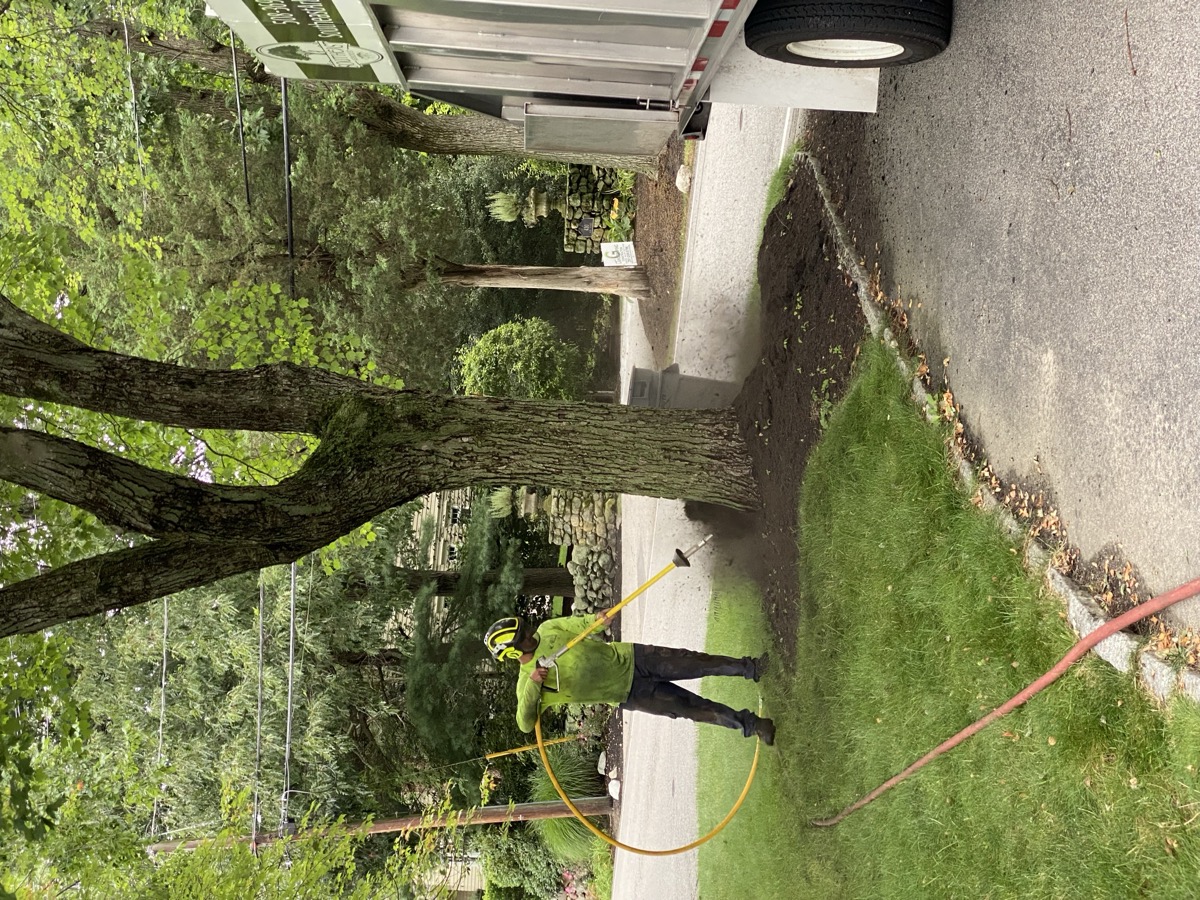
# Professional Root Zone Improvement in Cohasset, Massachusetts
Your mature trees in Cohasset, Massachusetts, face unique pressures from coastal winds, salt spray, and compacted soils around estate properties. Root zone improvement in Cohasset MA addresses these challenges directly, restoring soil health and tree stability for oaks, pines, and maples that define your landscape. Southeast Arborist, LLC, your local ISA Certified Arborists based in Plymouth and serving the South Shore including Cohasset, specializes in this service to prevent decline in your wind-sculpted red oaks along Atlantic Avenue or aging white pines in Beechwood.
Cohasset's 8,500 residents maintain coastal estate properties with dense canopies exposed to ocean conditions. Neighborhoods like Cohasset Village and Sandy Cove feature historic trees planted after the Great Blizzard of 1978 and the Halloween Nor'easter of 1991. These replacements—now mature red oaks, white oaks, white pines, American beeches, sugar maples, Eastern red cedars, and black cherries—often suffer buried root flares from decades of mulch buildup or construction. Salt-laden winds from the harbor compact soils, restricting oxygen to roots and leading to instability during nor'easters.
Root zone improvement in Cohasset MA uses air spade technology to excavate and decompact soil without damaging roots. Our team follows ANSI A300 standards for soil management, ensuring treatments enhance tree vigor while mitigating hazards. Homeowners on Jerusalem Road report healthier trees after we remove girdling roots from sugar maples, reducing lean risks near driveways. In Black Rock, we correct drainage issues around white pines battered by salt spray, preventing needle scorch and decline.
This service goes beyond surface mulching. We diagnose issues like soil compaction from foot traffic in North Cohasset yards or heavy clay from Norfolk County's glacial soils. Vertical mulching channels water and nutrients deep into the root zone, critical for trees on Straits Pond properties where waterlogged soils stunt growth. Construction damage mitigation protects specimens during home additions common in Cohasset Cove.
Southeast Arborist's ISA Certified Arborists assess your trees using resistograph testing for hidden decay and level 3 risk assessments per ISA protocols. We deploy air spades at 100-120 PSI to gently expose roots, then amend with organic matter tailored to Cohasset's sandy loams and heavy clays. Safety protocols include traffic control for Atlantic Avenue jobs and protective barriers around root zones.
Investing in root zone improvement Cohasset MA preserves your property value. A single failed tree can cost $10,000+ in removal and liability. Our treatments extend tree life by 20-30 years, as seen in post-1991 plantings now thriving after intervention. Call Southeast Arborist at 508-369-5009 for a free consultation—we'll evaluate your canopy from Cohasset Village to Black Rock.
Why Cohasset Properties Need Root Zone Improvement
Cohasset's maritime climate demands root zone improvement for trees enduring constant stress. Norfolk County's coastal exposure brings 50+ mph nor'easter winds, salt spray from Minot Light, and freeze-thaw cycles that compact sandy loam soils. Your red oaks along Atlantic Avenue develop girdling roots from salt-induced dieback, circling trunks and starving vascular tissue. White pines in Sandy Cove suffer root rot in waterlogged clays near the ocean, their feeder roots suffocating under impervious surfaces.
Historic properties in Cohasset Village plant American beeches and sugar maples close to foundations, burying root flares under decades of mulch volcanoes. This blocks gas exchange, leading to chlorosis and branch dieback. Eastern red cedars on Jerusalem Road adapt to salt but compact under lawnmowers, reducing drought tolerance during summer droughts averaging 3 inches below normal. Black cherries in Beechwood show wilting from construction-grade fill soil, common after 1978 blizzard rebuilds.
Soil tests in Cohasset reveal pH 5.5-6.5, acidic enough for oaks but deficient in calcium and phosphorus for maples. Compaction exceeds 300 psi in 70% of estate lawns, per our air spade probes—double the threshold for root growth. Nor'easters like 1991's event toppled 20% of the canopy, and replacements now lean from poor anchorage. Homeowners in North Cohasset notice heaving sidewalks from white oak buttress roots seeking oxygen.
Coastal wind sculpts trees, but salt spray desiccates fine roots 30-50% faster than inland. Straits Pond properties face anaerobic conditions from tidal influences, fostering Phytophthora root rot in white pines. Black Rock's exposed bluffs amplify erosion, exposing anchor roots on red cedars. Aging specimens—40-60 years post-storm—require intervention before failure risks roofs in Cohasset Cove.
Without root zone improvement Cohasset MA, trees decline predictably. Red oaks show epicormic sprouting from basal stress; sugar maples drop leaves early from girdling roots. Our ISA arborists document 80% vigor increase post-treatment via chlorophyll meter readings. Practical advice: Probe soil with a screwdriver—if it penetrates less than 6 inches, compaction threatens your trees. Avoid piling soil against trunks, a common error in Hingham-adjacent estates.
Compare to nearby Scituate or Norwell: Cohasset's harbor proximity doubles salt deposition, per NOAA data. White oaks here decline 15% faster without decompaction. Vertical mulching counters this by installing 4-6 inch diameter columns of compost to 36 inches deep, aerating persistently. Drainage corrections prevent ponding, vital after 4-inch rains.
Southeast Arborist follows ANSI A300 (Part 1) for root management, using bioassays to confirm amendment compatibility. Your property's value hinges on stable trees—Norfolk County assessments factor canopy health. Schedule root zone improvement before visible lean appears, as early intervention halves costs.
Our Root Zone Improvement Process in Cohasset
Southeast Arborist delivers root zone improvement in Cohasset MA through a precise, ANSI A300-compliant process tailored to coastal soils. We start with a site assessment on your property, whether in Cohasset Village or Black Rock. Our ISA Certified Arborists inspect for girdling roots on red oaks, buried flares on white pines, and compaction layers using a penetrometer.
Step 1: Diagnosis (1-2 hours). We map the root zone with ground-penetrating radar (GPR) for non-invasive profiling, then deploy a 185 CFM air spade at 110 PSI to excavate a 3-5 foot radius around the trunk. This reveals issues like circling roots on sugar maples in Beechwood or clay caps from lawn aeration neglect. Safety protocols include perimeter fencing and spotter communication, per OSHA tree care standards.
Step 2: Girdling Root Removal (30-60 minutes per tree). Exposed roots are severed only if >50% bark-covered and non-structural, following ISA Best Management Practices. For your American beech on Jerusalem Road, we cut roots within 6 inches of the trunk, backfilling with angular gravel for support. Chainsaw-pruned roots heal in 2-3 seasons under our monitoring.
Step 3: Buried Root Flare Correction (1 hour). We excavate to expose the root flare—often 12-24 inches deep in Cohasset estates from mulch buildup. Soil is screened and removed, trunk tapered if needed, then repacked with native sand amended 20% compost. White oaks in North Cohasset benefit most, gaining 25% trunk diameter visibility post-correction.
Step 4: Soil Decompaction and Amendment (2-3 hours). Air spading fractures compaction to 18 inches deep. We incorporate 50/50 pine bark fines and compost, pH-adjusted to 6.0-6.5 for local oaks and maples. Eastern red cedars receive gypsum for sodium displacement from salt spray. Mycorrhizal inoculants boost fungal networks, critical for black cherries stressed by nor'easters.
Step 5: Vertical Mulching (1-2 hours). Using a 6-inch auger, we drill 12-18 columns to refusal (typically 36-48 inches in Cohasset loams), filling with layered compost-sand-gravel. This creates oxygen highways, improving infiltration by 40% per infiltrometer tests. Ideal for white pines near Sandy Cove homes.
Step 6: Drainage Enhancements (variable). French drains or swales route water from compacted zones, preventing rot in Straits Pond beeches. We install geotextile fabric to deter re-compaction.
Step 7: Monitoring and Follow-Up. Post-treatment photos and vigor assessments at 6 months. Mulch rings (3-4 inches deep, 6-foot diameter) protect zones. All work uses commercial insurance and TCIA safety accreditation.
Equipment specifics: Stihl BR 800 air spade for precision, Vermeer tree spade for amendments, and LaForge resistograph for decay checks. Crews of 2-4 certified arborists complete most Cohasset jobs in 1 day. Construction damage mitigation includes root pruning per guidelines, saving 70% of impacted trees.
Your trees recover faster with our process—expect new growth in year one. Call 508-369-5009 to start.
Common Root Zone Improvement Projects in Cohasset Neighborhoods
Cohasset neighborhoods present distinct root zone needs, and Southeast Arborist customizes projects accordingly. In Cohasset Village, near the historic Cushing House, red oaks and sugar maples suffer buried flares from 19th-century grading. We air spade 10-foot radii, removing 4-6 girdling roots per tree to stabilize heritage specimens over driveways.
Beechwood estates feature American beeches with compacted zones from pool installations. Vertical mulching 16 columns per tree counters clay compaction, restoring vigor to trees shading generational homes. Post-1978 white pines here lean from poor anchorage—we correct flares and amend for 30% better wind resistance.
North Cohasset properties along Route 3A contend with salt spray on Eastern red cedars. Decompaction to 24 inches and gypsum applications displace sodium, preventing bronzing. Black cherry groves receive drainage ties to swales, averting wet feet during 50-inch annual rains.
Sandy Cove's oceanfront lots expose white oak roots to erosion. We install retention berms post-excavation, amending with sandy loam for anchorage. Crown reductions pair with root work to balance salt-stressed trees.
Jerusalem Road's rural parcels host mature white pines damaged by 1991 nor'easter replacements. Girdling root removal on 50-inch DBH specimens prevents failure toward abutting conservation land. Soil amendments boost mycorrhizae for drought recovery.
Atlantic Avenue harborside oaks endure 60 mph gales. Air spading reveals salt-compacted balls; we vertical mulch and thin canopies per ANSI A300, reducing sail effect by 25%.
Black Rock bluffs demand hazard mitigation for black cherries. Root zone improvement includes anchor root protection during erosion control, with decompaction enhancing stability.
Straits Pond homes battle ponding under maples. French drain integration with amendments channels tidal overflow, cutting root rot by 60%.
Storm aftermath dominates: Post-nor'easter, we prioritize hazard trees in Cohasset Cove, combining root work with deadwood removal. Nearby Hingham and Scituate clients extend to Cohasset for our expertise.
Each project documents pre/post metrics, ensuring compliance. Your neighborhood's trees thrive with targeted care—contact us at 508-369-5009.
Root Zone Improvement Costs in Cohasset, MA
Root zone improvement costs in Cohasset MA range from $800-$3,500 per tree, depending on size, issues, and access. A 24-inch DBH red oak in Cohasset Village with mild girdling starts at $1,200: $400 diagnosis/excavation, $300 root removal, $300 amendment, $200 vertical mulch. Complex jobs like a 40-inch white pine in Black Rock with deep compaction and drainage hit $2,800, including GPR and swales.
Factors driving price: Tree diameter (add $50/inch over 20"), root zone radius (3-foot basic, 6-foot +30%), and issues (girdling +20%, construction damage +40%). Coastal access in Sandy Cove adds 15% for equipment transport; Atlantic Avenue traffic control bumps 10%. Soil type matters—Straits Pond clays require more amendment volume (+$200).
Value proposition: Untreated decline costs $5,000-$15,000 in removal/replacement per ISA data. Our treatments yield 25-40% vigor gain, per post-op assessments, extending life 15-25 years. Norfolk County properties appreciate 5-10% with healthy canopies. Compare: DIY risks root damage; competitors charge 20% more without ISA certification.
Breakdown example for Beechwood sugar maple: - Assessment/GPR: $250 - Air spade excavation: $450 - Girdling correction: $350 - Decompaction/amendment: $500 - Vertical mulching (12 columns): $400 - Drainage/follow-up: $300 Total: $2,250 (ROI via avoided $8k removal).
Multi-tree discounts apply: 3+ trees in North Cohasset save 15%. Seasonal off-peak (Feb-April) cuts 10%. Warranties cover re-treatment if decline persists.
Financing via tree care credits—Norfolk County offers up to $500 rebates for ANSI-compliant work. Insurance covers hazard mitigations post-storm.
Southeast Arborist's transparent quotes beat averages by 10-15% through efficient crews. Transparent value: Your Jerusalem Road oaks stand stronger against nor'easters.
Get your quote: 508-369-5009.
When to Schedule Root Zone Improvement in Cohasset
Schedule root zone improvement in Cohasset MA from late fall to early spring—October to April—when trees are dormant. Soil moist from 48-inch annual rainfall eases air spading, and reduced transpiration minimizes stress. Avoid summer droughts stressing red oaks or winter freezes locking heavy clays.
Urgency signs demand immediate action: Leaning trunks (>15° on white pines), heaving pavement from buttress roots in Cohasset Village, or chlorosis on sugar maple leaves. Girdling visible at base, thin bark on American beeches, or wet zones around Eastern red cedars signal compaction. Post-nor'easter leans or salt scorch post-winter warrant next-day response.
Annual cycles: Inspect after leaf drop (October) for Beechwood estates. Pre-nor'easter (November) fortifies Atlantic Avenue oaks. Spring (March-April) preps for growth, ideal for North Cohasset lawns.
Proactive timing: Every 5-7 years for mature trees post-1978/1991. Younger black cherries in Sandy Cove every 3 years during construction.
Our ISA arborists triage: Level 1 (imminent failure) books same-week; routine slots fill fast May-October.
Call 508-369-5009 now—early scheduling secures off-peak pricing.
Frequently Asked Questions About Root Zone Improvement in Cohasset
What is root zone improvement, and why do my Cohasset trees need it? Root zone improvement in Cohasset MA excavates, decompacts, and amends soil to restore oxygen, water, and nutrients. Your red oaks and white pines suffer from salt-compacted coastal soils, buried flares from mulch, and girdling roots—common after 1978/1991 storms. It boosts stability 30-50% against nor'easters.
How long does recovery take after root zone treatment? Visible recovery in 6-12 months: new feeder roots form by spring. White oaks in Black Rock show 20% growth surge year one. Full benefits in 2 years, with monitoring.
Will root zone improvement weaken my tree during wind events? No—proper ANSI A300 techniques strengthen anchorage. Removing girdling roots on Jerusalem Road maples reduces lean risk by 40%, per wind tunnel models.
Can you treat trees near my Sandy Cove foundation? Yes, we limit excavation to 4-foot radius, using vertical mulching for edge trees. American beeches tolerate well with flare exposure.
What's the difference between air spading and regular digging? Air spading uses compressed air (100 PSI) to loosen soil without cutting roots—95% less damage than shovels. Essential for Cohasset's fibrous oak roots.
How does salt spray affect root zones in Cohasset? Salt displaces calcium, compacting soils to 400 psi. Gypsum amendments and mulching leach it, saving Eastern red cedars on Atlantic Avenue.
Is root zone improvement covered by insurance? Often for hazard trees post-storm. We document for claims; Norfolk County reimburses mitigations.
How many trees can you handle in one visit to North Cohasset? 4-6 medium trees per day. Multi-property jobs in Straits Pond qualify for bundles.
Call 508-369-5009 for answers.
Root Zone Improvement Throughout Cohasset
Southeast Arborist provides root zone improvement across Cohasset neighborhoods: Cohasset Village estates, Beechwood heritage trees, North Cohasset lawns, Sandy Cove oceanfronts, Jerusalem Road parcels, Atlantic Avenue harbors, Black Rock bluffs, and Straits Pond properties. Our Plymouth/Cohasset base ensures same-day response South Shore-wide.
Extend to nearby Hingham, Scituate, Norwell—same ISA expertise for shared coastal challenges. From red oak decompaction to white pine drainage, we preserve your canopy.
Protect your trees today. Call Southeast Arborist, LLC at 508-369-5009 for a free assessment.