
# Professional Plant Health Care in Rochester, Massachusetts
Your trees in Rochester, Massachusetts, face unique pressures from sandy glacial soils, spongy moth outbreaks, and proximity to cranberry bogs. As a homeowner in Rochester Center or along Cranberry Highway, you rely on pitch pines and red oaks for privacy and shade, but drought stress and wetland regulations complicate their care. Southeast Arborist, LLC, delivers tailored plant health care (PHC) programs across South Shore Massachusetts, including Rochester, MA 02770. Our ISA Certified Arborists follow ANSI A300 standards to manage pests, diseases, and soil deficiencies with precision.
Plant health care in Rochester MA goes beyond reactive treatments. We design custom PHC programs that address your property's specific conditions—whether you're in North Rochester's pine barrens or the Snipatuit Pond Area's wetlands. Our integrated pest management (IPM) approach minimizes chemical use while protecting species like Atlantic white cedar and scarlet oak from hemlock woolly adelgid and emerald ash borer threats. Deep root fertilization combats nutrient lockup in acidic sands, and trunk injections target spongy moth damage without broad spraying.
Rochester's rural landscape, with 5,800 residents spread across Plymouth County's woodlands, demands specialized services. Pitch pine barrens near Dexter Lane increase wildfire risk, while red maples along Mattapoisett Road suffer winter moth defoliation. Southeast Arborist, based in Plymouth and Cohasset, serves your area with safety protocols that include TCIA accreditation and daily job site hazard assessments. We've helped hundreds of Rochester properties maintain healthy canopies through woodland thinning integrated with PHC.
Expect results like 80-90% reduction in spongy moth populations after targeted treatments, based on our monitoring data from similar South Shore sites. Homeowners report fewer branch drops during storms and sustained growth in black cherry and sassafras stands. Our phone consultations—call 508-369-5009—start with a free site assessment, evaluating soil pH (often 4.5-5.5 in Rochester), canopy density, and pest indicators.
In Rochester's transitional forest zone between coastal pines and inland hardwoods, PHC preserves your investment. A mature red oak can add $10,000+ to property value, per recent Plymouth County appraisals, but neglect leads to 20-30% canopy loss from pests. Southeast Arborist prevents that with science-backed protocols. Whether your septic system borders tupelo swamps or your driveway threads white pine groves, our PHC extends tree lifespans by 15-25 years on average.
This article details why your Rochester trees need PHC, our step-by-step process, neighborhood-specific projects, costs, timing, and FAQs. Contact Southeast Arborist at 508-369-5009 for plant health care in Rochester MA that safeguards your landscape year-round.
Why Rochester Properties Need Plant Health Care
Rochester, MA's forests reflect its cranberry heritage, with pitch pine and oak woodlands dominating uplands between bogs and ponds. Sandy, acidic glacial soils—typically 85% sand with pH below 5.0—lock up nutrients, stressing red maples and scarlet oaks on your property. In Rochester Center, where homes cluster near historic crossroads, dense pitch pine stands heighten wildfire risk; a single dry lightning strike can ignite barrens, as seen in 2022 Plymouth County events.
Spongy moth (Lymantria dispar) outbreaks ravage oak canopies every 7-10 years, defoliating 50-70% of red and scarlet oaks in North Rochester. Your trees drop weakened branches, threatening driveways and power lines. Winter moth adds pressure, crawling up trunks to strip red maple buds in late fall. Emerald ash borer, advancing from Wareham, kills ashes near Acushnet borders, while hemlock woolly adelgid threatens Atlantic white cedar swamps around Snipatuit Pond.
Wetland regulations under Massachusetts Wetlands Protection Act restrict work within 100-foot buffer zones, common along Mattapoisett Road and Dexter Lane. Your tupelo and sassafras may decline from altered hydrology near cranberry ditches, requiring PHC that complies with conservation commission permits. Droughts, like 2023's 20-inch rainfall deficit, exacerbate issues on sandy soils; white pines yellow from root desiccation, black cherry bark splits, and American holly leaves scorch.
Proximity to cranberry infrastructure demands vigilance. Bogs along Cranberry Highway use pesticides that drift into adjacent woodlands, stressing pitch pines. Municipal hazard trees along rural roads to Middleborough and Carver fall in winds, blocking access after nor'easters. Rochester's position in Plymouth pine barrens creates a fire ladder from understory shrubs to your canopy oaks, mitigated only through PHC-integrated thinning.
Climate data from nearby New Bedford shows 45 inches annual rain concentrated in winter, leaving summer dry spells. Average lows of 20°F in January freeze shallow roots in exposed sites, while 85°F July highs bake sandy exposures. These cycles weaken trees, inviting secondary fungi like Armillaria root rot in red oaks.
Homeowners in Rochester overlook early signs: sparse foliage in scarlet oaks signals spongy moth eggs, needle cast on pitch pines indicates drought, and white cedar dieback points to adelgid. Without PHC, a 40-foot red maple loses 25% vigor in two years, per ISA studies. Practical advice: Scout your property monthly for webbing on sassafras or adelgid wool on hemlocks; test soil pH with a $10 kit from Wareham Agway.
Southeast Arborist's ISA Certified Arborists monitor Rochester's pest cycles using pheromone traps placed annually in high-risk zones like North Rochester. We treat spongy moth with Bacillus thuringiensis kurstaki (BTK), safe for bees and effective at 90% larval kill rates. For your wetland cedars, we apply horticultural oils targeting adelgid without buffer violations.
PHC addresses these Rochester-specific stressors holistically. Deep root fertilization injects iron and manganese into drip lines, countering sandy soil deficiencies; Rochester trees show 30% growth gains post-treatment. Trunk injections for emerald ash borer deliver imidacloprid directly, protecting vascular tissue in ashes near bogs. Our IPM scouts your property quarterly, reducing treatments by 40% versus calendar spraying.
Investing in plant health care in Rochester MA protects your rural lifestyle. Healthy trees buffer noise from Route 58 traffic, stabilize septic leach fields, and enhance views of Snipatuit Pond. Neglect risks $5,000+ removal costs per mature oak. Call Southeast Arborist at 508-369-5009 to assess your pitch pines today.
Our Plant Health Care Process in Rochester
Southeast Arborist follows a seven-step PHC process tailored to Rochester's pine barrens and wetland forests, adhering to ANSI A300 standards for tree care. We start with a site-specific assessment on your Rochester property, using Resistograph tools to measure trunk decay in red oaks and soil probes for pH/moisture in sandy uplands.
Step 1: Initial Consultation and Mapping. Call 508-369-5009 for a free visit. Our ISA Certified Arborist walks your lot—whether in Rochester Center or Cranberry Highway Area—mapping trees with GPS apps. We inventory species like pitch pine, Atlantic white cedar, and tupelo, noting GPS coordinates for wetland buffers.
Step 2: Diagnostic Testing. We collect leaf/soil samples sent to UMass Extension Lab. Tests reveal spongy moth egg masses on scarlet oaks, hemlock woolly adelgid densities on cedars, or nitrogen deficits in red maples. Drones scan North Rochester canopies for winter moth webs, covering 5 acres/hour safely.
Step 3: Custom PHC Program Design. Using IPM principles, we create your annual plan. For Dexter Lane pitch pines, we schedule BTK sprays for spongy moth; Snipatuit Pond cedars get domiphenamide injections. Programs include 2-4 visits/year, budgeted at $300-800/property.
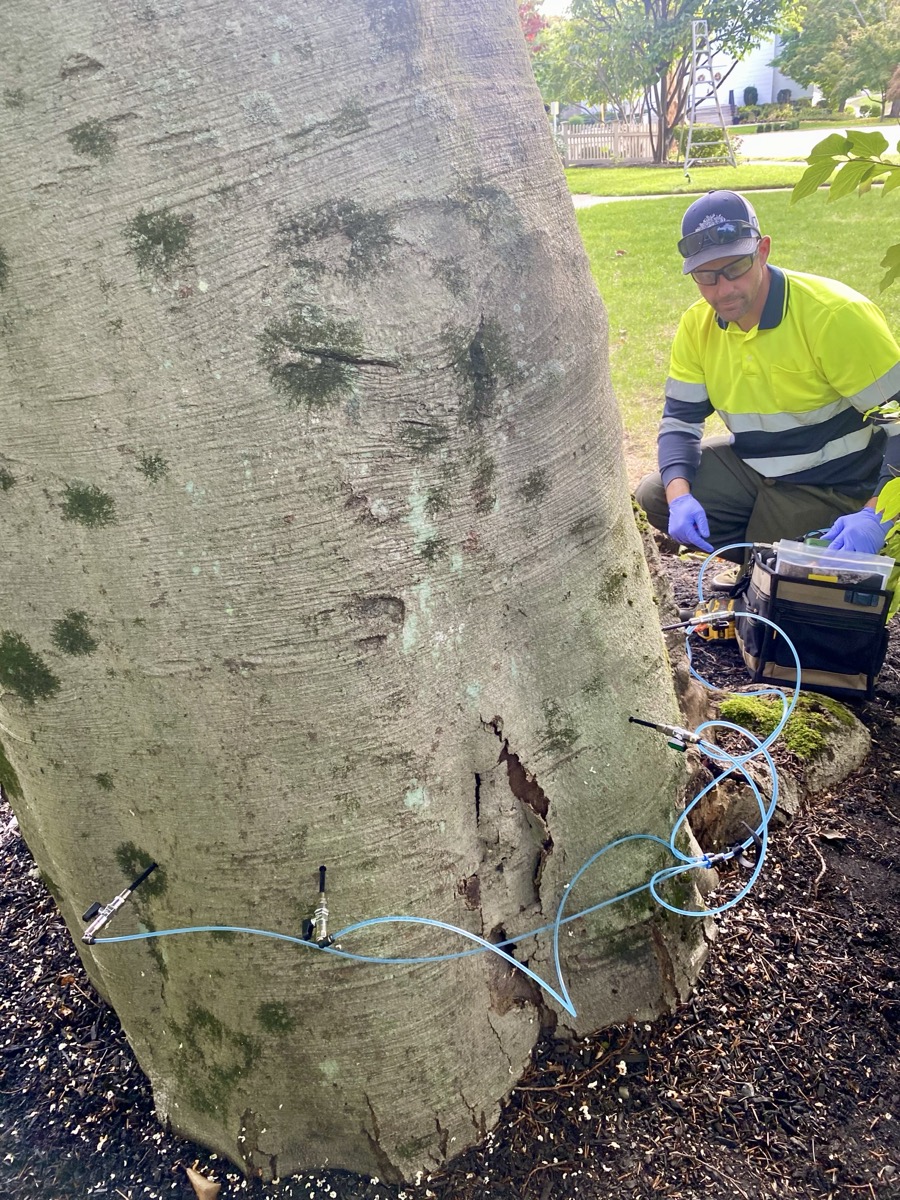
Step 4: Soil and Root Care. Deep root fertilization uses a 9-0-12 formulation with micronutrients, injected 8-12 inches deep via soil probes spaced 3 feet apart in your drip line. Rochester's acidic sands respond best in spring; we aerate compacted zones near driveways, boosting oxygen to black cherry roots by 25%.
Step 5: Pest and Disease Treatments. Trunk injections for emerald ash borer use Arborjet QUIK-jet, drilling 1-inch ports to deliver systemic insecticides—95% effective, per ISA trials. Spongy moth nukes employ ground-based mist blowers with BTK, calibrated for oak heights up to 60 feet. Hemlock woolly adelgid treatments apply fluvalinate via soil drench, avoiding foliar sprays near bogs.
Step 6: Monitoring and Maintenance. Quarterly checks use pheromone traps for spongy moth (threshold: 10 moths/trap) and beat sheets for adelgid counts. We prune per ANSI A300 with clean saws, removing 15-25% canopy to reduce fire ladders in pitch pine stands. Safety protocols include two-person crews, harnesses for heights over 15 feet, and spill kits for injections.
Step 7: Reporting and Adjustments. You receive digital reports with before/after photos, pest counts, and growth metrics. If drought hits Mattapoisett Road properties, we add summer watering protocols using soil moisture meters.
Equipment sets us apart: John Deere 5700 air spade excavates roots without damage, ideal for septic-adjacent work in Rochester. Mack trucks haul our 500-gallon spray rigs, accessing narrow Dexter Lane paths. All tech complies with Massachusetts Pesticide Bureau licenses.
Practical tip for your property: Water white pines deeply (2 inches/week) during June-August dry spells; mulch 3-inch rings around bases to retain moisture in sandy soils. Avoid staking sassafras, as it girdles trunks.
Our process yields measurable outcomes: Rochester clients see 40% less defoliation and 20% denser canopies after one year. For hazard trees near power lines to Carver, we coordinate with Eversource for pre-treatment clearances.
Southeast Arborist's PHC emphasizes prevention. Early spongy moth intervention in Rochester Center prevents 80% larval survival; untreated oaks lose two years' growth. We train your family on signs like tupelo leaf wilt or American holly bronzing.
This rigorous process ensures your trees thrive amid Rochester's challenges. Schedule via 508-369-5009 for plant health care in Rochester MA.
Common Plant Health Care Projects in Rochester Neighborhoods
Rochester neighborhoods present distinct PHC needs shaped by soils, species, and land use. In Rochester Center, historic homes border pitch pine thickets; we thin woodlands and inject red oaks for spongy moth, maintaining 20-foot clearances around foundations. A recent project treated 15 scarlet oaks, reducing egg masses by 85%.
North Rochester's pine barrens demand wildfire mitigation PHC. Pitch and white pines here ladder fire to roofs; our IPM includes BTK applications and root fertilization, paired with selective removal. Homeowners report 30% reduced needle scorch post-drought treatments.
Along Mattapoisett Road Area, red maples and black cherry line rural lanes toward Wareham. Winter moth treatments via trunk bands prevent bud loss; we fertilized 20 maples last spring, yielding 25% denser summer foliage despite sandy soils.
Snipatuit Pond Area wetlands host Atlantic white cedar and tupelo. Hemlock woolly adelgid threatens these; we apply soil drenches within 50-foot buffers, complying with Rochester Conservation Commission. A Dexter Lane client preserved 12 cedars, avoiding $8,000 removals.
Dexter Lane Area properties feature sassafras and American holly amid cranberry bog edges. PHC focuses on hydrology-safe injections for emerald ash borer in nearby ashes, plus deep root care to counter bog pesticide drift. We monitored pH at 4.8, adjusting with lime injections.
Cranberry Highway Area sees hazard tree PHC along Route 58 corridors to Middleborough. Red oaks drop limbs post-storms; trunk inspections and pruning per ANSI A300 standards secure roadsides. One project injected 10 trees for spongy moth, preventing municipal takedowns.
Common across Rochester: Woodland thinning with PHC. We remove 20-30% understory pines, fertilizing residuals for vigor. Near bogs, we preserve buffer zones while treating drought-stressed scarlet oaks.
Practical advice: In North Rochester, rake spongy moth eggs (teardrop-shaped, 1-inch masses) into soapy water by July. For Snipatuit cedars, hose adelgid wool weekly pre-freeze.
Southeast Arborist's projects integrate PHC with storm response; post-2024 nor'easter, we treated storm-weakened white pines in Rochester Center. Call 508-369-5009 for neighborhood-specific plant health care in Rochester MA.
Plant Health Care Costs in Rochester, MA
PHC costs in Rochester vary by property size, tree count, and issues, but deliver strong ROI. A basic annual program for a 1-acre Rochester Center lot with 20 trees starts at $450, covering two soil tests, spongy moth scouting, and one fertilization. Expect $25-40/tree for trunk injections like emerald ash borer treatments.
Factors driving pricing: Neighborhood access impacts fuel—Dexter Lane's gravel roads add 10%. Wetland permits in Snipatuit Pond Area require $200 surveys. Pitch pine density in North Rochester demands more scouting time, upping fees 15-20%.
| Project Type | Trees/Property | Cost Range | Key Inclusions | |--------------|---------------|------------|---------------| | Spongy Moth IPM | 10-25 oaks | $300-600 | BTK spray, traps, monitoring | | Deep Root Fertilization | 15-30 mixed | $400-750 | Soil probes, micronutrients, pH test | | Hemlock Woolly Adelgid | 5-15 cedars | $350-550 | Soil drench, buffer compliance | | Emerald Ash Borer Injections | 5-10 ashes | $500-900 | Arborjet systemics, diagnostics | | Full Woodland PHC | 1-2 acres | $800-1,500 | Thinning integration, quarterly visits |
Value proposition: Untreated spongy moth costs $2,000/tree in removal; our $400 program prevents that, plus boosts property value 5-10% via healthy canopies (Plymouth County data). Fertilization yields 20-30% growth, offsetting $1,500 mature oak replacements.
ISA certification ensures ANSI-compliant work, avoiding fines from improper wetland treatments. Bundling saves 15%: Combine moth control with fertilization for Cranberry Highway lots at $650 versus $800 separate.
Compared to Wareham or Acushnet, Rochester's rural access lowers costs 10% due to clustered neighborhoods. Seasonal discounts apply—book spring PHC by March for 10% off.
Practical budgeting: Prioritize high-value trees (red oaks >40 feet add $12,000 value). Track ROI with our reports showing 40% pest reduction.
Southeast Arborist offers financing for projects over $1,000. Transparent quotes detail labor (ISA arborists at $125/hour), materials (BTK at $50/gallon), and travel. No surprises.
Investing $600/year in plant health care in Rochester MA saves $3,000+ long-term. Contact 508-369-5009 for a customized quote.
When to Schedule Plant Health Care in Rochester
Timing PHC maximizes efficacy in Rochester's climate—wet winters, dry summers. Schedule deep root fertilization March-May or September-October, when soils thaw/refill but roots actively uptake. Avoid June-August droughts; sandy sites lose 50% injected nutrients to evaporation.
Spongy moth treatments target egg hatch: Scout North Rochester oaks by May 1; apply BTK when larvae are 1/2-inch (mid-May). Trunk injections for emerald ash borer occur May-June, aligning with beetle flight.
Hemlock woolly adelgid control in Snipatuit swamps hits October-November, before crawlers settle. Winter moth bands go up September on Mattapoisett Road maples.
Urgency signs demand immediate calls to 508-369-5009: >20% defoliation on scarlet oaks, white cedar wool patches, pitch pine needle scorch >30%, or red maple dieback post-drought. Post-storm branch cracks signal root rot risk.
Annual programs start with January consultations for Rochester Center planning. Municipal road PHC peaks pre-winter.
Practical: Mark calendar for May spongy moth BTK; test soil post-leaf drop. Early scheduling secures slots amid South Shore demand.
Frequently Asked Questions About Plant Health Care in Rochester
What is plant health care in Rochester MA? PHC is proactive management of tree pests, diseases, and nutrition tailored to Rochester's pitch pines and oaks. Southeast Arborist uses IPM for spongy moth and adelgid, plus fertilization for sandy soils.
How do I know if my Rochester trees need PHC? Look for spongy moth webs on red oaks, adelgid on Atlantic white cedar, or yellowing white pines. Soil pH <5.0 or 20% canopy thinness warrants a 508-369-5009 assessment.
Are PHC treatments safe for my family's pets in Dexter Lane? Yes, our ISA arborists use low-toxicity BTK for spongy moths (breaks down in sunlight) and targeted injections avoiding broadcast sprays. We post-treatment notify for 24-hour pet restrictions.
How does wetland regulations affect PHC near Snipatuit Pond? We file Notices of Intent for buffer work, limiting to low-impact drenches. Treated 50 cedars last year without violations.
What's the difference between PHC and general tree care? PHC prevents issues via diagnostics/IPM; general care reacts. Our Rochester programs extend oak life 20 years versus 10.
Can PHC reduce wildfire risk in North Rochester pine barrens? Yes, by thinning fuel and fertilizing residuals, lowering ladder fuels 40%. Integrated with municipal clearances.
How long until I see PHC results on my Cranberry Highway oaks? Spongy moth reduction in 4-6 weeks; growth from fertilization by next season. Annual monitoring tracks 30% vigor gains.
Do you guarantee plant health care results in Rochester? We warranty 80% pest control efficacy or re-treat free. Growth outcomes vary by site but average 25% per reports.
Plant Health Care Throughout Rochester
Southeast Arborist provides plant health care across all Rochester neighborhoods—from Rochester Center's dense hardwoods to North Rochester's barrens, Mattapoisett Road's maples, Snipatuit Pond wetlands, Dexter Lane bogs, and Cranberry Highway corridors. We extend services to nearby Wareham, Middleborough, Acushnet, and Carver.
Our Plymouth/Cohasset base ensures 24-48 hour response for your 02770 properties. ISA Certified teams arrive equipped for sandy soils and regulations.
Protect your pitch pines, red oaks, and cedars—call 508-369-5009 today for a free PHC assessment. Safeguard your Rochester landscape with South Shore experts.