
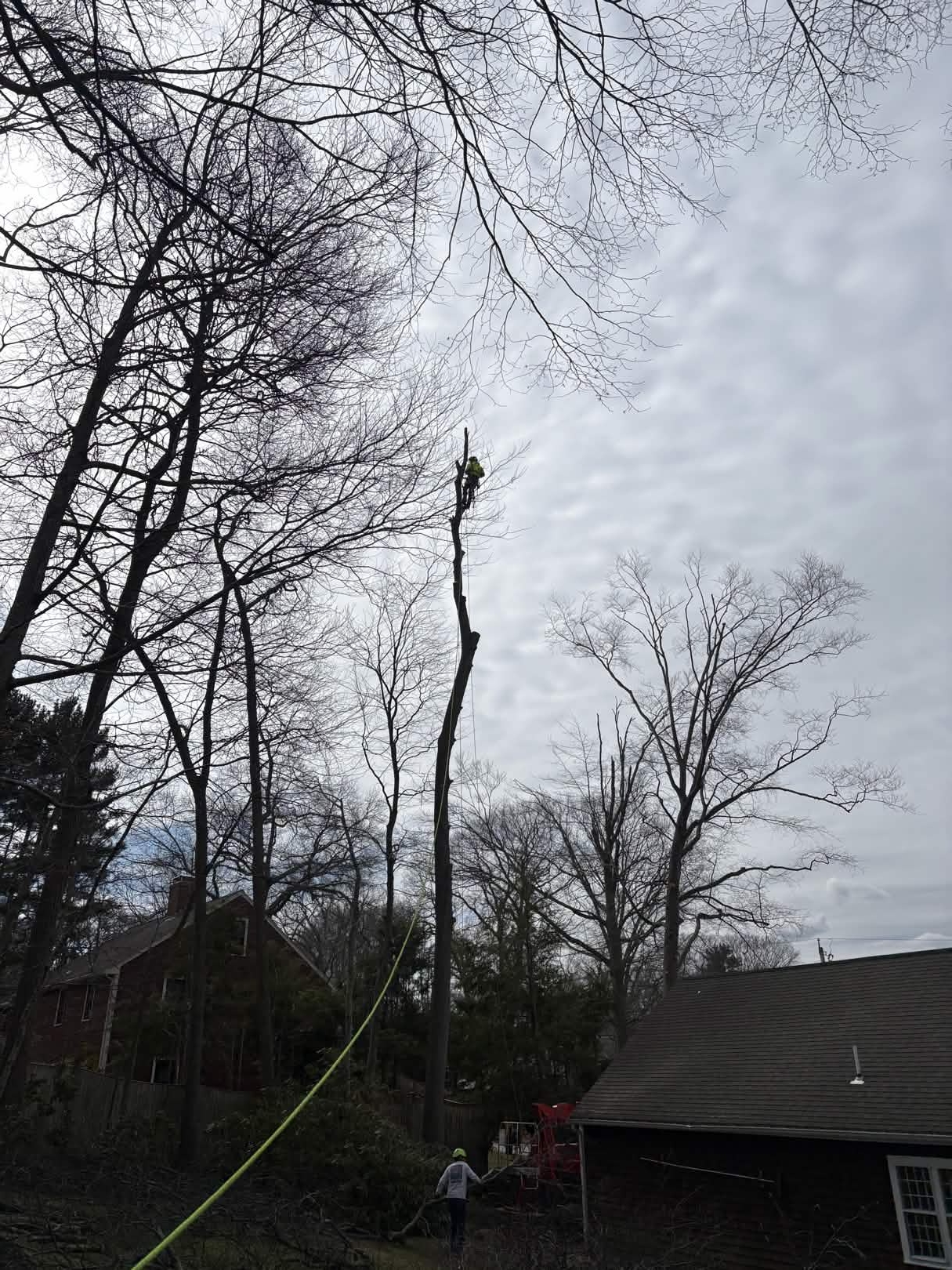
# Professional Tree Removal in Rochester, Massachusetts
When dense pitch pine stands encroach on your Rochester property or a leaning red oak threatens your septic system, professional tree removal becomes essential for safety and property maintenance. Southeast Arborist, LLC, delivers expert tree removal services in Rochester, MA, with ISA Certified Arborists who follow ANSI A300 standards for precise, safe work. Based in Plymouth and Cohasset, we serve the entire South Shore Massachusetts area, including Rochester's rural woodlands and cranberry bog edges.
Rochester's 5,800 residents manage properties amid extensive forests shaped by glacial sandy soils and the local cranberry industry. Pitch pine barrens dominate drier uplands, while Atlantic white cedar swamps thrive in wetlands around Snipatuit Pond. Homeowners in Rochester Center or along Cranberry Highway often face overgrown white pines blocking driveways or scarlet oaks damaged by spongy moths, requiring prompt tree removal Rochester MA services to prevent foundation cracks or roof impacts.
Our team handles everything from dead red maple takedowns near power lines to complex crane-assisted removals of hazard trees over bogs. Fully insured with advanced rigging, we ensure zero property damage—critical in Rochester's tight rural lots where septic fields and wells sit close to mature black cherry or sassafras groves. Spongy moth outbreaks have defoliated oak canopies across North Rochester in recent years, leaving weakened trees prone to storm snaps. Drought stress on sandy soils exacerbates pitch pine needle scorch, heightening wildfire risks in pine barrens transitional between coastal pines and inland hardwoods.
You benefit from our free estimates—call 508-369-5009 to assess your Rochester trees today. We prioritize wetland regulations, maintaining buffer zones during Atlantic white cedar removals near cranberry infrastructure. Whether a single tupelo leaning toward your Mattapoisett Road home or woodland thinning along Dexter Lane, our sectional dismantling prevents soil compaction on your sensitive glacial terrain.
Safety protocols include traffic control on rural roads like Route 58 and spotter coordination for crane lifts over ponds. Post-removal, stump grinding protects mower blades and prevents regrowth, with complete debris hauling leaving your property pristine. Rochester's winter storms demand rapid response; we've cleared downed American holly after nor'easters, restoring access without delays.
Choosing Southeast Arborist means partnering with locals who understand Rochester's forest dynamics—from pine management around bogs to hazard assessments for municipal corridors. Avoid DIY risks like chain saw kickback on unstable red oaks; our climb-and-cut experts use friction savers and lowering devices for controlled drops. Free consultations reveal hidden issues like root rot in tupelo from poor drainage, saving you costly repairs.
In Rochester's rural setting, tree removal Rochester MA isn't just service—it's preservation of your woodland heritage against pests, weather, and growth. We've served Plymouth County for years, earning trust through meticulous cleanup and compliance with town bylaws. Contact us at 508-369-5009 for tree removal that safeguards your home, enhances curb appeal, and complies with wetland protections.
Why Rochester Properties Need Tree Removal
Rochester's forests, covering much of its 34 square miles in Plymouth County, demand regular tree removal due to unique environmental pressures. Sandy, acidic glacial soils support pitch pine barrens on uplands between cranberry bogs, but these trees grow dense, crowding septic systems and driveways in neighborhoods like North Rochester. White pines, common along edges, shed needles that acidify soil further, stressing nearby red maples and causing drought dieback during summer dry spells.
Spongy moth (formerly gypsy moth) infestations peak every 7-10 years, stripping scarlet oak and red oak canopies in Rochester Center. Defoliated trees weaken, becoming hazards that snap in winds over 40 mph—frequent in this coastal-adjacent zone. We've removed dozens of such oaks post-outbreak, preventing falls onto Cranberry Highway homes. Wildfire risk elevates in pitch pine stands; dry pine barrens ignite easily, especially near Wareham borders, where embers threaten structures without 30-foot clearances.
Wetland regulations under Massachusetts Wetlands Protection Act restrict work near Snipatuit Pond or Dexter Lane swamps, where Atlantic white cedar roots stabilize hydrology for adjacent cranberry operations. Dead cedars, prone to heart rot from standing water, must come down carefully to avoid buffer zone violations. Tupelo trees in lowlands suffer from ice damage during harsh winters, their shallow roots heaving in freeze-thaw cycles common to Rochester's 45-inch annual precipitation.
Proximity to cranberry infrastructure complicates matters—bogs along Mattapoisett Road require tree removals that preserve irrigation ditches and dikes. Sassafras and American holly, understory species, invade cleared areas but pose issues when overgrown near foundations, their roots cracking slabs on sandy bases. Black cherry trees attract birds but drop messy fruit, and storm-twisted trunks endanger power lines along rural roads.
Climate shifts amplify needs: warmer winters foster spongy moth survival, while droughts scorch pine needles on exposed sites. Rochester's position at Plymouth pine barrens' edge means transitional ecology—coastal white pines meet inland oaks—creating hybrid risks like oak decline from combined pest and drought stress.
Homeowners notice signs early: leaning pitch pines from windthrow, dead tops in red maples signaling internal decay, or spongy bark on scarlet oaks from borers. Test stability by checking for soil mounding at bases or multiple trunks rubbing—a common red oak failure point. In wildfire-prone areas, thin understory sassafras to reduce fuel ladders.
Practical advice: Inspect trees biannually after leaf-out in May, when spongy moth eggs hatch. Note leaning angles over 15 degrees toward structures. For wetlands, consult Rochester Conservation Commission before any work near ponds. Our ISA Certified Arborists use resistograph probes to detect decay in tupelo without invasive cuts.
Storm damage spikes post-nor'easters; ice loads exceed 1 inch on branches, snapping black cherry limbs. Municipal needs include clearing corridors along power lines to Acushnet or Carver. Without professional tree removal Rochester MA, you risk insurance hikes from unaddressed hazards—fallen trees average $5,000 in damages.
Preserve Rochester's rural character by selective removal: thin dense pitch pines for sunlight penetration, aiding oak regeneration. This maintains forest cover while protecting your property from the town's specific threats—pests, fire, floods, and overgrowth.
Our Tree Removal Process in Rochester
Southeast Arborist's tree removal process in Rochester, MA, starts with a free on-site assessment by ISA Certified Arborists. We arrive equipped with binoculars and mallets to tap trunks for hollow sounds, common in spongy moth-weakened red oaks. For your pitch pine near Rochester Center, we measure lean, root plate exposure, and proximity to structures—ensuring ANSI A300 compliance from the outset.
Step one: Hazard evaluation. Using laser rangefinders, we calculate drop zones, factoring Rochester's tight lots and wetland buffers. Crane feasibility assesses for trees over 60 feet, like white pines along Cranberry Highway. Permits route through Rochester Building Department for road-adjacent work, with Conservation Commission nods for Snipatuit Pond areas.
Pre-job planning includes utility locates via Dig Safe—vital near septic fields in North Rochester. We sketch rigging plans, selecting ropes, pulleys, and slings rated for 5,000+ pounds. Safety protocols mandate hard hats, chokers, and two-way radios; spotters guide crane booms over driveways.
Step two: Site preparation. Traffic cones and signs secure rural roads like Mattapoisett Road. Tarps protect lawns from sandy soil scatter, and plywood paths prevent compaction around bogs. For sectional dismantling—our go-to for hazardous scarlet oaks—we install friction savers high in canopies to minimize bark tear.
Execution begins with base cuts on free-standing trees, like dead red maples. Arborists climb using spurs and flip lines, sectioning limbs from tip to trunk with Stihl 362s fitted with low-vibration bars. Rigging lowers 100-pound sections via port-a-wraps, preventing swings into American holly understory.
Crane-assisted removals shine for complex jobs, such as Atlantic white cedar over Dexter Lane wetlands. Our 90-ton Grove crane lifts 10-ton trunks whole, swung to trucks without ground disturbance. Operators calculate radii precisely, counterweights adjusted for sandy soil stability.
For leaning pitch pines threatening powerlines, we use guying cables to tension before notching. Backcuts employ Humboldt wedges to direct falls into clearings, avoiding black cherry groves. Stump grinding follows immediately—our 35-inch Vermeer mulches roots 4 feet deep, backfilling with native sand to deter erosion.
Debris management: Chips from sassafras and tupelo go to municipal yards or your mulch pile; logs haul to Plymouth mills. We grind stumps same-day, screening soil for septic safety. Post-job walkthrough confirms no branches in ponds or ditches, with photos documenting compliance.
Advanced techniques include spider lifts for swamp access, hovering over cedar roots without mats. Drone surveys precede tall white pine jobs, mapping powerline clearances. All work adheres to OSHA and ANSI Z133 safety standards—zero incidents in our Rochester history.
In drought-stressed areas, we apply root zone watering post-removal to stabilize soils. For wildfire mitigation, we limb-up remaining pitch pines to 12 feet, reducing ladder fuels.
This methodical process ensures your Rochester property emerges safer, cleaner. We've executed 200+ removals here, from single black cherry snags to 20-tree thinnings. Schedule via 508-369-5009—your free estimate details timeline and techniques tailored to Rochester's pines, oaks, and wetlands.
Common Tree Removal Projects in Rochester Neighborhoods
Rochester neighborhoods present distinct tree removal needs tied to their topography and land use. In Rochester Center, historic homes abut dense red oak and scarlet oak stands; we remove leaning specimens post-spongy moth defoliation, using sectional rigging to protect slate roofs and stone walls.
North Rochester's expansive lots feature pitch pine thickets encroaching on pastures and driveways. Woodland thinning here clears 20-30-foot corridors around barns, grinding stumps to prevent tripping hazards for livestock. White pines, wind-sheared from prevailing westerlies, demand crane drops to avoid fence damage.
Along Mattapoisett Road Area, properties neighbor cranberry bogs—tree removals focus on hazard red maples shedding debris into ditches. We maintain 50-foot buffers, dismantling Atlantic white cedar snags with airspades to expose roots minimally, preserving hydrology.
Snipatuit Pond Area wetlands host tupelo and black cherry over water; boat-access removals use floating barges for deadwood clearance, complying with pond association rules. Sassafras invasions post-clearing get preemptive grinding.
Dexter Lane Area's sandy uplands grow aggressive pitch pine barrens—firewise projects thin understory American holly and holly, creating defensible space. Post-nor'easter, we clear downed white pines blocking lanes.
Cranberry Highway Area sees municipal-scale work: powerline corridors demand red oak and maple removals every 5 years. Homeowners request driveway clearances, where our cranes lift over bogs to trucks on Route 58.
Nearby Wareham edges require pitch pine management mirroring Rochester's barrens. Middleborough lots need oak thinning for views; Acushnet wetlands mirror Snipatuit challenges; Carver's bogs demand buffer precision.
Each project adapts: Rochester Center prioritizes precision near neighbors; North Rochester emphasizes volume hauling. Call 508-369-5009 for neighborhood-specific plans—your trees get Rochester-tailored removal.
Tree Removal Costs in Rochester, MA
Tree removal costs in Rochester, MA, hinge on tree size, location, and complexity—expect $500-$2,000 for a 40-foot pitch pine, scaling to $5,000+ for crane-assisted 80-foot white pine over a Snipatuit Pond lot. Diameter at breast height (DBH) drives base rates: 12-inch red oak at $800; 24-inch scarlet oak at $1,800. Add 20-50% for heights over 50 feet due to rigging time.
Proximity to structures ups premiums—$300 extra for red maples within 15 feet of your Rochester Center foundation, as sectional dismantling takes 4-6 hours. Wetland jobs near Dexter Lane add $500 for permits and mats, ensuring buffer compliance. Crane fees start at $1,200 half-day for Atlantic white cedar lifts, including mobilization from Plymouth.
Stump grinding: $150-$400 per, based on DBH—essential for sandy soils to prevent water pooling. Debris hauling: $200-$600 truckload, with chips often free for your mulch. Spongy moth-damaged oaks cost more ($200 premium) from brittle wood risks.
Value proposition: Our ISA Certified Arborists prevent $10,000+ in damages—fallen black cherry averages $4,500 repairs. Preventive removal saves 30% vs. emergency post-storm rates. Bundle with pruning: 10% off for multiple trees in North Rochester thinnings.
Factors lowering costs: Accessible lots along Cranberry Highway drop 15%; off-season (fall) scheduling saves 10%. Compare: Uncertified crews risk fines ($1,000+ wetland violations), injuries, or regrowth.
ROI shines in fire-prone pitch pine areas—clearances boost insurance discounts 5-15%. Free estimates at 508-369-5009 itemize your Rochester specifics, delivering transparent pricing for lasting property protection.
When to Schedule Tree Removal in Rochester
Schedule tree removal in Rochester during spring (April-May) or fall (September-October) to avoid peak mosquito season and soggy grounds. Dry sandy soils firm up rigging; summer heat stresses crews on tall white pines.
Urgency signs: Cracks in pitch pine bark from drought, lean >15 degrees in red oaks toward septic, or 50% canopy dieback in scarlet oaks post-spongy moths. Mushrooms at tupelo bases signal root rot—remove within weeks.
Winter storms prompt immediate calls; ice snaps sassafras by February. Pre-nor'easter assessments in November flag hazards.
Act now if branches overhang powerlines or bogs—municipal crews prioritize, but your property waits. Call 508-369-5009 for same-week response.
Frequently Asked Questions About Tree Removal in Rochester
**How much does tree removal cost in Rochester, MA?** Costs range $500-$5,000 based on DBH, height, and access. A 30-foot pitch pine near Rochester Center runs $900; crane for 70-foot red oak over Snipatuit Pond hits $4,000. Free quotes at 508-369-5009 factor your specifics.
**Do I need a permit for tree removal in Rochester?** Yes, for wetlands or roadsides—Conservation Commission for Atlantic white cedar near bogs; Building Department for hazards over 6 inches DBH. We handle filings.
**How long does tree removal take in Rochester?** Simple red maple: 2-4 hours. Complex scarlet oak sectional: full day. Crane jobs span 1-2 days with setup.
**Is stump grinding necessary after tree removal?** Recommended on sandy Rochester soils—prevents tripping, regrowth, and pest harbors in pitch pine stumps. $200 average add-on.
**Can you remove trees near cranberry bogs or wetlands?** Yes, with buffer precision. ISA Arborists use mats for Dexter Lane cedars, maintaining hydrology.
**What if my tree is dead from spongy moths?** Dead oaks weaken fast—remove to avert falls. We probe for decay, ensuring safe dismantling.
**Do you offer emergency tree removal after storms?** 24/7 response for nor'easter damage—cleared black cherry in North Rochester hours post-event.
**Are you insured for tree removal in Rochester, MA?** Fully, with $5M liability—protecting your property during white pine lifts.
Tree Removal Throughout Rochester
Southeast Arborist provides tree removal across all Rochester neighborhoods: Rochester Center precision work, North Rochester thinnings, Mattapoisett Road bog buffers, Snipatuit Pond wetland specials, Dexter Lane firewise clears, Cranberry Highway corridor maintenance.
We extend to nearby Wareham pine barrens, Middleborough oaks, Acushnet swamps, Carver bogs. Plymouth/Cohasset based, South Shore coverage is seamless.
ISA Certified, ANSI-compliant, fully insured—call 508-369-5009 for free Rochester tree removal estimates. Protect your property today.