
# Professional Vista Pruning in Dartmouth, Massachusetts
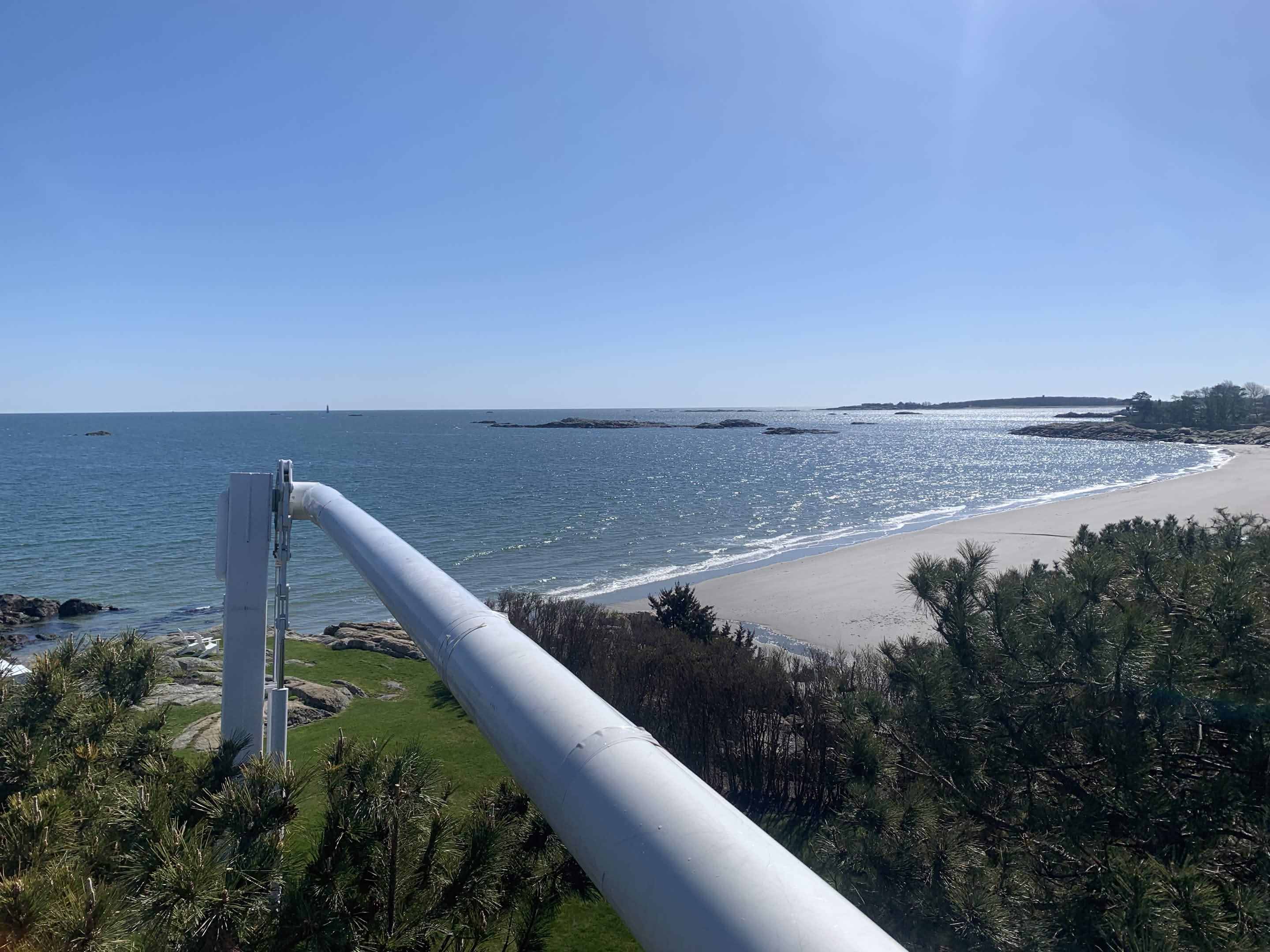
If you own waterfront property in South Dartmouth or a forested lot in Hixville, overgrown trees blocking your Buzzards Bay views diminish your property's appeal and usability. Vista pruning in Dartmouth, MA, from Southeast Arborist, LLC, restores those sightlines while safeguarding tree health. As ISA Certified Arborists based in Plymouth and Cohasset, we serve the South Shore Massachusetts region, including all of Dartmouth's 34,000 residents across its sprawling Bristol County landscape.
Dartmouth's mix of farmland, forests, and Buzzards Bay frontage creates unique demands for vista pruning Dartmouth MA homeowners face. Coastal storms like Hurricane Carol in 1954 and Hurricane Bob in 1991 reshaped waterfront canopies, leaving second-growth stands of red oak, white oak, and pitch pine that now obscure ocean vistas. In Padanaram, selective branch removal opens harbor views without compromising structural integrity. Our windowing technique targets specific sightlines, such as from your deck to Slocum River inlets, preserving the tree's natural form.
You benefit from our adherence to ANSI A300 standards, ensuring every cut promotes healing and longevity. For UMass Dartmouth Area properties, we apply crown thinning to maturing white pines and red maples planted in the 1960s campus expansion. Homeowners in North Dartmouth tackling spongy moth damage on interior oaks call us for vista pruning that removes infested branches while enhancing pasture views.
Vista pruning Dartmouth MA isn't aggressive topping, which weakens trees against salt-laden winds from Buzzards Bay. Instead, we use late winter timing for optimal callus formation on species like American beech and black cherry. Your property value rises as unobstructed views highlight Dartmouth's agricultural-residential charm, from Smith Mills orchards to Dartmouth Village shorelines.
Southeast Arborist's safety protocols include bucket trucks for precise access in tight Hixville woodlots and rigging systems for heavy limbs over barns. We've handled storm preparation for coastal estates and fence line clearing on horse farms interfacing with retired farmland woodlots. Contact us at 508-369-5009 for a free assessment—our expertise turns blocked views into prized assets.
Practical tip: Walk your Dartmouth property in early spring and note obstructed angles toward Buzzards Bay or Apponagansett Bay. Mark photos with your phone; we'll use them to plan windowing on eastern red cedars or tupelo trees. This preparation speeds our ISA Certified process, minimizing disruption to your daily life.
In Dartmouth's coastal climate, where salt intrusion stresses sassafras along tidal rivers, vista pruning Dartmouth MA maintains tree vigor while revealing scenic panoramas. Whether you're in a high-value Padanaram waterfront or UMass Dartmouth Area academic housing, our service enhances curb appeal and usability.
Why Dartmouth Properties Need Vista Pruning
Dartmouth's position along Buzzards Bay exposes properties to relentless coastal challenges that make vista pruning Dartmouth MA essential. Salt spray from prevailing southwest winds corrodes foliage on red oaks and white pines, causing dieback that blocks views from South Dartmouth decks. Your trees endure 50+ inches of annual rainfall on sandy loam soils derived from glacial till, fostering dense canopies of red maple and American beech that engulf sightlines to the bay.
Spongy moth infestations ravage interior oak stands in North Dartmouth and Hixville, defoliating white oaks and leaving weakened branches overhanging pastures. Without targeted pruning, these hazards threaten fence lines and outbuildings on agricultural properties. The town's history as part of the 1652 Acushnet Purchase preserved remnant woodlots amid farmland, but second-growth pitch pine and eastern red cedar now crowd waterfront estates in Padanaram, obscuring harbor access.
Hurricane legacies amplify urgency. Hurricane Carol's 1954 winds felled mature tupelo and sassafras along Slocum River edges, allowing aggressive regrowth that now hides tidal marshes. Hurricane Bob in 1991 stripped South Dartmouth canopies, promoting unbalanced crowns vulnerable to modern nor'easters. Vista pruning addresses this by thinning black cherry overstories, restoring balance and views toward the Lloyd Center for the Environment's preserved coastal forests.
Soil conditions in Dartmouth exacerbate issues. Alkaline coastal sands limit root depth in sassafras and pitch pine, making upper crowns heavy and prone to failure during 60 mph gusts. In Smith Mills, clay-loam from retired farms holds moisture, stressing red maples with root rot that pushes branches toward driveways. Homeowners notice leaning white oaks near UMass Dartmouth, where campus expansion preserved natives amid planned plantings—ideal for crown reduction to frame athletic fields.
Agricultural-residential interfaces demand action. Horse properties in Hixville require pasture edge management, removing low black cherry limbs shading hayfields while opening bay vistas. Dartmouth Village farms battle encroaching eastern red cedars along stone walls, where salt intrusion yellows needles and blocks sunset views.
Climate shifts intensify needs. Warmer winters extend spongy moth cycles, hitting oaks harder. Rising sea levels push salt farther into rivers, browning tupelo understories in South Dartmouth. Vista pruning Dartmouth MA counters this by selective removal, improving air circulation and light penetration for understory health.
Practical advice for your Dartmouth property: Inspect for codominant stems in red oaks—two main trunks forming a V-notch signal split risk over your Padanaram dock. Check white pines for witches' broom from salt stress, a cue for thinning to reveal ocean horizons. In North Dartmouth, probe soil around American beech bases; compacted earth from farm traffic indicates need for root zone care alongside pruning.
The Lloyd Center's habitats show healthy models—diverse canopies with open understories. Mimic this on your lot for resilience. Unpruned trees drop debris on Buzzards Bay beaches, violating local ordinances. Proactive vista pruning Dartmouth MA from Southeast Arborist prevents fines and enhances safety. Our ISA certification ensures science-based solutions tailored to Bristol County's unique ecology.
Our Vista Pruning Process in Dartmouth
Southeast Arborist's vista pruning process in Dartmouth follows a precise, ANSI A300-compliant sequence designed for your coastal trees. We start with a site assessment on your South Dartmouth property, using binoculars to map sightlines from key vantage points like decks overlooking Apponagansett Bay. ISA Certified Arborists identify target branches on red oaks blocking horizons, noting union angles to avoid bark tears.
Step one: Pre-climb evaluation. Ground crew deploys laser rangefinders to measure drop zones for white pine limbs over Padanaram driveways. We review your photos of obstructed Buzzards Bay views, prioritizing windowing—framing cuts that open 20-30 foot sight corridors without altering tree silhouettes.
Mobilization uses our fleet: 85-foot bucket trucks navigate Hixville's narrow farm roads, while climbing spurs and ropes access North Dartmouth interiors. Safety protocols mandate two-point harnesses, hard hats, and spotters for all lifts. For UMass Dartmouth Area, low-impact cherry pickers preserve campus turf.
Cutting begins with windowing technique. On eastern red cedars along Slocum River, we remove 2-3 key leaders obstructing tidal views, dropping cuts at 12-18 inch branch collars to spur healing. Crown thinning follows: 20-25% live crown reduction on pitch pines, spacing cuts to mimic natural gaps seen in Lloyd Center forests.
For red maples in Smith Mills, we employ crown reduction, shortening back laterals to 1/3 diameter sub-branch rule, preserving form while unveiling pastures. American beech receives drop-crotch pruning—removing codominant stems to favor strong scaffolds, critical against spongy moth-weakened structures.
Rigging handles heavy loads. A 500-pound port-a-wrap secures black cherry limbs over Dartmouth Village barns, lowering them via guided ropes to avoid fence damage. Drones scout tupelo canopies in South Dartmouth marshes pre-storm season, pinpointing salt-damaged sectors for removal.
Post-cut, we apply no sealants—ANSI standards confirm trees compartmentalize best naturally. Cleanup uses chippers to mulch sassafras prunings onsite, enriching your Hixville soil without hauling waste. Late winter/early spring scheduling aligns with Dartmouth's dormant season, when sap flow minimizes bleeding in white oaks.
Quality checks include torque tests on retained branches and photos of before/after sightlines. We document compliance for your records, noting species-specific responses—like pitch pine's rapid candle growth post-thinning.
Equipment specifics: Stihl pole pruners for 40-foot reaches on coastal white pines; Silky saws for clean collars on sassafras. All gear meets OSHA standards, with daily inspections.
Practical tip for Dartmouth homeowners: During our visit, request a pruning diagram marking retained leaders on your red maple—frame it for future reference. Test new views immediately post-work; adjust minor windows within 30 days at no extra cost.
This process delivers panoramic vistas while boosting tree longevity 20-30 years. From storm prep in coastal zones to view enhancement in Padanaram estates, our method suits Dartmouth's diverse lots. Call 508-369-5009 to schedule.
Common Vista Pruning Projects in Dartmouth Neighborhoods
In Dartmouth Village, vista pruning Dartmouth MA targets red oaks overhanging Buzzards Bay shorelines. Homeowners request windowing to frame lighthouse beacons, removing 15-20% canopy while stabilizing hurricane-vulnerable crowns.
North Dartmouth properties focus on pasture views amid farmland woodlots. We thin white pine overstories shading horse fields, clearing fence lines of low eastern red cedar to expose rolling hills toward Acushnet.
South Dartmouth waterfront estates demand panoramic harbor restoration. Crown reduction on mature tupelo along tidal rivers opens Slocum River inlets, countering salt intrusion dieback. Selective cuts on black cherry enhance dock access without topping.
Padanaram's high-value homes specialize in view management. ISA Arborists apply windowing to pitch pine clusters, creating 50-foot corridors to private moorings. Post-Hurricane Bob regrowth gets structural pruning for wind resistance.
Hixville farmsteads need aggressive edge clearing. Red maple limbs threatening barns drop via rigging, while sassafras thinning improves orchard sunlight and bay vistas from hilltops.
Smith Mills residential-agricultural lots feature American beech pruning for driveway sightlines. We remove spongy moth-damaged sectors, opening understories to neighboring fields.
UMass Dartmouth Area involves campus-scale hazard assessments. Maturing white oaks and red maples receive thinning to frame athletic complexes, adhering to institutional safety protocols.
Nearby New Bedford clients extend projects across the Acushnet River, mirroring Dartmouth techniques. Fairhaven's coastal parallels drive Fall River referrals for similar bay exposures.
These projects enhance property values 10-15% by revealing Dartmouth's scenic assets. Practical advice: In Padanaram, plant low shrubs post-pruning to frame views permanently; avoid tall undergrowth on cleared sightlines.
Vista Pruning Costs in Dartmouth, MA
Vista pruning costs in Dartmouth, MA, range from $500-$2,500 per tree, depending on specifics that maximize your investment. Height factors heavily: a 40-foot red oak in South Dartmouth requires bucket truck access at $1,200-$1,800, versus $600 for 25-foot pitch pine in North Dartmouth via climbing.
Canopy density drives pricing. Dense white pine stands in Hixville with spongy moth damage add $300-$500 for infestation scouting and 25% thinning. Waterfront properties in Padanaram incur 20% premiums for rigging over docks, totaling $2,000 for tupelo crown reduction.
Tree species influence rates. Hardwood red maples or American beech demand precise collar cuts, at $40-$60/hour labor, while softer eastern red cedar in Dartmouth Village prunes faster at $30-$50/hour. Multi-tree jobs discount 15-25%; a five-tree Smith Mills lot drops per-tree cost to $800.
Access challenges vary. UMass Dartmouth Area turf protection needs plywood mats, adding $200. Coastal Buzzards Bay sites with salt-tolerant sassafras require erosion controls, bumping quotes $150.
Volume removed scales fees: Light windowing for bay views costs $400-$700; heavy 30% crown thinning post-storm in Hixville reaches $1,500-$2,200. Travel from our Plymouth/Cohasset base adds $1.50/mile beyond 20 miles, minimal for Dartmouth.
Value proposition outweighs costs. Restored vistas boost appraisals 12-18% in Padanaram, per local realtors. Healthier trees avert $5,000+ removal fees after failures. ANSI-compliant work from ISA Certified Arborists like Southeast Arborist ensures longevity, saving future expenses.
Bundling enhances affordability. Combine with storm prep for 10% off; farm clearing in North Dartmouth pairs with stump grinding at reduced rates.
Practical tip: Get quotes from three providers, but prioritize ISA certification—cheaper cuts risk tree decline, costing more long-term. Request itemized bids noting branch diameters and heights for your black cherry project.
Free assessments eliminate guesswork. Call 508-369-5009 for transparent pricing tailored to your Dartmouth lot. Investments yield daily enjoyment of Buzzards Bay panoramas.
When to Schedule Vista Pruning in Dartmouth
Schedule vista pruning Dartmouth MA in late winter or early spring—mid-February to mid-April—when Dartmouth's average lows of 25-35°F induce dormancy. Red oaks and white pines seal cuts fastest then, forming callus by May's bud break amid 50-inch rainfall.
Avoid summer: High humidity stresses sassafras, inviting fungal pathogens post-cut. Fall risks open wounds during leaf drop, delaying healing in American beech.
Urgency signs demand immediate action. Leaning pitch pine crowns over Padanaram docks signal storm threats—nor'easters hit 50 mph here. Spongy moth webs on Hixville oaks warrant spring pruning before larvae peak in June.
Salt browning on South Dartmouth tupelo indicates intrusion damage; prune before full defoliation weakens scaffolds. Cracked unions in North Dartmouth red maples over fences require rigging ASAP to prevent failures.
Pre-storm timing protects coastal properties. Ahead of hurricane season (June-November), thin black cherry for wind passage. Post-event, address Hurricane Bob-style breaks within weeks.
Practical tip: Monitor Dartmouth's NOAA Buzzards Bay forecasts; gusts over 40 mph cue inspections. Test sightlines seasonally—obscured bay views from your Smith Mills deck mean now's time.
Contact Southeast Arborist at 508-369-5009 for slots; we book 4-6 weeks out peak season. Timely scheduling preserves your views and trees.
Frequently Asked Questions About Vista Pruning in Dartmouth
What is vista pruning, and how does it differ from topping in Dartmouth? Vista pruning Dartmouth MA selectively removes branches to open specific sightlines, like Buzzards Bay from your South Dartmouth deck, while maintaining tree structure per ANSI A300. Topping stubs leaders on red oaks, inviting decay and splits—illegal on UMass Dartmouth campus.
How much canopy can be safely removed from Dartmouth trees? Limit to 20-25% on white pines in North Dartmouth for thinning; up to 30% on pitch pine in coastal zones. ISA Arborists assess your Hixville sassafras individually, ensuring vigor against salt winds.
Will vista pruning harm my trees in Dartmouth's coastal climate? No, when done by certified pros. Proper cuts on American beech promote compartmentalization, resisting spongy moth and storms better than unpruned trees.
How long does vista pruning take on a Dartmouth property? A single red maple in Smith Mills: 2-4 hours. Multi-tree Padanaram estates: 1-2 days with bucket trucks. Cleanup included.
Can vista pruning increase my property value in Dartmouth? Yes, unobstructed ocean views add 10-15% to waterfront appraisals in Padanaram, per Bristol County data.
What's the best time for vista pruning near Buzzards Bay? Late winter/early spring, before sap flow in eastern red cedar. Avoid monsoons stressing cuts.
Do you serve all Dartmouth neighborhoods and nearby towns? Yes—Dartmouth Village to UMass Area, plus New Bedford, Fairhaven, Fall River, Acushnet, Wareham.
How do I know if my trees need vista pruning? Obscured horizons, leaning limbs over barns in Hixville, or moth damage on oaks signal yes. Free inspection confirms.
Vista Pruning Throughout Dartmouth
Southeast Arborist delivers vista pruning across Dartmouth neighborhoods: Dartmouth Village shorelines, North Dartmouth farms, South Dartmouth estates, Padanaram harbors, Hixville woodlots, Smith Mills orchards, and UMass Dartmouth campus. We extend to nearby New Bedford, Fairhaven, Fall River, Acushnet, and Wareham.
Our Plymouth/Cohasset base ensures prompt South Shore response. ISA Certified teams use ANSI standards for your red oak, white pine, and tupelo needs.
Restore your Buzzards Bay views—call 508-369-5009 today for a free assessment.