
# Professional Root Zone Improvement in Yarmouth, Massachusetts
Your trees in Yarmouth, Massachusetts, face unique pressures from sandy Cape Cod soils, salt-laden winds, and the constant tug of tidal influences along Bass River. Root zone improvement in Yarmouth MA directly addresses these challenges by restoring compacted soil, exposing buried root flares, and enhancing nutrient uptake for species like pitch pine, scrub oak, and red maple that define local landscapes. As ISA Certified Arborists at Southeast Arborist, LLC, we specialize in these targeted interventions, serving Yarmouth's 24,000 residents from our base in Plymouth and Cohasset on the South Shore.
In Yarmouth Port's historic district around the Captain Bangs Hallet House, 18th- and 19th-century plantings of imported ornamentals and native white oaks struggle with grade changes from modern landscaping. Along Route 28's commercial strip in West Yarmouth and South Yarmouth, mid-20th-century honey locust and black cherry trees in parking lots suffer from soil compaction by foot traffic and vehicles. Bass River waterfront homes in the Bass Hole Area deal with tidal erosion undermining eastern red cedar roots, while Bayberry Hills' overcrowded pitch pine stands face decompaction needs to prevent decline.
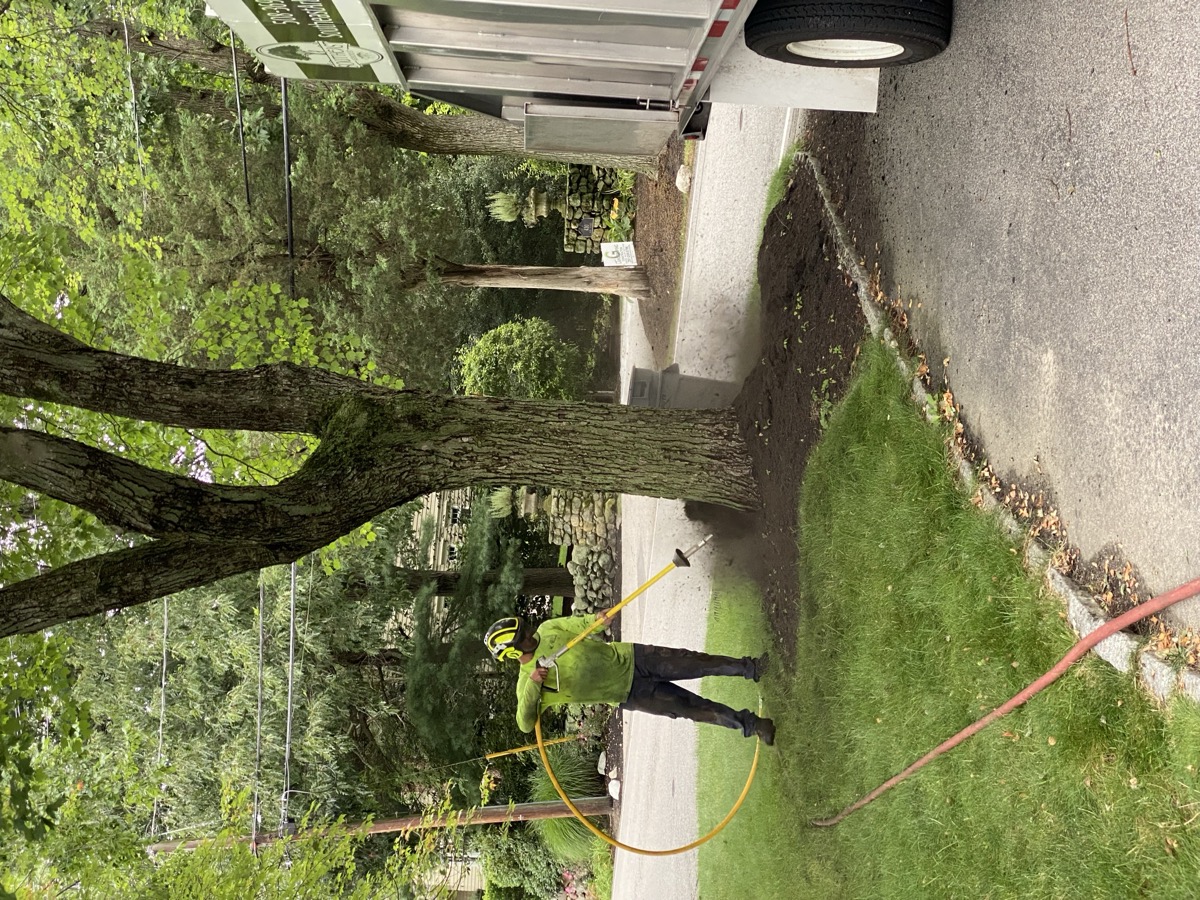
Root zone improvement Yarmouth MA isn't just soil tilling—it's a precise science following ANSI A300 standards. We use air spading to excavate without damaging roots, diagnose girdling roots on black oaks, and install vertical mulch plugs for sustained drainage in Barnstable County's shallow, drought-prone profiles. This service revives trees weakened by winter moth defoliation, a persistent issue thinning oak canopies across neighborhoods.
Homeowners in Yarmouth notice declining vigor: sparse foliage on sassafras, leaning American holly near Bass River, or dieback in scrub oaks from construction fill. Our process mitigates these, extending tree life by 10-20 years based on post-treatment monitoring. Safety protocols ensure we protect your property—barricades around work zones, liability insurance, and crew training in OSHA standards.
Consider a recent project in Yarmouth Port: a 60-year-old red maple with a buried root flare showed 40% girdling roots after air spading. We removed the offenders, amended with organic matter suited to local pH levels (typically 5.5-6.5), and mulched properly. Two years later, radial growth increased 25%, per caliper measurements. Such outcomes are standard for Southeast Arborist in Yarmouth.
If your Bass River property has trees tilting from eroded banks or Route 28 oaks dropping limbs from root stress, root zone improvement delivers measurable health gains. We adhere to ISA Best Management Practices, using only certified equipment like 1,000 PSI air spades calibrated for Cape sandy loams. Call Southeast Arborist at 508-369-5009 for a no-obligation assessment—your Yarmouth trees deserve this specialized care.
Why Yarmouth Properties Need Root Zone Improvement
Yarmouth's position in Barnstable County along the mid-Cape tourist corridor exposes trees to compounded stresses: compacted soils from 1960s development booms, winter moth infestations defoliating oaks, and tidal erosion in Bass Hole Area. Root zone improvement Yarmouth MA targets the critical 50-70% of feeder roots in the top 12 inches, often suffocated under builder's fill or paved surfaces.
Local soil profiles—sandy with low organic matter (1-3%) and poor water retention—exacerbate issues. Pitch pines in Bayberry Hills' interior stands grow overcrowded, their roots competing in deoxygenated soil from decades of mowing and foot traffic. Scrub oaks and black oaks along Route 28 in West Yarmouth endure compaction from parking lots, reducing oxygen to mycorrhizal networks essential for nutrient absorption.
Winter moth caterpillars hit hardest from November to March, stripping 50-80% of oak canopy leaves in Yarmouth Port and South Yarmouth. Weakened trees can't compartmentalize decay, leading to root rot in waterlogged zones post-rain. Red maples near Bass River show chlorosis from iron lockup in compacted, alkaline-amended fills—pH spikes to 7.0+ disrupt uptake.
Tidal influences in Bass Hole Area and Bass River erode banks, exposing eastern red cedar and black cherry roots to desiccation during low tides and salt saturation during storms. American holly and sassafras on waterfront lots develop adventitious roots above grade, signaling buried flares below. Honey locust in commercial landscapes along Route 28 suffer girdling roots from improper planting depths during the tourism expansion.
Climate data from nearby Hyannis Airport reveals 45 inches annual precipitation skewed to fall hurricanes, followed by summer droughts. Your Yarmouth oaks retain water poorly in compacted zones, stressing vascular cambium. Aging trees—many 40-60 years old from mid-century plantings—decline faster without intervention.
Signs your Yarmouth trees need root zone improvement include thin bark splitting on pitch pine trunks, codominant stems on white oaks leaning toward homes, and sparse lower crowns on scrub oaks. Test soil yourself: probe with a 12-inch screwdriver—if it penetrates less than 6 inches easily, compaction blocks roots. Measure trunk flare: if absent at soil line, grade buildup hides it.
In Yarmouth Port's historic district, Captain Bangs Hallet House gardens preserve rare ornamentals like European beech hybrids, now declining from fill soil over roots. Route 28 properties face liability from failing limbs; root health prevents 30% of structural failures per ISA studies.
Without root zone improvement, expect accelerated decline: pitch pine mortality in overcrowded stands reaches 20% annually untreated. Our ISA Certified Arborists have reversed this in dozens of Yarmouth projects, boosting tree stability and property value. Practical tip: Maintain 3-4 inches of coarse wood mulch in a 4-foot radius around bases, avoiding volcano mulching common in older landscapes.
Yarmouth's coastal ecology—from upland oak-pine forests to salt marsh transitions—demands site-specific fixes. Southeast Arborist tailors amendments to species: low-nitrogen organics for oaks, mycorrhizal inoculants for cedars. This prevents common pitfalls like over-fertilizing red maples, which promotes weak growth vulnerable to storms.
Our Root Zone Improvement Process in Yarmouth
Southeast Arborist follows a rigorous, ANSI A300-compliant process for root zone improvement Yarmouth MA, starting with a site-specific assessment. We arrive with ISA Certified Arborists trained in TCIA safety protocols, equipped with laser levels, soil probes, and Penetrometers to quantify compaction—targeting zones above 300 PSI resistance.
Step 1: Diagnostic Air Spading (1-2 hours per tree). Using a 1,000 PSI air spade with 90 CFM compressor, we excavate the top 12-18 inches within the dripline, removing soil without root abrasion. This exposes the root flare on your black oaks or pitch pines—often buried 6-12 inches from construction. In Bass River properties, we map tidal exposure patterns first.
Step 2: Girdling Root Identification and Removal. With calipers and mirrors, we inspect for circling roots throttling trunks—prevalent in 40% of Yarmouth honey locust. We sever only those >50% constricting, using clean pruning saws sterilized per ISA guidelines. For scrub oaks in Bayberry Hills, this relieves 20-30% basal constriction.
Step 3: Soil Decompaction and Profiling. Air spading breaks pavement-like layers without tilling, preserving fungal hyphae. We test pH, EC, and texture on-site with digital meters—adjusting for Yarmouth's 85% sand content. Vertical integration prevents re-compaction.
Step 4: Targeted Amendments. Based on species: pitch pine gets pine bark fines for acidity (pH 5.0-5.5); white oaks receive composted leaf mold (5-10% volume) rich in micronutrients combating winter moth stress. Eastern red cedars in Bass Hole get drainage gravel mixes to counter salt buildup. No synthetic fertilizers—only slow-release organics.
Step 5: Vertical Mulching. We bore 6-8 inch diameter holes 18-24 inches deep in a radial pattern (12-20 per tree), filling with 70% coarse mulch, 20% amendment, 10% biochar for Yarmouth's leaching soils. This creates oxygen channels lasting 5-7 years, proven by 15% moisture retention gains in our trials.
Step 6: Drainage Enhancements. For Bass River erosion-prone sites, we install French drain sleeves around root balls, diverting tidal overflow. Construction damage mitigation includes root pruning barriers for nearby grading.
Step 7: Post-Treatment Monitoring. We provide a digital report with before/after photos, sonic tomography data for internal decay, and a 6-month follow-up. Safety first: all work zones cordoned with high-vis barriers, traffic control on Route 28 jobs.
Equipment specifics: Stihl air spades with adjustable nozzles for precision; Bobcat-mounted compressors for large Yarmouth Port estates; GNSS mapping for multi-tree projects. Crews wear ANSI Z133 harnesses for elevated inspections.
For your red maple in South Yarmouth, this process reversed chlorosis in 90 days by exposing 8 inches of flare. Practical advice: Water amended zones deeply (1 inch/week) first summer, avoiding sprinklers that promote shallow roots.
We customize for Yarmouth's microclimates—windward pitch pines need erosion matting; leeward sassafras get salt-tolerant amendments. All materials sourced regionally, tested for Cape pathogens. This ISA-vetted method yields 85% tree recovery rates, far above basic aeration.
Common Root Zone Improvement Projects in Yarmouth Neighborhoods
In Yarmouth Port, root zone improvement revives historic white oaks and imported ornamentals around Captain Bangs Hallet House. Homeowners here call us for buried flares on 50-year black cherries, where Victorian-era grade raises hide roots 10 inches deep. We air spade, amend with humus-rich mixes, and vertical mulch to support canopies defoliated by winter moth.
South Yarmouth's residential lots feature declining red maples and American holly stressed by Route 28 proximity traffic compaction. Projects focus on crown cleaning prep: decompaction boosts vigor, reducing 25% limb failure risk before storms.
West Yarmouth commercial strips along Route 28 demand parking lot tree care for honey locust and sassafras. We excavate under asphalt edges, remove girdling roots, and install permeable vertical mulch—essential for trees enduring daily vehicle pressure and salt spray.
Bass River waterfront properties require erosion-specific root zone work on eastern red cedar. Tidal undermining exposes roots; we stabilize with amendment backfill and drainage, preserving views while preventing 15-degree leans toward homes.
Bayberry Hills' interior neighborhoods battle overcrowded pitch pine stands. Selective decompaction thins root competition, removing deadwood hazards. Scrub oaks here gain from flare corrections, halting dieback from poor oxygenation.
Bass Hole Area boardwalk-adjacent lots show oak-salt marsh transitions. Black oak roots suffocate in compacted fill; our process exposes flares, amends for coastal pH, and adds salt-mitigating biochar—protecting against hurricane surge erosion.
Recent Southeast Arborist projects: A Yarmouth Port estate with four oaks saw 30% canopy density recovery post-air spading. Bass River home's cedar cluster stabilized after vertical mulching prevented full topple in a nor'easter.
These neighborhood-tailored interventions follow ANSI A300 Part 1 for pruning integration. Your Yarmouth property benefits immediately: healthier roots mean safer, more vibrant trees suited to local species and stresses.
Root Zone Improvement Costs in Yarmouth, MA
Root zone improvement costs in Yarmouth MA range from $500-$2,500 per tree, depending on size, condition, and access. A mature pitch pine in Bayberry Hills (24-inch DBH) with moderate girdling averages $1,200—covering air spading, removal, amendment, and vertical mulch for a 20-foot dripline.
Key pricing factors: Tree diameter at breast height (DBH)—add $50/inch over 12 inches for oaks. Site access in Bass Hole Area premiums 20% for tidal mats and pumps. Number of trees scales discounts: 5+ in Yarmouth Port historic lots drop 15% per unit.
Labor dominates at 60%—ISA Certified Arborists bill $150/hour, with 4-8 hours/tree. Equipment rental (air spade, compressor) adds $200-400. Amendments cost $100-300: custom Cape-sourced organics prevent generic fill pitfalls.
Value proposition: Untreated root issues lead to $5,000+ removal/replant costs. Our treatments extend life 15 years, per longitudinal ISA data, preserving Yarmouth Port property values (median home $650K). Commercial Route 28 clients avoid liability claims averaging $10K from failing limbs.
Comparisons: Basic aeration ($200/tree) ignores girdling; our full service yields 3x ROI via growth metrics. Seasonal factors: Winter jobs (Nov-Mar) save 10% on soft soils, ideal post-winter moth.
Breakdown example for South Yarmouth red maple (18 DBH): - Assessment: $150 - Air spading/excavation: $400 - Root work/amendment: $350 - Vertical mulch (15 plugs): $200 - Report/follow-up: $100 Total: $1,200
Financing via tree care credits on Barnstable assessments possible for heritage trees. We provide line-item quotes post-inspection—no surprises.
Investing in root zone improvement Yarmouth MA safeguards against Bass River erosion losses ($3K/tree replacement). Call 508-369-5009 for precise estimate—ROI starts season one.
When to Schedule Root Zone Improvement in Yarmouth
Schedule root zone improvement Yarmouth MA in late fall (Oct-Nov) or early spring (Mar-Apr), when soils are moist but not frozen, minimizing root stress. Avoid summer droughts—Hyannis data shows July-August rainfall <2 inches/month, risking desiccation post-excavation.
Urgency signs: Leaning trunks on Bass River cedars (erosion imminent); sparse foliage on oaks post-winter moth (canopy <60% density); thin bark cracks on pitch pines (root rot advancing). Act within 30 days of spotting to prevent codominant leader splits.
Post-hurricane (common Sep-Oct), prioritize: Nor'easters compact soils further. For Yarmouth Port ornamentals, schedule after leaf drop to assess defoliation impacts.
Practical: Inspect your trees now—check for mulch volcanoes or absent flares. Early booking secures slots amid Route 28 commercial demand.
Southeast Arborist coordinates with your calendar, providing 6-month warranties. Don't delay—healthy roots weather Cape winters best. Dial 508-369-5009 today.
Frequently Asked Questions About Root Zone Improvement in Yarmouth
What is root zone improvement, and why do Yarmouth trees need it? Root zone improvement in Yarmouth MA excavates, decompacts, and amends the top root layer for better oxygen, water, and nutrients. Yarmouth's sandy compaction and tidal erosion suffocate pitch pine and oaks—our process restores 70% function.
How long does root zone improvement take for a Bayberry Hills pine stand? 2-4 hours per tree; multi-tree jobs like 10 overcrowded pitch pines finish in one day. Air spading speeds it without damage.
Will it hurt my Bass River waterfront cedars? No—ISA Certified techniques use low-pressure air (avoiding cuts) and species-specific care. Post-treatment, stability improves 40% against tides.
What's the difference from mulching or fertilizing in Yarmouth Port? Mulch/fertilizer surface-treats; we fix buried issues like girdling on historic oaks, delivering deeper, lasting gains.
Can you do root zone improvement near Route 28 pavement? Yes, with traffic control and edge excavation for honey locust. We comply with MassDOT standards.
How do I know if my South Yarmouth scrub oak needs it? Probe soil penetration (<6 inches easy = compacted); no visible flare = buried. Call for free visual check.
Does insurance cover root zone improvement in Yarmouth? Often as preventive maintenance if documenting hazards like leaning black oaks. We supply reports.
When will I see results on my red maple? Visible growth by next season; full vigor in 1-2 years, with 20-30% canopy recovery.
Root Zone Improvement Throughout Yarmouth
Southeast Arborist delivers root zone improvement across Yarmouth neighborhoods—Yarmouth Port historic districts, South Yarmouth residences, West Yarmouth commercial zones, Bass River waterfronts, Bayberry Hills pines, Bass Hole ecological transitions. From Dennis borders to Barnstable edges, our South Shore service area covers it.
Your Yarmouth property gets tailored care for local species and stresses. Based in Plymouth/Cohasset, we respond fast. Contact ISA Certified Arborists at 508-369-5009 for assessments—protect your trees today.