
# Professional Tree Removal in Yarmouth, Massachusetts
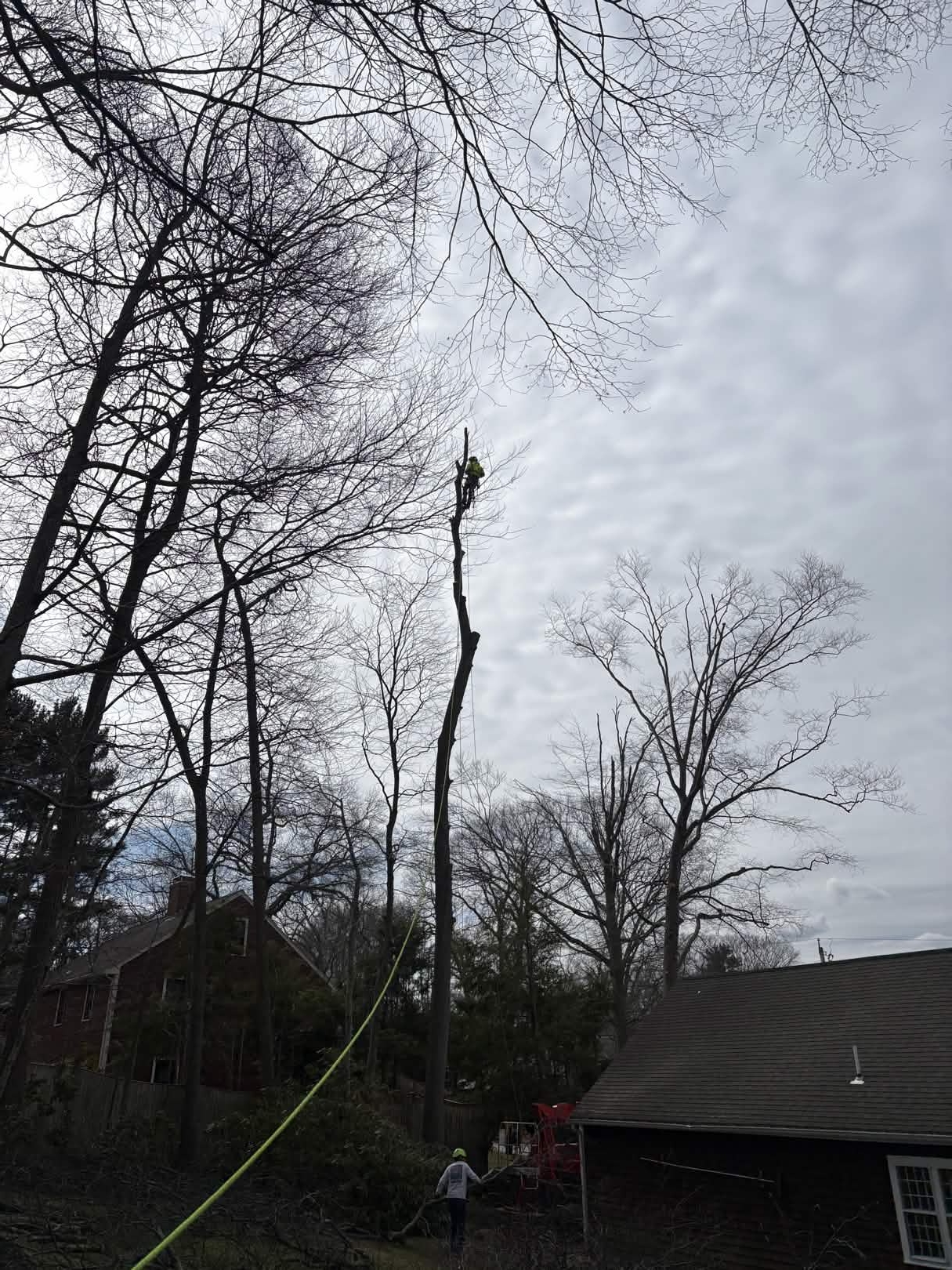
If you own property in Yarmouth, Massachusetts, your trees face unique pressures from the Cape's coastal environment, historic plantings, and heavy tourist traffic along Route 28. Pitch pines lean from salt-laden winds, oaks weaken under winter moth infestations, and aging landscape trees from the mid-20th century tourism boom now threaten commercial lots and residential homes. Southeast Arborist, LLC, your local ISA Certified Arborists based in Plymouth and Cohasset, delivers safe tree removal in Yarmouth MA, using crane-assisted techniques, advanced rigging, and full insurance coverage to protect your foundation, roof, and driveway.
Yarmouth spans 24,000 residents across Barnstable County, from the historic bayside of Yarmouth Port to the developed sound side neighborhoods like South Yarmouth and West Yarmouth. In Bass River and Bayberry Hills, tidal erosion undermines red maples and eastern red cedars, while overcrowded pitch pine stands in interior areas like Bass Hole create fire hazards. Our team handles tree removal Yarmouth MA projects daily, addressing dead scrub oaks in Yarmouth Port's Captain Bangs Hallet House district and hazardous black oaks along Route 28 commercial strips.
As ISA Certified Arborists, we follow ANSI A300 standards for every job, ensuring precise cuts that prevent property damage. Whether a single leaning honey locust in West Yarmouth or a full crew dismantling a multi-trunk sassafras near Bass River waterfronts, our process prioritizes safety with spotters, traffic control, and protective barriers. Homeowners in Yarmouth Port value our respect for 18th- and 19th-century ornamental plantings, where we selectively remove only compromised trees like declining American holly specimens to preserve historic character.
Tree removal in Yarmouth MA isn't just about cutting down trees—it's risk mitigation tailored to local soil conditions. Cape sandy soils drain quickly but hold little moisture, stressing black cherry and white oak roots during summer droughts. Combine that with nor'easters pushing 60 mph gusts from Nantucket Sound, and your trees become liabilities. We've seen pitch pines topple onto Route 28 businesses in South Yarmouth, eastern red cedars snap in Bayberry Hills winds, and black oaks split from internal decay after winter moth defoliation.
Southeast Arborist offers free estimates for tree removal Yarmouth MA—call 508-369-5009 today. Our South Shore Massachusetts service area covers all Yarmouth neighborhoods, from Bass Hole's coastal transition zones to Dennis and Barnstable borders. Fully insured crews arrive with chippers, cranes, and stump grinders, leaving your property pristine. Past clients in West Yarmouth report zero damage during removals near power lines, thanks to our utility coordination and sectional dismantling expertise.
In Yarmouth's mid-Cape tourist corridor, timely tree removal protects your investment. Commercial properties along Route 28 need parking lot clearances to avoid lawsuits from falling limbs, while Bass River residents require erosion-damaged tree extractions to safeguard docks. Our crane-assisted tree removal in Yarmouth MA handles heights up to 80 feet safely, far surpassing bucket truck limits. Don't wait for the next storm—our ISA certification guarantees compliance with local bylaws in Barnstable County.
This guide equips you with Yarmouth-specific knowledge on tree removal costs, timing, and neighborhood projects. Learn signs of hazardous trees like canopy dieback in red maples or trunk cracks in honey locusts, and discover why our complete debris hauling saves you disposal fees at the Yarmouth transfer station. Southeast Arborist turns complex jobs into seamless experiences, restoring safety to your Yarmouth property.
Why Yarmouth Properties Need Tree Removal
Yarmouth's coastal location in Barnstable County exposes trees to relentless salt spray, sandy soils low in nutrients, and microclimates varying from Yarmouth Port's sheltered bayside to West Yarmouth's open sound-side winds. Pitch pines dominate interior stands in Bass Hole Area, growing dense and fire-prone due to suppressed understories. These trees often die from pine tip moth or root rot in compacted Cape soils, requiring prompt removal to prevent widowmakers from falling on nearby homes.
Oaks—scrub oak, black oak, and white oak—form the backbone of Yarmouth's upland forests, but winter moth defoliation weakens their canopies annually. In Yarmouth Port's historic district around Captain Bangs Hallet House, 200-year-old white oaks show V-shaped crotches from early pruning errors, now splitting under ice loads. Homeowners notice branch tips browning in spring; that's advanced decline signaling full tree removal in Yarmouth MA to protect preserved 18th-century landscapes.
Route 28's commercial corridor in South Yarmouth and West Yarmouth features aging honey locusts and red maples planted during the 1950s tourism boom. These trees suffer from girdling roots in parking lots, where gravel amendments starved them of oxygen. Black cherry and sassafras nearby develop included bark unions, prone to failure in 40 mph gusts. Tidal erosion in Bass River properties undercuts eastern red cedar roots, with brackish water rotting trunks exposed at low tide—common in Bayberry Hills waterfronts.
American holly thrives in Yarmouth Port's acidic soils but declines from scale insects, dropping heavy branches onto captains' homes. Overcrowded pitch pine stands in Bass Hole Area create shaded interiors where scrub oaks starve, leading to sudden topples during nor'easters. Yarmouth's freeze-thaw cycles crack oak bark, inviting armillaria root rot that spreads to neighboring red maples.
Climate data from nearby Hyannis shows average winter lows of 24°F stressing evergreens like eastern red cedar, while summer highs near 82°F dry out shallow-rooted honey locusts. Combine this with 45 inches annual precipitation skewed to fall hurricanes, and your trees face constant structural threats. Inspect for leaning trunks over 15 degrees, soil heaving at bases from frost, or mushrooms on white oak bark—these demand immediate tree removal Yarmouth MA.
In Bass River, tidal surges from Bass Hole boardwalk erode banks, toppling black oaks into marshes. Bayberry Hills golf course edges see sassafras invasions weakening fairway pines. Historic Yarmouth Port requires sensitive removals to maintain canopy views from Strawberry Hill. South Yarmouth condos battle declining commercial cherries dropping fruit on walkways.
Southeast Arborist's ISA Certified Arborists assess these issues using resistograph probes for internal decay in black oaks and level readings for pitch pine leans. We document findings per ANSI A300 to justify removals under Yarmouth bylaws. Neglecting these leads to $10,000+ in roof repairs—our clients in West Yarmouth avoided that last winter.
Practical advice: Walk your property post-leaf fall, tapping trunks for hollow sounds in red maples. Check for codominant stems in young honey locusts near power lines. In Bass River, probe exposed roots for rot. Early detection cuts costs 30% versus emergency calls. Our free inspections flag these in Yarmouth neighborhoods, preventing Dennis-border properties from spillover hazards.
Our Tree Removal Process in Yarmouth
Southeast Arborist follows a meticulous, 10-step tree removal process in Yarmouth MA, customized to coastal challenges like power lines along Route 28 and tight Bass River lots. Step 1: Free on-site assessment by ISA Certified Arborists. We arrive in Plymouth-based trucks, mapping your pitch pine or black oak with laser rangefinders for height, lean, and drop zone clearances.
Step 2: Risk analysis per ANSI A300 Part 1. For Yarmouth Port historic trees, we use sonic tomography to measure decay in white oak interiors without invasive drilling. Permits from Yarmouth Conservation Commission come next for Bass Hole wetlands-adjacent removals.
Step 3: Crew briefing and safety setup. Fully insured teams deploy barriers around Bayberry Hills driveways, air horns for South Yarmouth traffic, and spotters for West Yarmouth power line jobs. Hard hats, chokers, and personal fall arrest systems meet OSHA standards.
Step 4: Crane positioning for complex tree removal Yarmouth MA. Our 95-ton Grove crane accesses 80-foot eastern red cedars in Bass River, lifting 10-ton sections over homes. Bucket trucks handle suburban scrub oaks up to 50 feet.
Step 5: Rigging installation. Arborists climb with throw lines, securing friction savers and pulleys to sassafras trunks. In overcrowded Bass Hole pitch pines, we use port-a-wraps for controlled lowering, preventing swings into American holly understories.
Step 6: Sectional dismantling from the top. Starting at codominant stems, we make face cuts per directional felling angles, then backcuts with wedges for red maples leaning toward Route 28. Pieces rope down at 2 feet per second, avoiding black cherry branches below.
Step 7: Base cuts and stump management. Fellers notch honey locust bases away from structures, using boomer saws for precision. Stump grinding add-on follows with 30-inch Vermeer cutters, processing roots to 18 inches below grade in Yarmouth's sandy soils.
Step 8: Debris processing. Chippers mulches branches from white oaks into landowner ARBORIST chips for Bayberry Hills paths, or hauls full loads to Cape Cod Regional Landfill. No piles left for Yarmouth's mosquito-prone marshes.
Step 9: Site restoration. Rake sandy soils level, seed with conservation mix for Bass River erosion control, and inspect for forgotten limbs in scrub oak canopies.
Step 10: Final walkthrough and invoice. We photograph before/after for your records, confirming no foundation cracks from vibrations.
Equipment shines in Yarmouth: DMM climbing saddles for sassafras heights, GRCS systems for black oak overhands, and 27-ton knucklebooms for Route 28 parking lots. Safety protocols include daily JSA meetings, adapting to Yarmouth's 20-30 mph afternoon winds.
For your leaning pitch pine in West Yarmouth, crane-assisted removal takes 4 hours versus 8 with climbers alone. We've dismantled 100-foot multi-trunks near Captain Bangs Hallet House without historic district violations. Homeowners gain peace knowing our 20+ years on South Shore MA prevent the $20,000 average Cape tree fall claim.
Call 508-369-5009 for your free estimate—our process minimizes disruption in tourist-heavy Yarmouth.
Common Tree Removal Projects in Yarmouth Neighborhoods
In Yarmouth Port, we remove declining ornamental American holly and black cherry near Captain Bangs Hallet House, using low-impact rigging to protect 19th-century root zones. Historic bylaws demand minimal disturbance, so sectional drops preserve surrounding white oaks.
South Yarmouth's Route 28 motels call for parking lot honey locust extractions, where girdling roots heave asphalt. Our cranes lift over signage, grinding stumps to avoid tripping hazards for tourists.
West Yarmouth homes feature dead pitch pines from overcrowding; we clear 5-tree clusters protecting roofs from nor'easters. Structural pruning precedes full removals on young red maples to enhance form.
Bass River waterfronts need tidal-undermined eastern red cedar removals—our excavator-assisted pulls reclaim eroding banks, followed by riprap for stabilization.
Bayberry Hills golf-adjacent properties request scrub oak clearances invading fairways, with mulched debris enriching course soils.
Bass Hole Area boardwalk vicinities see black oak and sassafras removals at forest-marsh edges, coordinating with Dennis for shared hazards.
These projects highlight tree removal Yarmouth MA expertise—ISA Certified Arborists tailor to each spot.
Tree Removal Costs in Yarmouth, MA
Tree removal costs in Yarmouth MA range $800-$5,000 per tree, driven by height, access, and complexity. A 40-foot pitch pine in open West Yarmouth yard costs $1,200; add $1,500 for crane in Bass River tight lots.
Factors: Species density—overcrowded Bass Hole scrub oaks add $300/tree for rigging. Height over 60 feet in Yarmouth Port white oaks requires $2,000 cranes. Proximity to structures like Route 28 power lines in South Yarmouth hikes 25% for spotters.
Stump grinding adds $200-$500, essential in Bayberry Hills to prevent regrowth in sandy soils. Debris hauling to Cape landfill: $400 for full truckloads from black oak jobs.
Southeast Arborist provides value: Free estimates via 508-369-5009, bundled services save 15% on multi-tree Bayberry Hills clearances. ISA certification ensures no redo costs from improper cuts.
Compared to DIY risks ($10k damages), our insured jobs protect your wallet. Historic Yarmouth Port discounts apply for compliant removals. Transparent quotes factor Barnstable County fees.
When to Schedule Tree Removal in Yarmouth
Schedule tree removal Yarmouth MA in late fall (October-November) or winter (December-March), when bare canopies ease access and frozen Bayberry Hills soils support cranes. Avoid spring budding on red maples or summer tourist peaks along Route 28.
Urgency signs: 20%+ canopy dieback from winter moth in oaks, trunk leans over 20° toward Bass River docks, or fresh cracks post-nor'easter in pitch pines. Mushrooms at white oak bases or heaving soil in Bass Hole signal root rot—act within 48 hours.
Yarmouth's short winters limit slots; book ahead for West Yarmouth storms. Our calendars prioritize hazards. Call 508-369-5009 for seasonal advice.
Frequently Asked Questions About Tree Removal in Yarmouth
**How much does tree removal cost in Yarmouth MA?** Expect $800-$5,000 based on 30-80 foot heights common in pitch pine stands. Bass River cranes add $1,500; stump grinding $300 extra.
**Do I need a permit for tree removal in Yarmouth?** Yes for Bass Hole wetlands or over 10-inch caliper oaks in Yarmouth Port. We handle Barnstable County filings.
**Is crane-assisted tree removal necessary in Yarmouth neighborhoods?** Essential for 60+ foot black oaks near West Yarmouth homes or Route 28 lots—prevents property damage.
**What happens to debris after tree removal Yarmouth MA?** We chip on-site for Bayberry Hills mulch or haul to landfill, leaving no trace.
**How do you protect my property during removal?** Tarps under drop zones, barriers for South Yarmouth driveways, and vibration monitors for foundations.
**Can you remove hazardous trees near power lines?** Yes, coordinating with Eversource for honey locust jobs in Bass River.
**When is the best time for tree removal in Yarmouth?** Winter for frozen access in scrub oak areas; avoid summer humidity.
**Do you offer stump grinding with tree removal?** Standard add-on, grinding eastern red cedar stumps 18 inches deep in sandy soils.
Tree Removal Throughout Yarmouth
Southeast Arborist serves all Yarmouth neighborhoods—Yarmouth Port historic districts, South Yarmouth commercial strips, West Yarmouth residences, Bass River waterfronts, Bayberry Hills properties, Bass Hole Area forests. We extend to nearby Dennis and Barnstable.
From Plymouth/Cohasset, our crews reach you fast for urgent pitch pine drops. ISA Certified Arborists ensure ANSI A300 compliance.
Contact Southeast Arborist, LLC at 508-369-5009 for free tree removal Yarmouth MA estimates. Protect your property today.