
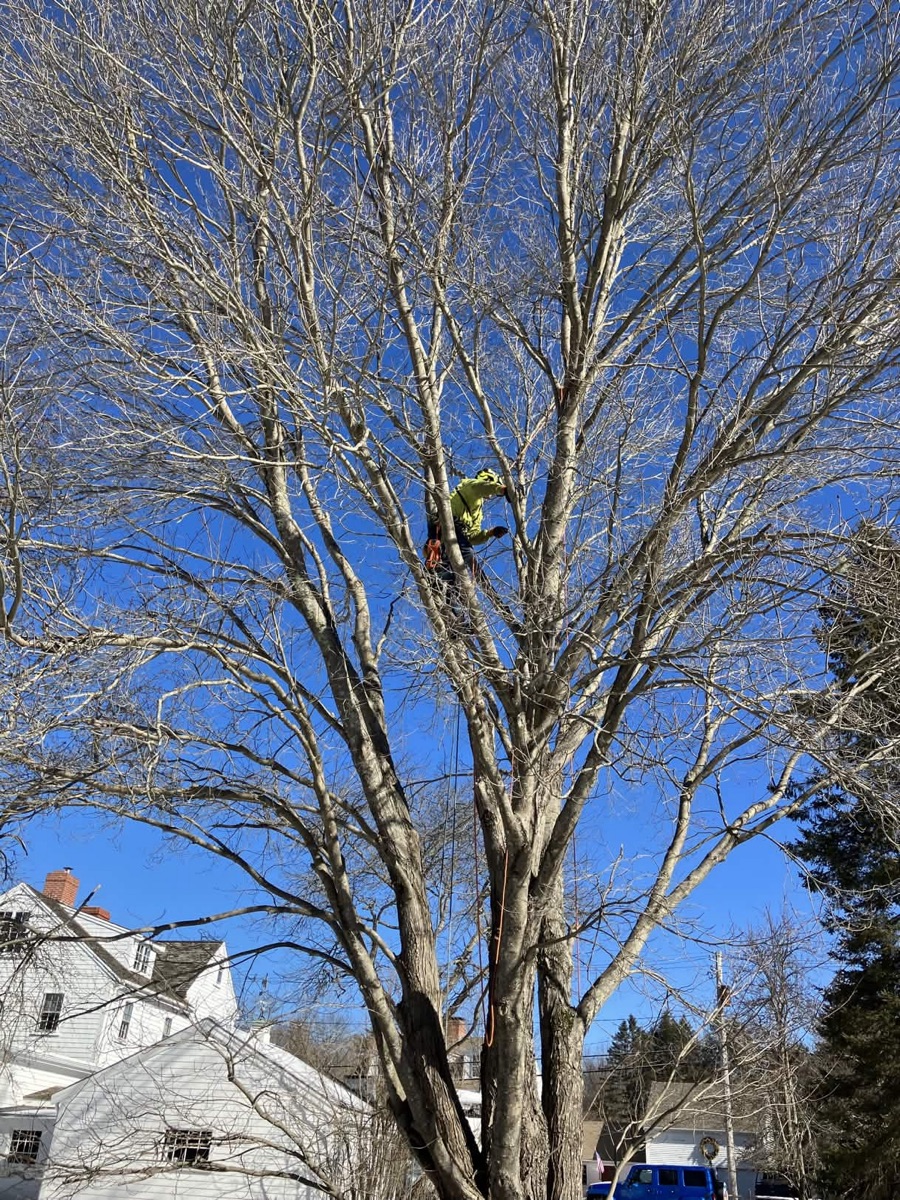
# Professional Tree Pruning in Yarmouth, Massachusetts
Your trees in Yarmouth, MA, face unique pressures from coastal winds, salty air, and sandy soils that demand precise tree pruning to stay healthy and safe. As ISA Certified Arborists at Southeast Arborist, LLC, we deliver ANSI A300-compliant tree pruning services tailored to Yarmouth's mid-Cape environment. Based in Plymouth and Cohasset, we serve the South Shore Massachusetts area, including all of Barnstable County's 24,000-resident town of Yarmouth (ZIP 02664), with its historic bayside villages and bustling Route 28 commercial strip.
Tree pruning in Yarmouth MA isn't just trimming—it's strategic care that addresses winter moth defoliation on oaks, tidal erosion along Bass River, and overcrowded pitch pines in interior neighborhoods. Our team follows American National Standards Institute (ANSI) A300 guidelines, ensuring every cut promotes tree vigor while minimizing risks to your property. Whether you own a home in Yarmouth Port's historic district or manage commercial lots in West Yarmouth, professional pruning prevents storm damage, restores views, and extends tree life.
Yarmouth's tree population includes pitch pine, scrub oak, black oak, white oak, eastern red cedar, black cherry, sassafras, American holly, red maple, and honey locust. These species thrive in the town's glacial sands and brackish influences but suffer from aging landscapes planted during the mid-20th-century tourism boom. Along Route 28, commercial properties rely on us for parking lot tree maintenance, while Bass Hole Area waterfront homes need pruning to counter erosion undermining roots.
We prioritize safety with rigorous protocols: all arborists wear PPE, use secured rigging, and employ bucket trucks or climbing systems suited to Yarmouth's dense neighborhoods. Our ISA certification means we diagnose issues like codominant stems in young red maples or deadwood in black oaks before they become hazards. Homeowners in South Yarmouth call us for crown cleaning on mature oaks weakened by winter moth, while Bayberry Hills residents seek structural pruning for pitch pines crowding power lines.
Investing in tree pruning Yarmouth MA saves you money long-term by averting costly removals—pitch pines alone can cost $2,000+ to remove if neglected. We handle crown thinning to improve wind resistance, elevation for safe passage under branches, and reduction for vista pruning along Bass River properties. Unlike DIY attempts that risk girdling cuts on sassafras or improper topping of honey locust, our methods follow science-based standards.
Contact Southeast Arborist today at 508-369-5009 for a free assessment. We'll evaluate your oaks, cedars, and cherries against Yarmouth's specific challenges, from historic plantings at Captain Bangs Hallet House to sound-side developments. Proper tree pruning keeps your property compliant with local codes, boosts curb appeal in tourist-heavy areas, and safeguards against nor'easters. Schedule now to protect your Yarmouth landscape.
Why Yarmouth Properties Need Tree Pruning
Yarmouth's coastal position in Barnstable County exposes trees to relentless challenges that make regular pruning essential for survival. Sandy, nutrient-poor soils drain quickly, stressing roots of white oaks and red maples during summer droughts, while high groundwater tables near Bass River drown eastern red cedars. Combine this with 50+ mph winter winds off Nantucket Sound and salty fog, and your trees develop weak crotches, deadwood, and overcrowded canopies needing immediate attention.
Winter moth caterpillars defoliate oak canopies annually in Yarmouth Port and Bass Hole Area, weakening black oaks and scrub oaks by 20-30% each spring. Without crown thinning to redirect energy to healthy branches, these trees become susceptible to two-lined chestnut borer and Armillaria root rot, common in the town's acidic soils (pH 4.5-5.5). Pitch pines in Bayberry Hills interior stands grow overcrowded, shading out understory sassafras and black cherry, leading to self-thinning and hazardous falling limbs.
Route 28's commercial corridor features aging honey locust and American holly planted in the 1950s-60s tourism surge. These trees now overhang parking lots in West Yarmouth, dropping debris and blocking sightlines. Tidal erosion along Bass River properties undermines pitch pine roots, causing leaners that pruning can stabilize through selective reduction. In Yarmouth Port's historic district around Captain Bangs Hallet House, 18th-century ornamentals like imported European beech (rare on Cape Cod) require restoration pruning to preserve canopy integrity without altering heritage aesthetics.
Your Yarmouth climate—USDA Zone 7a with 45-inch annual rainfall skewed to hurricanes—amplifies these issues. Nor'easters shear branches from red maples, creating entry points for Nectria canker. Pruning removes these hazards, improving air circulation to dry foliage faster and reduce fungal risks like anthracnose on sassafras. Structural pruning on young honey locust prevents codominant leaders that split in ice storms, a frequent South Yarmouth occurrence.
Homeowners in Bass Hole Area see oak-pine transitions to salt marsh erode boardwalk-adjacent trees; vista pruning opens views while balancing ecology. Overgrown cedars in South Yarmouth block solar access, stressing lawns already challenged by pine needle mulch. Without intervention, declining trees lower property values by 10-15% in this tourist corridor, per Barnstable County appraisals.
Practical advice: Inspect your pitch pines for pitch masses indicating southern pine beetle, prevalent post-defoliation. For oaks, check for vertical cracks in bark signaling weakness. Schedule pruning when 25%+ of canopy shows dieback. Southeast Arborist's ISA arborists use resistograph testing on Route 28 commercial trees to quantify decay before pruning decisions. This precision targets Yarmouth's issues, unlike generic services ignoring local pests like bagworms on cedars.
Neglect leads to insurance claims—Yarmouth's density means falling limbs damage neighboring roofs yearly. Pruning per ANSI A300 standards builds resilience, ensuring your trees withstand Cape Cod's environmental gauntlet.
Our Tree Pruning Process in Yarmouth
Southeast Arborist follows a meticulous, ANSI A300-compliant process for tree pruning in Yarmouth MA, customized to local species and conditions. We start with a site assessment: our ISA Certified Arborists arrive with laser rangefinders and resistographs to map your pitch pine or black oak canopy, noting winter moth damage or erosion risks near Bass River.
Step 1: Hazard identification. We scan for deadwood in white oaks (common after defoliation) and codominant stems in young red maples using binoculars and drones for Route 28 commercial lots. In Yarmouth Port historic areas, we document heritage trees at Captain Bangs Hallet House to comply with preservation guidelines.
Step 2: Pruning prescription. Per ANSI A300, we classify cuts: crown cleaning removes >50% deadwood without exceeding 25% live canopy removal. For overcrowded Bayberry Hills pitch pines, thinning targets 15-20% density reduction, selecting interior branches <2-inch diameter. Vista pruning along Bass Hole boardwalk elevates lower limbs 14 feet while preserving oak-marsh ecology.
Step 3: Gear-up with Yarmouth-specific equipment. Bucket trucks access West Yarmouth parking lot honey locust; spider lifts navigate South Yarmouth narrow streets. Climbers use throwlines and saddles for sassafras in dense Yarmouth Port yards. All cuts use Felco pruners or Silky saws, sterilized between trees to prevent Dutch elm disease spread (though rare, a risk with stressed black cherry).
Step 4: Execution with safety first. Ground crew establishes 1½ tree-length exclusion zones, per TCIA standards. We rig heavy limbs over Bass River homes with port-a-wraps, lowering via lowering devices to avoid tidal slopes. Crown reduction on leaning cedars shortens leaders by 1/4 length, collar cuts healing over without stubs that invite decay fungi.
Techniques vary by species: scrub oaks get subtle thinning to mimic natural gap-phase regeneration; American holly receives hand-pruning to avoid tearing waxy leaves. Structural pruning on juvenile honey locust subordinates weak stems early. Storm restoration post-nor'easter involves cleaning jagged breaks on red maples, applying no sealants as ANSI prohibits them.
Step 5: Cleanup and documentation. We chip branches onsite for Bass River mulch paths (nitrogen-balanced at 30:1 C:N), haul debris in 20-yard bins. Provide a digital report with before/after photos, cut logs per A300 (Part 1), and 3-year follow-up plan. For commercial Route 28 clients, we include liability waivers.
Our protocols exceed OSHA: daily inspections, two-way radios, and first-aid certified crews. In Yarmouth's 24,000-population density, we coordinate with Yarmouth Fire for overhead power prunes. This process ensures your trees gain 10-20 years lifespan—pitch pines pruned biennially show 40% less breakage.
Practical tip: Water deeply post-pruning (1 inch/week for 4 weeks) to aid callus formation in sandy soils. Avoid summer cuts on oaks to prevent oak wilt vectors. Call us at 508-369-5009 for this full-service approach.
Common Tree Pruning Projects in Yarmouth Neighborhoods
Yarmouth neighborhoods present distinct pruning needs, from historic preservation to commercial safety. In Yarmouth Port, around Captain Bangs Hallet House, we perform restoration pruning on 200-year-old white oaks and imported ornamentals. These trees feature multi-trunk forms weakened by age; we clean crowns, removing 10-15% deadwood while maintaining 18th-century silhouettes.
South Yarmouth residential yards call for crown elevation on maturing black oaks overhanging driveways. Winter moth leaves sparse canopies, so we thin selectively, targeting rubbing branches to boost light penetration for underplantings. Pitch pine deadwood removal prevents spark risks near homes.
West Yarmouth's Route 28 strip malls demand parking lot maintenance: hazard limb pruning on honey locust drops clearance to 16 feet, per zoning. Aging mid-century plantings show girdling roots; we air-spade and prune to expose stems without bark damage.
Bass River waterfront properties face tidal erosion—selective pruning stabilizes leaning eastern red cedars, reducing sail effect by 20%. Vista cuts frame marsh views, removing lower sassafras limbs undermined by tides.
Bayberry Hills interior neighborhoods feature overcrowded pitch pine stands; we thin to 40% spacing, subordinating suppressors on black cherry. This mimics natural fire regimes absent due to development.
Bass Hole Area boardwalk zones require ecological pruning: elevate scrub oak trailside branches 10 feet, preserving upland-to-marsh transition. American holly gets deadwood removal to support bird habitat.
Common across Yarmouth: structural pruning on young red maples protects against ice-split crotches. Commercial Route 28 work includes safety prunes for ADA paths. Call 508-369-5009 for neighborhood-specific service.
Tree Pruning Costs in Yarmouth, MA
Tree pruning costs in Yarmouth MA range from $300-$1,200 per mature tree, depending on height, species, and access. A 40-foot pitch pine in Bayberry Hills with light thinning costs $450 (15% canopy removal), while a 60-foot Route 28 commercial oak needing full hazard pruning hits $950 due to bucket truck setup.
Factors driving prices: Tree size—add $10/foot diameter at breast height (DBH). Pitch pines (avg. 18" DBH) cost more than scrub oaks (12") from resin cleanup. Location matters: Bass River waterfront adds 20% for erosion rigging; Yarmouth Port historic trees require $150 preservation survey.
Access challenges: West Yarmouth dense lots need climbing (+$200); South Yarmouth overhead wires trigger utility coordination (+$100). Scope: Crown cleaning (deadwood only) $250 base; full thinning/reduction $8/visible leaf area percentage removed, capped at 25% ANSI limit.
Yarmouth-specific premiums: Winter moth oaks demand resistograph (+$75); tidal leans add cabling assessment (+$100). Commercial Route 28 multi-tree contracts discount 15% ($5,000+/year savings).
Value proposition: Our pruning averts $2,500+ removals—pitch pine decline escalates fast. Boosted property values (5-10% via healthy canopies) and insurance discounts (up to 7%) offset costs. Biennial service for Bass Hole cedars halves breakage risk.
Get a free quote at 508-369-5009; no travel fees from Plymouth base.
| Project | Avg. Cost | Trees Served | |--------|-----------|--------------| | Residential Oak Cleaning | $400 | Black/White Oak | | Commercial Lot Prune | $800/tree | Honey Locust | | Waterfront Vista | $650 | Red Cedar/Pine | | Structural Young Tree | $300 | Red Maple |
When to Schedule Tree Pruning in Yarmouth
Schedule tree pruning in Yarmouth MA from late fall (November) to early spring (March), during dormancy. Avoid April-June oak sap flow to prevent vascular staining from winter moth wounds. Summer suits light cleaning on cedars; post-nor'easter (September-October) for storm restoration.
Urgency signs: >20% deadwood (prune ASAP); leaning pitch pines post-erosion; rubbing branches on Bass River sassafras; codomaints splitting in red maples. Call at first sign—delays compound Yarmouth wind damage.
Annual for commercial Route 28; biennial residential. Contact 508-369-5009 now.
Frequently Asked Questions About Tree Pruning in Yarmouth
**What is ANSI A300 tree pruning, and why does it matter in Yarmouth?** ANSI A300 sets standards for cut types and limits, preventing over-pruning that stresses oaks in winter moth zones. Our ISA arborists ensure Yarmouth trees heal properly in sandy soils.
**How much canopy can be removed safely from my Yarmouth Port oak?** No more than 25% in one session; we thin gradually for historic white oaks, promoting vigor against coastal decline.
**When should I prune pitch pines in Bayberry Hills?** Late winter, targeting overcrowded stands to reduce beetle risks. Deadwood anytime if hazardous.
**Does pruning help with tidal erosion on Bass River properties?** Yes, reduction balances weight on undermined red cedars, paired with root protection.
**How do you handle Route 28 commercial pruning safely?** Exclusion zones, traffic control, and utility pre-calls for honey locust over lots.
**Is structural pruning needed for young red maples in South Yarmouth?** Essential now to prevent future splits; subordinates weak stems early.
**What about American holly in Bass Hole Area?** Hand-prune deadwood winter to minimize leaf tear, supporting salt marsh ecology.
**How to prepare my West Yarmouth yard?** Clear 20-foot radius; mark utilities. We handle rest.
Tree Pruning Throughout Yarmouth
Southeast Arborist provides tree pruning across Yarmouth neighborhoods: Yarmouth Port historic districts, South Yarmouth homes, West Yarmouth commercial, Bass River waterfronts, Bayberry Hills pines, Bass Hole ecology zones. We extend to Dennis and Barnstable.
From Plymouth/Cohasset, we reach Yarmouth fast. Call 508-369-5009 for ISA-certified service.