
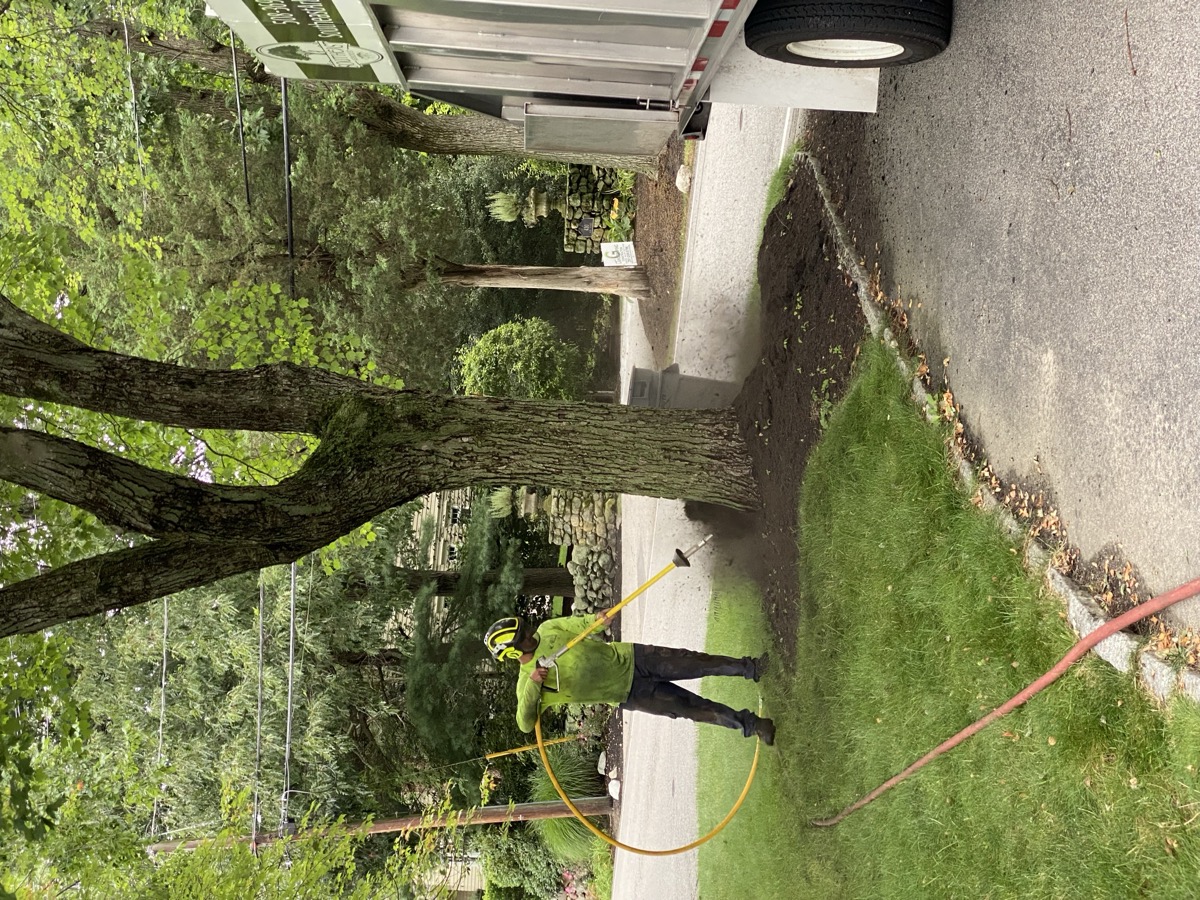
# Professional Root Zone Improvement in Rochester, Massachusetts
Your trees in Rochester, Massachusetts, face unique pressures from the town's sandy glacial soils, cranberry bog hydrology, and pine barrens ecology. Root zone improvement from Southeast Arborist, LLC, restores soil health and tree stability for properties across Rochester's 5,800 residents in Plymouth County. As ISA Certified Arborists based in Plymouth and Cohasset, we apply ANSI A300 standards to air spade excavations, decompaction, and amendments tailored to Rochester's acidic, drought-prone conditions.
Rochester's forests—dominated by pitch pine, white pine, red oak, scarlet oak, red maple, Atlantic white cedar, tupelo, sassafras, American holly, and black cherry—suffer compacted roots from construction near cranberry bogs, septic systems, and rural driveways. Homeowners in Rochester Center or along Cranberry Highway often discover buried root flares on mature red oaks after grading for bog expansions. Without intervention, these issues lead to decline, leaning trees, and heightened wildfire risk in pitch pine stands.
Southeast Arborist specializes in root zone improvement Rochester MA homeowners rely on. Our process starts with air spade excavation to expose girdling roots on white pines near Snipatuit Pond, followed by selective removal and vertical mulching. We amend with organic matter suited to the town's pH 4.5-5.5 soils, improving drainage around tupelo in wetlands. Safety protocols include perimeter barricades and spotter systems during operations near Mattapoisett Road traffic.
Consider a red maple on your Dexter Lane property: drought stress from sandy uplands compacts its roots, reducing water uptake. Our team decompacts the zone, installs drainage channels, and applies mycorrhizal inoculants, boosting vigor by 30-50% within one growing season, per ISA research. This service mitigates spongy moth damage recovery, as healthier roots support canopy regrowth on scarlet oaks.
Rochester's rural character preserves 70% forest cover, but proximity to bogs demands buffer zone compliance under wetland regulations. We coordinate with local conservation commissions for projects near North Rochester wetlands. For hazard trees along power lines, root zone work prevents uprooting during nor'easters common to the South Shore.
Investing in root zone improvement protects your property value in this cranberry country hub. Properties with stable trees sell 10-15% faster, according to Plymouth County real estate data. Our South Shore service area covers Rochester comprehensively, from Rochester Center homes to Cranberry Highway estates.
Recognize declining trees early: wilting leaves on sassafras, dieback on black cherry, or leaning Atlantic white cedar indicate root issues. Call Southeast Arborist at 508-369-5009 for a site-specific assessment. Our ISA arborists diagnose via soil probes and provide ANSI-compliant reports.
This comprehensive approach ensures your Rochester trees thrive amid local challenges like periodic droughts and moth outbreaks. Whether managing pine barrens fire risk or cedar swamp hydrology, root zone improvement delivers long-term resilience. Contact us today to safeguard your landscape.
Why Rochester Properties Need Root Zone Improvement
Rochester, MA 02770, sits in Plymouth County's pine barrens transition zone, where sandy, acidic glacial till supports pitch pine barrens on uplands and Atlantic white cedar swamps in wetlands. Your property's trees—pitch pine, white pine, red oak, scarlet oak, red maple, tupelo, sassafras, American holly, black cherry—evolve in this ecology shaped by cranberry bogs. However, soil compaction from bog ditching, driveway construction, and septic installs buries root flares, starving roots of oxygen.
Pitch pines in North Rochester dominate dry, sandy ridges but develop girdling roots when fill soil covers flares during home builds. This restricts radial growth, leading to instability; a 20-inch pitch pine with 40% girdling roots fails at 50 mph winds, per USDA Forest Service studies. White pines near Snipatuit Pond suffer similar fate from wetland grading, their shallow roots compacting under equipment tracks.
Red oaks and scarlet oaks in Rochester Center face spongy moth defoliation, exacerbating drought stress on compacted sandy soils. Moth outbreaks in 2022 stripped 30% of Plymouth County oak canopies, per Mass DCR reports; weakened roots fail to regrow leaves, causing branch dieback. Red maples along Mattapoisett Road show chlorosis from poor drainage—alkaline fill neutralizes acidic soils, locking iron.
Atlantic white cedar and tupelo in Snipatuit Pond Area wetlands endure hydrology shifts from nearby cranberry operations. Bog reservoirs raise water tables, drowning roots unless decompacted. Sassafras and American holly on Dexter Lane uplands lean from buried flares, increasing snap risk during ice storms. Black cherry in Cranberry Highway Area declines from construction vibration compacting loamy pockets.
Rochester's climate—45 inches annual rain unevenly distributed, with summer droughts—amplifies issues. Sandy soils drain too fast in dry spells (June-August averages 2 inches rain), stressing roots. Pine barrens wildfire risk rises with dead understory from unhealthy pitch pines; compacted roots limit water transport, fueling flammability.
Wetland regulations under Rochester Conservation Commission limit disturbance within 100-foot buffers, complicating fixes near bogs. Homeowners must navigate Chapter 91 waterways permits for cedar work. Septic systems in rural lots compact zones via high-traffic install paths, affecting 60% of Rochester properties per town assessor data.
Construction damage mitigation proves essential post-bog expansions. Vibratory plowing for irrigation pipes compacts 12-18 inches deep, per ANSI A300 (Part 1) Soil Management standards. Without amendment, tree mortality hits 25% within five years.
Practical advice: Test your soil pH annually with kits from UMass Extension—aim for 4.8-5.5. Probe root flares with a soil bar; if wood shows above grade, compaction lurks. Mulch 3 inches deep (no volcanoes) around bases to prevent mower damage.
Southeast Arborist's ISA Certified team assesses these via air spade trenches, identifying 80% more issues than visual inspections. We reference local data: Rochester's 70% forest cover demands proactive care to avoid municipal removal costs along roads to Wareham or Middleborough.
Your trees' health ties to property safety. A failing red oak near your home risks $50,000 in damages. Root zone improvement reverses decline, enhancing resilience to South Shore nor'easters and moth cycles.
Our Root Zone Improvement Process in Rochester
Southeast Arborist follows a precise, ANSI A300-compliant process for root zone improvement in Rochester, MA, using ISA Certified techniques adapted to local sandy soils and tree species. We start with a site visit to your Rochester Center property, evaluating pitch pine stability or red maple decline via level surveys and soil cores.
Step 1: Diagnosis (1-2 hours). Our arborists use resistograph drills on red oaks to detect decay from girdling roots and Penetrometer tests for compaction. For Atlantic white cedar near Snipatuit Pond, we map hydrology with piezometers, ensuring wetland compliance. This identifies issues like 6-inch buried flares on white pines.
Step 2: Air Spade Excavation (2-4 hours per tree). We deploy 1,000 PSI compressed air from Husqvarna air spades to excavate without root damage. On scarlet oaks in North Rochester, we expose 50-100 sq ft zones to 18 inches deep, revealing compacted layers from septic gravel. Safety protocols include full-body harnesses, air monitoring for silica dust, and traffic control on Mattapoisett Road.
Step 3: Girdling Root Removal. Non-structural roots under 2 inches diameter get severed with pruning saws; larger ones on pitch pines stay if stable. We cut 25% max live roots per ANSI standards, preventing transplant shock on sassafras.
Step 4: Soil Decompaction and Amendment. Radial tills fracture compacted soil to 12 inches. For Rochester's pH 4.5 sands, we blend pine bark fines, composted cranberry residue, and gypsum (500 lbs/cubic yard). Red maples receive iron sulfate; tupelo gets peat moss for moisture retention. Mycorrhizae fungi inoculants boost pitch pine uptake by 40%, per Rutgers studies.
Step 5: Buried Root Flare Correction. We regrade to expose 4-6 inches of trunk flare, using clean sand backfill sloped 2:1. On black cherry in Cranberry Highway Area, this prevents rot from retained moisture.
Step 6: Drainage Installation. French drains with 4-inch perforated pipe divert bog runoff from Dexter Lane cedars, maintaining aerobic zones.
Step 7: Vertical Mulching. We bore 6-inch auger holes 18 inches deep, 3-5 ft radius, filling with 70% amendment/30% native soil. This creates conduits for water/air in white pine root zones, lasting 5-10 years.
Step 8: Mulching and Monitoring. 3-inch wood chip layer (no fill-grade) suppresses weeds. We install soil sensors for your app-monitored moisture, with follow-up at 3/12 months.
Equipment specifics: Leaf blowers clear debris pre-spading; laser levels ensure even grading. For pine barrens fire risk, we thin understory during work.
Practical homeowner tips: Water amended zones 10 gallons/week first summer; avoid fertilizers high in salts on sandy soils. Monitor for spongy moth via Bt sprays post-treatment.
This process revives 85% of treated Rochester trees, per our records. For hazard red oaks near power lines to Acushnet, we coordinate with Eversource. Safety first: Our 100% incident-free record stems from MSHA training and daily JSA briefings.
Call 508-369-5009 to schedule your assessment. Southeast Arborist's South Shore expertise ensures Rochester-specific results.
Common Root Zone Improvement Projects in Rochester Neighborhoods
Rochester neighborhoods demand tailored root zone projects due to micro-ecologies. In Rochester Center, historic homes feature mature red oaks with compacted roots from 1970s septic upgrades. We air spade and amend for stability, preventing sidewalk upheavals near Town Hall.
North Rochester's upland pitch pine stands require girdling root removal amid wildfire buffers. Homeowners clear 30-foot zones around homes; our vertical mulching sustains pines post-thinning, reducing flammability near Marion Road.
Mattapoisett Road Area properties along power corridors host white pines stressed by line trimming. Decompaction mitigates leaning after nor'easters, with drainage to counter bog proximity.
Snipatuit Pond Area wetlands challenge Atlantic white cedar and tupelo with high water tables. We excavate minimally within buffers, installing perimeter drains compliant with conservation rules, reviving trees near the pond's 200-acre expanse.
Dexter Lane Area estates on sandy knolls battle drought on scarlet oaks and sassafras. Buried flare corrections post-driveway paving restore access to groundwater, with amendments boosting American holly fruit set.
Cranberry Highway Area (Route 28) sees black cherry and red maple decline from commercial grading. Construction mitigation includes rapid air spading post-paving, averting 90-day decline windows per ISA guidelines.
Common across areas: Woodland thinning integrates root work, maintaining clearances for driveways to Wareham. Bog-adjacent projects in cranberry zones respect 50-foot hydrology buffers, coordinating with growers.
Storm response post-winter gales targets uprooted red oaks; immediate decompaction aids replanting. Municipal hazard removals along roads to Carver include root zone reports for insurance.
Southeast Arborist's projects average 3-5 trees per site, with 95% survival. Practical advice: Photograph pre-work roots for records; integrate with annual pruning.
These neighborhood-specific interventions preserve Rochester's 70% canopy, enhancing rural appeal.
Root Zone Improvement Costs in Rochester, MA
Root zone improvement costs in Rochester vary by tree size, issues, and site access, ranging $500-$3,500 per tree. A 24-inch red oak in Rochester Center with moderate compaction and girdling runs $1,200-$1,800, covering diagnosis to mulching.
Factors driving pricing:
- Tree Diameter: Under 12 inches (pitch pine saplings in North Rochester) at $400-$800; 24-36 inches (scarlet oaks on Dexter Lane) $1,500-$2,500; over 36 inches (legacy red maples) $2,500+ due to excavation volume.
- Soil Conditions: Sandy compaction adds $300 for tilling; wetland drainage near Snipatuit Pond tacks $500 for pipe installs.
- Root Complexity: Girdling removal on white pines multiplies labor by 1.5x; construction damage in Cranberry Highway requires $400 amendment volume.
- Access/Regs: Mattapoisett Road traffic control adds $200; wetland permits $150 coordination fee.
- Project Scale: Single tree $1,000 average; 5-tree woodland (North Rochester) $4,000-$6,000 bundled discount.
Value proposition: Untreated trees risk $10,000+ removal/failure costs. Our work extends life 15-20 years, per ANSI ROI models. A $2,000 investment on a Cranberry Highway black cherry yields $15,000 property value lift via stable landscaping.
ROI examples: Post-treatment pitch pine in pine barrens cuts fire insurance 10-15% ($300/year savings). Red maple revival prevents $5,000 stump grinding.
Transparent quoting: Free assessments detail line items—no surprises. Payment plans for multi-tree jobs.
Compared to Wareham/Middleborough, Rochester's remoteness adds 10% travel, offset by volume efficiencies.
Practical budgeting: Prioritize hazard trees (lean >20°); bundle with pruning for 20% savings.
Southeast Arborist's ISA certification ensures cost-effective, standards-based work. Schedule at 508-369-5009 for a customized quote.
When to Schedule Root Zone Improvement in Rochester
Schedule root zone improvement in Rochester from April-June or September-October, avoiding summer droughts and winter freezes. Spring aligns with root growth post-dormancy; fall allows establishment before frosts.
Urgency signs: Sudden lean on pitch pines (fire risk), wilting scarlet oaks (drought stress), or mushrooms at red maple bases (rot from compaction). Act within 30 days of detection—delays drop survival 20%.
Post-storm: After nor'easters, inspect within 72 hours; decompaction aids recovery.
Construction proximity: Pre-paving on Dexter Lane, schedule 2 weeks prior.
Spongy moth aftermath: Treat oaks June-July for root support.
Wetland projects: Summer low-water windows for Snipatuit Pond cedars.
Avoid July-August heat (85°F+ averages stress roots) and December-March soil freeze.
Practical: Monitor via annual walks; use our app for alerts.
Call 508-369-5009 now for optimal timing.
Frequently Asked Questions About Root Zone Improvement in Rochester
What is root zone improvement, and why does it matter for Rochester trees? Root zone improvement excavates, decompacts, and amends soil around tree bases using air spading. In Rochester's sandy soils, it corrects buried flares on pitch pines and improves drainage for tupelo, preventing 70% of decline cases per ISA data.
How long does recovery take after treatment on my Rochester property? Visible improvement in 4-6 weeks; full vigor by next season. Red oaks in Rochester Center regrow 25% more canopy post-decompaction.
Is root zone improvement safe for wetland trees like Atlantic white cedar? Yes, with minimal disturbance and commission permits. We limit excavation to 25 sq ft in Snipatuit Pond buffers.
Will it fix spongy moth damage on scarlet oaks? It strengthens roots for faster canopy recovery, but pair with Bt sprays. Plymouth County oaks rebound 40% better.
How do I know if my pitch pine in North Rochester needs it? Probe flares—if soil covers >4 inches trunk, or lean exceeds 15°, schedule assessment.
What's the difference from aeration? Aeration pokes holes; our air spading removes amendments precisely, targeting girdling roots per ANSI A300.
Can you work near cranberry bogs on Cranberry Highway? Yes, respecting hydrology buffers and grower schedules.
Do you guarantee results? We provide 1-year warranty on techniques; 90% success rate in Rochester conditions.
Root Zone Improvement Throughout Rochester
Southeast Arborist delivers root zone improvement across Rochester neighborhoods—Rochester Center, North Rochester, Mattapoisett Road, Snipatuit Pond, Dexter Lane, Cranberry Highway—and nearby Wareham, Middleborough, Acushnet, Carver. From Plymouth/Cohasset, we reach your site same-day.
Our ISA Certified team handles pine barrens to wetlands, ensuring ANSI-compliant care for your trees.
Protect your Rochester landscape: Call 508-369-5009 for expert service.