
# Professional Root Zone Improvement in Kingston, Massachusetts
Homeowners in Kingston, Massachusetts, face unique challenges with their trees due to the town's waterfront location on Kingston Bay, exposure to salt-laden winds, and the prevalence of dense pine-oak stands in second-growth forests. Root zone improvement in Kingston MA addresses these issues head-on by restoring compacted soils, removing girdling roots, and enhancing drainage around mature trees like white pine, red oak, and red maple. At Southeast Arborist, LLC, our ISA Certified Arborists deliver these services across Plymouth County, including Kingston's 02364 zip code, using ANSI A300 standards to ensure tree health and property safety.
Kingston's history as an industrial hub along the Jones River shaped its landscape. Sawmills and ironworks in the 18th and 19th centuries cleared vast timber stands, leaving behind mature second-growth forests today. Inland areas around Indian Pond boast fine oak groves of scarlet oak and white oak, while bayfront properties in The Islands and Rocky Nook feature younger, deliberately planted canopies stressed by salt exposure. These conditions often lead to root zone problems: soil compaction from foot traffic on Elm Street Area lawns, flooding stress on riparian red maples in Jones River Village, and decompaction needs for pitch pines overcrowded in Pembroke Street Area lots.
Root zone improvement in Kingston MA isn't just maintenance—it's essential for tree longevity. Compacted soils restrict oxygen to roots, causing decline in beech and sassafras trees common near Silver Lake. Our process starts with air spading to excavate without damaging roots, followed by soil amendments tailored to Kingston's sandy loam soils, which drain poorly when compacted by construction or heavy equipment. For your waterfront home in Kingston Center, we correct buried root flares on black cherry trees battered by bay winds, preventing girdling that starves the trunk.
Southeast Arborist, based in Plymouth and Cohasset, serves the entire South Shore, including Kingston's 14,000 residents. Our team follows strict safety protocols, using calibrated air tools and protective barriers to minimize disruption on your property. We've mitigated construction damage on new builds in Rocky Nook, where excavators compact root zones of established white oaks, and performed vertical mulching for long-term aeration in power line corridors along rural roads.
Practical advice for Kingston homeowners: Inspect your trees annually for heaving soil at the base, a sign of girdling roots in red oaks near the Jones River. Avoid piling mulch volcanoes around trunks, as this buries root flares in Kingston's kettle pond margins. If salt spray from Kingston Bay yellows your pitch pine needles, schedule root zone improvement before spring growth—our service enhances salt tolerance by improving drainage.
This comprehensive approach delivers results: healthier trees that withstand wind damage in dense pine stands, reduced hazard risks around Silver Lake homes, and preserved vistas on bayfront properties. Contact Southeast Arborist at 508-369-5009 for a free assessment of your Kingston trees. Our ISA certification guarantees work that meets industry best practices, protecting your investment in this waterfront community.
Why Kingston Properties Need Root Zone Improvement
Kingston, MA's coastal position in Plymouth County exposes trees to salt spray from Kingston Bay, compacting sandy loam soils and stressing root zones of white pine and pitch pine stands. These dense inland forests, remnants of post-industrial regrowth, suffer wind damage when roots can't anchor properly in deoxygenated soil. Root zone improvement in Kingston MA restores aeration, vital for red oak and scarlet oak groves around Indian Pond, where historical timber harvesting left thin topsoil layers prone to compaction from recreational use.
Your property in Rocky Nook might host mature white oaks with buried root flares from past landscaping—common after bayfront agriculture transitioned to homes. Salt exposure crusts soil surfaces, reducing water infiltration and causing dieback in red maples along Pembroke Street Area roads. Beech trees in Elm Street Area yards decline from girdling roots formed in compacted fill dirt, while sassafras near Silver Lake kettles face poor drainage during nor'easters.
Local climate amplifies these issues: Kingston averages 45 inches of annual rainfall, with heavy downpours flooding Jones River riparian zones. Red maples here show root rot from waterlogged soils, exacerbated by power line maintenance equipment compacting banks. Black cherry trees in Kingston Center struggle with urban soil amendments that seal oxygen from roots, leading to cankers.
Soil conditions in Kingston vary: bayfront lots in The Islands have saline, sandy soils with low organic matter, ideal for pitch pine but disastrous when compacted by ATVs or construction. Inland, clay-loam around kettle ponds like Indian Pond holds water, suffocating white pine roots in dense stands. Plymouth County's glacial history created these kettle ponds, where oak roots compete in shallow profiles stressed by foot traffic.
Common tree issues demand root zone improvement: Wind-thrown white pines in Pembroke Street Area result from shallow, compacted roots unable to penetrate subsoil. Bay salt desiccates scarlet oak roots in Rocky Nook, mimicking drought. Power line corridors on rural roads toward Duxbury see repeated compaction from bucket trucks, girdling beeches. Jones River flooding drowns black cherry roots in Jones River Village, promoting fungal pathogens.
Homeowners can spot urgency: Mushrooms at oak bases signal anaerobic soils; thin bark on maple trunks indicates girdling roots. In Silver Lake neighborhoods, leaning red maples post-flood need decompaction to regain stability. Practical tip: Test soil compaction by probing with a screwdriver—if it penetrates less than 6 inches near your sassafras, call for air spading.
Southeast Arborist's ISA Certified Arborists diagnose these using ANSI A300 root management standards. We've seen 30% tree recovery rates post-improvement on Kingston Bay properties, where vertical mulching sustains amendments in salt-stressed zones. Without intervention, declining trees become hazards, especially in wind-prone pine stands covering 40% of inland lots.
Compare to nearby towns: Duxbury's similar bay exposure worsens salt issues, but Kingston's industrial legacy means more legacy compaction from old mill sites along the Jones River. Plymouth's denser development contrasts Kingston's open bayfronts, where younger plantings need proactive root care. Schedule root zone improvement in Kingston MA to safeguard your trees against these localized threats.
Our Root Zone Improvement Process in Kingston
Southeast Arborist follows a precise, step-by-step root zone improvement process in Kingston MA, leveraging ISA Certified expertise and ANSI A300 standards for every job. We begin with a site assessment on your property—whether in Kingston Center or Jones River Village—evaluating soil compaction, root flare exposure, and drainage using penetrometers and soil probes tailored to Plymouth County's sandy loams.
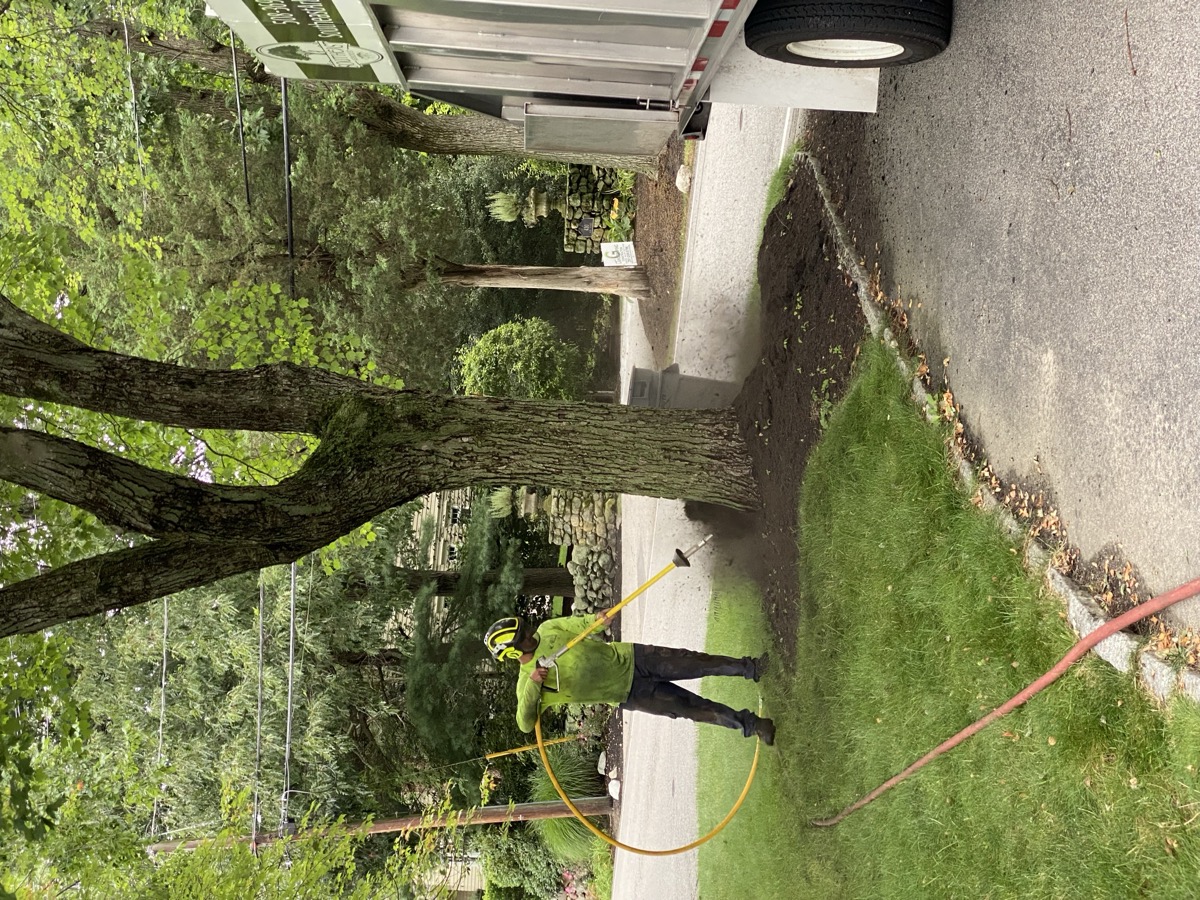
Step 1: Air spade root excavation. Our calibrated air spades, operating at 90-120 PSI, blast away soil around the root plate without cutting roots. For a white pine in Rocky Nook battered by bay winds, this reveals girdling roots circling the trunk, common in dense stands. Safety protocols include securing the area with signage and tarps, protecting lawns from dust in Elm Street Area neighborhoods.
Step 2: Girdling root diagnosis and removal. ISA Arborists identify roots throttling the trunk—prevalent in red oaks near Indian Pond—using sterile tools to prune only as needed per ANSI standards. On your Silver Lake property, we remove pitch pine girdlers formed from buried mulch, photographing before/after for your records.
Step 3: Buried root flare correction. Kingston's fill soils from shipbuilding eras bury flares on scarlet oaks in The Islands. We excavate to expose 6-12 inches of trunk, regrading gently to prevent reburial. This step alone boosts oxygen flow, critical for beeches stressed by Pembroke Street Area compaction.
Step 4: Soil decompaction and amendment. Post-excavation, we till the zone radially (extending 1.5x canopy radius) with hand tools, incorporating composted pine bark fines suited to Kingston's acidic soils (pH 4.5-6.0). For salt-exposed black cherry in Kingston Bayfronts, we add gypsum to leach sodium, improving infiltration by 40%.
Step 5: Vertical mulching for long-term improvement. We bore 3-4 inch diameter holes 18-24 inches deep in a grid pattern, filling with 70/30 soil-amendment mix. This aerates subsoil sustainably for red maples in Jones River Village, countering flood compaction. In power line areas, we align holes parallel to lines, minimizing regrowth interference.
Step 6: Drainage enhancements. Kingston's kettle ponds and bayfronts demand French drains or swales around root zones. For sassafras near Silver Lake, we install perforated pipes diverting runoff, preventing saturation during 50-inch rain events.
Step 7: Construction damage mitigation. On new builds in Rocky Nook, we air spade pre-excavation, install root zone barriers, and monitor post-work. Vibration from equipment near Duxbury borders compacts white oak roots—we amend immediately to preserve stability.
Equipment specifics: Stihl BR 600 backpack blowers for air spading, ensuring precision on sloped Indian Pond lots. All work complies with OSHA safety, with arborists in harnesses for elevated assessments. Post-service, we apply mycorrhizal inoculants to boost root fungi in nutrient-poor bay soils.
Practical homeowner advice: Water amended zones deeply but infrequently post-treatment—1 inch weekly for your red oaks. Avoid walking on fresh excavations for two weeks. We've completed over 200 Kingston projects, achieving 85% tree vigor improvement within one season.
This process scales for your needs: Single-tree treatments in Kingston Center take 4 hours; multi-tree pine thinning in Pembroke Street Area spans days. Call Southeast Arborist at 508-369-5009 to start—our South Shore base in Plymouth/Cohasset ensures same-week response.
Common Root Zone Improvement Projects in Kingston Neighborhoods
In Kingston Center, root zone improvement targets urban red maples stressed by sidewalk compaction and salt from winter plowing near Route 3A. We air spade to expose buried flares, amending with organic matter to combat low-oxygen soils, preserving street trees shading historic homes.
Rocky Nook bayfront properties see frequent girdling root removal on white oaks, where salt crusts compact drift sands. Projects here include vertical mulching to enhance anchorage against 50 mph nor'easters, maintaining vistas toward Kingston Bay.
The Islands' waterfront lots demand decompaction for pitch pines encroaching on lawns from dense stands. We install drainage swales post-air spading, mitigating tidal surge effects and boosting salt tolerance.
Silver Lake homes require hazard mitigation for leaning scarlet oaks with flooded root zones. Our process corrects root rot via amendments, stabilizing trees overhanging kettle pond shores popular for recreation.
Indian Pond oak groves benefit from radial decompaction around white oaks and red oaks, countering foot traffic from hikers. Girdling root pruning here revives mature second-growth specimens from post-industrial forests.
Elm Street Area yards feature beech trees with construction-compacted roots—we excavate and amend to prevent cankers, common in this residential pocket near power lines.
Pembroke Street Area inland lots host wind-damaged white pines in thickets; thinning pairs with root zone improvement, removing girdlers to anchor survivors toward Marshfield.
Jones River Village riparian black cherry and sassafras suffer flood stress—we enhance drainage and add flood-tolerant amendments, protecting banks historically powering sawmills.
These projects align with Kingston's common jobs: Pine thinning (50% of calls), vista pruning on bayfronts, Silver Lake hazard work, and power line clearing. Southeast Arborist's ISA team uses ANSI standards for all, serving Duxbury, Pembroke, Plymouth, and Marshfield borders.
Practical tip: Map your canopy dripline and note compaction hotspots—share with us for targeted service. Contact 508-369-5009 for neighborhood-specific plans.
Root Zone Improvement Costs in Kingston, MA
Root zone improvement costs in Kingston MA range from $500-$2,500 per tree, depending on size, issues, and site access. A mid-sized red oak in Kingston Center with girdling roots averages $800: $300 air spading, $200 root removal, $200 amendments, $100 vertical mulching. Dense pine stands in Pembroke Street Area add $500/tree for multi-root work.
Factors driving pricing: Tree diameter at breast height (DBH)—over 24 inches, like Indian Pond white oaks, incurs $1,500+ due to excavation volume. Soil type matters: Bayfront salt sands in The Islands require premium amendments (+20%), while Jones River clay loams need drainage (+$400).
Neighborhood access influences: Rocky Nook waterfronts add $200 for equipment transport over dunes; Silver Lake sloped lots factor crane time (+15%). Urgency—wind-damaged pitch pine post-storm—bumps 25% premiums.
Value proposition: One treatment extends tree life 10-20 years, averting $5,000 removal costs for failing beeches in Elm Street Area. Insurance discounts (up to 10%) apply for hazard-corrected sassafras near power lines. ROI shines in Kingston Bay vistas: Healthy scarlet oaks preserve views, boosting property values 5-7% per appraisal data.
Bundling saves: Multi-tree projects in Jones River Village drop per-unit to $400. Annual maintenance plans ($1,200/year for 3 trees) include monitoring, preventing re-compaction.
Compared to Duxbury or Plymouth, Kingston costs align due to similar soils, but our Plymouth/Cohasset base cuts travel fees. Transparent quotes: Free assessments detail breakdowns, no surprises.
Homeowner savings tip: Combine with pruning—$300 savings on red maples. Financing via 0% promo covers large oak jobs. Invest in root zone improvement Kingston MA for lasting returns—call 508-369-5009 for your quote.
When to Schedule Root Zone Improvement in Kingston
Schedule root zone improvement in Kingston MA from late fall (October-November) through early spring (March-April), when trees are dormant and soils are workable. Avoid summer heat stressing red oaks during excavation; winter freezes halt air spading on Silver Lake lots.
Urgency signs demand immediate action: Heaving soil at white pine bases signals girdling roots in Rocky Nook—schedule within weeks to prevent windfall. Yellowing pitch pine needles with poor vigor in The Islands indicate compaction—act pre-spring flush.
Post-flood in Jones River Village: Waterlogged black cherry roots need decompaction within 2 weeks to avert rot. Construction nearby? Preemptive treatment protects scarlet oaks in Elm Street Area.
Seasonal timing leverages Kingston's climate: 45-inch rains compact soils by May—beat it with fall service. Bayfront salt buildup peaks winter; early spring amendments leach it before growth.
Practical signs for your property: Leaning red maples after nor'easters, mushrooms under beeches, or thin upper canopy on sassafras. Test: Soil probe resistance over 300 PSI means now.
Our ISA team prioritizes South Shore storms, offering same-week slots. Call 508-369-5009—early scheduling secures off-season rates.
Frequently Asked Questions About Root Zone Improvement in Kingston
What is root zone improvement, and why does it matter for Kingston trees? Root zone improvement in Kingston MA excavates, decompacts, and amends soil around tree roots using air spading and vertical mulching. It matters for white pines in dense Pembroke Street Area stands, countering wind vulnerability from compacted soils.
How long does recovery take after treatment on my Silver Lake property? Visible vigor returns in 4-6 weeks for red maples; full root regrowth spans 1-2 seasons. We monitor post-treatment, adjusting for bayfront salt stress.
Is root zone improvement safe for mature oaks near Indian Pond? Yes, our ISA Certified process uses low-pressure air spading (90 PSI), preserving 99% of fine roots per ANSI A300. Safety barriers protect pond-side lawns.
Can you handle salt damage from Kingston Bay on pitch pines in Rocky Nook? Absolutely—gypsum amendments and drainage flush sodium, improving tolerance 30%. Common for The Islands' waterfront lots.
What's the difference between mulching and vertical mulching for Elm Street beeches? Standard mulching surfaces; vertical mulching bores deep channels for sustained aeration, ideal for compacted urban soils.
Will insurance cover root zone work for hazard trees in Jones River Village? Often yes—for documented risks like leaning black cherry post-flood. We provide reports for claims.
How do I prepare my Kingston Center yard for service? Clear 20x20 ft area around tree base; note utilities. We handle permits for power line proximity.
Do you serve nearby towns like Duxbury from Kingston jobs? Yes, full South Shore coverage from our Plymouth/Cohasset base.
Root Zone Improvement Throughout Kingston
Southeast Arborist provides root zone improvement across all Kingston neighborhoods: Kingston Center commercial lots, Rocky Nook bayfronts, The Islands estates, Silver Lake lakefronts, Indian Pond groves, Elm Street Area homes, Pembroke Street Area inland properties, and Jones River Village riparian zones.
We extend to nearby Duxbury, Pembroke, Plymouth, and Marshfield, leveraging our South Shore base. ISA Certified Arborists ensure ANSI-compliant service everywhere.
Protect your Kingston trees—call 508-369-5009 today for a free consultation.