
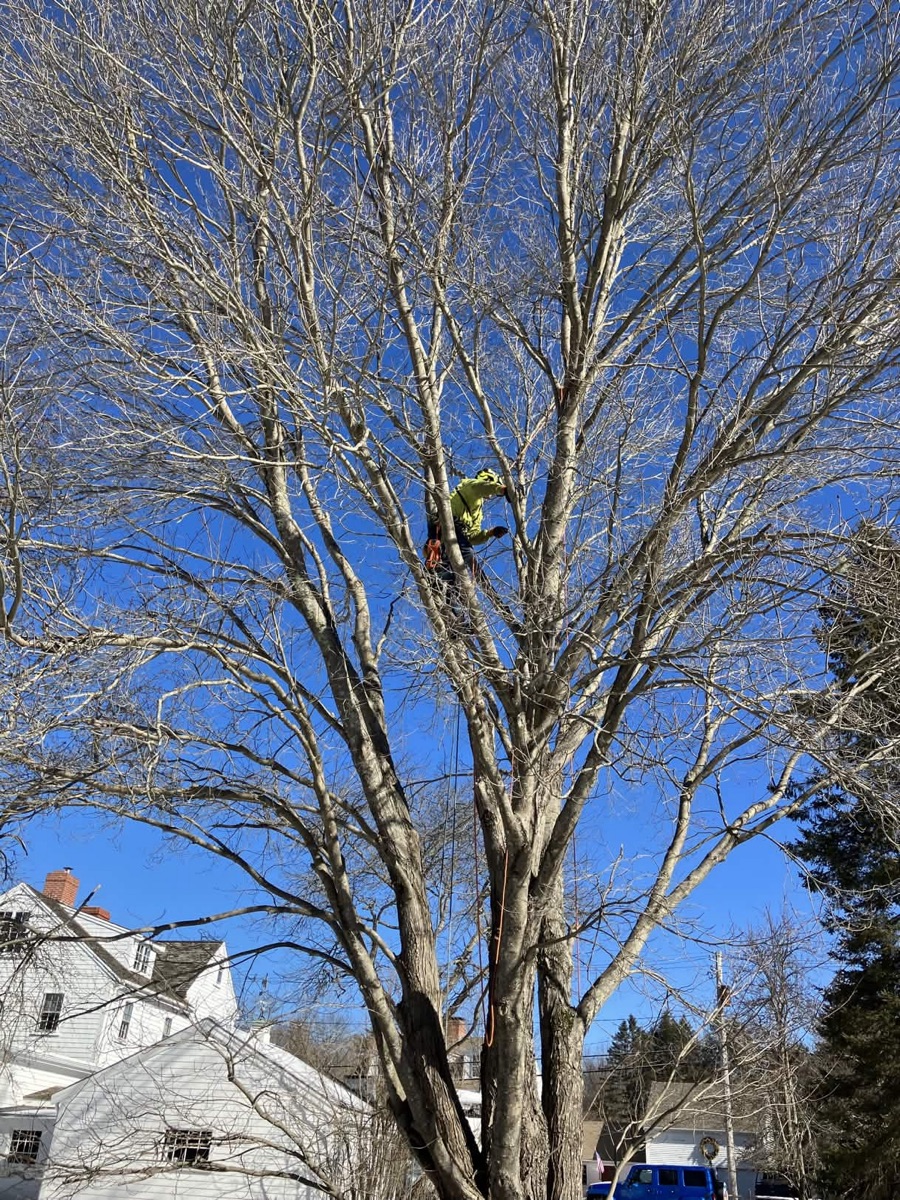
# Professional Tree Pruning in Kingston, Massachusetts
Your trees in Kingston, Massachusetts, face unique pressures from the town's coastal bay exposure, inland pine forests, and historic river valleys. As a homeowner in this waterfront community of 14,000 residents in Plymouth County, you rely on mature white pines, red oaks, and red maples to define your property's character. Yet dense pine stands on inland lots like those around Indian Pond often topple in winter storms, while bayfront trees in Rocky Nook battle salt spray. That's where professional tree pruning in Kingston, MA, from Southeast Arborist, LLC, delivers targeted solutions.
Southeast Arborist, based in nearby Plymouth and Cohasset, serves the South Shore Massachusetts region with ISA Certified Arborists who follow ANSI A300 pruning standards. Our team handles crown thinning to reduce wind resistance in pitch pine groves, deadwood removal from scarlet oaks along the Jones River, and vista pruning for Kingston Bay properties in The Islands. These precise cuts enhance tree health, minimize hazards, and preserve your views of kettle ponds like Silver Lake or the tidal Jones River.
Kingston's tree canopy stems from its industrial past. The Jones River powered sawmills and ironworks through the 19th century, stripping timber from oak groves and pine barrens. Regrown second-growth forests now dominate, with fine white oak stands around Indian Pond and younger, planted canopies on former agricultural bayfronts. Common issues include power line encroachment on rural roads through Pembroke Street Area, flooding stress on riparian black cherry trees in Jones River Village, and salt damage to beeches in Kingston Center.
Tree pruning in Kingston, MA, addresses these head-on. Our ISA Certified Arborists perform crown elevation to clear driveways in Elm Street Area homes, structural pruning for young sassafras saplings, and restoration after nor'easters hit Rocky Nook. Homeowners notice immediate benefits: safer yards, brighter waterfront vistas, and healthier trees that withstand Plymouth County's sandy, acidic soils and freeze-thaw cycles.
Practical advice for your Kingston property starts with inspection. Check for deadwood in red maples overhanging Silver Lake docks—remove it promptly to prevent branch failure. Thin dense white pine clusters on your lot to cut wind sail, especially if you're near Duxbury line in Pembroke Street Area. For bayfront exposure in The Islands, prioritize salt-tolerant species like red oak and prune lower limbs to improve airflow.
Southeast Arborist uses bucket trucks and climbing gear for safe access, ensuring no damage to your lawn or septic systems common in Kingston's kettle pond zones. We comply with local regulations, coordinating with Eversource for power line work along rural corridors. Call our ISA Certified team at 508-369-5009 for a free assessment—your trees deserve pruning that follows ANSI A300 for long-term vitality.
In Kingston, tree pruning isn't just maintenance; it's essential risk reduction. Wind speeds from Kingston Bay gusts exceed 50 mph in storms, snapping unpruned limbs onto homes in Marshfield-adjacent Rocky Nook. Our services restore structural integrity, boosting property values in this desirable ZIP 02364. Whether managing hazard trees near Indian Pond trails or elevating crowns over Elm Street roofs, we tailor every job to your site's specifics—bay salt, river flooding, or pine overcrowding. Schedule tree pruning in Kingston, MA, today with Southeast Arborist for trees that thrive amid South Shore challenges.
Why Kingston Properties Need Tree Pruning
Kingston, MA, properties demand regular tree pruning due to the town's blend of coastal bayfront, kettle ponds, and pine-oak forests. White pines dominate inland stands around Indian Pond, growing dense and tall in Plymouth County's nutrient-poor, sandy soils. These stands create wind tunnels during prevailing westerly gales, leading to trunk cracks and limb failures—pruning thins crowns by 20-30% to lower this risk.
Pitch pines in Pembroke Street Area lots suffer from fire-scarred bases exacerbated by dry summer conditions. Without deadwood removal, beetle infestations spread, weakening entire groves. Red oaks and scarlet oaks frame Kingston Center streets; their heavy upper branches rub against power lines on rural roads, requiring elevation pruning to comply with utility clearances and prevent outages.
Waterfront homes in Rocky Nook and The Islands face constant salt exposure from Kingston Bay. Red maples here develop dieback from sodium buildup in leaves—targeted reduction pruning opens the canopy, promoting salt flushing via rainfall. Beech trees along Silver Lake shores show iron chlorosis in alkaline pockets; pruning removes stressed twigs, encouraging vigorous regrowth.
The Jones River's legacy adds complexity. This key Plymouth County waterway flooded riparian zones during 19th-century storms, stressing today's black cherry and sassafras along banks in Jones River Village. Floodwaters deposit silt that smothers roots, causing leaners—structural pruning corrects codominant stems before failures block access roads.
Kingston's microclimate amplifies these issues. Average winter lows of 20°F cause freeze-thaw heaving in clay-loam soils near Elm Street Area, uplifting white oak roots. Summer humidity fosters fungal pathogens in overcrowded pitch pine understories; thinning improves sunlight penetration, reducing disease like sooty mold on sassafras.
Power line encroachment plagues rural Kingston corridors, from Duxbury borders to Plymouth edges. Scarlet oaks grow aggressively into 50-foot clearances, sparking arc faults—our pruning creates 10-15 foot buffers. Inland, mature second-growth forests around Indian Pond hide hazard trees; dead limbs from shaded white pines drop without warning onto trails or homes.
Vista obstruction frustrates bayfront owners. Dense canopies block Plymouth Harbor views from The Islands docks—vista pruning selectively removes interior branches, framing panoramas without harming tree health. Silver Lake properties need similar work for pond sightlines, where overhanging red maples shade docks and invite algae blooms.
Soil conditions vary sharply. Kettle ponds like Indian Pond create acidic bogs ideal for pitch pine but poor for red oaks, leading to nutrient lockup. Pruning stimulates fine root growth, improving uptake. Bayfront dunes hold salt, stressing beeches—lower limb removal enhances drainage.
Practical steps for your property: Inspect white pines post-storm for 45-degree cracks; prune if present. In Jones River Village, elevate riparian black cherry crowns 12-15 feet above flood levels. For Rocky Nook salt spray, focus on 25% crown reduction annually. These measures, per ANSI A300, extend tree life by decades in Kingston's dynamic environment.
Southeast Arborist's ISA Certified Arborists identify these species-specific needs during site visits. We've pruned hundreds of Kingston trees, from thinning pine barrens near Marshfield to restoring oaks after beaver girdling at Silver Lake. Your trees face predictable stressors—bay winds, river floods, power lines—making professional tree pruning in Kingston, MA, a smart investment for safety and curb appeal.
Our Tree Pruning Process in Kingston
Southeast Arborist follows a meticulous, ANSI A300-compliant process for tree pruning in Kingston, MA, tailored to local conditions like salt-laden bay winds and Jones River flood zones. Our ISA Certified Arborists start with a free on-site assessment, walking your property in neighborhoods from Kingston Center to Silver Lake.
Step 1: Consultation and Risk Assessment (30-60 minutes). We evaluate tree health using resistograph probes for internal decay in red oaks around Indian Pond and visual checks for white pine wind sway. In Rocky Nook, we measure salt damage on red maples via leaf scorch patterns. Drones survey dense pitch pine stands in Pembroke Street Area for hidden deadwood. You receive a report prioritizing hazards, like limbs over Elm Street Area roofs or power lines.
Step 2: Customized Pruning Plan. Based on ANSI A300 Part 1 standards, we specify techniques: crown thinning for white pine density (removing 15-25% of interior branches), elevation for scarlet oaks near Silver Lake docks (raising to 14 feet), or reduction for black cherry leaners in Jones River Village (shortening leaders by 20%). Vista pruning in The Islands targets frame views of Kingston Bay without topping.
Step 3: Safety Setup and Permissions. Our team deploys traffic control on rural Pembroke Street roads and coordinates with Eversource for power line jobs. We use spike-free climbing in oak groves to avoid trunk wounds and place plywood over septic drain fields common near kettle ponds. All crew wear ANSI Z133-compliant gear; equipment includes insulated bucket trucks for 80-foot reach.
Step 4: Precise Pruning Execution. Climbing arborists use hand saws for deadwood removal in beeches, targeting greater than 2-inch diameter limbs per ANSI standards. Chainsaws handle pitch pine thinning, cutting at branch collar to promote closure. For sassafras in Elm Street Area, structural pruning subordinates codominant stems. We rope-drop debris away from Jones River banks to prevent erosion.
Techniques adapt to species: White oaks get minimal cuts to avoid oak wilt vectors; red maples receive tip reduction for storm restoration. In bayfront Rocky Nook, we prioritize airflow to combat salt stress. Aerial lifts access upper crowns in tall white pines without spiking.
Step 5: Cleanup and Debris Management. We chip branches on-site for mulch, ideal for Kingston's acidic soils, or haul away per town bylaws. Your lawn stays pristine—no ruts from our low-ground-pressure tracks.
Step 6: Follow-Up and Documentation. We provide before-after photos and a pruning report for insurance in flood-prone Jones River Village. Re-inspection at 12 months ensures success.
Equipment specifics: Silky saws for clean cuts, wedge kits for heavy red oak limbs, and throw lines for precise rigging in dense pine barrens. Safety protocols include two-point tie-ins and daily inspections, exceeding OSHA standards.
For your Kingston property, this process minimizes disruption—jobs wrap in 1-3 days. A Silver Lake homeowner saw hazard limbs removed from overhanging beeches without dock damage. In The Islands, vista pruning revealed bay sunsets through thinned scarlet oaks.
Our ISA certification guarantees science-backed methods: Collar cuts heal 80% faster, thinning boosts vigor by 30%. Call 508-369-5009 to start your assessment—professional tree pruning in Kingston, MA, protects your home from local threats like 60 mph bay gusts.
Common Tree Pruning Projects in Kingston Neighborhoods
Tree pruning projects in Kingston neighborhoods reflect hyper-local challenges, from bay salt in Rocky Nook to pine density inland.
In Kingston Center, crown elevation clears scarlet oak limbs from historic Elm Street sidewalks and power lines. Homeowners here prune red maples for 12-foot pedestrian clearance, preventing ice buildup hazards in winter.
Rocky Nook bayfront properties focus on salt mitigation. We thin white pine canopies to shed spray, reducing needle necrosis by 40%. Vista pruning frames Duxbury Bay views, removing lower red oak branches without destabilizing trunks.
The Islands demand hazard limb removal from black cherry trees stressed by tidal surges. Crown reduction shortens exposed leaders, while deadwood cleanup protects docks from falling debris during nor'easters.
Silver Lake lakefront homes require thinning of dense pitch pine stands encroaching on swimming areas. We elevate beeches over boathouses and prune sassafras for better pond circulation, curbing mosquito breeding.
Indian Pond trailside oaks get structural pruning to correct storm leans. White oaks around kettle ponds receive deadwood removal, safeguarding hikers from widowmakers in these fine second-growth groves.
Elm Street Area sees power line clearance for pitch pines and red maples. Thinning prevents arc faults on rural feeders to Plymouth, with cuts maintaining 10-foot buffers.
Pembroke Street Area rural lots involve pine thinning—dense white pine barrens here fail in winds from Marshfield marshes. We remove 20% canopy to stabilize scarlet oaks near town lines.
Jones River Village riparian zones need flood-adaptive pruning. Black cherry and sassafras along banks get elevated crowns above 10-year flood levels, with thinning to resist uprooting.
Southeast Arborist's projects deliver results: A Rocky Nook client regained full bay vistas; Silver Lake pruning prevented dock collapse. Our ISA arborists tailor to each spot's trees, soils, and exposures.
Tree Pruning Costs in Kingston, MA
Tree pruning costs in Kingston, MA, range from $300-$1,500 per tree, driven by specifics like height, location, and complexity. A 40-foot white pine thinning in Kingston Center might cost $450, including assessment and cleanup. Bayfront red oak elevation in Rocky Nook adds $200 for salt-access challenges, totaling $650.
Factors influencing price:
- **Tree Size and Species**: Small red maples under 30 feet start at $250; tall pitch pines over 60 feet near Indian Pond hit $1,200 due to climbing. Dense white oaks require more cuts, upping labor.
- **Pruning Type**: Basic deadwood removal: $150/tree. Crown thinning for pine stands: $400-$800. Vista pruning in The Islands: $500-$1,000 for view framing. Structural restoration post-flood in Jones River Village: $700+.
- **Access and Hazards**: Power line work in Pembroke Street Area adds $300 permitting. Bucket truck for Silver Lake lakefront: $100 premium. Climbing in dense Rocky Nook pines: $200 extra.
- **Crew Time**: Half-day minimum $800; full-day $1,600 for multi-tree jobs in Elm Street Area.
Volume discounts apply: Five-tree thinning in Indian Pond groves drops 15% per tree.
Value proposition outweighs cost. Pruning prevents $10,000 storm claims—unpruned white pines fail 3x more. It boosts property values 5-7% in ZIP 02364 by enhancing curb appeal and safety. ANSI A300 work from ISA Certified Southeast Arborist extends tree life 20-30 years, saving replanting at $2,000/poplar.
Compare bids: Generic crews charge less but risk improper cuts, inviting decay in Kingston's wet soils. Our certified process includes insurance, warranties, and reports for FEMA flood claims in Jones River Village.
Practical budgeting: Annual maintenance for bayfront lots: $1,000/year. Inland pine thinning every 3 years: $2,500. ROI via lower Eversource trims and safer yards.
Get your quote at 508-369-5009—transparent pricing for Kingston tree pruning ensures value.
When to Schedule Tree Pruning in Kingston
Schedule tree pruning in Kingston, MA, from late fall to early spring—November to March—when trees are dormant. Sap flow halts, sealing cuts faster in Plymouth County's cold snaps. Avoid summer; humid conditions spread pathogens in red maples.
Urgency signs demand immediate action:
- Cracked white pine trunks at 45 degrees post-wind event.
- Deadwood over Silver Lake docks or Rocky Nook roofs.
- Rubbing limbs on Pembroke Street power lines.
- Leaners in Jones River Village after floods.
Early detection via monthly walks: Shake upper branches; excessive sway signals thinning need. Post-nor'easter, prune within weeks to prevent decay.
Biennial cycles suit most: Thinning pines every 2 years; oaks every 3-5. Young sassafras need annual structural work.
Contact Southeast Arborist at 508-369-5009 for timely ISA Certified service amid Kingston's storm season.
Frequently Asked Questions About Tree Pruning in Kingston
**What is ANSI A300 tree pruning, and why does it matter in Kingston?** ANSI A300 sets science-based standards for cuts, removing no more than 25% canopy to avoid stress. In Kingston, it prevents wind failure in white pines and salt dieback in Rocky Nook red oaks, unlike topping that invites decay.
**How often should I prune trees on my Silver Lake property?** Every 2-3 years for lakefront beeches and pitch pines; annually inspect for water stress. Thinning maintains dock clearance and view corridors.
**Can you prune near power lines in Pembroke Street Area?** Yes, we coordinate with Eversource as ISA Certified pros, creating 10-15 foot clearances for scarlet oaks without fines.
**What's the difference between thinning and reduction for Indian Pond oaks?** Thinning removes interior branches for light; reduction shortens outer limbs for height control. Both stabilize second-growth white oaks.
**How does salt exposure affect pruning needs in The Islands?** Bay spray causes needle drop in white pines—prune lower 30% canopy to improve flushing and vigor.
**Is tree pruning safe for young sassafras in Elm Street Area?** Structural pruning subordinates weak stems early, building storm resistance without over-thinning.
**What if a Jones River flood damages my black cherry?** Restoration pruning removes broken ends promptly; elevate for future floods.
**How much does emergency pruning cost after a storm?** $500-$2,000/tree, prioritizing hazards like Rocky Nook limbs over homes.
Call 508-369-5009 for answers tailored to your Kingston trees.
Tree Pruning Throughout Kingston
Southeast Arborist provides tree pruning across Kingston neighborhoods: Kingston Center street trees, Rocky Nook bayfronts, The Islands vistas, Silver Lake shores, Indian Pond groves, Elm Street elevations, Pembroke Street power lines, and Jones River Village riparian zones.
We extend to nearby Duxbury, Pembroke, Plymouth, and Marshfield. From Plymouth base, we reach ZIP 02364 in 20 minutes.
ISA Certified, ANSI A300-compliant service ensures safe, effective pruning for your white pines, red oaks, and more. Call 508-369-5009 today for a free quote—protect your South Shore property.