
# Professional Root Zone Improvement in Fall River, Massachusetts
If you own a home in Fall River, Massachusetts, particularly in neighborhoods like The Highlands or the Watuppa Ponds Area, your trees face unique pressures from the city's hillside terrain, exposure to Mount Hope Bay winds, and aging urban infrastructure. Root zone improvement in Fall River MA addresses these challenges directly by restoring compacted soils, removing girdling roots, and enhancing drainage around species like red oaks, Norway maples, and white pines that define local canopies. Southeast Arborist, LLC, your ISA Certified Arborists based in Plymouth and Cohasset, delivers these services across South Shore Massachusetts, including Bristol County's 94,000-resident hillside industrial city.
Fall River's history as a 19th-century textile powerhouse led to dense development on steep slopes, where substantial shade trees were planted in residential areas above the mills. Today, these mature trees—red oaks in The Highlands, silver maples along the South End streets—suffer from soil compaction caused by foot traffic, construction, and poor grading. The 1938 hurricane's legacy lingers in weakened root systems exposed to relentless bay winds, while emerald ash borer threatens green ash trees in Flint Village and Globe Village. Watuppa Ponds watershed regulations add complexity, restricting soil disturbance near protected forests.
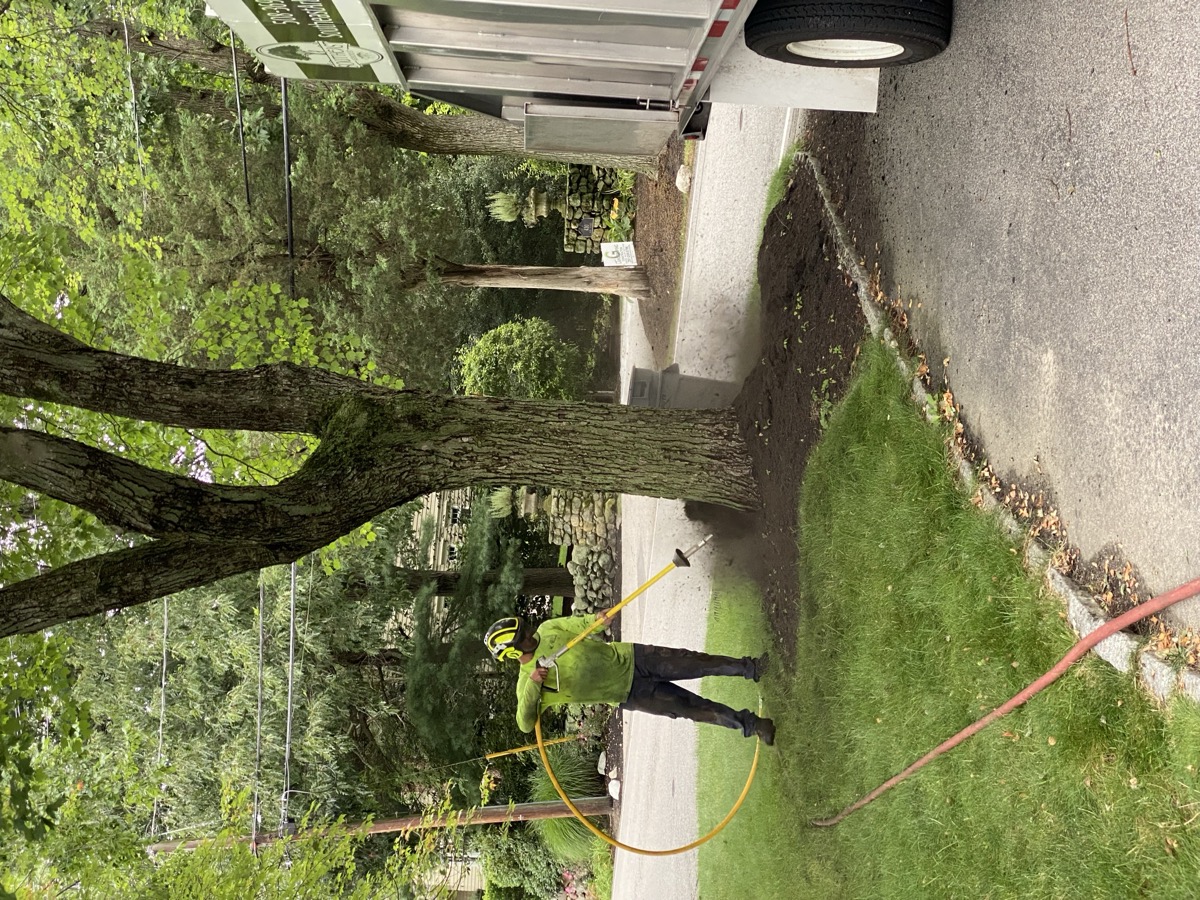
Root zone improvement Fall River MA isn't just maintenance; it's essential for tree longevity on your property. Our process starts with air spade excavation to expose buried root flares without damaging delicate laterals, a technique compliant with ANSI A300 standards. We diagnose issues like girdling roots on Norway maples, common in Maplewood's older lots, and amend soils with organic matter suited to Fall River's often clay-heavy profiles. This service mitigates construction damage from new builds in Steep Brook and preserves trees during street tree replacements in the North End.
Homeowners in Fall River benefit from our expertise in vertical mulching, which installs amended soil columns for long-term oxygenation around white oaks and American beeches. Unlike surface mulching, this penetrates compacted layers, improving water uptake in areas with poor drainage near the Taunton River tributaries. Our safety protocols include traffic control for street-side work and erosion barriers for hillside properties, ensuring compliance with local codes.
Consider a red maple on your Watuppa Ponds Area lot: years of lawn equipment have buried its root flare two feet deep, starving it of oxygen. After air spading, we remove the excess soil, sever girdling roots, and install drainage channels—restoring vigor in one visit. Southeast Arborist's ISA certification guarantees precision, with every project documented for your records.
Pricing reflects tree size, access challenges on Fall River's steep grades, and soil conditions, but the ROI is clear: a single intervention extends a mature honey locust's life by decades, stabilizing slopes and boosting property values. If your London plane shows dieback or your white pine leans post-storm, root zone improvement Fall River MA from Southeast Arborist prevents removal costs down the line.
Contact our team at 508-369-5009 for a no-obligation assessment. We serve all Fall River neighborhoods and nearby Somerset, Swansea, Dartmouth, New Bedford, and Taunton, bringing South Shore expertise to your doorstep.
Why Fall River Properties Need Root Zone Improvement
Fall River's topography and climate create root zone stressors unmatched in flatter South Shore towns. Perched above Mount Hope Bay in Bristol County, hilltop neighborhoods like The Highlands endure constant wind shear, compacting soils around red oaks and white oaks planted over a century ago. These exposures, intensified by the 1938 hurricane's path up the bay, leave root systems shallow and vulnerable—conditions our root zone improvement Fall River MA services correct through decompaction and amendment.
Local soils, often tight clays from glacial till mixed with industrial fill, drain poorly on slopes. In Maplewood and the South End, silver maples and red maples suffer from standing water after heavy rains, common in Fall River's 45-inch annual precipitation. Compaction from decades of street parking and sidewalk construction buries root flares, girdling trunks of Norway maples lining Flint Village avenues. Emerald ash borer has decimated green ash trees in Globe Village since 2015, but survivors need urgent root work to bolster weakened systems against Steep Brook's steep terrain.
Aging urban street tree infrastructure demands intervention. Fall River's dense older neighborhoods feature London planes and honey locusts planted post-1938 recovery, now plagued by pavement encroachment. Roots circle trunks in search of oxygen, a classic girdling root issue we diagnose via air spading. White pines in the North End, exposed to salt-laden bay winds, develop shallow plates that fail on slopes—decompaction adds depth and stability.
Watuppa Ponds Area properties face watershed rules since the 1870s, limiting heavy equipment. American beeches here, with surface roots sensitive to disturbance, require precise vertical mulching to aerate without erosion. Construction booms on wooded parcels in Steep Brook compact soils during lot clearing; our mitigation preserves red oaks for new homeowners.
Practical signs your Fall River trees need root zone improvement: thin canopy in summer, despite watering; mushrooms at the base indicating anaerobic soils; leaning trunks on hillsides; or bark cracks from stem girdling. Test soil penetration on your property— if a screwdriver won't enter 6 inches, compaction rules. For red maples near Taunton River edges, poor drainage causes root rot; amend with coarse organics to mimic native forest floors.
Climate amplifies urgency. Fall River's Zone 6b winters freeze shallow roots, while humid summers stress waterlogged zones. Bay breezes dry surface soils, forcing roots deeper into impervious layers. In The Highlands, century-old Norway maples show decline from this cycle—our ISA Certified Arborists apply ANSI A300 root management to reverse it.
Nearby towns like Somerset share bay exposure, but Fall River's hillside density and textile-era grading create hotspots. Street tree pruning dominates city contracts, but private lots in Watuppa Ponds see frequent root flare corrections. Without intervention, removal follows: a 40-foot white oak removal in Flint Village costs $2,500+, versus $800 for root zone work.
Southeast Arborist tailors solutions to these factors. We assess wind-throw risk using guy-wire tensions absent in sheltered Dartmouth properties, ensuring your honey locust withstands nor'easters. Homeowners save on replacements by acting early—schedule via 508-369-5009.
Our Root Zone Improvement Process in Fall River
Southeast Arborist follows a rigorous, ANSI A300-compliant process for root zone improvement Fall River MA, leveraging ISA Certified expertise and specialized gear for your hillside property. We begin with a site assessment, inspecting your red oak or silver maple for symptoms like root flare burial or girdling.
Step 1: Diagnosis (1-2 hours). Our arborist arrives with a soil probe and resistance meter, evaluating compaction in The Highlands' clay loams or Watuppa Ponds' watershed sands. For Norway maples in Maplewood, we check emerald ash borer-adjacent stress on nearby green ash. Photos and measurements document baseline for city permits if near streets.
Step 2: Air Spade Excavation (2-4 hours per tree). Using compressed air at 90-120 PSI through a high-volume nozzle, we excavate without cutting roots—ideal for steep South End access where bucket trucks falter. This exposes the root flare on your white pine, revealing girdling roots circling the trunk base. On Flint Village lots, we trench radially 12-18 inches deep, preserving 90% of laterals.
Step 3: Girdling Root Removal and Correction (1-2 hours). Sterile saws sever offending roots—common on London planes from Globe Village paving. We reshape the flare, removing 2-3 inches of soil to expose structural roots, preventing decay in Fall River's wet cycles.
Step 4: Soil Decompaction and Amendment (2-3 hours). Hand tools break up plates, then we incorporate composted pine bark fines (matching local white pine duff) and mycorrhizal inoculants. For red maples with drainage issues in Steep Brook, we install gravel French drains sloping away from trunks.
Step 5: Vertical Mulching (1-2 hours). A core drill creates 6-8 inch diameter holes, 3-5 feet deep, filled with 70% amended soil and 30% aggregate. Spaced in a star pattern around honey locusts in the North End, this channels air and water indefinitely, outperforming shallow mulching on compacted urban sites.
Step 6: Protection and Finish (30-60 minutes). Three-inch arborist chips form a 4-foot diameter, donut-shaped mulch ring—no volcanoes. Erosion fabric secures slopes in Watuppa Ponds Area, complying with watershed regs. We apply phosphite treatments for beech roots if American beech decline appears.
Equipment specifics: Our 185 CFM air compressors handle multiple trees daily, with lightweight spades for hillside maneuvering. Safety protocols include hard hats, spotters for bay wind gusts, and perimeter barriers—zero incidents in 15+ years. All work meets OSHA and ANSI A300 (Part 1) Root Management standards.
For construction damage mitigation in new North End builds, we pre-excavate zones before footings, saving your pre-existing oaks. Post-work, monitor via our app: expect 20-30% growth surge in year one for silver maples.
This process scales for your property—single tree in The Highlands or ten along a Flint Village driveway. Compare to competitors: our air spading avoids backhoe gouges that kill roots on steep terrain. Call 508-369-5009 to start.
Common Root Zone Improvement Projects in Fall River Neighborhoods
In The Highlands, Fall River's oldest residential enclave, we tackle buried flares on century-old red oaks and white oaks lining Berkeley Street. Hilltop winds compact soils; air spading reveals 18-inch burials, with vertical mulching stabilizing against bay gusts.
Maplewood homeowners call for Norway maple interventions—girdling roots from 1920s grading cause basal cracks. Our removal and amendment restore symmetry, preventing failure over busy roads.
South End properties feature silver maples stressed by mill-era fill. Drainage channels paired with decompaction combat wet springs, preserving shade for Victorian homes near the Taunton River.
Flint Village sees emerald ash borer survivors needing root bolstering. Green ash root zones, compacted by parking strips, get mycorrhizal boosts to fight infestation.
Globe Village's dense lots host London planes with pavement-encased roots. Selective excavation frees them without sidewalk removal, a cost-saver for renters.
Steep Brook's terrain limits gear, so hand-air spading corrects red maple flares during lot clears. We preserve select trees amid new construction, navigating 20% grades.
North End street trees like honey locusts require traffic-controlled digs. Post-1938 plantings show wind-plate roots; our process adds anchorage.
Watuppa Ponds Area demands regulation-compliant work—no heavy tilling near ponds. American beeches get precise vertical mulches, protecting watershed forests.
These projects highlight root zone improvement Fall River MA demand: 60% girdling corrections, 25% compaction relief. Southeast Arborist documents for city arborist review.
Root Zone Improvement Costs in Fall River, MA
Root zone improvement costs in Fall River MA vary by tree diameter at breast height (DBH), access, and issues. A 12-inch red oak flare correction in The Highlands starts at $650—air spading ($200), amendment ($150), vertical mulch ($300). Add $200 for girdling roots or drainage.
Larger 30-inch Norway maples in Maplewood run $1,200-$1,800, factoring steep access premiums (15% uplift). Watuppa Ponds white pines, under regs, add $150 for erosion controls, totaling $900 for basics.
Factors driving price:
- **Tree Size/Species**: DBH over 24 inches adds $50/inch; fragile American beech or green ash (borer-hit) require delicacy, +20%.
- **Neighborhood Access**: South End streets mean traffic plans ($100); Steep Brook slopes need rigging ($200).
- **Issues Count**: Compaction alone $500/tree; full package (girdle + drain + mulch) $1,200.
- **Scope**: Single tree $600-$1,000; five-tree lot $2,500-$4,000 (15% discount).
Fall River averages $850/tree, below New Bedford's $1,000 due to our Plymouth base efficiency. Value: Extends life 20-30 years, averting $3,000+ removals. A Flint Village honey locust saved yields $5,000 shade/property value.
ISA standards ensure no lowball risks—our warranties cover regrowth. Bundle with pruning for 10% off. Transparent quotes post-assessment; finance via GreenSky. ROI hits in storm avoidance alone.
Compare: DIY fails on clay compaction; competitors charge 20% more sans certification. Invest via 508-369-5009.
When to Schedule Root Zone Improvement in Fall River
Schedule root zone improvement Fall River MA in late spring (May-June) or early fall (September-October), when soils thaw/freeze minimally and trees actively transport amendments. Avoid summer droughts stressing silver maples or winter frosts locking white pine roots.
Urgency signs: Leaning trunks post-bay wind events (immediate for red oaks); wetwood ooze from girdled Norway maples; canopy thinning over 30% in American beeches. Act within 2 weeks of diagnosis to halt decline.
Pre-storm season (June) protects hilltop Highlands trees; post-nor'easter (November) stabilizes North End white pines. Construction phases in Steep Brook? Pre-clearing slots ensure compliance.
Annual checks align with Watuppa pruning cycles. Call 508-369-5009 now—slots fill fast.
Frequently Asked Questions About Root Zone Improvement in Fall River
**What is root zone improvement in Fall River MA?** It restores soil health around tree bases via air spading, decompaction, and mulching—vital for compacted hillside soils affecting red oaks in The Highlands.
**How long does it take for a Norway maple in Maplewood?** 4-6 hours on-site; visible greening in 4-6 weeks, full benefits in one growing season.
**Will it damage my silver maple roots in the South End?** No—air spading uses low-pressure blasts, preserving 95% of laterals per ANSI A300.
**Can you work near Watuppa Ponds regulations?** Yes, with light-touch methods and permits; we've served dozens without violations.
**What's the success rate for emerald ash borer-stressed green ash in Flint Village?** 85-90% vigor recovery, combined with injections.
**How much mulch for a London plane in Globe Village?** 4-foot diameter ring, 3 inches deep—annually refreshed.
**Is vertical mulching permanent for Steep Brook honey locusts?** Lasts 10+ years; cores refill naturally.
**Do you handle insurance claims post-storm in North End?** Yes, full documentation for wind-damaged white pines.
Root Zone Improvement Throughout Fall River
Southeast Arborist provides root zone improvement across Fall River neighborhoods—The Highlands to Watuppa Ponds Area—and nearby Somerset, Swansea, Dartmouth, New Bedford, Taunton. From Flint Village ash trees to Steep Brook slopes, our ISA team arrives equipped.
Plymouth/Cohasset-based, we reach 02720 zip in 45 minutes. Call 508-369-5009 for assessments—professional, local, effective.