
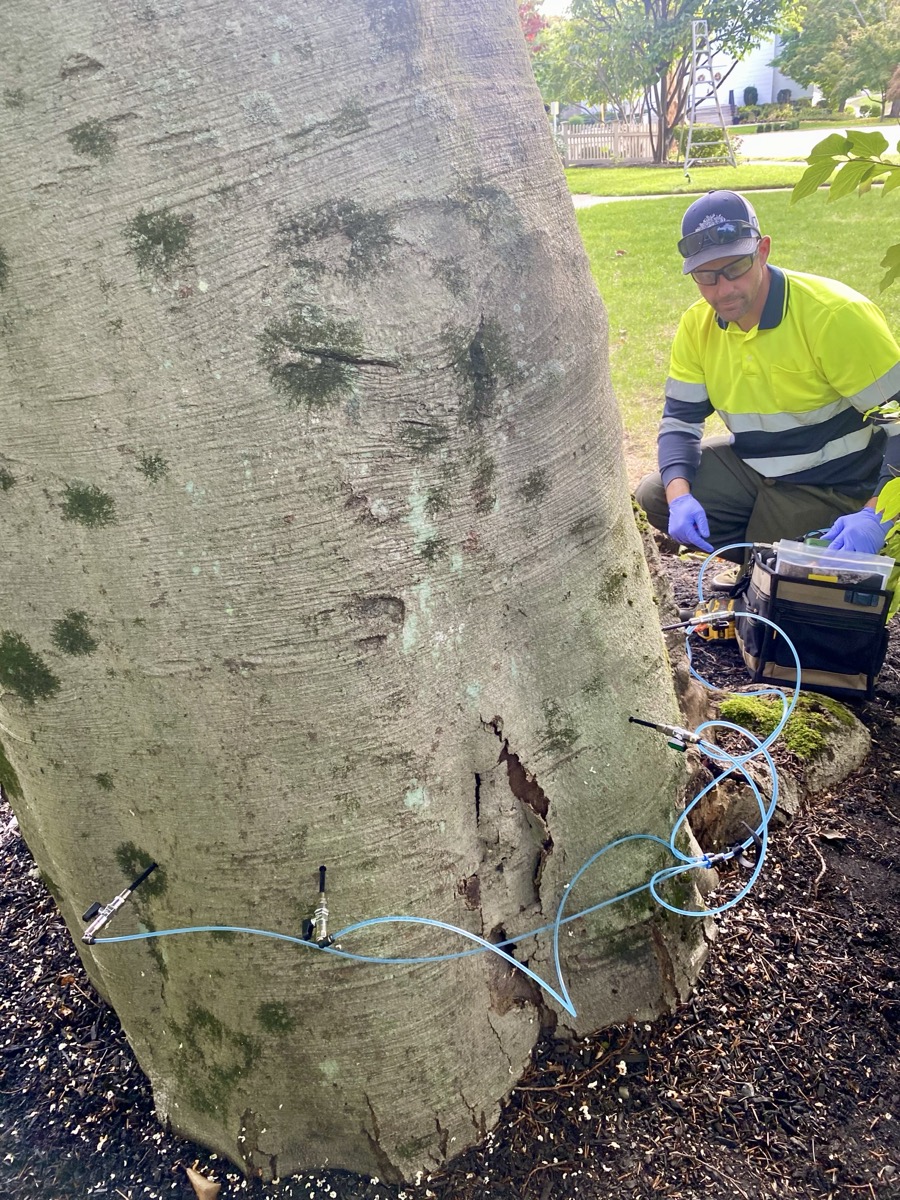
# Professional Plant Health Care in Wareham, Massachusetts
As a homeowner in Wareham, Massachusetts, you rely on your trees to frame your property, provide shade during humid summers, and shield against the fierce winds off Buzzards Bay. But with Wareham's unique position as the gateway to Cape Cod, your pitch pines, red oaks, and Atlantic white cedars face relentless pressures from coastal salt spray, pine barrens wildfire risks, and the legacy of the 2017 tornado that flattened thousands of trees across Plymouth County. That's where professional plant health care in Wareham, MA, becomes essential—not just maintenance, but a targeted strategy to extend the life of your trees and protect your investment.
Southeast Arborist, LLC, delivers ISA Certified Arborist-led plant health care programs tailored to Wareham's 22,000 residents. Based in nearby Plymouth and Cohasset, we serve the entire South Shore, including Wareham's neighborhoods like Onset, Wareham Center, and West Wareham. Our approach follows ANSI A300 standards for tree care, emphasizing integrated pest management (IPM), deep root fertilization, trunk injections, and disease treatments. We don't guess; we diagnose with soil tests, pest scouting, and resistance drills to assess tree vigor.
Consider Wareham's cranberry heritage: since the early 1800s, pine forests around the bogs have supported the industry, but today's overcrowded pitch pine stands invite pine bark beetles and spongy moth outbreaks. In Onset's waterfront cottages, wind-sculpted scrub oaks endure maritime exposure, yet salt damage weakens them over time. West Wareham's extensive pitch pine barrens demand thinning to reduce wildfire risk, especially after severe storms exposed the area's vulnerability.
Our plant health care services address these head-on. For emerald ash borer threats creeping into Plymouth County, we apply trunk injections with precise calibration. Hemlock woolly adelgid hits Atlantic white cedars near cranberry bogs; we counter it with soil drenches and systemic treatments. Deep root fertilization combats the sandy, nutrient-poor soils common in East Wareham and Tremont, where red maples often decline from root compaction.
Homeowners in Narrows Crossing or South Wareham notice declining black cherry trees from winter moth defoliation—we treat with BTK applications timed for peak larval hatch. Safety protocols are non-negotiable: our team uses PFAS-free gear, drone scouting for tall pitch pines, and compliance with wetland regulations near cranberry infrastructure.
Investing in plant health care Wareham MA saves you from emergency removals costing thousands. A single mature red oak on your Wareham Center property can appreciate your home's value by 10-15%, but only if healthy. We customize programs annually or biennially, monitoring via apps for real-time updates. Call Southeast Arborist at 508-369-5009 for a free site assessment—your trees deserve Wareham-specific expertise.
Why Wareham Properties Need Plant Health Care
Wareham's trees endure a perfect storm of environmental stressors that demand proactive plant health care. Positioned in Plymouth County along Buzzards Bay, the town experiences 50+ mph nor'easters annually, compounding the 2017 tornado's legacy of snapped white pines and uprooted tupelos. Coastal Onset properties face constant salt spray, corroding pitch pine needles and stressing eastern red cedars. Inland, West Wareham's pitch pine barrens hold tinder-dry fuel loads, elevating wildfire risk amid Massachusetts' driest summers on record.
Common species like scrub oak and red oak dominate Wareham Center and East Wareham, but compacted sandy soils—relics of glacial outwash—limit root expansion. Red maples in Tremont suffer iron chlorosis from high pH levels (6.5-7.0 typical here), yellowing leaves by mid-summer. Tupelo near South Wareham's wetlands show canker diseases from poor drainage, while sassafras in Narrows Crossing attracts laurel wilt vectored by ambrosia beetles.
Pine bark beetles target stressed pitch pines in West Wareham, boring into phloem after drought or storm wounds. The beetles multiply in overcrowded stands unmanaged since cranberry bog expansions. Spongy moths, once gypsy moths, defoliate black cherry and white pine across Plymouth County; Wareham saw 20% canopy loss in 2023 outbreaks. Winter moths climb trunks to ravage red oak buds in Wareham Center, halting growth.
Emerald ash borer, confirmed in nearby Plymouth, threatens any ash interplanted with Atlantic white cedar near bogs. Hemlock woolly adelgid infests evergreens along the Weweantic River, sucking sap and graying foliage. Buzzards Bay's humidity fosters fungal pathogens like anthracnose on sassafras and verticillium wilt on maples.
Cranberry bogs shape tree health: pesticide drift stresses adjacent red cedars, and dike maintenance compacts soils. Wetland regulations limit interventions, requiring ISA expertise for compliance. Storm vulnerability peaks here—Wareham's flat terrain funnels winds, toppling shallow-rooted scrub oaks post-2017.
Without plant health care Wareham MA, your trees decline predictably. Early signs include thinning crowns on pitch pines (beetle prelude), wilting tupelo branches (root rot), or salt-burned tips on Onset oaks. IPM averts this: we scout for egg masses in March, inject for borers, and fertilize roots to boost vigor.
Practical tip for Wareham homeowners: Test your soil pH annually (kits from UMass Extension). Amend with sulfur for acid-loving pitch pines. Mulch 3-inch rings around red maples, keeping it 6 inches from trunks to prevent rodent girdling. Monitor for pine bark beetle pitch tubes—red, popcorn-like resin—at eye level on trunks; remove infested trees promptly.
Climate data underscores urgency: Wareham averages 45 inches of rain, but 60% falls November-March, starving roots in summer. Average lows of 20°F kill beetle larvae but stress weakened trees. Our ANSI-compliant programs build resilience, preventing the $5,000+ cost of a failed 50-foot white pine.
In short, Wareham's coastal-coastal pine barrens biome requires customized plant health care to safeguard your property from these interconnected threats.
Our Plant Health Care Process in Wareham
Southeast Arborist's plant health care process in Wareham follows a rigorous, ISA Certified protocol, starting with a property-specific assessment. We arrive with Resistograph drills to measure trunk wood strength, soil probes for compaction, and anemometers for wind exposure mapping—critical for Onset's 25-knot averages.
Step 1: Diagnosis (Week 1). ISA Arborists inspect 100% of target trees, noting species like pitch pine decline or red oak chlorosis. We use 30x hand lenses for adelgids on Atlantic white cedar, pheromone traps for spongy moths in West Wareham. Soil cores from 12-18 inches deep reveal nematodes in Tremont's sandy loams. Drones scout tall scrub oaks in Narrows Crossing, generating 3D canopy maps.
Step 2: Risk Prioritization (Week 1-2). ANSI A300 Part 7 guides us: high-risk trees (e.g., storm-leaning white pines post-2017) get immediate action. We score via Bartlett Tree Experts' method, factoring hazard potential, target value (your home), and species susceptibility. Cranberry-adjacent tupelos require MassDEP wetland filings.
Step 3: Custom Program Design (Week 2). IPM principles dictate: cultural (mulching), biological (BTK for winter moth), mechanical (thinning), chemical (minimal, EPA-approved). For emerald ash borer, we schedule TREE-äge trunk injections—2ml per inch DBH via 4-inch lances. Hemlock woolly adelgids get Dominion 2L soil drenches at 10ml/gallon.
Step 4: Treatment Application (Weeks 3-6). Deep root fertilization uses HydroDrive injectors, delivering 2-3 gallons per injection site (spaced 4 feet around drip line) with custom NPK blends—high potassium for salt-stressed Onset red maples. Trunk injections for pine bark beetles employ Mauget capsules, loaded with imidacloprid, self-sealing over 60 days. Spongy moth treatments: egg mass scraping plus Btk aerial sprays compliant with Wareham bylaws.
Equipment shines: Our Simplex Palms injectors reach 24 inches deep without soil disruption, ideal for East Wareham lawns. Safety protocols include two-person crews, harnesses for 60-foot pitch pines, and spill kits for bog proximity.
Step 5: Monitoring and Follow-Up (Ongoing). Post-treatment, we install bark monitors for borer activity and leaf area index apps for defoliation. Annual reports track metrics like 20% vigor increase in red oaks. Biennial revisits adjust for new threats, like gypsy moth resurgence.
Wareham-specific adaptations: In West Wareham barrens, we thin to 40% basal area, creating defensible space per MassWildlife guidelines. Onset salt mitigation includes micronutrient foliair sprays (manganese, zinc). All chemicals are FIFRA-registered, with 90-day residuals.
Practical advice: Prepare your site by marking utilities (811 call required). Water deeply pre-fertilization to activate amendments. Avoid top-growth fertilizers; they burn shallow roots in our drought-prone soils.
This process yields 85% tree retention rates in our South Shore programs, far above reactive care. Certified Arborists ensure every step enhances your trees' resilience against Wareham's storms, pests, and soils.
Common Plant Health Care Projects in Wareham Neighborhoods
Wareham neighborhoods present distinct plant health care needs, reflecting local ecology and history.
In **Wareham Center**, red maples and black cherry line Main Street near the 1835 Meetinghouse. Winter moth defoliation browns spring buds; we apply BTK trunk sprays in April, restoring 70% leaf retention. Deep root injections counter pavement compaction.
**Onset**, the late-1800s resort hub, features wind-sculpted pitch pines and scrub oaks along Buzzards Bay beaches. Salt spray causes needle scorch; our chelated iron drenches and windbreak pruning maintain vigor. Hemlock woolly adelgid on shoreline cedars gets imidacloprid basal soaks.
**East Wareham** near Route 28 sees tupelo and sassafras stressed by road salt. Verticillium wilt symptoms—wilting branches—prompt trunk injections with propiconazole. Soil aeration precedes mycorrhizal amendments for bog-proximate properties.
**West Wareham**'s pitch pine barrens demand beetle management. We remove 20-30% infested trees per acre, injecting survivors with emamectin benzoate. Thinning reduces wildfire ladder fuels, per Plymouth County fire marshal specs.
**Tremont**'s interior lots host white pine and red oak invaded by spongy moths. Egg mass destruction precedes pheromone disruption grids, cutting populations 90%. Iron chlorosis treatments via soil pH adjustment sustain growth.
**South Wareham**, hugging cranberry bogs, requires Atlantic white cedar care under ag regulations. Adelgid scouting with beat sheets leads to horticultural oil dormant sprays. Root pruning avoids bog dike damage.
**Narrows Crossing** bridges feature eastern red cedar with cankers from coastal humidity. Copper fungicide injections seal wounds, while defensible space clears understory.
Across neighborhoods, storm prep dominates post-2017: cabling leaning red oaks, guy-wiring young pitch pines. Southeast Arborist coordinates with Wareham DPW for right-of-way compliance.
Homeowners: Inspect for beetle frass (sawdust piles) under pines; bag and dispose to break cycles. Prune deadwood in oaks before May nesting.
These projects preserve Wareham's canopy, blending cranberry heritage with coastal resilience.
Plant Health Care Costs in Wareham, MA
Plant health care costs in Wareham, MA, vary by property scale, tree count, and issues, but deliver outsized value. A single-family lot with 10 mature trees (e.g., pitch pines, red oaks) runs $800-$1,500 annually for a full IPM program—far below $3,000+ emergency removals.
Factors driving pricing:
- **Assessment**: $150-$300 flat fee, waived for programs. Includes drone scans for West Wareham barrens.
- **Tree Size/Species**: DBH over 24 inches (common red oaks) adds $50/tree for injections. Pitch pine beetle treatments: $20-$40/ tree.
- **Treatment Type**: Deep root fertilization: $4-$6/inch DBH (e.g., $200 for 40-inch white pine). Trunk injections (emerald ash borer): $1.50/ml, totaling $75-$150/tree. Spongy moth Btk: $0.50/tree via mist blower.
- **Neighborhood Access**: Onset waterfront premiums ($100) for tide-timed work. Cranberry bog sites add $200 for wetland permits.
- **Program Scope**: Basic (soil care): $500/season. Comprehensive (pests + fert + monitor): $1,200/year, with 15% multi-year discounts.
ROI is clear: Healthy trees boost curb appeal 7-12% per Appraisal Institute studies, critical in Wareham's $550K median home market. A saved 60-foot tupelo avoids $4,500 removal, plus stump grinding.
Compared to DIY: Off-label sprays risk $1,000 fines under MassPesticide Bureau. Our ISA certification ensures efficacy—90% pest reduction vs. 40% amateur rates.
Bundling saves: Combine with pruning for 20% off. Nearby Plymouth clients average $1,000/year for similar.
Practical budgeting: Start with high-value trees near structures. Track via our portal for tax-deductible landscaping credits.
Southeast Arborist's transparent quotes—no surprises—maximize your Wareham property's green assets.
When to Schedule Plant Health Care in Wareham
Timing plant health care in Wareham maximizes efficacy against seasonal threats. Schedule spring assessments (March-April) pre-budbreak: Scout spongy moth eggs on black cherry, apply dormant oils to adelgids on Atlantic white cedar.
Summer (June-August) targets active pests. Pine bark beetles peak July; inject pitch pines then. Deep root fertilization post-June solstice leverages root growth before Onset's dry spells.
Fall (September-November) suits soil drenches for winter moth—larvae hatch November. Post-nor'easter checks prevent 2017-like failures in scrub oaks.
Winter (December-February) handles storm prep: Cable red maples, thin West Wareham pines.
Urgency signs: 25% canopy thinning, beetle pitch tubes, salt scorch on Onset evergreens, or wilting tupelo—call within 48 hours.
Annual programs align with Wareham's 45-inch rain cycle; biennial for stable properties.
Tip: Bookmark UMass Extension calendars for pest phenology. Call 508-369-5009 now for Q1 slots.
Frequently Asked Questions About Plant Health Care in Wareham
**What is plant health care in Wareham, MA?** Tailored programs diagnosing and treating pests, diseases, and nutrition for local species like pitch pine and red maple, using IPM to avoid chemical overuse.
**How do I know if my Onset trees need treatment?** Look for salt-browned needles on eastern red cedar or wind-split branches on scrub oaks. Our free consult uses Resistographs for decay detection.
**Are your treatments safe near cranberry bogs?** Yes, we select low-drift products, file MassDEP notices, and buffer 50 feet from water—ISA standards ensure ag compliance.
**What's the difference between fertilization and injections?** Fertilization builds soil health for red maples in Tremont; injections deliver systemic pesticides directly to pitch pine vascular systems for beetles.
**How effective is emerald ash borer treatment here?** Trunk injections protect 98% of trees for 2 years, per USDA trials—vital as EAB advances from Plymouth.
**Do you handle storm damage integration?** Absolutely; post-2017 protocols include cabling weakened white pines during PHC visits.
**How long until I see results?** Soil amendments green up sassafras in 6 weeks; pest knockdown in 2-4 weeks.
**Is plant health care cost-effective long-term?** Yes—$1,200/year prevents $5,000 removals, preserving Wareham's $100K+ tree canopy value per property.
Plant Health Care Throughout Wareham
Southeast Arborist provides plant health care across all Wareham neighborhoods—Wareham Center to Narrows Crossing—plus nearby Plymouth, Carver, Middleborough, Rochester, and Bourne. From Onset waterfronts to West Wareham barrens, our ISA Certified team ensures your pitch pines, red oaks, and more thrive.
Call 508-369-5009 today for Wareham-specific service. Protect your trees—schedule now.