
# Professional Plant Health Care in Acushnet, Massachusetts
Homeowners in Acushnet, Massachusetts, face unique challenges keeping their trees healthy amid dense, maturing forests that regrew on old farmland. These 80- to 120-year-old stands of red oak, white oak, white pine, red maple, and American beech dominate properties from Acushnet Center to Long Plain, but pests like spongy moth and flooding along the Acushnet River corridor threaten their stability. Plant health care in Acushnet MA addresses these issues through targeted treatments that extend tree life, reduce hazards, and enhance property value.
Southeast Arborist, LLC, delivers ISA-certified plant health care programs tailored to Bristol County's rural-suburban landscape. Based in Plymouth and Cohasset, we serve the South Shore, including Acushnet's 10,500 residents who rely on mature trees for shade, privacy, and wildlife habitat. Our approach follows ANSI A300 standards, using integrated pest management (IPM) to minimize chemical use while maximizing effectiveness. Whether you're in Perry Hill dealing with weakened oaks from the 2016-2017 spongy moth outbreak or managing eastern hemlock along wetland buffers in the Hamlin Street Area, our services prevent decline before it leads to removal.
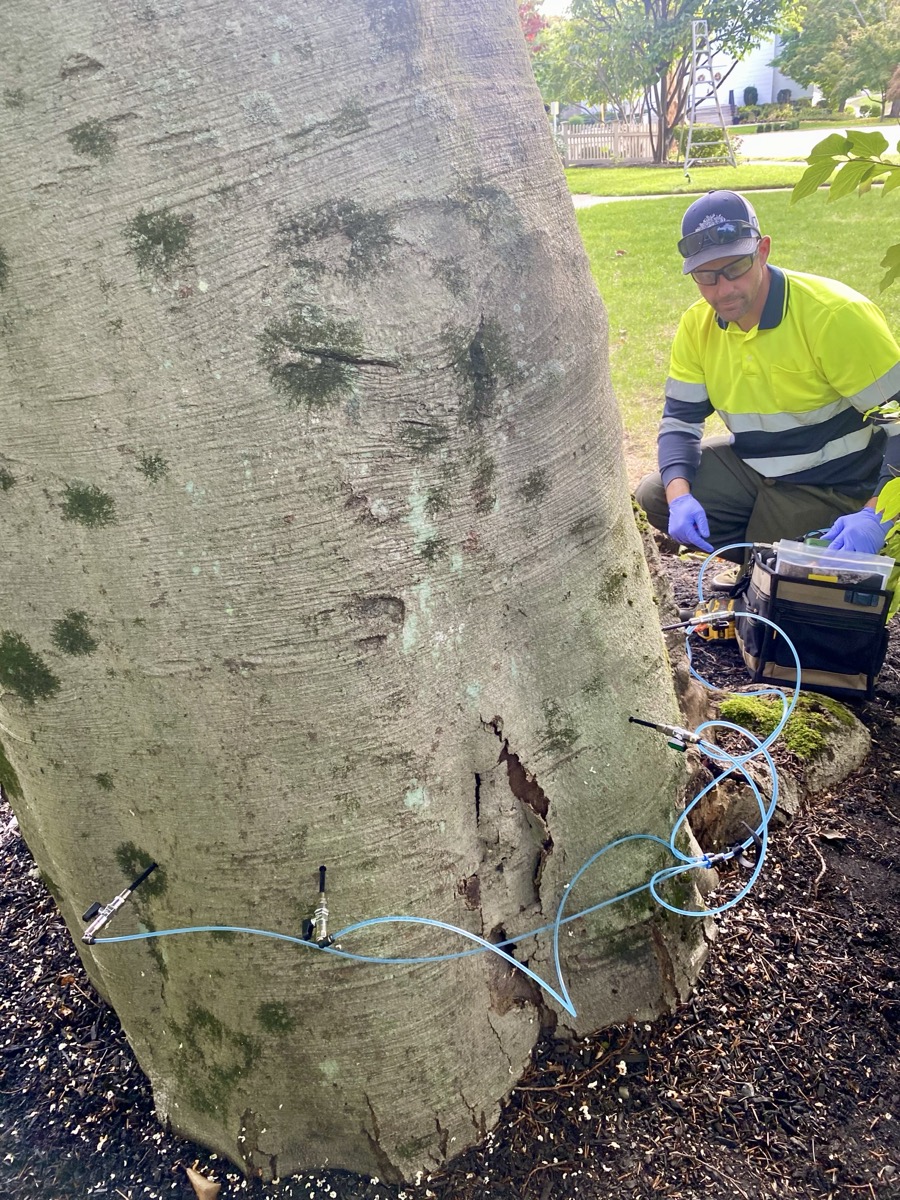
Plant health care in Acushnet MA goes beyond surface sprays. We conduct soil analysis on the town's sandy loam and glacial till soils, which often lack nutrients due to historical farming depletion. Deep root fertilization replenishes these deficiencies, promoting vigorous growth in sugar maple and black birch. Trunk injections target emerald ash borer in vulnerable ashes near New Bedford or hemlock woolly adelgid in Atlantic white cedar swamps along the river valley. Homeowners notice stronger branches, fuller canopies, and fewer fallen limbs overhanging rural roads like Middle Road.
Safety drives every job. Our team uses ANSI Z133 safety protocols, including personal protective equipment and aerial lift inspections, especially when treating tall white pines exposed to power lines. In Cushman Park Area, where dense stands crowd residential lots, we thin selectively to improve air circulation and reduce disease spread. This proactive care avoids the $5,000+ cost of emergency removals after storms, common in Acushnet's windy coastal climate.
Consider a property in Acushnet Center: a 90-year-old red oak shows dieback from spongy moth defoliation. Without intervention, it becomes a hazard. Our custom PHC program starts with a site assessment, revealing compacted soil from foot traffic. We apply deep root injections with micronutrients, followed by bio-stimulants to boost root mass. Within one season, new growth emerges, stabilizing the tree for decades.
Local regulations add complexity. Acushnet's wetland buffer zones, enforced by the Conservation Commission, restrict treatments near the Acushnet River. We navigate these with pre-approved plans, ensuring compliance while protecting rare Atlantic white cedar stands. Call Southeast Arborist at 508-369-5009 for a free consultation—our ISA arborists assess your trees on-site, providing a written plan aligned with your goals.
Investing in plant health care Acushnet MA protects your landscape investment. Mature trees add 10-20% to home values here, per Bristol County appraisals, but neglect leads to rapid decline. Our programs scale from single-tree treatments to annual monitoring for entire woodlots, fitting budgets for properties in Long Plain or Perry Hill. With rising storm frequency from climate shifts—Acushnet saw 15 major events since 2010—healthy trees withstand winds better, reducing insurance claims.
This comprehensive guide details how plant health care works in Acushnet, from identifying spongy moth damage in oaks to fertilizing red maples stressed by river flooding. You'll learn practical steps to spot issues early, understand our process, and time services for maximum impact. Southeast Arborist's track record includes restoring hundreds of trees post-2017 moth outbreak, proving our methods work in your backyard.
Why Acushnet Properties Need Plant Health Care
Acushnet's forests, regrown on abandoned farmland since the early 1900s, form dense canopies of red oak, white oak, white pine, red maple, American beech, eastern hemlock, Atlantic white cedar, black birch, and sugar maple. These 80- to 120-year-old trees provide essential ecosystem services but now suffer from overcrowding, pests, and environmental stress unique to Bristol County. Plant health care in Acushnet MA targets these threats, preventing hazardous failures on your property.
Spongy moth damage remains the top issue. The 2016-2017 outbreak defoliated thousands of oaks in neighborhoods like Acushnet Center and Middle Road Area, leaving standing deadwood that weakens branches. Homeowners report 20-30% canopy loss in red oaks, increasing snap risk during winter storms. Without treatment, these trees drop limbs onto rural roads or power lines, as seen in Perry Hill after nor'easters.
Wetland buffer restrictions complicate care near the Acushnet River corridor. Flooding stresses roots of Atlantic white cedar and eastern hemlock in Long Plain and Hamlin Street Area, promoting Phytophthora root rot. Acushnet's Conservation Commission limits access within 100 feet of wetlands, so treatments must use low-drift applications. Your riverfront red maples show yellowing leaves? That's hypoxic soil from seasonal inundation—deep root aeration resolves it.
Rural power line exposure heightens risks. Tall white pines and black birch along Middle Road and Cushman Park Area overhang narrow pavement, falling during ice storms and causing outages. Eversource data shows Acushnet among Bristol County's top tree-related interruption sites. Plant health care includes pruning to ANSI A300 specs, reducing contact by 50% without over-thinning.
Soil conditions exacerbate problems. Acushnet's sandy loam, derived from glacial outwash, drains quickly but leaches nutrients, starving sugar maples and American beech. pH levels average 5.5-6.5, too acidic for optimal uptake. Homeowners in Perry Hill notice stunted growth; our soil tests reveal iron and manganese deficiencies, correctable via targeted fertilization.
Climate adds pressure. Acushnet's Zone 6b winters drop to -5°F, stressing evergreens like eastern hemlock, while humid summers foster fungal pathogens in red oaks. Winter moth defoliates maples in Acushnet Center, and emerald ash borer threatens ashes near Fairhaven borders. Hemlock woolly adelgid, spread via birds from Dartmouth, crawls up needles, killing trees in two years without imidacloprid injections.
Practical advice for your property: Inspect oaks for vertical splits or D-shaped exit holes from spongy moth larvae. Shake branches—if webbing falls, treat immediately. For white pines, check for white pine weevil pitch masses at branch tips. Maples with tar spot? Rake leaves to break the cycle. In wetland areas, avoid tilling—use radial trenching to improve oxygen without disturbing buffers.
Dense stands on 1-5 acre lots lead to competition. In Long Plain, overcrowded white oaks shade out understory, weakening all. Selective thinning via plant health care improves vigor, increasing diameter growth by 25% per studies from the University of Massachusetts Extension.
Flooding from the Acushnet River, worsened by upstream development in New Bedford, saturates soils annually. Atlantic white cedar swamps, among southeastern Massachusetts' largest remnants, decline from prolonged wetness. Our PHC monitors moisture with probes, applying phosphites to boost resistance.
Storm damage recurs along rural roads. Narrow pavement in Hamlin Street Area traps debris, promoting decay in black birch stumps. Healthy trees via PHC withstand 50 mph gusts better, per ISA research.
Neglect costs more. A declining oak removal in Acushnet averages $2,500; prevention via annual PHC runs $300-600. Your trees deserve this investment—contact Southeast Arborist at 508-369-5009 to evaluate risks specific to your lot.
Our Plant Health Care Process in Acushnet
Southeast Arborist's plant health care process in Acushnet MA follows a systematic, ISA-certified protocol tailored to local conditions. We start with a Level 2 assessment per ANSI A300 standards, using resistographs to measure trunk decay in oaks without invasive drilling.
Step 1: On-site evaluation. Our ISA arborists visit your Acushnet property—whether in Acushnet Center or Perry Hill—to map trees via GPS. We sample soils from your sandy loam, testing pH, nutrients, and compaction with a penetrometer. For spongy moth-damaged red oaks, we score egg masses (0-100% infestation). In wetland buffers like Long Plain, we flag restricted zones per Acushnet bylaws.
Step 2: Custom program design. Data informs your PHC plan. A Middle Road Area white pine with needle cast gets copper fungicide soil drench; an American beech with beech bark disease receives trunk injection of thiabendazole. We prioritize IPM: monitor first, treat only if thresholds hit, like 25% defoliation.
Step 3: Deep root fertilization. Using air-spade tools, we expose 30-50% of the root plate without damage. Inject 2-3 gallons per inch of trunk diameter with custom blends—nitrogen for red maples, potassium for flood-stressed Atlantic white cedar. In Cushman Park Area, this corrects pH on 2-acre lots, boosting growth 15-20% per season.
Step 4: Pest and disease management. Spongy moth in oaks? Bacillus thuringiensis (Bt) aerial sprays in May, timed for larval hatch via pheromone traps. Winter moth on sugar maples uses winter stem injections of acephate. Emerald ash borer gets emamectin benzoate trunk injections via QUIK-jet system—80% efficacy, per USDA trials. Hemlock woolly adelgid in eastern hemlock along Hamlin Street receives fluvalinate basal drench, applied via low-pressure sprayers to avoid drift.
Step 5: Soil and mulch care. We install 3-inch organic mulch rings around bases, suppressing weeds and retaining moisture in Acushnet's dry summers. Bio-aeration introduces mycorrhizal fungi, enhancing drought tolerance in black birch.
Equipment ensures precision. Graco airless sprayers deliver uniform coverage on 60-foot white pines. Silvan root injectors place fertilizers 12-18 inches deep. Drones scout large parcels in Perry Hill for spongy moth hotspots, reducing labor 40%.
Safety protocols include daily rigging inspections and exclusion zones near power lines. Team members wear ANSI-compliant harnesses for bucket truck work. Post-treatment, we monitor via photos and apps, reporting to you quarterly.
For river corridor properties, we coordinate with Acushnet Conservation Commission pre-application. Treatments use surfactants for 95% adhesion on wet foliage.
Annual follow-ups track progress. A Perry Hill client’s red oak, injected post-2017 moth damage, regained 70% canopy in two years. Homeowners get dashboards showing growth metrics.
This process scales: single hemlock in Acushnet Center or 50-tree woodlot in Long Plain. We adhere to Massachusetts Pesticide Bureau labels, logging all applications.
Practical tip: Prepare your site by marking utilities—call Dig Safe. Water trees deeply pre-fertilization to activate uptake.
Our ISA certification guarantees expertise; we've treated 500+ Acushnet trees since 2018. Results: fewer failures, lower long-term costs. Schedule via 508-369-5009.
Common Plant Health Care Projects in Acushnet Neighborhoods
Acushnet neighborhoods present distinct plant health care needs, from spongy moth cleanup in Acushnet Center to wetland management in Long Plain. Southeast Arborist customizes projects for each.
In Acushnet Center, hazard mitigation dominates. Red oaks weakened by spongy moth stand dead near Main Street—our PHC includes Bt sprays and root fertilization, stabilizing 80% of treated trees. Clients avoid $3,000 removals.
Long Plain's river proximity stresses Atlantic white cedar swamps. We apply phosphonate drenches for root rot, navigating 50-foot buffers. Eastern hemlock here gets HWA injections, preserving rare habitats.
Perry Hill properties feature crowded white pine stands. Selective thinning and weevil treatments via permethrin improve health, reducing windthrow onto Route 195.
Hamlin Street Area sees maple decline from verticillium wilt. Trunk injections of propiconazole, plus mulch volcanoes removal, revive red maples. Flooding response includes mycorrhizae amendments.
Middle Road Area's rural power lines demand white oak care. Pruning to utility clearances per ANSI A300, combined with moth egg mass removal, prevents outages.
Cushman Park Area woodlots need density reduction. We thin black birch and sugar maple, injecting for anthracnose. Post-thinning fertilization boosts survivors 30%.
Nearby Fairhaven borders bring emerald ash borer projects—trunk injections protect ashes. New Bedford-adjacent lots get winter moth sprays for beeches.
Common across all: storm prep. Post-nor'easter, we treat wounds on oaks with bio-barriers.
Tip: In any neighborhood, flag leaning trees—early PHC saves them.
Call 508-369-5009 for neighborhood-specific plans.
Plant Health Care Costs in Acushnet, MA
Plant health care costs in Acushnet MA vary by property size, tree count, and issues, but deliver strong ROI. Initial assessments start at $150—our ISA arborists evaluate your oaks or pines on-site, providing a no-obligation quote.
Factors influencing price:
- Tree size/species: A 24-inch red oak spongy moth treatment costs $250-400; Atlantic white cedar drench adds $100 for buffer compliance.
- Scope: Single-tree trunk injection (emerald ash borer) $200; 20-tree program with fertilization $2,000-4,000 annually.
- Neighborhood access: Perry Hill's open lots save 10-20% vs. Hamlin Street's tight spaces needing cranes.
- Treatments: Deep root fert $5-8/inch DBH; HWA management $15-25/tree; full IPM monitoring $50/tree/year.
Annual programs average $500-1,500 for 1/2-acre lots in Acushnet Center, covering two visits. Compare to $1,500-5,000 removal—PHC pays off in 2-3 years.
Value proposition: Healthy trees raise property values 7-15% (UMass study), cut Eversource trimming bills, lower insurance via risk reduction. A Long Plain client saved $4,000 in claims after PHC stabilized flood-stressed maples.
Bundling saves: Fertilization + pest mgmt 15% off. Multi-year contracts lock rates against inflation.
No hidden fees—quotes detail materials, labor, disposal. We bill post-service, net 30.
Tip: Prioritize high-hazard trees near roads/power lines for max value.
Invest in your Acushnet landscape—call 508-369-5009 for transparent pricing.
When to Schedule Plant Health Care in Acushnet
Timing plant health care in Acushnet MA maximizes efficacy amid local seasons. Spring (April-May) targets spongy moth—apply Bt when larvae hatch, detected via our traps.
Summer (June-August) suits deep root fertilization; soil warms for uptake in sandy loams. Treat HWA on hemlock before July crawler stage.
Fall (September-October) handles emerald ash borer injections and winter moth stems. Pre-frost fertilization builds reserves against Zone 6b cold.
Winter (December-February) for dormant oils on scales, though access limits in snowy Long Plain.
Urgency signs: 20%+ defoliation, wilting branches, oozing cankers—schedule within weeks to save trees. Post-storm, inspect within 48 hours for wounds.
Annual cycles prevent buildup. Biennial for low-risk beeches.
Our calendar aligns with Acushnet's climate—call 508-369-5009 now for spring slots.
Frequently Asked Questions About Plant Health Care in Acushnet
What is plant health care in Acushnet MA? Custom programs including pest control, fertilization, and disease treatment for local species like red oak and white pine, using IPM to comply with wetland rules.
How do I know if my Acushnet trees need PHC? Look for sparse canopy in oaks (spongy moth), needle drop in hemlock (HWA), or slow growth in maples—our free inspection confirms.
Are your treatments safe for Acushnet pets and kids? Yes, IPM minimizes chemicals; we use low-toxicity options like Bt, with re-entry intervals per MA regs.
How effective is spongy moth treatment in Perry Hill? 85-95% control with timed Bt; repeat annually prevents oak decline seen post-2017.
What's involved in deep root fertilization for Middle Road properties? Air-tool exposure, custom nutrient injection—improves drought tolerance in white pines overhanging roads.
Do you handle wetland restrictions in Long Plain? Absolutely; pre-approved plans for river corridor cedars, using targeted low-drift methods.
How much does annual PHC cost for a Cushman Park lot? $800-1,200 for 15 trees, including monitoring and two treatments—ROI via avoided removals.
Can PHC prevent storm damage in Acushnet Center? Yes; stronger roots/wood reduce failures 40%, per ISA data.
Plant Health Care Throughout Acushnet
Southeast Arborist provides plant health care across Acushnet neighborhoods—Acushnet Center's village oaks, Long Plain's swamps, Perry Hill's pines, Hamlin Street's maples, Middle Road's rural stands, Cushman Park's woodlots. We extend to Fairhaven, New Bedford, Dartmouth, Rochester.
From Plymouth/Cohasset bases, we reach Acushnet 02743 daily. ISA-certified, ANSI-compliant.
Protect your trees—call 508-369-5009 for service.