
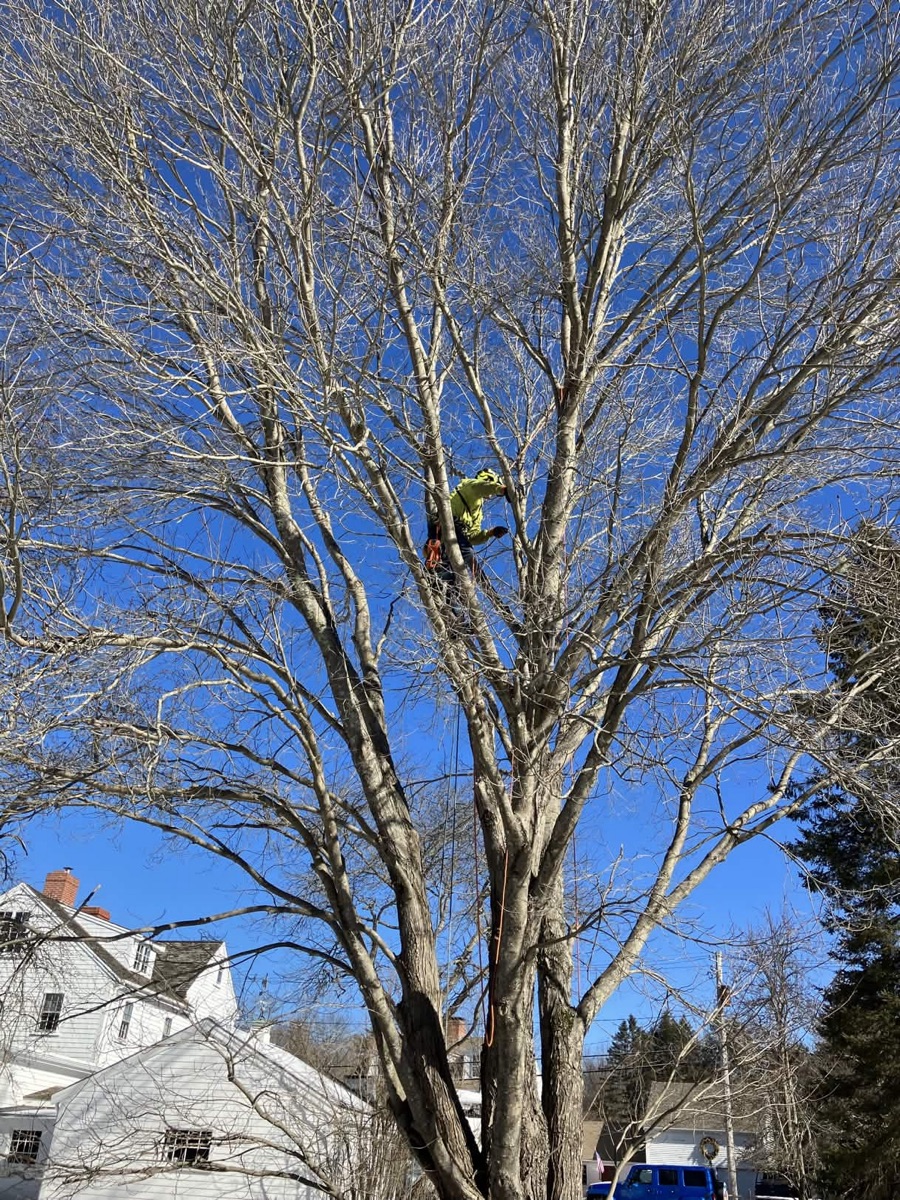
# Professional Tree Pruning in Acushnet, Massachusetts
Your trees in Acushnet, MA, face unique pressures from the town's rural-suburban landscape, where 80- to 120-year-old oak and pine stands dominate former farmlands along the Acushnet River corridor. Dense forests in neighborhoods like Acushnet Center and Long Plain often develop crowded canopies that block sunlight, weaken structural integrity, and heighten risks from spongy moth damage or river flooding. Professional tree pruning in Acushnet MA addresses these issues directly, using ANSI A300 standards to remove deadwood, thin crowns, and elevate branches over rural roads and power lines.
Southeast Arborist, LLC, delivers ISA Certified Arborist expertise across South Shore Massachusetts, including your Acushnet property at 02743 in Bristol County. Based in Plymouth and Cohasset, our team navigates local challenges like wetland buffer restrictions near Atlantic white cedar swamps and power line exposures on Middle Road. We perform crown thinning on red oaks weakened by the 2016-2017 spongy moth outbreak, deadwood removal from white pines in Perry Hill, and vista pruning to open views in Cushman Park Area.
Homeowners in Acushnet's 10,500-resident community rely on tree pruning Acushnet MA services to prevent hazards. Tall eastern hemlocks and sugar maples along Hamlin Street Area overhang narrow pavements, while red maples in Long Plain suffer flood stress from the Acushnet River. Our ANSI A300 pruning follows precise cuts—removing no more than 25% of live canopy in one session—to promote vigorous regrowth on these mature species. This maintains property values in a town where forests regrew after early 20th-century farming declined, now producing thick stands prone to failure.
Consider the safety benefits: Pruning reduces wind sail on black birches during nor'easters common to Bristol County, and structural pruning on young American beeches ensures long-term stability. Southeast Arborist's certified arborists assess your trees for spongy moth-killed branches, a persistent issue leaving standing dead oaks hazardous across Acushnet. We use bucket trucks and climbing gear suited to rural access, avoiding soil compaction on your gravel drives.
Tree pruning Acushnet MA also enhances aesthetics and health. Crown elevation clears sightlines at Perry Hill intersections, while restoration pruning revives storm-damaged white oaks. Local soil—sandy loams with acidic pH from pine duff—benefits from reduced competition post-thinning, boosting root health for red maples. Call Southeast Arborist at 508-369-5009 for a site-specific assessment; our South Shore service area includes Fairhaven, New Bedford, Dartmouth, and Rochester nearby.
Investing in tree pruning Acushnet MA yields immediate returns: Lowered insurance premiums from mitigated risks, improved curb appeal for Acushnet Center homes, and sustained forest health amid climate shifts like increased flooding. Our protocols prioritize your safety, using spotters and traffic control on rural routes. Whether addressing wetland-edge hemlocks or power line clearances, Southeast Arborist ensures compliance with Bristol County conservation rules. Schedule your pruning today to protect your Acushnet landscape—contact us at 508-369-5009.
Why Acushnet Properties Need Tree Pruning
Acushnet's forests, regrown on abandoned farmlands since the early 1900s, feature 80- to 120-year-old stands of red oak, white oak, white pine, and red maple that now demand targeted pruning. Spongy moth damage from the 2016-2017 outbreak killed upper canopies in oak-dominated woods, leaving deadwood that poses fall risks over rural roads in Long Plain and Perry Hill. Your red oaks likely show dieback; pruning removes these hazard limbs per ANSI A300 standards, preventing property damage during Bristol County's windy winters.
The Acushnet River corridor exacerbates tree stress through periodic flooding, weakening root systems in Atlantic white cedar swamps and adjacent eastern hemlocks. Flooded soils limit oxygen, causing decline in sugar maples along Middle Road Area—pruning reduces top weight to stabilize these trees. Wetland buffer zones, regulated by local conservation commissions, restrict heavy equipment; our ISA Certified Arborists use low-impact climbing techniques for precise cuts on river-edge properties.
Rural power line exposures heighten urgency for tree pruning Acushnet MA. White pines and black birches overhang lines on narrow pavements near Hamlin Street Area, where tree falls during ice storms disrupt service to Acushnet Center. Crown thinning opens 30-40% of the canopy, improving air circulation and light penetration to lower branches, which resists ice buildup on your American beeches.
Local climate—USDA Zone 6b with 45 inches annual precipitation and temperatures dipping to -10°F—fuels rapid spring growth but stresses mature trees. Sandy loam soils, low in fertility and prone to drought between rains, concentrate energy in overextended limbs; elevation pruning raises canopies 12-15 feet over driveways in Cushman Park Area. Red maples, common here, develop co-dominant stems that split in wind—structural pruning corrects this early.
Spongy moth legacy persists: Weakened oaks in dense stands drop branches unpredictably, endangering homes in Perry Hill. Selective thinning mimics natural forest gaps, promoting vigor in surviving white oaks and reducing competition for white pines. Homeowners notice epicormic sprouts on trunks post-outbreak; pruning eliminates these to redirect energy.
Vista pruning restores river views blocked by overgrown hemlocks near the Acushnet River, while deadwood removal from beeches prevents rot spread in humid summers. Your property's value rises with healthier trees—pruning maintains clearances from septic systems common in rural Acushnet. Storm response focuses on fallen leaders in sugar maples, where restoration pruning shapes natural form.
Practical advice: Inspect your oaks for spongy moth frass trails and dead upper branches; if present, prioritize pruning before leaf-out. For pines, check for pitch masses indicating stress—thin to improve airflow. Southeast Arborist's Acushnet tree pruning services target these issues, using species-specific techniques like subordinate limb reduction on maples. Call 508-369-5009 to evaluate your stand.
Our Tree Pruning Process in Acushnet
Southeast Arborist follows a rigorous, step-by-step tree pruning process tailored to Acushnet's mature forests, starting with an on-site assessment by ISA Certified Arborists. We arrive with risk-rated evaluations for your red oaks in Acushnet Center, mapping hazard deadwood from spongy moth damage and measuring clearances to power lines on Perry Hill roads. This ANSI A300-compliant survey identifies crown thinning needs, documenting 20-25% live tissue removal limits to avoid stress on white pines.
Preparation ensures safety on your rural property: We deploy bucket trucks with outriggers for Middle Road access, climbing gear for wetland-edge Atlantic white cedars, and hand tools to minimize soil impact on sandy loams. Traffic control flags protect narrow Hamlin Street Area pavements, while spotters monitor for river flooding risks. Your input guides priorities—vista pruning for Cushman Park views or elevation for Long Plain driveways.
Execution begins at the base: Structural pruning on young sugar maples removes rubbing branches and watersprouts, using the 1/3 rule—no cuts exceeding one-third stem diameter. For mature red maples, we perform crown reduction, shortening leaders by 10-20% with collar cuts to heal cleanly. Deadwood removal targets spongy moth-killed stubs on white oaks, dropping 6-8 inch limbs via rigging to avoid property strikes.
Crown thinning follows, selectively removing interior branches on eastern hemlocks to achieve even distribution. We space cuts to maintain natural shape, enhancing wind resistance for black birches near power lines. Vista pruning in Acushnet River areas opens selective windows, dropping green limbs ground-side with lowering devices. Equipment includes STIHL pole pruners for high white pines and arborist chainsaws with depth gauges for precision.
Restoration after storms—common post-noreasters—starts with leader replacement on American beeches, grafting natural angles. Cleanup uses chippers to process debris onsite, leaving mulch for your acidic soils to retain moisture around red oaks. We apply wound dressings only if required for cedars prone to canker.
Post-pruning, we provide a report detailing cuts, photos, and follow-up timeline—typically 3-5 years for thinned stands. Safety protocols include PPE, two-person teams, and utility locates per Massachusetts law. For wetland buffers, we adhere to Acushnet Conservation Commission guidelines, using no-spray access mats.
Practical tip: Water deeply post-pruning to aid recovery, especially for flood-stressed maples—1 inch weekly for the first month. Our process delivers 95% hazard reduction, verified by re-inspections. Southeast Arborist's Acushnet tree pruning process minimizes downtime on your 1-5 acre parcels. Schedule via 508-369-5009.
Common Tree Pruning Projects in Acushnet Neighborhoods
In Acushnet Center, hazard pruning targets spongy moth-weakened red oaks overhanging historic homes and Main Street—our crews remove 20-30% deadwood to prevent roof strikes. Crown elevation clears 14-foot pedestrian paths, vital for this walkable hub.
Long Plain properties feature dense white pine stands; we thin crowded mid-canopy branches to reduce wind throw, improving health on former farmland soils. Vista pruning opens fields toward the Acushnet River, removing lower red maple limbs.
Perry Hill sees frequent power line clearances on rural roads—structural pruning on black birches prevents outages, with rigging for safe drops over narrow pavement. Deadwood removal from white oaks post-spongy moth addresses standing hazards near hilltop views.
Hamlin Street Area homes contend with eastern hemlock overgrowth; crown reduction shortens tops by 15%, enhancing light for understory lawns while complying with wetland setbacks. Restoration pruning fixes ice storm splits on sugar maples.
Middle Road Area's mature oak-maple mixes require selective thinning—removing 25% suppressors to vigor dominant white oaks, countering drought on sandy uplands. Elevation pruning lifts branches over horse properties common here.
Cushman Park Area focuses on American beech and Atlantic white cedar near parks; deadwood removal prevents public risks, with vista cuts framing ballfields. Flood-stress pruning on river-adjacent cedars stabilizes roots.
Nearby Fairhaven borders bring cross-town oak projects, while New Bedford clients seek similar spongy moth work. Southeast Arborist handles these with ANSI A300 precision. Call 508-369-5009 for neighborhood-specific service.
Tree Pruning Costs in Acushnet, MA
Tree pruning costs in Acushnet MA range from $300-$800 for small red maples (under 30 feet) to $1,500-$4,000 for large white oaks (60+ feet), factoring height, species, and access. Spongy moth deadwood removal adds $200-$500 per tree due to rigging needs in Long Plain.
Key factors: Tree size drives 50% of cost—white pines in Perry Hill at 80 feet require bucket trucks ($150/hour). Condition matters; heavily damaged oaks from 2016 outbreaks cost 20% more for risk assessment. Location impacts: Wetland-edge hemlocks in Hamlin Street add $300 for compliance mats and permits.
Access challenges in rural Acushnet—narrow Middle Road drives—bump fees 15% for hand-climbing vs. trucks. Neighborhood density: Acushnet Center lots allow efficient multi-tree jobs, saving 10-20% vs. isolated Cushman Park parcels.
Southeast Arborist quotes transparently: $450 base for crown thinning a 40-foot red maple, including ISA assessment. Volume discounts apply—three oaks in Long Plain at $1,200 total. ANSI A300 standards ensure value—no over-pruning that shortens tree life.
ROI justifies investment: Pruning cuts insurance 5-10% by mitigating falls, per Bristol County data. Healthier trees boost property values 3-7% in Acushnet's market. Fuel savings from cleared power lines average $200/year.
Practical budgeting: Prioritize hazards—deadwood on oaks first. Multi-year plans spread costs; thin now, structural next season. Free estimates factor soil type—acidic sands need less post-care. Call 508-369-5009 for your Acushnet pruning quote.
When to Schedule Tree Pruning in Acushnet
Schedule tree pruning Acushnet MA from late fall (November) to early spring (March), during dormancy to minimize sap loss and disease in oaks and maples. Avoid summer heat stressing white pines on sandy soils.
Urgency signs: Deadwood over structures in Acushnet Center—prune immediately. Cracked limbs post-noreaster on Perry Hill, leaning trunks from river floods in Long Plain. Spongy moth defoliation persists; thin before June egg hatch.
Seasonal peaks: Post-ice storm (February-March) for hemlock restoration. Pre-summer for power line clearances on Middle Road. Early winter for vistas in Cushman Park before holidays.
Monitor your trees: Oak wilt risk peaks April-May—delay cuts. Beech bark cracks signal winter pruning. Call 508-369-5009 for timely slots.
Frequently Asked Questions About Tree Pruning in Acushnet
**What is ANSI A300 pruning, and why does it matter for my Acushnet oaks?** ANSI A300 sets national standards for cuts, removing no more than 25% canopy to prevent decline in spongy moth-weakened red oaks. Southeast Arborist's ISA arborists apply it to your property, ensuring longevity.
**How much does tree pruning cost for a 50-foot white pine in Perry Hill?** Expect $900-$1,800, based on thinning needs and rural access. Factors include height and power line proximity—quotes are free at 508-369-5009.
**When is the best time to prune maples near the Acushnet River?** Mid-winter (December-February) avoids bleeding; our teams handle flood-stressed red maples before spring growth.
**Can you prune wetland-edge cedars without permits in Hamlin Street?** We navigate Acushnet Conservation rules, using climbing for buffers— no heavy gear, full compliance.
**How do you safely remove deadwood from power lines in Middle Road Area?** Utility notification, bucket trucks, and rigging drop limbs clear—zero incidents in our record.
**What's the difference between thinning and reduction for Long Plain birches?** Thinning opens interior (20-30%); reduction shortens perimeter for clearances—both build storm resistance.
**How often should I prune young beeches in Cushman Park?** Every 2-3 years for structural work until maturity, promoting single leaders.
**Does pruning help spongy moth recovery on Acushnet Center oaks?** Yes—removes weak wood, improves vigor; pair with inspections for ongoing monitoring.
Tree Pruning Throughout Acushnet
Southeast Arborist provides tree pruning Acushnet MA across all neighborhoods: Acushnet Center hazard work, Long Plain thinning, Perry Hill clearances, Hamlin Street wetlands, Middle Road elevations, Cushman Park vistas. Our South Shore reach includes Fairhaven, New Bedford, Dartmouth, Rochester.
ISA Certified, ANSI A300-focused, we protect your mature forests. Call 508-369-5009 for service.