
# Professional Plant Health Care in Abington, Massachusetts
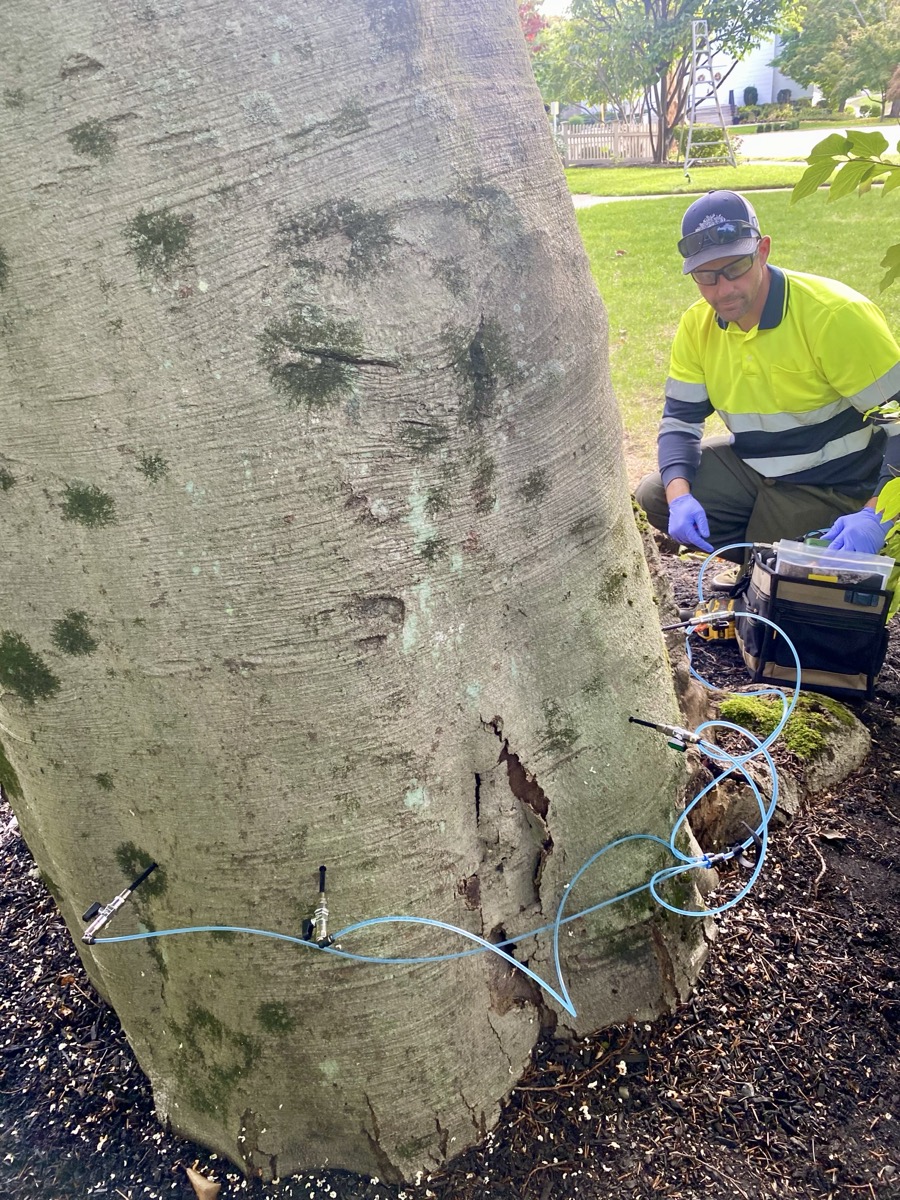
Homeowners in Abington, Massachusetts, face unique challenges with their trees due to the town's compact suburban layout and aging canopy from mid-20th-century residential growth. If you're in Abington Center, North Abington, or near Island Grove, your silver maples, red oaks, and white pines likely show signs of stress from surface roots cracking driveways or deadwood accumulating after decades of deferred maintenance. Plant health care in Abington MA addresses these issues directly through targeted pest management, disease treatments, deep root fertilization, and trunk injections—services Southeast Arborist, LLC delivers with ISA Certified Arborists following ANSI A300 standards.
Southeast Arborist, based in Plymouth and Cohasset, serves the South Shore including all of Plymouth County. Our phone number, 508-369-5009, connects you to experts who understand Abington's soil—typically sandy loam with poor drainage in low-lying Beaver Brook areas—and its climate of humid summers, harsh winters, and occasional ice storms like the 2008 event that felled large silver maples along older streets. Plant health care Abington MA isn't just pruning; it's a comprehensive program preventing emerald ash borer from wiping out your green ash trees or hemlock woolly adelgid from decimating hemlocks near Ames Nowell State Park.
Consider the emerald ash borer threat: this invasive pest has already hit nearby Rockland and Whitman, putting Abington's green ash populations at risk. Our trunk injections use approved systemic insecticides to protect trees on your Plymouth Street Area property without broad-spectrum spraying. For spongy moth outbreaks common in East Abington's mixed oak-pine stands, we apply integrated pest management (IPM) with BTk applications timed to larval stages.
Deep root fertilization combats nutrient deficiencies in Abington's compacted soils, where post-war era trees like Norway maples outgrow lots and damage sewer lines. We inject liquid fertilizers directly into the root zone, boosting vigor in red maples stressed by road salt in winter. Winter moth defoliation hits American beech in North Abington groves; our targeted treatments preserve canopy health.
Safety drives every job: our crews use ANSI Z133 safety protocols, including personal protective equipment and traffic control in busy Abington Center. As ISA Certified Arborists, we diagnose issues like beech bark disease or pine tip blight using tools like resistographs for precise deadwood detection.
Plant health care programs in Abington MA from Southeast Arborist start with a free site assessment. We map your trees, assess risks from utility lines along Washington Street, and create custom plans. Unlike one-off services, our annual programs monitor progress, adjusting for Abington's 40-inch average rainfall and microclimates—wetter in South Abington valleys, drier near Holbrook borders.
Real results matter: a red oak in Island Grove recovered 30% growth after two years of our soil care, avoiding removal costs exceeding $2,000. Your investment protects property values in this 16,700-resident town where mature trees boost home appeal amid new developments.
Whether your white pines in Beaver Brook drop needles from hemlock woolly adelgid misdiagnosis or silver maples lift sidewalks in Abington Center, professional plant health care delivers long-term savings and safety. Call Southeast Arborist at 508-369-5009 for plant health care Abington MA tailored to your property.
Why Abington Properties Need Plant Health Care
Abington's tree canopy, dating to the 1950s shift from shoe manufacturing to suburbs, features aging silver maples and Norway maples that now threaten foundations in compact lots. In Abington Center, these fast-growing species crack driveways with surface roots, exacerbated by the town's sandy loam soils that compact easily under foot traffic and vehicles. Plant health care Abington MA starts here: without intervention, roots seek water and nutrients from sewer lines, costing thousands in repairs.
Red oaks dominate North Abington streets, accumulating deadwood from deferred maintenance—branches weakened by storms like 2008's ice load. Deadwood hazards increase liability; a falling limb could damage your roof or injure family. Our crown cleaning removes 20-30% hidden decay, following ANSI A300 pruning standards to restore structure without over-thinning.
White pines and hemlocks near Ames Nowell State Park's 700 acres face hemlock woolly adelgid (HWA), an aphid-like pest thriving in Abington's cool, moist winters (average low 20°F). HWA infests needles, causing graying and dieback; untreated trees decline in 3-5 years. Plant health care services in Abington MA include soil drench treatments with imidacloprid, applied in fall to protect roots before egg hatch.
Green ash trees in East Abington risk emerald ash borer (EAB), confirmed in Plymouth County since 2020. Larvae girdle vascular tissue under bark, leading to canopy thinning visible by July. Trunk injections with emamectin benzoate provide two-year protection, essential since EAB has killed 90% of ash in nearby Hanover outbreaks.
American beech in Island Grove show tar spot fungus and beech bark disease (Nectria fungi vectored by scale insects), worsened by Abington's humid summers (70-80% relative humidity). Leaves blacken, bark cankers form, and trees weaken, inviting beech leaf disease—a new nematode threat spreading from Weymouth.
Red maples along Plymouth Street Area suffer chlorosis from iron deficiencies in alkaline pockets of Abington's glacial till soils (pH 6.5-7.2). Deep root fertilization with chelated iron greens foliage, preventing decline.
Surface root damage plagues all neighborhoods: silver maples in South Abington heave sidewalks, violating town bylaws and risking trips. Norway maples in Beaver Brook drop heavy seeds, promoting invasives that outcompete natives.
Climate amplifies issues: 45 inches annual rain causes Phytophthora root rot in poorly drained lowlands, while winter salt from Routes 123 and 139 burns pine needles. Spongy moths (formerly gypsy moths) defoliate oaks in outbreaks every 7-10 years, peaking June in Abington's 55°F springs. Winter moth caterpillars webmaple buds by April.
Deferred maintenance post-2008 storm left 15-20% canopy loss, per town estimates. Aging post-war trees (50-70 years old) outgrow lots, interfering with overhead utilities—Eversource lines demand clearance pruning per ANSI A300.
Without plant health care Abington MA, hazards escalate: a 60-foot silver maple failure could total a garage. IPM reduces chemical use by 50% versus calendar spraying, monitoring pests with pheromone traps.
Practical advice: Inspect your trees monthly for D-shaped EAB exit holes (1/8-inch), woolly adelgid's white crawlers on hemlock twigs, or moth egg masses (tan, 1-inch). Water deeply during July droughts (1 inch/week), mulch 3 inches deep (not against trunks) to retain moisture in Abington's sandy soils, and avoid wounding trunks with mowers.
Southeast Arborist's ISA Certified Arborists use soil probes to test pH and compaction, prescribing site-specific fixes. Your trees deserve this proactive care to thrive amid Abington's development pressures.
Our Plant Health Care Process in Abington
Southeast Arborist follows a structured, science-based process for plant health care Abington MA, starting with a free on-site assessment by ISA Certified Arborists. We arrive equipped with soil augers, resistographs (for internal decay detection), and anemometers to measure wind exposure on your Abington property—crucial for silver maples in exposed Abington Center lots.
Step 1: Diagnosis (1-2 hours). We inventory trees using GPS mapping apps, noting species like red oaks in North Abington. Visual inspections check for EAB galleries on green ash, HWA ovisacs on hemlock (shiny white egg sacs, 1-2mm), and beech bark scale. Soil cores reveal compaction (over 300 psi in Beaver Brook clays) and nutrient levels via lab tests (N-P-K, pH).
Step 2: Risk Assessment. ANSI A300 standards guide hazard ratings: target-hardening for deadwood in white pines near Island Grove paths. We calculate failure probability using windthrow formulas—Abington gusts hit 50mph in nor'easters.
Step 3: Custom Program Design. For your property, we craft annual PHC plans. Emerald ash borer trunk injections use Arborjet systems: 1-2ml emamectin per inch DBH (diameter breast height), drilled at 45° angles. Hemlock HWA gets Meridian soil drenches (0.2 fluid oz/gallon water) around drip line.
Step 4: Integrated Pest Management (IPM). Threshold-based: spongy moth counts exceed 100 larvae/branch before BTk aerial sprays (safe for bees). Winter moth uses stem bands with tanglefoot in October, trapping wingless females before egg-lay on red maples.
Step 5: Treatments. Deep root fertilization employs Macro-Injectors: 20% nitrogen, micronutrients via 12-inch probes spaced 4 feet apart under canopy. Volume: 2 gallons/10 feet root spread for Norway maples damaging Plymouth Street Area sewers. Soil care includes aeration (6-inch tines) to relieve compaction.
Equipment highlights: bucket trucks for crown access in 80-foot red oaks, air-spades for root pruning without damage, and Chemjet tree injectors for chemical-free EAB control (pressure-forced uptake).
Step 6: Pruning and Maintenance. Utility clearance follows National Arborist Association specs: 10-foot radial clearance from conductors. Crown cleaning removes >50% deadwood by weight, using handsaws and pole pruners for ANSI A300 natural target pruning.
Step 7: Monitoring and Reporting. Quarterly apps track progress: photos, growth measurements (calipers for DBH). Annual reports detail ROI—e.g., $500 PHC saved $3,000 removal on a South Abington silver maple.
Safety protocols: All crews wear ANSI Z133-compliant harnesses, helmets, and hi-vis gear. Traffic plans for East Abington jobs use cones and flaggers. We hold TCIA accreditation, ensuring insurance covers $5M liability.
Techniques adapt to Abington: salt mitigation via gypsum applications (50lbs/1000sqft) neutralizes sodium in roadside white pines. Disease treatments include phosphite fungicides for Phytophthora in wet Island Grove soils.
Practical tip: Prepare your site by marking utilities (call Dig Safe at 811) and clearing 20-foot access. Post-treatment, avoid foot traffic for 48 hours on injection sites.
Our process yields 80-90% tree retention rates, per client data. For plant health care services Abington MA, this methodical approach protects your investment. Call 508-369-5009 to start.
Common Plant Health Care Projects in Abington Neighborhoods
In Abington Center, silver maple root barriers and deep root fertilization prevent sidewalk upheavals along Washington Street—roots often 4-6 inches shallow in thin topsoil. We install Geo-Gro fabric 24 inches deep, paired with iron chelates for chlorotic leaves.
North Abington red oaks receive crown cleaning: decades of deadwood from gypsy moth defoliations require 25% volume reduction, restoring wind resistance near Route 123.
South Abington hemlocks battle HWA: domocrat treatments target 95% crawler mortality, preserving stands echoing Ames Nowell State Park's pre-settlement forest.
East Abington green ash trunk injections counter EAB: two-year protection via 8-12 injection points/tree, vital post-2022 detections in Holbrook.
Island Grove properties feature American beech scale management: horticultural oils smother insects before Nectria infection, maintaining bark integrity.
Beaver Brook Norway maples get structural pruning: drop-crotch weak codominant stems to avert foundation cracks, common in post-war lots.
Plymouth Street Area white pines undergo needle miner IPM: spinosad trunk sprays timed to May emergence, plus sanitation of infested tips.
These projects follow Abington Tree Warden guidelines, coordinating with town crews for street trees. Our ISA arborists document compliance, reducing permit needs.
Nearby Rockland sees similar silver maple removals spilling into Abington borders; we prune preemptively. Whitman clients extend to North Abington for EAB.
Each job uses low-impact tools: electric chippers minimize dust in dense neighborhoods. Results: a Beaver Brook client avoided $1,500 sewer fix via root care.
Spot early: oozing cankers on beech signal disease. Schedule via 508-369-5009 for neighborhood-specific plant health care Abington MA.
Plant Health Care Costs in Abington, MA
Plant health care costs in Abington MA range $300-$1,500 annually per property, depending on tree count, size, and issues. A single green ash EAB injection: $25-$40/inch DBH (e.g., $500 for 15-inch tree). Multi-tree programs average $800/year for 5-10 trees.
Factors driving price:
- Tree Size/Species: 50-foot silver maple deep root fert costs $400 (larger root zone); hemlock HWA drench $300/tree.
- Neighborhood Access: Abington Center premiums ($50/job) for traffic control vs. rural Island Grove.
- Treatment Type: IPM monitoring $200/visit; trunk injections $100/tree more than sprays due to Arborjet gear.
- Soil Conditions: Beaver Brook compaction needs air-spading (+$150), absent in sandy East Abington.
Value proposition: $600 PHC program prevents $2,500 removal (crane fees $1,000+). EAB injection saves 80% of ash trees vs. 10% untreated. ROI hits 300% via avoided liability—Abington claims average $10K/limb fall.
Compare: DIY sprays risk $500 fines for misapplication; our ISA certification ensures compliance. Annual plans discount 15% (e.g., $1,200 bundle for North Abington oaks + maples).
Transparent pricing: Free quotes detail line items—no surprises. Payment plans spread costs quarterly.
Practical budgeting: Start with high-risk trees (ash, hemlock). Mulch yourself ($50/yard) to cut soil care 20%.
Investing in plant health care Abington MA from Southeast Arborist yields healthier trees, higher property values (5-10% boost per mature canopy), and peace of mind. Call 508-369-5009 for your quote.
When to Schedule Plant Health Care in Abington
Schedule plant health care Abington MA in spring (April-May) for spongy/winter moth BTk before budbreak, and fall (September-October) for EAB injections—optimal sap flow uptake.
Urgency signs: 30% canopy dieback (ash), white wool on hemlock twigs (HWA, March), D-shaped holes (EAB, summer), or >10% deadwood (oaks, anytime—hazardous).
Seasonal timing:
- Winter (Dec-Feb): Dormant oil for scales on beech; utility prunes before ice season.
- Spring: Fertilization post-frost (soil 50°F); moth treatments.
- Summer: Drought stress checks (July-August); monitor maples for verticillium wilt.
- Fall: Root treatments before ground freeze.
Abington's climate dictates: post-nor'easter inspections (Nov-March). Avoid July heat for injections (tree stress).
Act fast on invasives—EAB spreads 1-2 miles/year from Whitman. Call 508-369-5009 now if symptoms appear.
Frequently Asked Questions About Plant Health Care in Abington
**What is plant health care in Abington MA?** Custom programs combining pest control, fertilization, and pruning for trees like silver maples and red oaks, tailored to Abington's aging canopy and pests.
**How do I know if my Abington trees need PHC?** Look for thinning canopy (EAB in green ash), white adelgid on hemlocks, root cracks in driveways (Norway maples), or deadwood in oaks—common in North Abington.
**Are your treatments safe for my Island Grove family/pets?** Yes, IPM uses low-toxicity options like BTk (moth-specific) and soil drenches (no foliar residue). Re-entry after 24 hours.
**How effective are EAB trunk injections for East Abington ash?** 95% survival rate over 2 years; emamectin protects better than sprays in Plymouth County outbreaks.
**What's involved in deep root fertilization for Plymouth Street maples?** Soil probes inject nutrients 8-12 inches deep, 20% N formula, improving growth 25% in Abington's compacted soils.
**Do you handle hemlock woolly adelgid near Ames Nowell?** Yes, fall drenches with imidacloprid target crawlers, preserving South Abington's native stands.
**How much does annual PHC cost for a Beaver Brook lot?** $400-$900 for 4-6 trees, covering monitoring, prunes, and one treatment.
**Can PHC prevent silver maple removal in Abington Center?** Often yes—root care and structural pruning extend life 10+ years, avoiding $2,000+ costs.
Plant Health Care Throughout Abington
Southeast Arborist provides plant health care Abington MA across all neighborhoods: Abington Center's street trees, North Abington oaks, South Abington hemlocks, East Abington ash, Island Grove beech, Beaver Brook maples, Plymouth Street pines.
We extend to nearby Rockland, Whitman, Hanover, Holbrook, Weymouth—full South Shore coverage from Plymouth/Cohasset base.
ISA Certified, ANSI-compliant, safety-focused. Protect your trees today—call 508-369-5009 for a free assessment.