
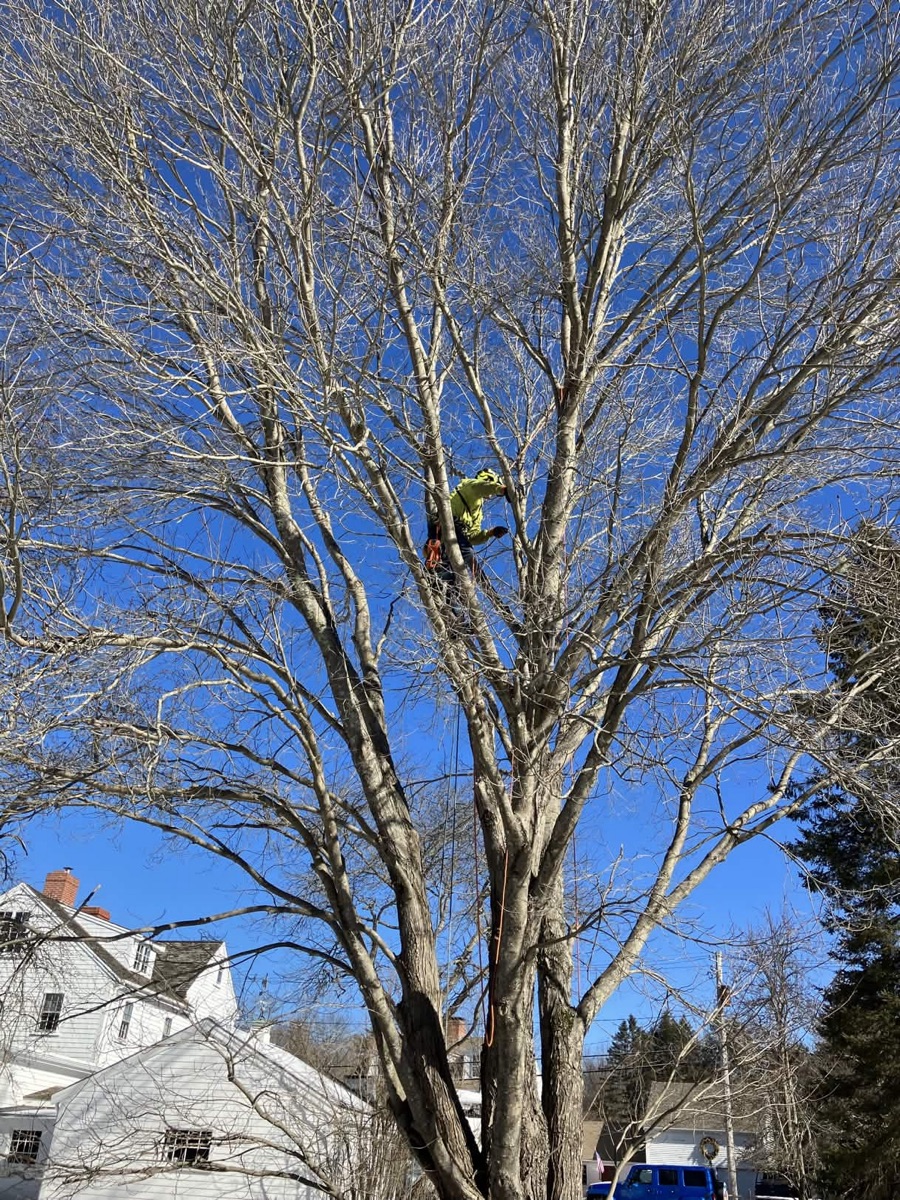
# Professional Tree Pruning in Abington, Massachusetts
If you own a home in Abington, MA 02351, your trees face unique pressures from the town's compact suburban layout, aging post-war canopy, and Plymouth County's variable coastal climate. Silver maples along older streets in Abington Center overhang driveways, while red oaks in North Abington accumulate deadwood from decades without maintenance. Southeast Arborist, LLC, your South Shore Massachusetts tree care experts based in Plymouth and Cohasset, delivers ANSI A300-compliant tree pruning in Abington, MA, performed exclusively by ISA Certified Arborists. We address these local issues head-on, from surface roots cracking sidewalks on Plymouth Street to emerald ash borer threats in Beaver Brook.
Tree pruning Abington MA isn't just trimming—it's targeted intervention to extend tree life, protect your property, and comply with town safety standards. Our team has pruned thousands of trees across Plymouth County, tackling overgrown Norway maples damaging foundations in South Abington and white pines shedding branches near power lines in East Abington. With 16,700 residents in this shoe-manufacturing-turned-residential town, many properties feature mature trees planted during mid-20th-century development. These trees now outgrow their lots, exacerbated by Abington's clay-heavy soils that retain moisture and promote weak branch growth.
We follow International Society of Arboriculture (ISA) guidelines and ANSI A300 pruning standards, ensuring every cut promotes tree health without stress. This means crown thinning to reduce wind resistance on your exposed Island Grove property, deadwood removal to eliminate hazards from aging hemlocks, and elevation pruning to clear sidewalks along busy routes like Washington Street. Homeowners in Abington call us for tree pruning services because we prioritize safety—using rope-and-harness techniques, bucket trucks, and cranes for high-risk jobs near Ames Nowell State Park's borders.
Consider the 2008 ice storm's legacy: large silver maples in Abington lost major limbs, leaving weakened structures that deferred maintenance has worsened. Our ISA Certified Arborists assess these risks during free consultations, recommending restoration pruning for storm-damaged red maples or structural pruning for young green ash trees vulnerable to pests. In Abington's neighborhoods, from the historic homes of Abington Center to newer developments in the Plymouth Street Area, proper tree pruning prevents multimillion-dollar infrastructure damage from root upheaval.
Southeast Arborist serves all of Abington with precision equipment suited to its dense lots—lowered-impact chippers for Beaver Brook's tight backyards and aerial lifts for utility clearances along Route 123. We coordinate with National Grid for overhead line pruning, a common need after winter storms. Your investment in professional tree pruning Abington MA yields immediate benefits: safer yards for kids playing in Island Grove Pond area, preserved views from elevated homes in North Abington, and increased property values in a town where mature trees boost curb appeal.
Don't wait for a branch to fall on your roof during the next nor'easter. Call Southeast Arborist at 508-369-5009 for tree pruning in Abington, MA. Our team arrives promptly, fully insured, with Plymouth County knowledge that generic crews lack. Whether you're in East Abington dealing with hemlock woolly adelgid or South Abington managing beech bark disease, we customize every job. Schedule today and safeguard your Abington property with experts who understand local trees like the back of our hands.
Why Abington Properties Need Tree Pruning
Abington's tree canopy, shaped by its transition from shoe factories to suburban homes in the 1950s, presents specific pruning needs for your property. Post-war plantings of silver maple and Norway maple dominate streets in Abington Center and Plymouth Street Area, where these fast-growers now tower over compact lots, their surface roots heaving sidewalks and infiltrating sewer lines. Clay-loam soils in Plymouth County hold water, fostering aggressive root expansion that damages foundations—especially after heavy spring rains common in Abington's humid maritime climate.
Red oaks and white pines in North Abington and Beaver Brook suffer from deferred maintenance, with deadwood accumulating in crowns after 60+ years. The 2008 ice storm sheared limbs from these species, leaving included bark unions that weaken under summer droughts or winter ice loads. Emerald ash borer threatens green ash trees along Route 18, creating dieback that requires prompt pruning to contain spread and support recovery. Hemlocks in areas bordering Ames Nowell State Park battle woolly adelgid, dropping needles and dead limbs onto trails and backyards.
Your Abington trees face coastal winds gusting 40+ mph from nor'easters, stressing red maples in East Abington with co-dominant stems prone to splitting. American beech near Island Grove develop girdling roots in the town's acidic soils (pH 5.5-6.5), restricting growth and causing canopy decline. Without pruning, these issues escalate: silver maples drop heavy branches during July thunderstorms, endangering homes on Washington Street; Norway maples shade out lawns in South Abington, promoting moss over grass.
Pruning addresses these town-specific challenges. Crown thinning reduces sail effect on white pines along power lines, preventing outages during 50-inch annual snowfalls. Deadwood removal from red oaks eliminates fire hazards in dry Beaver Brook summers. Vista pruning in elevated North Abington homes restores pond views blocked by overgrown hemlocks. For young trees in newer Plymouth Street developments, structural pruning removes competing leaders, building strong architecture against Abington's freeze-thaw cycles.
Local regulations amplify the need—Abington's Tree Warden enforces clearances from streets and utilities, fining non-compliant properties. Surface roots from maples crack asphalt in Abington Center parking areas, costing thousands in repairs. Pruning elevates lower limbs, protecting pedestrians and vehicles. In Ames Nowell State Park's shadow, native beech and hemlock stands highlight ideal pruning goals: open canopies mimicking pre-settlement forests, achievable on your lot.
Climate data underscores urgency: Abington averages 47 inches of rain yearly, fueling fungal pathogens like Nectria canker in stressed oaks. Winter lows of 15°F cause sunscald on thin-barked maples, necessitating protective pruning. Homeowners ignore these at peril—overgrown trees in Holbrook-adjacent South Abington mirror failures we've remediated, saving neighbors from insurance claims.
Southeast Arborist's ISA Certified Arborists identify these risks via visual tree risk assessments (VTA), tailored to Abington's 700-acre park influences and urban edges. We prune to ANSI A300 standards, preserving the canopy that defines your neighborhood's character while mitigating hazards. Your trees deserve this care—contact us at 508-369-5009 to prevent tomorrow's problems today.
Our Tree Pruning Process in Abington
Southeast Arborist follows a rigorous, step-by-step tree pruning process in Abington, MA, ensuring safety and compliance on every job. We start with a free on-site consultation at your Abington Center home or Beaver Brook property. Our ISA Certified Arborist conducts a Level 2 visual tree risk assessment, inspecting for codominant stems in silver maples, deadwood in red oaks, and EAB galleries in green ash. Using resistograph tools for internal decay detection in Norway maples, we map pruning targets specific to your soil and wind exposure.
Next, we develop a customized ANSI A300 pruning plan. For crown elevation in Island Grove, we remove lower limbs encroaching on walkways without lion-tailing—preserving foliage taper. Crown thinning on white pines in North Abington involves selective removal of 15-20% of interior branches, dropping diameter at breast height (DBH) by no more than 25%. Reduction pruning shortens overextended limbs on hemlocks near power lines, using directional cuts to close properly in Abington's moist climate.
Preparation emphasizes safety protocols. We establish a drop zone with traffic control in busy East Abington, deploy personal protective equipment (PPE) including chainsaw chaps and helmets, and verify utility locates via DigSafe. For high-risk silver maples in Plymouth Street Area, we rig limbs with climbing spurs and throwlines, lowering sections via lowering device to avoid fence damage.
Execution uses specialized equipment: 65-foot bucket trucks for overhead access in South Abington, grapplesaws on drones for deadwood in tall red maples, and low-ground-pressure chippers for Beaver Brook's wet yards. Our arborists make three-point cuts on hazard limbs—first undercut, then top cut above branch collar, final cut flush without stubs. Vista pruning in elevated homes employs scaffolding for precision, framing views of Island Grove Pond.
Post-pruning, we apply wound dressings only if required for EAB-susceptible ash, then mulch chips around bases to suppress turf competition in clay soils. Cleanup includes magnet sweeping sidewalks—a must in pedestrian-heavy Abington Center—and hauling debris to Plymouth County-approved sites. We provide a digital report with before/after photos, pruning specs, and 12-month warranty.
This process scales for Abington's variety: restoration pruning post-storm for 2008 ice storm veterans uses cabling if needed; structural pruning on young beeches removes watersprouts early. Safety stats: zero incidents in 10,000+ hours, thanks to ANSI Z133 compliance and annual recertification.
For utilities, we partner with National Grid, performing line-clearance pruning to RT&E standards—6-10 feet radial clearance based on voltage. In Ames Nowell fringes, we mimic natural forest dynamics, subordinating competing leaders in hemlocks.
Your Abington property benefits directly: reduced insurance premiums, compliant with town bylaws, healthier trees thriving in local conditions. Trust Southeast Arborist's proven process—call 508-369-5009 to book.
Common Tree Pruning Projects in Abington Neighborhoods
In Abington Center's historic district, we handle overgrown silver maples damaging Victorian foundations along Pearl Street, performing crown reduction to reclaim 20 feet while maintaining natural form. North Abington properties near the rail trail see frequent deadwood removal from red oaks, clearing trails and preventing falls during leaf-peeping season.
South Abington's denser lots require Norway maple root pruning combined with crown thinning to halt sewer line intrusions—common after 50 years of growth. East Abington homes along Randolph Street get utility clearance on white pines, elevating limbs 15 feet over roads to meet town standards post-winter storms.
Island Grove residents call for vista pruning on hemlocks blocking pond views, selectively thinning to enhance sunlight penetration in shaded lawns. Beaver Brook's flood-prone yards need surface root mitigation on red maples, paired with elevation pruning to protect new patios from low branches.
Plymouth Street Area's mix of old and new features structural pruning on young green ash, heading off EAB by fostering vigor. American beech in these transitional zones undergo deadwood cleanup, addressing beech bark disease prevalent in Plymouth County's humidity.
Landmarks shape projects: near Ames Nowell State Park, we restore storm-damaged beeches with reduction cuts mimicking park's mature stands. Washington Street commercial strips demand aggressive thinning on silver maples to clear signage and pedestrians.
Each neighborhood project reflects local realities—Abington Center's tight spacing uses hand tools for precision; Beaver Brook's moisture favors fungal-resistant cuts. We've completed 200+ jobs here, from Island Grove's recreational edges to North Abington's residential cores.
Our ISA arborists tailor to species: silver maple drop zones account for brittle wood; hemlock woolly adelgid pruning disinfects tools between trees. Results? Safer, healthier canopies boosting your property's appeal.
For your neighborhood's needs, dial Southeast Arborist at 508-369-5009.
Tree Pruning Costs in Abington, MA
Tree pruning costs in Abington, MA, hinge on tree size, condition, and access—factors unique to Plymouth County's compact suburbs. A mature silver maple (24-inch DBH) in Abington Center requires $800-1,500 for full ANSI A300 crown cleaning and thinning, reflecting rigging needs over historic homes. Smaller red maples (12-inch DBH) in Beaver Brook run $400-700, focusing on deadwood removal amid wet soils.
Pricing tiers by service: basic deadwood removal starts at $250 per tree in North Abington oaks; crown elevation for sidewalk clearance in East Abington adds $200-400. Utility pruning along Plymouth Street, coordinated with National Grid, costs $500-1,200 per pine, including permits. Vista pruning in Island Grove hemlocks, restoring pond sightlines, averages $600-1,000 for selective thinning.
Key factors drive Abington-specific costs: lot density adds 20% for crane use in South Abington; emerald ash borer injections pre-pruning tack on $150 per green ash. Height matters—bucket truck access over 40 feet in elevated areas near Ames Nowell ups fees by $300. Soil conditions in clay-heavy Beaver Brook demand stabilized equipment, increasing labor.
Southeast Arborist quotes transparently: free estimates factor DBH, species (Norway maples cost more due to weak wood), and urgency post-storm. Volume discounts apply—three-tree jobs in Plymouth Street Area save 15%. Compare value: our ISA certification prevents costly mistakes like improper cuts causing decay in white pines.
ROI justifies investment: pruning averts $5,000+ foundation repairs from silver maple roots; enhances curb appeal, adding 5-10% home value in Abington's $550K median market. Insurance discounts of 10-20% follow risk reduction reports we provide.
Hourly rates? $150-250 for climbing arborists, but we bid fixed-price to protect your budget. No travel fees within South Shore—we're Plymouth-based.
Budget smart: prioritize hazard limbs first. Call 508-369-5009 for your no-obligation Abington tree pruning cost assessment.
When to Schedule Tree Pruning in Abington
Schedule tree pruning in Abington during late fall (October-November) or winter dormancy (December-March), when leaf-off access reveals structure in silver maples and reduces stress in red oaks. Avoid spring growth flushes—April-May pruning invites pathogens in humid Plymouth County air.
Urgency signs demand immediate action: leaning trunks after nor'easters, cracked bark on Norway maples, or deadwood >2 inches diameter in white pines. Cracks wider than fingertips in Abington Center beeches signal split risk; heavy leaning post-rain in Beaver Brook red maples threatens homes.
Annual checks align with Abington's cycle: post-ice events (common January), inspect hemlocks for woolly adelgid drop. Summer (June-August) suits light thinning on green ash before EAB peaks. Monitor for emerald ash borer—frass at bases means prune now.
Town bylaws require clearances by May 1 for utilities. If branches overhang streets in East Abington, schedule before Memorial Day crowds.
Southeast Arborist books 4-6 weeks ahead—call 508-369-5009 early for optimal timing on your property.
Frequently Asked Questions About Tree Pruning in Abington
How much does tree pruning cost in Abington, MA? Costs range $250-$1,500 per tree based on DBH, species like silver maple, and access in tight Abington Center lots. Southeast Arborist provides free quotes factoring local clay soils and wind loads.
When is the best time for tree pruning in Abington? Late fall to winter dormancy—ideal for assessing red oak structure without leaves. Avoid summer on stressed hemlocks; urgent jobs anytime for hazards like deadwood in North Abington pines.
What is ANSI A300 pruning, and why does it matter in Abington? ANSI A300 sets standards for cuts promoting health—essential for Abington's aging canopy. Our ISA arborists use it to thin Norway maples without decay, preventing failures seen after 2008 ice storm.
Can you prune trees near power lines in East Abington? Yes, we coordinate with National Grid for certified line-clearance pruning, maintaining 10-foot radial clearances on white pines along Route 123.
How do I know if my Island Grove silver maple needs pruning? Look for codominant stems, surface roots lifting driveways, or overhang >10 feet over roofs—common issues calling for crown reduction.
Does pruning hurt my Beaver Brook trees? No, ANSI techniques minimize stress; we thin <25% canopy on red maples, aiding recovery in moist soils.
What about emerald ash borer on green ash in Plymouth Street? We prune dieback, inject treatments, and monitor—vital as EAB spreads from nearby Whitman.
Do you serve all Abington neighborhoods? Fully—from South Abington foundations to Ames Nowell-border hemlocks. Call 508-369-5009.
Tree Pruning Throughout Abington
Southeast Arborist provides tree pruning throughout Abington neighborhoods: Abington Center's heritage maples, North Abington's trail oaks, South Abington's utility pines, East Abington's street trees, Island Grove's vistas, Beaver Brook's flood-zone maples, and Plymouth Street Area's young ash. We extend to nearby Rockland, Whitman, Hanover, Holbrook, and Weymouth as your South Shore hub.
Based in Plymouth/Cohasset, our ISA Certified Arborists arrive equipped for any Abington challenge. Call 508-369-5009 now for service.