# Professional Oak Tree Specialist in Yarmouth, Massachusetts
As a homeowner in Yarmouth, Massachusetts, you rely on your oaks to frame views of Bass River, shade your Bassberry Hills driveway, or anchor the historic charm of Yarmouth Port. But when winter moth defoliation thins your black oak canopy or tidal erosion undermines white oak roots along the Bass Hole boardwalk, you need more than a quick trim. That's where Southeast Arborist, LLC steps in as your dedicated oak tree specialist in Yarmouth, MA.
Based in Plymouth and Cohasset, our ISA Certified Arborists serve the South Shore, including Barnstable County's mid-Cape tourist corridor. With 508-369-5009, you connect directly to experts who follow ANSI A300 standards for tree care. We specialize in red and white oaks—prevalent in Yarmouth's scrub oak forests and aging Route 28 landscapes—handling oak wilt prevention, disease diagnosis, and structural pruning tailored to coastal conditions.
Yarmouth's 24,000 residents face unique pressures on their trees. Pitch pines crowd interior neighborhoods like Bayberry Hills, while black oaks in West Yarmouth battle winter moth outbreaks that weaken branches during harsh Cape winters. Our team uses immediate wound sealing on every cut to prevent infection, a critical step in sandy, nutrient-poor soils where recovery lags. We never prune oaks from February through July, avoiding sap flow that spreads oak wilt.
Picture your South Yarmouth property: a mature white oak leaning toward your home after years of storm exposure. Our oak tree specialists assess codominant stems, thin the crown for wind resistance, and elevate clearance over your driveway—all while prioritizing safety with TCIA-accredited protocols. We've managed commercial lots along Route 28, where honey locust and red maples mix with oaks, ensuring compliance with local zoning for tourism-heavy zones.
Homeowners call us for practical solutions: cabling failing forks in Yarmouth Port's 18th-century plantings near Captain Bangs Hallet House, or removing dead pitch pines threatening Bass River docks. Our equipment includes low-impact aerial lifts for tight historic districts and soil injectors for targeted oak wilt treatments. Every job starts with a free health assessment, diagnosing issues like anthracnose in humid springs or Phytophthora root rot from poor drainage.
In Yarmouth's bayside historic areas and sound-side developments, oaks define property values. A single untreated oak wilt infection can spread underground via root grafts, costing thousands in removals. Southeast Arborist prevents that with species-specific care: red oaks get aggressive vascular treatments, white oaks focus on canopy restoration. Our clients in Dennis and Barnstable trust us for the same precision.
Ready to protect your oaks? Dial 508-369-5009 for an oak tree specialist in Yarmouth, MA who delivers results. We turn vulnerable trees into assets, enhancing your curb appeal amid Cape Cod's coastal ecology.
Why Yarmouth Properties Need Oak Tree Specialist
Yarmouth's coastal position in Barnstable County exposes oaks to relentless challenges that demand an oak tree specialist in Yarmouth, MA. Sandy soils drain quickly but retain salt from winter storms, stressing white oaks in Yarmouth Port's historic district. Here, around Captain Bangs Hallet House, 19th-century plantings of black oak and imported ornamentals suffer from compacted roots under village roads, leading to decline.
Winter moth defoliation hits hardest in spring, stripping oak leaves and weakening canopies across South Yarmouth neighborhoods. Your black oaks lose photosynthate, making them susceptible to two-lined chestnut borer. Without intervention, branches die back, as seen in overcrowded pitch pine stands in Bayberry Hills where oaks compete for light and water.
Route 28's commercial corridor amplifies issues. Mid-20th-century tourism development planted red oaks and honey locust for parking lot shade, but now these aging trees drop debris on businesses in West Yarmouth. Tidal erosion along Bass River properties undermines root systems—white oaks tilt toward the water, their buttress roots exposed by scouring tides. In Bass Hole Area, the upland oak forest transitions to salt marsh, where American holly and eastern red cedar encroach, shading oaks and promoting fungal pathogens.
Local climate compounds problems: foggy summers foster anthracnose on red maple-oak mixes, while droughty falls dry out sassafras and black cherry understories. Scrub oaks in interior lots develop V-shaped crotches from wind shear, risking failure during nor'easters. Homeowners notice leaning trunks or epicormic sprouts—signs of internal decay from past injuries.
As your oak tree specialist in Yarmouth, MA, Southeast Arborist diagnoses these precisely. Our ISA Certified Arborists use resistographs to measure wood strength in white oaks near Dennis town lines, identifying hidden rot before it fails. In Barnstable-adjacent areas, we address root zone conflicts where oaks tangle with black cherry and red maple.
Practical advice for your property: Inspect oaks post-winter for moth webbing; if present, apply Bt kurstaki before bud break. Mulch 3-4 inches deep around bases, keeping it 6 inches from trunks to avoid rodent damage in Yarmouth's vole-heavy soils. Test soil pH—Cape sands often hit 5.5; amend with lime for oaks thriving at 6.0-7.0.
Overcrowded stands in Bass River require selective thinning: remove 20-30% pitch pine canopy to favor oaks, reducing competition. Waterfront owners, watch for Phytophthora in waterlogged zones—symptoms include wilting leaves despite moisture. Our treatments involve fungicide drenches compliant with Massachusetts pesticide regulations.
Commercial properties along Route 28 need annual safety prunes to meet liability standards. Declining oaks drop limbs onto walkways, inviting lawsuits. We elevate canopies 14 feet over roads, following ANSI A300 guidelines.
Yarmouth's oaks aren't just trees—they stabilize dunes, filter stormwater in Bayberry Hills developments, and preserve historic aesthetics. Neglect them, and erosion accelerates; invest in specialist care, and they endure. Southeast Arborist's track record in South Shore MA proves it: healthier oaks mean lower insurance premiums and preserved views.
Our Oak Tree Specialist Process in Yarmouth
Southeast Arborist follows a rigorous, step-by-step oak tree specialist process in Yarmouth, MA, customized to local species like black oak and white oak. Start with your call to 508-369-5009—we schedule a free site visit within 48 hours, even in peak summer for Bass River emergencies.
Step 1: Visual Assessment. Our ISA Certified Arborist arrives with a drone for canopy mapping in tall Yarmouth Port oaks. We score health on a 0-10 scale, noting winter moth damage or codominant leaders. In West Yarmouth, we check Route 28 trees for included bark unions using sounding mallets.
Step 2: Diagnostic Tools. Soil probes reveal compaction in Bayberry Hills lawns—common under pitch pine-oak mixes. Resistographs core samples quantify decay in red oaks; air spades expose roots without damage for Bass Hole erosion checks. Lab tests confirm oak wilt via Nitidulid beetle vectors or root graft spread.
Step 3: Customized Plan. For white oaks, we prioritize structural pruning: reduce weight on overloaded limbs by 25%, targeting watersprouts. Red oaks get wilt prevention—trench root zones with vibratory plows to sever grafts. All plans adhere to ANSI A300 Part 1 standards.
Step 4: Pruning Execution. Timing matters: August through January only, avoiding February-July sap runs. Our crews use hand saws for precision in historic Yarmouth Port, bucket trucks for South Yarmouth heights. Every cut gets immediate wound sealant—painting pruner blades with latex-based protectant prevents fungal entry in humid Cape air.
Techniques shine in specifics: Crown cleaning removes deadwood from black oaks, improving light penetration for understory sassafras. Structural support cables 316 stainless steel leaders in scrub oaks, installed via climbing arborists. We drop limbs directionally away from Bass River docks, using rigging ropes and port-a-wraps.
Step 5: Treatment Application. Oak wilt hits via vascular blockage— we inject propiconazole at 10ml per DBH inch, calibrated for Yarmouth's 24-inch average white oaks. Disease diagnosis includes PCR testing for Biscogniauxia canker in stressed trees.
Step 6: Post-Care Monitoring. We install ID tags with QR codes linking to your report. Return visits at 6 months check regrowth; soil amendments like mycorrhizal inoculants boost recovery in sandy soils.
Equipment sets us apart: Teledyne air spades excavate without root harm, ideal for tidal zones. DMM climbing saws minimize bark tears on American holly-adjacent oaks. Safety protocols include two-rope systems, hard hats, and spotters—TCIA Best Practices certified.
For your overcrowded Bayberry Hills pines shading oaks, we thin selectively: fell 15-foot pitch pines with felling wedges, leaving nurse trees. Commercial Route 28 jobs use traffic control with MA DOT flaggers.
This process delivers: a South Yarmouth client saved $8,000 on removal by cabling their white oak. Practical tip: Water deeply during July droughts—1 inch weekly—to mimic Bass River moisture without waterlogging.
Our oak tree specialist process in Yarmouth ensures longevity, turning liabilities into landmarks.
Common Oak Tree Specialist Projects in Yarmouth Neighborhoods
In Yarmouth Port, oak tree specialist projects center on preserving Captain Bangs Hallet House surroundings. We perform crown cleaning on 100-year black oaks, removing winter moth-weakened branches to protect historic roofs. Structural pruning corrects V-crotches, cabling forks with eyebolts for wind resistance.
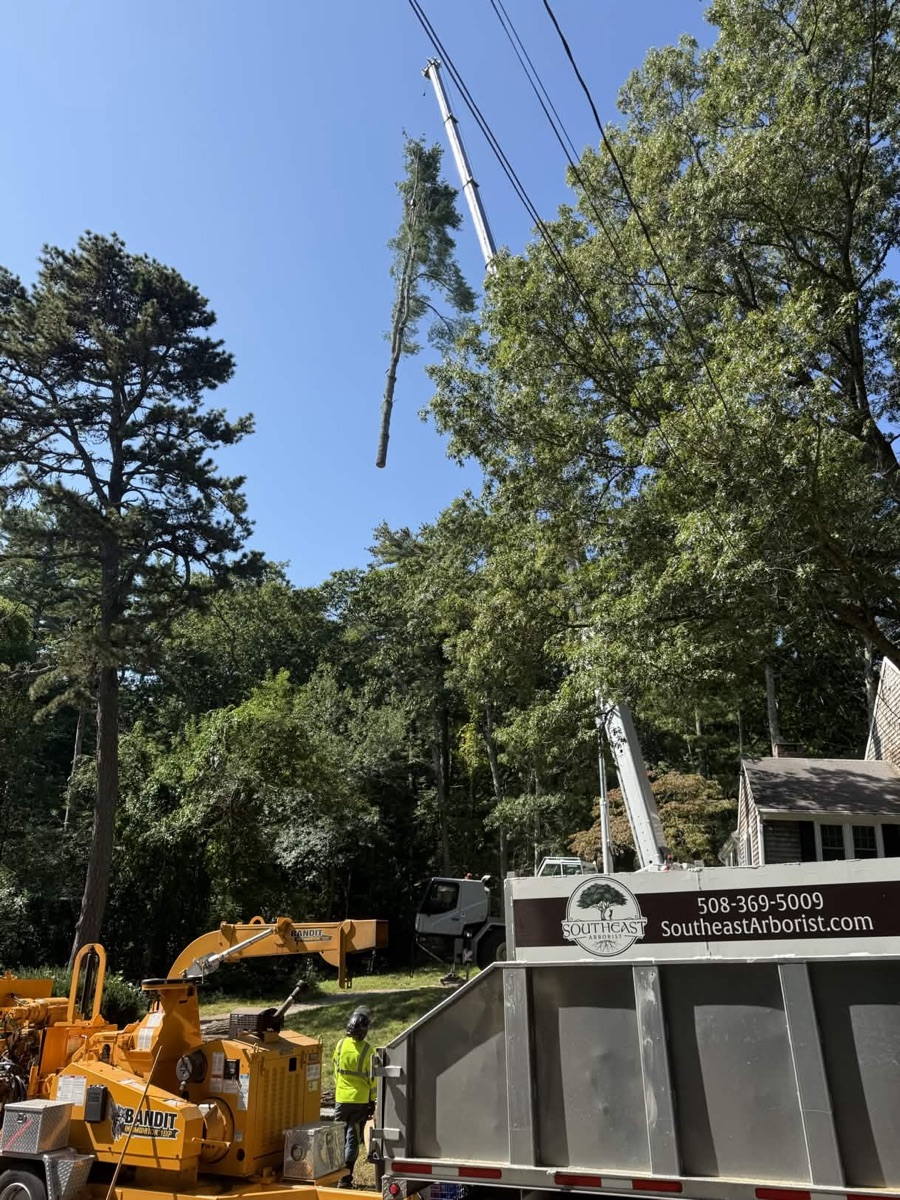
South Yarmouth homeowners request hazard removals: dead pitch pines crowding white oaks near Route 28. Our crews section-fell with cranes, mulching debris onsite to enrich local soils. Selective pruning opens views to Nantucket Sound, thinning red oaks by 20% without over-thinning.
West Yarmouth commercial lots along the tourist corridor see parking lot maintenance. We prune honey locust-oak mixes to 14-foot clearance, diagnosing anthracnose on red maples. Deadwooding prevents limb drops on vehicles, a frequent call after nor'easters.
Bass River waterfront properties face tidal erosion—oak tree specialists trench and cable white oaks with exposed roots. We install root barriers to divert scour, then prune for dock clearance. One project saved a boathouse by supporting a 36-inch red oak.
Bayberry Hills developments deal with overcrowded stands: pitch pine removal favors scrub oaks, with structural support for codominant stems. Health assessments spot black cherry competition, prescribing understory clears.
Bass Hole Area transitions demand ecological pruning: thin upland oaks encroaching salt marsh, preserving American holly edges. Erosion control includes guy wires on tilting white oaks.
Across neighborhoods, common threads: oak wilt prevention via root barriers near Dennis properties, and disease diagnosis for Phytophthora in wet zones. Southeast Arborist's ISA experts handle it all.
Practical advice: In Yarmouth Port, scout oaks for carpenter ants post-pruning—borings signal heart rot. Bass River owners, elevate mulch berms to combat tides.
These projects boost safety and value—one West Yarmouth lot avoided $15,000 liability. Call 508-369-5009 for your neighborhood's needs.
Oak Tree Specialist Costs in Yarmouth, MA
Oak tree specialist costs in Yarmouth, MA vary by project scope, but expect transparency from Southeast Arborist. A basic health assessment for your Yarmouth Port black oak runs $250-$400, including drone imaging and resistograph—free if treatment follows.
Pruning dominates: crown cleaning a 30-foot white oak in South Yarmouth costs $600-$1,200, factoring height, access, and debris haul. Structural pruning adds $300 for cabling, essential for Bass River erosion cases.
Removals spike prices: sectioning a dead pitch pine in Bayberry Hills near power lines hits $1,500-$3,000, with crane rental. Commercial Route 28 lots average $2,500 per tree for full safety overhauls.
Oak wilt treatment: $800-$1,500 per injection site, based on DBH. Root trenching adds $500, preventing spread in West Yarmouth clusters.
Factors influencing costs: Tree size (DBH over 24 inches raises rates 20%), location (Bass Hole waterfront access fees $200), urgency (storm damage premiums 15%), and crew needs (climbers for historic Yarmouth Port).
Soil conditions matter—sandy Yarmouth soils slow recovery, so we bundle amendments ($150/yard). Permits from Barnstable County conservation run $100-$300 for protected oaks.
Value proposition: Prevent $10,000 removals with $1,000 pruning. Our ANSI A300 work cuts insurance 10-20% via risk reports. Clients recoup via increased appraisals—healthy oaks add 5% property value in tourist corridors.
Comparisons: DIY risks fines; unlicensed crews skip wound sealing, accelerating decline. Southeast Arborist's ISA certification ensures compliance, with warranties up to 2 years.
Practical budgeting: Small residential jobs under $1,000 qualify for South Shore discounts. Multi-tree contracts save 15%. Get your quote at 508-369-5009—no surprises.
Investing in oak tree specialist services in Yarmouth pays dividends in durability and aesthetics.
When to Schedule Oak Tree Specialist in Yarmouth
Schedule your oak tree specialist in Yarmouth, MA during dormant seasons: August to January. This avoids sap flow, slashing oak wilt risk in red oaks. Avoid February-July—Cape springs trigger bleeding wounds inviting pathogens.
Urgency signs demand immediate calls to 508-369-5009: leaning trunks post-storm in Bass River, epicormic sprouting on West Yarmouth black oaks, or wilting branches despite rain signaling wilt.
Post-nor'easter inspections peak in March—book early for Bayberry Hills wind damage. Summer droughts (July-August) call for assessments before leaf scorch hits scrub oaks.
Winter moth peaks April; treat oaks before bud break. Fall (September-October) suits structural work, with lower rates.
Practical signs for your property: Cracks in bark, fungal shelves on trunks, or dead canopy over 20%. In Yarmouth Port historic zones, schedule annually to maintain village bylaws.
Don't delay Bass Hole erosion—tides worsen fast. Our team prioritizes South Shore emergencies.
Frequently Asked Questions About Oak Tree Specialist in Yarmouth
What makes oaks in Yarmouth prone to issues? Yarmouth's sandy soils, salt spray, and winter moth defoliation weaken black and white oaks. Tidal erosion in Bass River and overcrowding with pitch pines exacerbate decline.
How does Southeast Arborist prevent oak wilt in Yarmouth? We inject propiconazole and trench root grafts, timed outside sap flow. ISA Certified Arborists target high-risk red oaks near Dennis borders.
When is the best time for oak pruning in Yarmouth, MA? August-January only. Pruning February-July spreads disease via sap—critical for your Route 28 or Yarmouth Port trees.
What does structural pruning involve for my West Yarmouth oaks? We subordinate codominant stems, thin crowns 20-25%, and cable forks, following ANSI A300 for storm resistance.
How much does oak tree removal cost in Bass Hole Area? $1,200-$4,000 based on size and access. We section-fell to protect salt marsh ecology.
Can you treat winter moth on South Yarmouth oaks? Yes, with Bt applications pre-bud break, plus crown cleaning to remove webbing.
Do you serve commercial properties along Route 28? Absolutely—safety prunes, deadwooding, and assessments for liability reduction.
What's involved in a free oak health assessment? Drone scans, resistograph cores, soil tests, and a 0-10 health score with action plan.
Call 508-369-5009 for answers tailored to your oaks.
Oak Tree Specialist Throughout Yarmouth
Southeast Arborist provides oak tree specialist services across Yarmouth neighborhoods: Yarmouth Port historic preservation, South Yarmouth sound-side views, West Yarmouth commercial corridors, Bass River waterfronts, Bayberry Hills interiors, and Bass Hole ecological zones.
We extend to nearby Dennis and Barnstable, covering South Shore MA fully. From Plymouth/Cohasset, response times stay under 1 hour.
Protect your oaks today—call 508-369-5009 for ISA Certified expertise.