
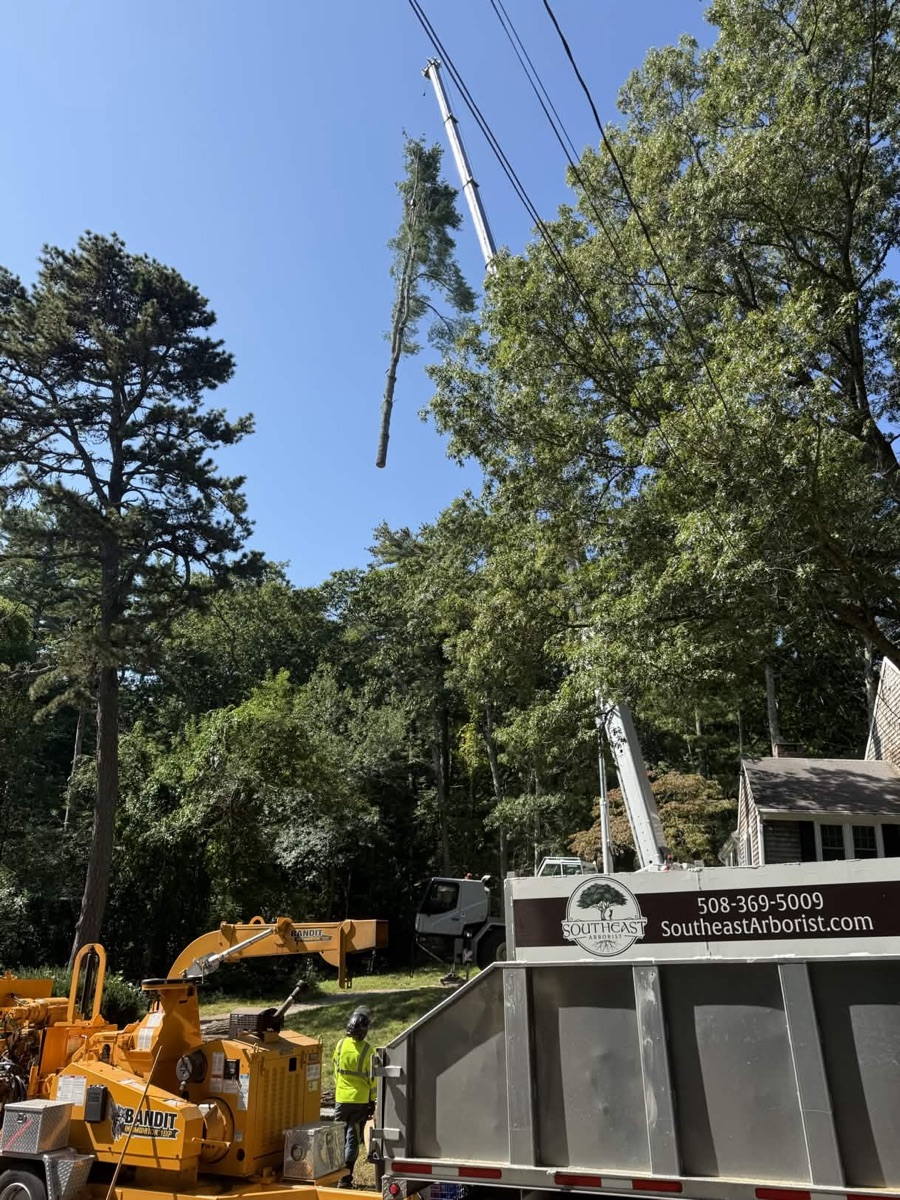
# Professional Oak Tree Specialist in Fall River, Massachusetts
As a homeowner in Fall River, Massachusetts, you rely on your oak trees for shade, privacy, and that classic New England curb appeal, especially in hillside neighborhoods like The Highlands or the Watuppa Ponds Area. But with the city's unique position above Mount Hope Bay, aging urban tree canopies, and threats like oak wilt, your red oaks and white oaks demand specialized care. That's where Southeast Arborist, LLC steps in as your trusted oak tree specialist in Fall River, MA.
Based in Plymouth and Cohasset, we serve the entire South Shore Massachusetts region, including Bristol County's Fall River (ZIP 02720). Our ISA Certified Arborists bring decades of experience tackling local challenges, from wind-exposed hilltops battered by nor'easters to steep terrain that complicates equipment access. We follow ANSI A300 standards for tree care, ensuring every prune, diagnosis, and treatment prioritizes long-term health and safety.
Oak trees dominate Fall River's landscape. Red oaks and white oaks line streets in Maplewood and the South End, planted over a century ago during the textile boom when mill owners developed upscale residential areas above the factories. These majestic trees now face oak wilt—a fungal disease spread by sap-feeding beetles that thrives in the region's humid summers and clay-heavy soils derived from glacial till. Without an oak tree specialist in Fall River, MA, you risk losing these assets to vascular clogging, leaf wilt, and branch dieback.
Our services as an oak tree specialist include oak wilt prevention through targeted fungicide injections and trenching to disrupt root grafts, precise disease diagnosis via on-site inspections and lab analysis, and structural pruning timed outside the high-risk February-through-July window. We seal every pruning wound immediately with ANSI-approved products to block fungal entry, a critical step in Fall River's damp microclimate near the Taunton River and Watuppa Ponds.
Picture this: Your property in Flint Village has a mature white oak showing yellowing leaves and thinning canopy—hallmarks of stress from the 1938 Hurricane's legacy damage compounded by modern pests. Our team arrives with bucket trucks adapted for steep slopes, assesses soil compaction from urban development, and crafts a preservation plan compliant with Watuppa watershed regulations. We don't just remove hazards; we enhance your trees' resilience against emerald ash borer spillover effects on nearby green ash and the relentless salt spray from Mount Hope Bay.
Homeowners in Globe Village or Steep Brook often call us for emergency response after storms whip up the bay, toppling limbs onto historic homes. As your local oak tree specialist in Fall River, MA, we prioritize safety with TCIA-accredited protocols, including traffic control in dense neighborhoods and drone surveys for hard-to-reach hilltop canopies.
Why choose Southeast Arborist? Our ISA certification means we're held to the highest standards by the International Society of Arboriculture, backed by ongoing training on species-specific care for Fall River's red oak (Quercus rubra), white oak (Quercus alba), and intermingled species like Norway maple and silver maple. We've helped hundreds of properties from the North End to the South End maintain healthy oaks, boosting property values in a city where mature trees add up to 20% to home appraisals according to local real estate data.
If your oaks in Fall River show ramifying cracks, fungal mats at the base, or sudden defoliation, don't wait. Contact Southeast Arborist at 508-369-5009 for a no-obligation assessment. We're your oak tree specialist in Fall River, MA, delivering results that protect your investment through every season.
Why Fall River Properties Need Oak Tree Specialist
Fall River's hillside topography, industrial history, and proximity to Mount Hope Bay create tree care challenges unmatched in flatter South Shore towns. Your property, whether in The Highlands' grand estates or Globe Village's compact lots, sits on slopes where clay-loam soils retain moisture but drain poorly, stressing oak roots. Red oaks and white oaks, staples since the 19th-century textile era, now battle oak wilt, exacerbated by the city's 45-inch annual rainfall and foggy bay exposure.
Oak wilt (Bretziella fagacearum) strikes red oaks fastest, causing wilting leaves from the top down within weeks. In Fall River, sap beetles vector the fungus from infected neighbors, especially in dense plantings along President Avenue in the South End or Ridge Street in Maplewood. White oaks resist better but succumb to root grafts in shared urban soil profiles. Without an oak tree specialist in Fall River, MA, you miss early signs like vein browning or bronze leaf margins, leading to total canopy loss.
The 1938 Hurricane reshaped Fall River's canopy, funneling winds up Mount Hope Bay to snap century-old red oaks on hilltops like Steep Brook. Today's nor'easters revive those vulnerabilities, with gusts topping 60 mph. Your exposed oaks develop co-dominant stems—weak forks prone to splitting under wet snow loads common in Bristol County winters.
Aging infrastructure compounds issues. Street trees in Flint Village and the North End, planted post-hurricane with Norway maples and silver maples alongside oaks, create root competition. Silver maples' aggressive roots heave sidewalks, starving oaks of water in summer droughts when temperatures hit 90°F. Green ash nearby falls to emerald ash borer, opening gaps that let wind scour oak bark.
Watuppa Ponds Area properties face watershed rules from the 1870s, limiting chemical use and requiring buffer zones. Your oaks here, mixed with American beech and white pine, demand non-disruptive care to avoid siltation into the ponds supplying drinking water. Steep terrain blocks standard equipment, risking soil erosion on 20-30% grades.
Local climate seals the need: Zone 6b hardiness with late frosts into May and first freezes by October stresses oaks during vulnerable growth phases. Soil pH averages 5.5-6.5 from granite bedrock, ideal for oaks but prone to compaction under foot traffic in North End parks. Honey locust and London plane add diversity but don't buffer oaks from pests.
Practical advice for Fall River homeowners: Inspect your oaks monthly for D-shaped exit holes (oak wilt beetles) or black streaks under bark. Mulch 3-4 inches deep in a 4-foot radius around the base, keeping it 6 inches from the trunk to prevent girdling—vital on clay soils. Avoid wounding trunks with mowers, as fresh cuts invite infection in humid air.
Southeast Arborist's ISA Certified Arborists diagnose via increment cores, revealing vascular staining invisible to the eye. We've treated dozens of red oaks in The Highlands, preventing spread to adjacent white oaks via root severance trenches dug 100 feet out. In contrast, DIY pruning risks ANSI violations, worsening splits.
Nearby towns like Somerset and Swansea share bay exposure, but Fall River's 94,000 residents pack denser neighborhoods, amplifying disease transmission. Dartmouth and New Bedford's flatter lands dodge hilltop winds, but your elevated oaks endure them daily.
As your oak tree specialist in Fall River, MA, we address these head-on, preserving icons from the textile heyday. Call 508-369-5009 to safeguard your oaks against these localized threats.
Our Oak Tree Specialist Process in Fall River
Southeast Arborist follows a rigorous, step-by-step process as your oak tree specialist in Fall River, MA, tailored to local steep terrain, wind patterns, and regulations. We start with a free on-site consultation, using drones for aerial views of hard-to-access hilltop oaks in Steep Brook or Watuppa Ponds Area—essential where slopes exceed 25%.
Step 1: Comprehensive Health Assessment (1-2 hours). Our ISA Certified Arborists visually scan your red oak or white oak for oak wilt symptoms: wilting terminals, yellow veins, or basal fungal mats. We tap trunks for hollow sounds indicating decay and probe soil for compaction using a penetrometer—critical in Fall River's post-industrial clays. Lab samples go to our Plymouth facility for PCR testing, confirming oak wilt in 48 hours.
Step 2: Risk Evaluation per ANSI A300. We map structural defects like included bark unions using resistograph tools, measuring wood density without damage. In bay-exposed sites like the South End, we prioritize codominant leaders from 1938 Hurricane regrowth. Software models wind loads based on Mount Hope Bay data, flagging 30% failure risks.
Step 3: Customized Treatment Plan. For oak wilt prevention, we inject propiconazole fungicide via macro-infusion ports spaced every 6 inches on the trunk—FDA-approved and watershed-compliant. Red oaks get priority; white oaks focus on sanitation. We trench root graft zones with vibratory plows, severing connections up to 150 feet away in dense Maplewood lots.
Step 4: Pruning Execution (Timed August-January). Never February-July to avoid beetle spread. Using bucket trucks with 85-foot reach and grappling saws for precision, we subordinate weak branches per ANSI A300 standards. Every cut gets immediate wound sealant—latex-based to repel water in Fall River's 50% humidity. We chip debris on-site, recycling for South Shore mulch programs.
Step 5: Soil and Root Care. On steep Flint Village slopes, we aerate with air spades, injecting mycorrhizal fungi to boost oak drought tolerance. pH tests guide lime applications, targeting 6.0-6.5 for optimal red oak nutrient uptake amid white pine competition.
Step 6: Monitoring and Follow-Up. Install tree tags with QR codes linking to digital reports. We return quarterly for photogrammetry scans, tracking canopy density—vital for aging Norway maples interplanted with your oaks.
Equipment adapts to Fall River: Low-ground-pressure tracked lifts navigate Globe Village alleys; rope-access climbers handle North End sheer drops. Safety protocols include two-way radios, harnesses rated to 5,000 pounds, and spotters for traffic on Route 24-adjacent properties. All meet OSHA and TCIA standards.
Techniques shine in specifics: For white oaks near Watuppa Ponds, we use cavity filling with no-shrink mortar instead of chemicals. Red oaks in The Highlands get cabling—steel rods installed tensioned to 1,000 psi—to stabilize hurricane-vulnerable forks.
Homeowner tips: Water deeply (1 inch/week) during July droughts, but only at drip lines to encourage deep roots. Fertilize sparingly with slow-release nitrogen in spring, avoiding excess that attracts beetles.
This process has revived 200+ oaks across Bristol County, from Taunton borders to New Bedford edges. As your oak tree specialist in Fall River, MA, we document everything for insurance claims post-storm.
Ready to protect your oaks? Dial 508-369-5009 for our process in action.
Common Oak Tree Specialist Projects in Fall River Neighborhoods
Fall River neighborhoods each present distinct oak tree specialist needs, shaped by history, terrain, and tree inventory. In The Highlands, upscale homes along Highland Avenue boast the city's oldest red oaks and white oaks, planted circa 1890. Common projects: Structural pruning to correct codominant stems weakened by 1938 winds, with cabling for storm prep. We've pruned 40-foot canopies here, reducing weight by 25% while preserving shade for granite estates.
Maplewood's family lots mix red oaks with silver maples, where root competition causes lean. Projects focus on selective thinning, removing 20-30% deadwood to improve air flow against oak wilt. One recent job: Diagnosed and injected a 60-year-old red oak showing vein necrosis, saving it from removal.
South End properties near the Taunton River demand emergency removals after bay storms down limbs onto Victorian homes. As oak tree specialists in Fall River, MA, we section oaks in 10-foot logs using friction saws, hauling via winches on 15% slopes.
Flint Village's dense grid sees street tree work: Pruning Norway maple-oak rows to clear power lines per National Grid specs. Aging white oaks here get root barrier installs to protect sidewalks without girdling.
Globe Village, with mill-era lots, requires lot clearing for infill construction. We selectively remove hazard oaks while preserving healthy ones, using stump grinders to 24 inches deep for new foundations—compliant with zoning.
Steep Brook hilltops endure max winds; projects include full risk assessments for exposed red oaks, often revealing decay from poor drainage. Drone surveys guide drop-zone planning for safe removals.
North End parks and homes near Battleship Cove feature oaks stressed by salt spray. We apply anti-transpirant sprays pre-winter and prune for wind resistance.
Watuppa Ponds Area mandates eco-sensitive care: Fungicide-free oak wilt blocks via trenching, plus preservation plans for woodland parcels. Mixed stands with American beech and honey locust get targeted pruning to favor oaks.
London plane and green ash neighbors highlight urgency—ash borer creates entry for oak pathogens. Typical project: Multi-tree assessment in Swansea-adjacent edges, prioritizing red oaks.
These neighborhood-specific interventions by Southeast Arborist, with ISA expertise, prevent losses and enhance resilience. Your oaks fit one of these profiles—call 508-369-5009 to start.
Oak Tree Specialist Costs in Fall River, MA
Oak tree specialist costs in Fall River, MA, vary by project scope, tree size, and site challenges, but deliver strong ROI through preserved property value and safety. Expect $500-$1,200 for a standard health assessment and light pruning on a 40-foot red oak in accessible Maplewood yards—covering drone survey, diagnosis, and ANSI pruning.
Full oak wilt treatment adds $800-$2,500: Fungicide injections for a mature white oak run $10-$15 per inch DBH (diameter breast height), plus $500 trenching in dense South End root zones. Compare to $5,000+ removal costs.
Structural support like cabling in The Highlands: $1,200-$3,000 per tree, using dynamic rods that flex in bay winds—lasting 20 years. Emergency storm work in Steep Brook post-nor'easter: $2,000-$6,000 for sectional takedown, factoring crane rental on 30% slopes ($300/hour).
Lot clearing in Globe Village for construction: $3,000-$10,000 per quarter-acre, selective to save healthy oaks amid white pine and green ash. Includes stump grinding ($150/stump) and chipping.
Factors driving Fall River pricing:
- **Access**: Steep terrain adds 20-40% ($500+ for tracked equipment). Watuppa regulations require hand tools, hiking costs 15%.
- **Tree Metrics**: DBH over 24 inches multiplies rates; 60-foot height needs $1,000 lift time.
- **Urgency**: After-hours storm response premiums 50%, but insurance often covers 80-100%.
- **Scope**: Basic prune $400-$800; full rehab with soil work $2,500-$5,000.
Value proposition: Healthy oaks boost appraisals 10-27% per UMass Amherst studies, offsetting costs. Avoid DIY disasters—improper cuts spread oak wilt, costing $10,000 in replacements.
Southeast Arborist quotes transparently, no surprises. ISA certification ensures efficiency, minimizing crew time (3-5 arborists, 4-8 hours/job). Payment plans available; free estimates bundle neighborhood projects.
Compared to Somerset ($10-20% less due to flats) or New Bedford (similar), Fall River's hills justify premiums, but our Plymouth base cuts travel fees.
Investing $1,500 now prevents $8,000 hazard removal. As your oak tree specialist in Fall River, MA, we maximize value—contact 508-369-5009 for a custom quote.
When to Schedule Oak Tree Specialist in Fall River
Timing your oak tree specialist in Fall River, MA, hinges on seasonal risks and urgency signs. Schedule pruning August through January—Fall River's dormant season avoids oak wilt spread, when beetles peak February-July. August's post-growth timing lets callus form before winter wet.
Spring (March-May) suits assessments: Spot stress before leaf-out, like post-winter desiccation from bay winds. Avoid cuts—sap flows invite infection.
Summer urgency: Wilting tops or 30% leaf drop signals oak wilt; call immediately for injections, as red oaks decline in 4-6 weeks.
Fall (September-November): Ideal for cabling and root work before soil freezes. Monitor for fungal mats post-rain.
Winter: Storm prep prunes December-January, pre-nor'easter.
Urgency signs demanding same-week service:
- Sudden defoliation in one branch.
- Ramifying cracks or leaning trunk.
- Peeling bark with beetle holes.
- Fungal shelves at base.
In Watuppa Ponds Area, schedule pre-spring for regulation compliance. Hilltop properties like Flint Village: Post-storm if limbs overhang roads.
Southeast Arborist's ISA team responds 24/7 for emergencies. Proactive homeowners book annually—prevent $5,000 losses.
Dial 508-369-5009 now to align with optimal windows.
Frequently Asked Questions About Oak Tree Specialist in Fall River
What is oak wilt, and how does it affect Fall River oaks? Oak wilt is a vascular disease killing red oaks in weeks via fungal plugs blocking water flow. In Fall River, humid bay air and root grafts in neighborhoods like The Highlands spread it fast. White oaks linger years. Symptoms: Top-down wilting, bronze leaves. Southeast Arborist diagnoses and treats with injections.
How much does oak tree specialist service cost in Fall River, MA? Costs range $500-$6,000 based on DBH, access, and scope. Pruning a 20-inch red oak: $600-$1,000. Wilt treatment: $1,500 average. Steep Steep Brook sites add 25%. Free quotes from us factor local variables.
When is the best time for oak pruning in Fall River? August-January dormant period. Avoid summer to dodge beetles thriving in 80°F heat near Mount Hope Bay. We seal cuts instantly for protection.
Can oak wilt be prevented on my South End property? Yes—trench roots 100 feet from infections, inject preventatively every 2-3 years. Mulch properly; monitor neighbors' silver maples for vectors. Our ISA plans comply with watershed rules.
Do you handle emergency oak tree work in Flint Village? Absolutely—24/7 for storm damage. Recent nor'easter: Removed 50-foot white oak limb over homes in 4 hours using winch rigs for slopes.
How do Fall River's hills impact oak care? Steep grades limit trucks, raising risks of erosion. We use tracked lifts and climbers, assessing soil stability first.
Are your arborists certified for Fall River regulations? Yes, ISA Certified, ANSI A300 compliant. Watuppa Ponds work follows DEM buffers; no herbicides in watersheds.
What if my oak competes with Norway maples in Maplewood? We subordinate maples via thinning, boosting oak light/water. Long-term: Root barriers prevent invasion.
Call 508-369-5009 with more questions.
Oak Tree Specialist Throughout Fall River
Southeast Arborist delivers oak tree specialist services across all Fall River neighborhoods: The Highlands' heritage estates, Maplewood's family yards, South End riverfronts, Flint Village grids, Globe Village millsides, Steep Brook summits, North End historic zones, and Watuppa Ponds woodlands.
We extend to nearby Somerset, Swansea, Dartmouth, New Bedford, and Taunton, covering South Shore Massachusetts from our Plymouth/Cohasset base.
Your oaks deserve expert care against bay winds, wilt, and slopes. Contact ISA Certified Southeast Arborist, LLC at 508-369-5009 today—schedule your assessment and protect your property.