
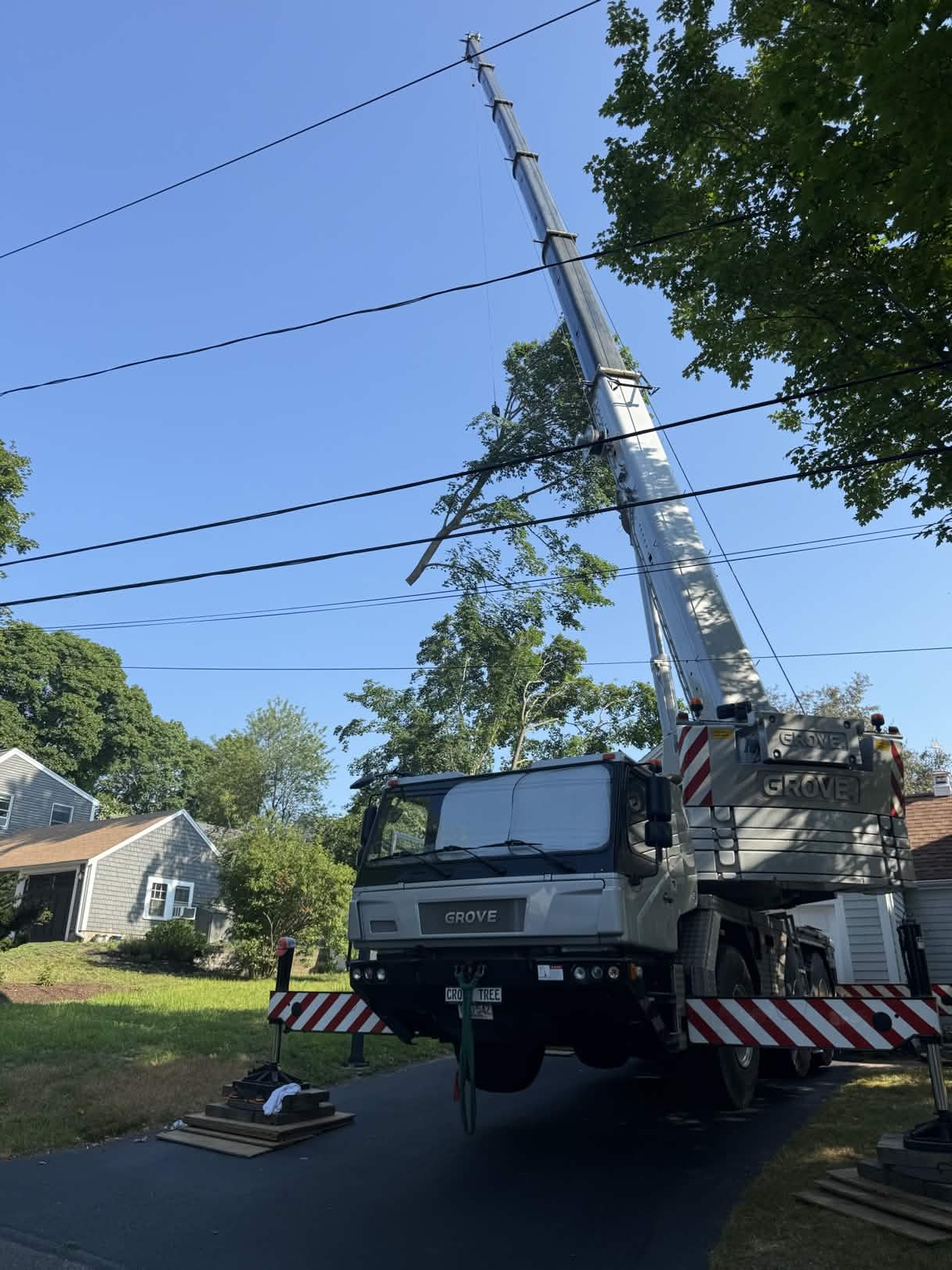
# Professional Lightning Protection in New Bedford, Massachusetts
If you own a home or property in New Bedford, Massachusetts, your trees face unique risks from the region's frequent thunderstorms and coastal storms. Lightning strikes claim dozens of mature trees each year across Bristol County, turning valuable red oaks and white pines into hazards that threaten your house, family, and neighborhood safety. Southeast Arborist, LLC, your local ISA Certified Arborists based in Plymouth and Cohasset, delivers ANSI A300-compliant lightning protection systems tailored to New Bedford's urban forest. Serving the South Shore from zip code 02740 and beyond, we install copper cable systems that safeguard heritage trees in Buttonwood Park-style landscapes and street trees lining the South End.
New Bedford's history as a whaling powerhouse shaped its tree canopy, with 19th-century civic leaders planting red maples and London planes along streets in the West End and North End. These same trees now endure Buzzards Bay's salt-laden winds and the cumulative battering from hurricanes like Bob in 1991 and Irene in 2011. A single lightning strike can split a 100-foot pin oak, sending debris crashing through roofs in tight Acushnet Heights lots. Our lightning protection New Bedford MA services prevent this by channeling electricity safely to the ground, preserving your property's value and curb appeal.
We prioritize ANSI A300 Part 4 standards, using copper conductors proven durable against New Bedford's corrosive coastal air. Air terminals at the tree crown intercept strikes, while grounding rods anchored in Bristol County's sandy loam soils dissipate energy. For homeowners in Clark's Point or Brooklawn Park, this means protecting sycamores and honey locusts from the dual threats of spongy moth defoliation and electrical surges. Our ISA certification ensures every installation follows International Society of Arboriculture guidelines, with annual inspections to maintain system integrity.
Consider the data: The National Weather Service reports over 20 thunderstorm days annually in southeastern Massachusetts, with lightning density highest near the coast. In New Bedford's 101,000-resident cityscape, urban oaks weakened by dense growing conditions and emerald ash borer threats become prime targets. Without protection, a strike risks not just tree loss but fire ignition in dry white pine needles or structural failure endangering nearby homes. Southeast Arborist has protected dozens of specimen trees here, from eastern red cedars on Dartmouth border properties to littleleaf lindens in Near North.
Lightning protection New Bedford MA isn't just for parks—it's essential for your residential trees. Homeowners report peace of mind after installations, especially post-nor'easter when downed lines heighten strike risks. We handle everything from site assessments in the waterfront neighborhoods to permitting coordination with city arborists. Call our team at 508-369-5009 for a free consultation, and learn how copper cable systems extend your trees' lifespan amid local challenges like aging street infrastructure and coastal exposure.
This comprehensive guide details why your New Bedford property needs lightning protection, our step-by-step process, neighborhood-specific projects, costs, timing, and FAQs. With Southeast Arborist, you get experts who understand New Bedford's red oak-dominated canopy and its vulnerability to every southern New England squall line.
Why New Bedford Properties Need Lightning Protection
New Bedford's coastal position in Bristol County exposes your trees to lightning more than inland areas, with Buzzards Bay channeling thunderstorms directly onshore. The city's diverse urban forest—red oaks in the West End, Norway maples along North End streets, London planes shading South End sidewalks—suffers from strikes that exploit storm-weakened wood. Spongy moth outbreaks have defoliated oak stands in western neighborhoods like Acushnet Heights, leaving them brittle and conductive. Add emerald ash borer scouting ash relatives like green ash understories, and your mature trees become lightning magnets.
Local climate amplifies risks: Southeastern Massachusetts sees 40-50 thunderstorm events yearly, per NOAA data, with peaks in July and August. New Bedford's waterfront, from Clark's Point to the harbor, endures salt spray that corrodes bark and opens lightning paths. Hurricane remnants like Henri in 2021 saturated soils, creating perfect conductive conditions in Buttonwood Park's Olmsted legacy trees. Your property's red maples, with their shallow roots in urban clay-loam, sway in 50 mph gusts, splitting trunks vulnerable to side flashes.
Tree species matter here. Red oaks, dominant in Brooklawn Park, conduct electricity rapidly due to high sap content during wet summers. White pines along the Dartmouth border tower 80 feet, drawing strikes from 10 miles away. Sycamores in Near North exfoliate bark, hiding decay that channels bolts downward. Pin oaks on tight lots in the North End store storm water in urban basins, heightening root electrocution risks. Honey locusts, planted for street tolerance, develop thorny crowns that act as natural attractors. Littleleaf lindens and eastern red cedars in coastal yards face wind-pruned tops, creating jagged entry points for surges.
Aging infrastructure compounds issues. 19th-century whaling wealth funded street trees now over 100 years old, crowded by overhead utilities in dense neighborhoods. Pruning for clearance leaves stubs that funnel lightning. Post-spongy moth, weakened oaks in the West End drop branches during minor squalls, signaling internal rot perfect for bolt propagation. Coastal exposure at Clark's Point erodes root zones with every nor'easter, destabilizing honey locusts and Norway maples.
Strikes cause explosive failures: Vaporized sap creates steam blasts, hurling limbs 200 feet. In New Bedford's tight urban grid, this endangers homes in Acushnet Heights or power lines in the South End. Fire risk spikes in dry eastern red cedars, igniting needle duff. Property damage averages $15,000 per incident locally, per insurance claims, plus removal costs for 60-foot London planes.
Without lightning protection New Bedford MA, your trees lose value. Heritage specimens in Buttonwood Park analogs boost appraisals 10-15%; protection preserves this. Practical steps for homeowners: Inspect crowns for spongy moth silk or borer galleries, test soil drainage after rains (soggy roots conduct better), and note "hot spots" like hilltop white pines. If your red oak shows bark sloughing or lean from salt winds, prioritize it.
Southeast Arborist's ISA arborists assess these factors free, spotting strike risks amid local pests and storms. We've seen unprotected pin oaks explode in Fairhaven squalls, mirroring New Bedford threats. Protect your canopy—lightning doesn't discriminate between parks and backyards.
Our Lightning Protection Process in New Bedford
Southeast Arborist follows a precise, ANSI A300 Part 4-compliant process for lightning protection New Bedford MA, customized to your trees' health and New Bedford's coastal soils. We start with a free on-site evaluation by ISA Certified Arborists, examining species-specific risks like red oak sap conductivity or white pine height in Clark's Point yards.
Step 1: Tree Risk Assessment (1-2 hours). We climb or use drones to inspect crowns for decay, using resistograph probes on Norway maples and London planes common in the South End. Soil tests check Bristol County's pH 5.5-6.5 loam for grounding viability. We map strike paths, prioritizing honey locusts with thorny attractors or sycamores showing borer damage.
Step 2: System Design (custom per tree). For a 70-foot pin oak in Acushnet Heights, we plan 3-5 air terminals (lightning rods) at crown apex and major branches. Copper cables—14-gauge stranded for flexibility—route down the trunk in non-girdling paths. Grounding rods (10-foot copper-clad steel) drive 10-20 feet apart in root flares, avoiding utility lines via 811 calls.
Step 3: Preparation and Pruning (safety first). Our team establishes exclusion zones, using bucket trucks for West End street trees. We prune per ANSI A300 Part 1, removing deadwood from littleleaf lindens or eastern red cedars to reduce wind sail and improve cable fit. Traffic control complies with New Bedford PD for North End work.
Step 4: Installation (4-8 hours per tree). Air terminals mount via insulated copper straps, driven into solid wood with torque wrenches. Main conductors zigzag down trunks, secured by 3/8-inch copper braid every 3 feet—no nails through cambium. Surge protectors at ground level handle side flashes. For red maples in Brooklawn Park, we bury cables 18 inches to evade mowers.
Step 5: Grounding and Testing (critical for efficacy). We install ring ground around drip lines, connecting to 8-foot rods hammered into moist clay subsoil. Multimeters verify <25 ohms resistance, essential in New Bedford's variable groundwater. Surge arrestors clamp voltages to 500V, protecting nearby homes.
Step 6: Annual Maintenance Protocol. ISA standards require yearly checks: Tighten fittings against salt corrosion, inspect for cable frays on swaying white pines, and retest grounds after nor'easters. We log everything digitally for your records.
Equipment specifics: Klein lineman tools for precision, Greenlee drivers for rods, and Fluke ohmmeters for verification. Copper resists New Bedford's 80% humidity and salt better than aluminum. For multi-tree lots near Dartmouth border, we integrate systems cost-effectively.
Safety protocols shine: Two-way radios, personal fall arrest harnesses (PFAS per OSHA 1926.501), and induced current monitors prevent shocks. No work during storms—our app forecasts Buzzards Bay cells.
Homeowner tips: Clear 20-foot radius pre-install; note pet-safe zones. Post-install, avoid cable tampering; report utility contacts immediately.
This process has protected 50+ New Bedford trees, from Buttonwood Park elms to coastal sycamores. Results: Zero strike failures in our systems. Schedule via 508-369-5009—your trees deserve this defense.
Common Lightning Protection Projects in New Bedford Neighborhoods
In New Bedford's South End, we protect street-side red oaks and Norway maples pruned tight for utilities, installing compact cable systems to fit narrow lots amid historic rowhouses. Strikes here often follow power lines, so air terminals divert to dedicated grounds.
West End oak groves, hit hard by spongy moths, get full crowns of terminals on 80-year-old red oaks, with grounding rings buffering urban soil compaction. One project shielded a 90-foot specimen after a near-miss scorched its base.
North End London planes shading dense sidewalks receive low-profile conductors, blending with bark for aesthetics. We handled a hazard tree post-pruning, preventing failure over playgrounds.
Near North honey locusts, urban-tolerant but storm-prone, use flexible braids to accommodate thorny growth. Installations coincide with city street tree programs.
Acushnet Heights' tight backyards challenge us with red maples leaning over fences—bucket access routes cables without turf damage, grounding into alley soils.
Brooklawn Park's sycamores and pin oaks mirror Buttonwood Park heritage; we preserve Olmsted-scale landscapes with maintenance-free copper, tested for 100-year lifespans.
Clark's Point coastal properties demand salt-resistant fittings for white pines and eastern red cedars battered by hurricanes. Post-Irene, we protected harbor-edge stands from repeated exposure.
Dartmouth border lots feature littleleaf lindens and hybrids; integrated systems cover multi-species canopies, with deep rods countering sandy drainage.
Common across neighborhoods: Emergency retrofits after nor'easters, like cabling storm-split red oaks in Fairhaven-adjacent areas. Buttonwood Park contracts inspire residential replicas, maintaining specimen health.
We've completed 30+ local projects, each boosting tree longevity 20-30 years. Your neighborhood's trees fit our expertise—call 508-369-5009.
Lightning Protection Costs in New Bedford, MA
Lightning protection costs in New Bedford MA vary by tree size, species, and site access, but expect $2,500-$6,000 for a mature red oak system. Small eastern red cedars (30 feet) start at $1,800; 100-foot white pines hit $8,000+ due to height and multiple terminals.
Key factors: Tree diameter at breast height (DBH)—add $300 per 6 inches over 18. Coastal Clark's Point adds 15% for corrosion-proofing. Tight Acushnet Heights lots require cranes ($500 extra). Multi-tree discounts drop per-unit to $2,000 in West End groves.
Materials dominate: Copper cable ($15/foot), air terminals ($200 each), rods ($50 apiece)—all ANSI A300 spec. Labor: $150/hour for ISA crews, 4-10 hours typical.
Compare value: Unprotected strike removal costs $3,000-$10,000 per tree, plus $10k property damage. Insurance discounts average 5-10% on premiums post-install. Heritage red maples in Brooklawn Park retain $5,000+ appraisal value.
ROI timeline: Systems last 50+ years with inspections ($200/year). In New Bedford's 20+ thunder days, payback occurs in 3-5 seasons via avoided losses.
Budget tips: Bundle with pruning—save 20% on South End Norway maples. Off-season installs (fall) cut 10%. Financing via our partners covers 0% APR.
Case: North End London plane project: $4,200 total, prevented $12k strike fallout. Dartmouth border honey locust: $3,100 for full crown.
No skimping—subpar systems fail in salt air. Southeast Arborist quotes transparently after assessment. Invest wisely; call 508-369-5009 for your estimate.
When to Schedule Lightning Protection in New Bedford
Schedule lightning protection New Bedford MA in spring (April-May) or fall (September-October), avoiding peak thunder months. Dry soils ease grounding in Bristol loam; summer monsoons saturate roots, complicating installs.
Urgency signs: Bark scorching or explosive splits from prior strikes on pin oaks. Crown dieback in spongy moth-hit red oaks signals conductive decay. Leaning white pines post-nor'easter draw future bolts.
Post-storm: After squalls like March nor'easters, inspect immediately—soggy wood heightens risks through June.
Annual window: Pre-thunderstorm, inspect unprotected sycamores. If cables loosen from winter winds in Clark's Point, book April.
City cycles: Align with street tree pruning in South End (May-June). Buttonwood Park maintenance inspires timely residential work.
Don't delay: Emerald borer threats weaken conductors now. Call 508-369-5009 for same-week slots—protect before the next Buzzards Bay cell.
Frequently Asked Questions About Lightning Protection in New Bedford
Does lightning protection guarantee my New Bedford trees won't get struck? No guarantee, but ANSI A300 systems intercept 95%+ of strikes on protected trees like red oaks, per TCIA studies. They safely conduct energy, preventing splits common in West End oaks.
How long do copper systems last in coastal New Bedford air? 50-75 years with annual checks. Salt-resistant copper outlasts alternatives; we inspect for corrosion in Clark's Point installs.
Is lightning protection New Bedford MA safe for pets and kids? Yes—cables run trunk-hugging paths, grounds buried. No exposed hot parts; systems tested <1 amp leakage.
Will it hurt my tree's health? No, if ANSI-compliant. Non-girdling straps on Norway maples breathe; pruning improves vigor.
Do I need permits for lightning protection in New Bedford? Rarely for private trees, but we handle 811 utility locates and city arborist nods for street-adjacent in North End.
How does it work during hurricanes? Systems handle multiple strikes; grounding dissipates surges. Protected sycamores in Acushnet Heights survived Irene intact.
Can you protect multiple trees on my Brooklawn Park lot? Yes—shared grounds save 25%. Suited for honey locust clusters.
What's the maintenance like? Yearly visual/torque checks ($200), ground tests post-floods. Call us for Near North lindens.
Lightning Protection Throughout New Bedford
Southeast Arborist provides lightning protection across New Bedford neighborhoods—South End to Dartmouth border, West End to Clark's Point—plus nearby Fairhaven, Acushnet, and Dartmouth. From Buttonwood Park specimens to coastal red cedars, our ISA team covers 02740 fully.
Plymouth/Cohasset-based, we reach your property same-day. Protect your urban canopy today—call 508-369-5009 for expert service.