
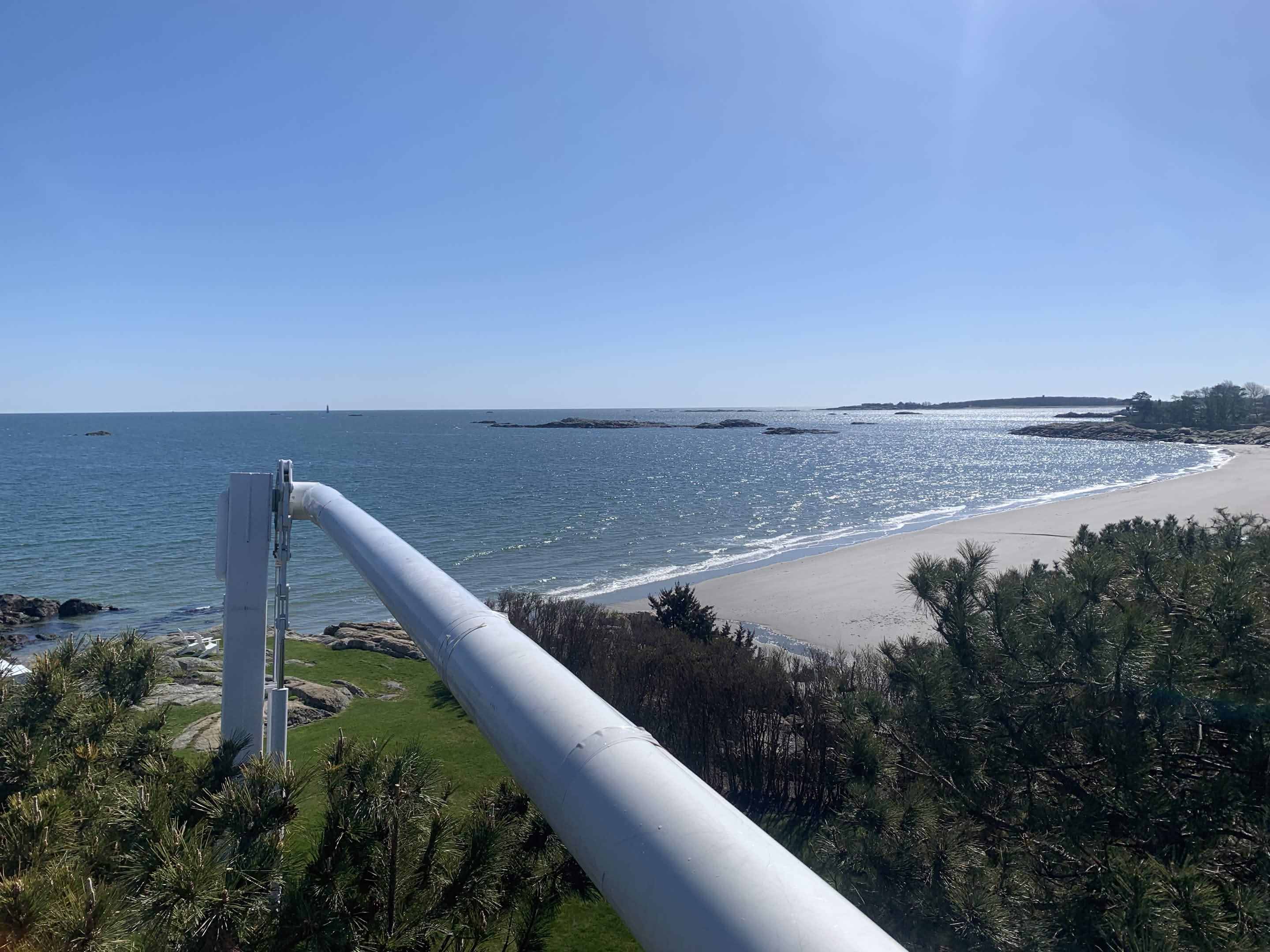
# Professional Vista Pruning in Kingston, Massachusetts
If you own a waterfront home in Kingston Bay or a lakeside property on Silver Lake, your trees likely block the panoramic views that define your property's value. Vista pruning in Kingston, MA, restores those sightlines while keeping your trees healthy and structurally sound. Southeast Arborist, LLC, your local ISA Certified Arborists based in Plymouth and Cohasset, specializes in this precise technique for South Shore Massachusetts properties. We serve Kingston's unique landscape—from the dense white pine stands in Rocky Nook to the oak groves around Indian Pond—using ANSI A300 standards to ensure every cut promotes tree vigor.
Kingston's 14,000 residents enjoy a waterfront community exposed to Kingston Bay's salt spray, kettle ponds like Indian Pond, and pine-oak forests shaped by centuries of industrial timber harvest along the Jones River. This history left mature second-growth forests prone to specific issues: wind-damaged white pines on inland lots, salt-stressed red maples along the bay, and power line conflicts in rural areas like Pembroke Street. Vista pruning addresses these by selectively removing branches to open ocean, harbor, or pond views without compromising tree health.
Our windowing technique targets exact sightlines, such as framing Kingston Bay sunsets from The Islands or clearing Silver Lake vistas from lakefront homes. Unlike aggressive topping, which invites decay and failure, we apply crown reduction and thinning to maintain natural form. This preserves property values in a town where bayfront lots command premiums for their views. Homeowners in Kingston Center or Jones River Village often call us after storms reveal leaning pitch pines or overcrowded scarlet oaks blocking river glimpses.
As ISA Certified Arborists, we follow rigorous safety protocols, including traffic control on rural roads and crane use for high-risk removals near power lines. Our team uses sterilized tools to prevent disease spread in Kingston's humid coastal climate, where beech bark disease and oak decline thrive. Practical tip: Walk your property after leaf drop in late fall to map obstructed views—note white pine clusters or red oak limbs overhanging decks. This prepares you for our late winter consultations, when sap flow is minimal for optimal healing.
Vista pruning Kingston MA enhances curb appeal and safety, especially with the town's bay exposure accelerating salt damage to black cherry and sassafras. We handle common projects like pine thinning for wind resilience inland and selective pruning for riparian trees stressed by Jones River flooding. Property owners report 20-30% view expansions post-service, boosting resale potential in Plymouth County's competitive market. Contact Southeast Arborist at 508-369-5009 for a free site assessment tailored to your Kingston address—whether Elm Street Area or the power line corridors near Duxbury line.
In Kingston's mix of open agricultural bayfronts and regenerating forests, professional intervention prevents hazards. Mature white oaks around Indian Pond, for instance, develop heavy limbs that droop over paths during wet springs. Our approach integrates soil conditions—sandy, well-drained uplands versus flood-prone Jones River banks—to recommend species-specific cuts. Expect detailed proposals outlining branch targets, healing timelines, and post-prune care like mulching to retain moisture in Kingston's variable rainfall.
This service goes beyond aesthetics: It mitigates risks from dense canopies in wind-prone areas like Marshfield-adjacent lots. We've restored views for dozens of Kingston properties, from Rocky Nook's bay exposures to Silver Lake's recreational shores. Schedule your vista pruning in Kingston, MA, with experts who understand local species like red maple's salt sensitivity and pitch pine's fire resilience. Call 508-369-5009 today to reclaim your scenery.
Why Kingston Properties Need Vista Pruning
Kingston, MA 02364, in Plymouth County, faces tree challenges tied to its bayfront location, kettle ponds, and second-growth pine-oak forests regenerated after 18th-19th century Jones River mills depleted timber. Dense white pine stands dominate inland neighborhoods like Rocky Nook and Pembroke Street Area, where overcrowding leads to wind damage during nor'easters common to South Shore Massachusetts. These trees, reaching 80-100 feet, compete for light and space, producing weak limbs that fail under 40-60 mph gusts from Kingston Bay.
Salt exposure stresses bayfront properties in The Islands and Kingston Center, where ocean spray desiccates red maples and black cherry foliage, causing dieback that blocks harbor views. Red oaks and scarlet oaks around Indian Pond develop epicormic sprouts from salt-induced vigor loss, overhanging pondsides and obscuring scenic waterlines. White oaks in Elm Street Area groves hold heavy acorn crops, adding limb weight that sags over driveways during humid summers.
Power line encroachment plagues rural roads near Jones River Village and Duxbury borders, where pitch pine and beech limbs arc into 13.8kV corridors, risking outages during ice storms. Flooding along the Jones River—Plymouth County's historic industrial artery—stresses riparian sassafras and red maples, leading to root rot and unstable crowns that threaten vistas from Pembroke Street homes.
Kingston's coastal climate amplifies these issues: Annual rainfall exceeds 45 inches, with sandy soils draining quickly on uplands but holding water in low-lying Silver Lake areas. This fosters fungal pathogens like Armillaria in white pines, weakening branches over bay views. Practical advice for Kingston homeowners: Inspect trees post-winter for codominant stems in young bayfront plantings—common after historical agriculture kept areas open. These stems split in winds, blocking sunrises.
Vista pruning in Kingston MA targets these problems with selective removal, unlike clear-cutting that erodes soil on kettle pond shores. For white pines in Rocky Nook, we thin 20-30% canopy to reduce sail effect without shocking roots in nutrient-poor sands. Red oaks near Silver Lake benefit from crown reduction, lifting lower limbs 15-20 feet to reveal lakefronts while improving air circulation against powdery mildew.
Property values hinge on views: Bayfront homes in The Islands average $1.2 million, per recent Plymouth County sales, with obstructed sightlines deducting 10-15%. Inland, Indian Pond lots premium for oak-shaded privacy, but overgrown scarlet oaks invade yards. Beech trees along Elm Street, prone to bark disease from Nectria fungi in humid conditions, drop limbs unpredictably—pruning opens streetscapes safely.
Common in Kingston: Windthrown pitch pines after March gales, salt-pruned black cherry along Pembroke Street, and flooded sassafras leaning into Jones River paths. Our ISA Certified Arborists assess these using resistograph probes for internal decay, recommending vista cuts that enhance resilience. Homeowners in Jones River Village note improved light for understory plants post-thinning, boosting biodiversity.
Soil pH 4.5-5.5 in pine-dominated uplands favors acid-loving species but limits recovery without mulch—advice: Apply 3-inch pine bark layers post-prune to stabilize. Near Marshfield and Plymouth, similar exposures mean coordinated pruning prevents cross-boundary failures. Vista pruning preserves Kingston's forest heritage while delivering unobstructed bay, pond, and river views essential to your lifestyle.
Our Vista Pruning Process in Kingston
Southeast Arborist's vista pruning process in Kingston, MA, follows ANSI A300 standards, starting with a site-specific assessment for your property's trees. We arrive from our Plymouth/Cohasset base with ISA Certified Arborists equipped for South Shore conditions—binoculars for initial canopy scans, soil augers for root zone checks, and drones for bayfront overviews in The Islands.
Step 1: Consultation and view mapping (1-2 hours). You point out desired sightlines—Kingston Bay sunsets from Rocky Nook decks or Silver Lake horizons from waterfront homes. We use laser rangefinders to plot exact branch targets, overlaying on GIS maps of Kingston's power lines and flood zones near Jones River Village.
Step 2: Tree health evaluation (30-60 minutes per tree). Climbing inspectors use resistographs on white pines and sonic tomography on red oaks around Indian Pond to detect decay. For salt-exposed red maples in Kingston Center, we measure chlorosis levels; pitch pines get fire scar assessments common in Pembroke Street Area.
Step 3: Customized proposal. We detail cuts: Windowing for precise frames (e.g., 10x20-foot openings in scarlet oak crowns), 25% crown reduction on white oaks, or selective thinning in dense black cherry stands. Pricing reflects tree size, access, and hazards like Elm Street power lines. Safety protocols include spotters, harnesses, and permits from Kingston's Tree Warden.
Step 4: Pruning execution (1-3 days). Late winter timing minimizes sap loss in Kingston's climate. Ground crew establishes zones with cones on rural roads; crane operators lift limbs over Silver Lake roofs. Arborists ascend via spikes or rope systems, making ANSI-approved cuts: Dynamic pruning on sassafras removes codominant leaders at branch collars.
Equipment tailored to Kingston: 65-foot bucket trucks navigate Rocky Nook's narrow lanes; grapples handle 2-ton white pine tops near bayfronts. We deploy low-emission chippers to process debris onsite, reducing truck traffic in residential Pembroke Street Area. Sterilized saws prevent beech bark disease spread.
Step 5: Post-prune care. We apply pruning sealant only on oak flush cuts prone to oak wilt; mulch roots in sandy Indian Pond soils. You receive a report with photos, cut logs per ANSI A300, and 6-month follow-up schedule. For Jones River riparian trees, we install erosion fabric if flooding exposed roots.
Techniques preserve health: No topping—ever. Instead, natural target pruning on red maples retains 70% live crown. Windowing in The Islands frames Kingston Bay without destabilizing pitch pines. Safety first: We de-energize lines via Eversource coordination for Elm Street work.
Practical Kingston advice: Tag problematic branches with flagging tape pre-visit; clear 20-foot access paths. This speeds our process, cutting costs. Our 100% TCIA accreditation ensures insurance-backed work, vital near Plymouth's busy routes.
In bayfront scenarios, we stage from water if needed, using barges for Rocky Nook access. Inland, chipper trucks haul white pine debris to Kingston's transfer station. Results: Views restored, trees 20-40% lighter for wind resistance, enhanced by Kingston's early spring growth flush.
This methodical approach has served hundreds of South Shore properties, from Duxbury to Marshfield. Trust Southeast Arborist for vista pruning Kingston MA that balances beauty, safety, and longevity.
Common Vista Pruning Projects in Kingston Neighborhoods
In Kingston Center, we perform crown thinning on mature red oaks and white oaks shading historic homes, opening bay glimpses while addressing salt stress from Kingston Bay proximity. Dense lower limbs often block street views; selective removal lifts canopies 12-15 feet.
Rocky Nook's inland white pine stands demand thinning—our biggest Kingston project category. Wind-damaged trees here fail annually; we remove 25-30% volume, creating windows to bayfronts without exposing roots in sandy soils.
The Islands waterfront properties feature deliberate plantings of red maples and black cherry, now overgrown. Vista pruning restores full harbor panoramas via windowing, preserving salt-tolerant species against spray.
Silver Lake homes require hazard pruning on pitch pines encroaching lakefront decks. We reduce crowns to prevent wind throw, unveiling water views prized for recreation.
Indian Pond's oak groves—red, scarlet, white—surround kettle shores with fine second-growth specimens. Projects focus on epicormic sprout removal and limb lifting, framing pond sunrises without disturbing upland ecology.
Elm Street Area sees power line clearances on beech and sassafras, combined with vista cuts for Elm Street vistas. We coordinate with utilities, thinning to maintain 25-foot clearances.
Pembroke Street Area rural lots host dense scarlet oaks and white pines near Duxbury line. Thinning prevents power outages, opening fields for Pembroke views.
Jones River Village riparian zones need flood-resilient pruning on red maples and black cherry stressed by historic waterway overflows. We elevate crowns above flood levels, restoring river sightlines.
Cross-neighborhood trends: Pine removal/thinning dominates 60% of jobs; bayfront windowing 25%. Landmarks like Jones River mills inform our work—regenerating forests now mature, demanding precise intervention.
Vista Pruning Costs in Kingston, MA
Vista pruning costs in Kingston, MA, range $500-$5,000 per project, driven by tree size, access, and complexity. A single 60-foot white pine window in Rocky Nook starts at $800; multi-tree thinning on Silver Lake lots hits $3,000+.
Key factors: Diameter at breast height (DBH)—$150-250 per inch over 12 inches for red oaks around Indian Pond. Height/access adds $500 for cranes in The Islands bayfronts. Salt-stressed black cherry in Kingston Center requires extra health assessments, +10-15%.
Neighborhood variances: Rural Pembroke Street crane fees low ($400/day); Elm Street power line work needs permits, +$200. Dense pine stands in Jones River Village mean volume chipping, $300/ton.
Value proposition: Boosts property value 5-15% via views—bayfront premiums average $100K in Plymouth County. Avoids $10K+ removal costs; prevents claims from wind-fallen limbs.
Southeast Arborist pricing: Transparent hourly ($175/arborist) or fixed bids post-assessment. ISA certification ensures ANSI compliance, no rework fees. Discounts for 3+ trees; bundle with hazard checks.
ROI example: Rocky Nook homeowner spent $2,200 on pitch pine thinning, gained 180-degree bay view, sold lot $150K over comps. Financing via our partners; insurance often covers hazards.
Practical budgeting: Measure DBH, count targets, note access. Call 508-369-5009 for free quote—beats DIY risks like improper cuts inviting decay in Kingston's humid climate.
Compared to Marshfield/Plymouth, Kingston's kettle ponds lower crane needs, trimming 10%. Long-term savings: Healthier trees resist Jones River floods, salt spray.
When to Schedule Vista Pruning in Kingston
Schedule vista pruning in Kingston, MA, late winter/early spring (February-April), when dormancy aids healing before May bud break. Kingston's climate—mild winters, 40°F averages—limits sap flow, reducing bleeding in red maples and oaks.
Urgency signs: Leaning white pines post-nor'easter in Rocky Nook; salt-browned black cherry limbs blocking The Islands views; codominant stems cracking in Indian Pond scarlet oaks. Act before summer storms—bay winds peak June-October.
Flood-damaged Jones River trees need immediate post-event pruning to shed waterlogged weight. Power line encroachments in Elm Street demand year-round response for safety.
Avoid summer: Heat stresses cuts in humid 80°F days, inviting pests to sassafras/beech. Fall risks leaf stains on homes.
Prep: Prune after leaf drop for visibility; monitor for beech bark disease flares. Our Plymouth/Cohasset team books 2-4 weeks out. Call 508-369-5009 now for spring slots—reclaim Kingston Bay or Silver Lake views proactively.
Frequently Asked Questions About Vista Pruning in Kingston
**What is vista pruning in Kingston, MA?** Selective branch removal to restore ocean, pond, or river views while following ANSI A300 standards. We use windowing on white pines in Rocky Nook for bay sightlines, preserving health unlike topping.
**How much does vista pruning cost in Kingston neighborhoods?** $500-$5,000 based on DBH, access. Silver Lake multi-tree jobs average $2,500; The Islands crane work $3,500. Free quotes via 508-369-5009.
**When's the best time for vista pruning Kingston MA?** Late winter/early spring for optimal healing in local climate. Avoid summer to prevent pest entry in red oaks around Indian Pond.
**Will vista pruning harm my trees?** No—ISA Certified Arborists limit to 25% canopy removal. Crown thinning strengthens wind resistance for pitch pines near Pembroke Street.
**Do you handle power line issues during Kingston vista pruning?** Yes, we coordinate Eversource clearances in Elm Street Area, maintaining 25-foot buffers on beech/sassafras.
**How does salt exposure affect Kingston trees needing vista pruning?** Bay spray stresses red maples/black cherry in Kingston Center; we prioritize affected limbs, advising salt-tolerant mulch.
**What's the difference between vista pruning and tree removal?** Pruning saves trees—e.g., thinning dense white pine stands in Jones River Village vs. full removal for hazards.
**How long does recovery take post-vista pruning?** Compartmentalization seals cuts in 4-6 weeks; full regrowth 1-2 years. We monitor Silver Lake properties.
Vista Pruning Throughout Kingston
Southeast Arborist delivers vista pruning across Kingston neighborhoods: Kingston Center bayfronts, Rocky Nook pines, The Islands harbors, Silver Lake shores, Indian Pond oaks, Elm Street power lines, Pembroke Street fields, Jones River Village riparian zones. We extend to nearby Duxbury, Pembroke, Plymouth, Marshfield.
From Plymouth/Cohasset, we reach Kingston 02364 in 20 minutes. ISA Certified, ANSI-compliant, fully insured. Call 508-369-5009 for assessments—restore your views today.