
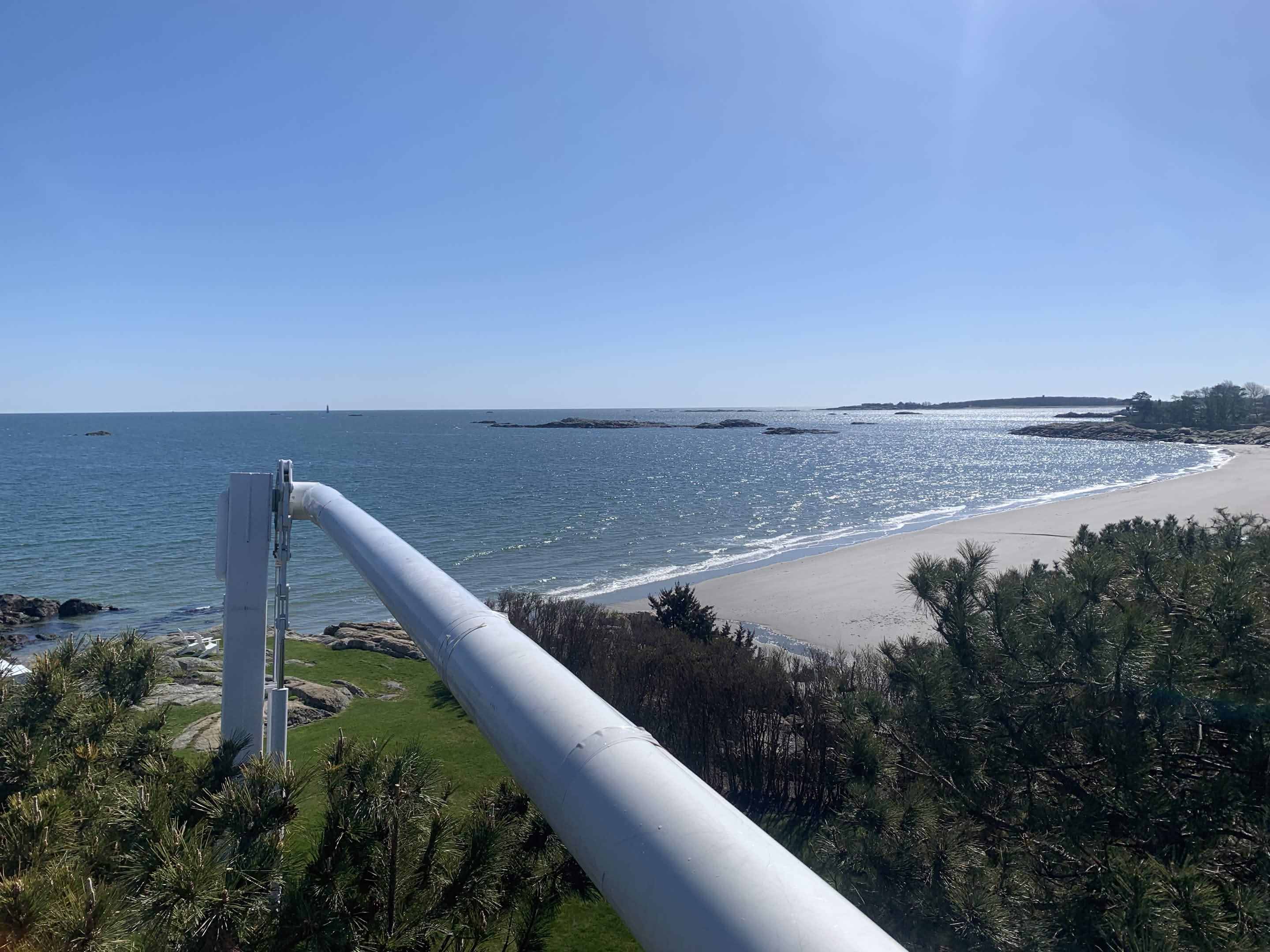
# Professional Vista Pruning in Fall River, Massachusetts
If you own a home in Fall River, Massachusetts, with a hillside property overlooking Mount Hope Bay or the Taunton River, overgrown trees might block your prized ocean or waterfront views. Vista pruning in Fall River MA restores those sightlines while keeping your trees healthy and structurally sound. At Southeast Arborist, LLC, our ISA Certified Arborists specialize in this precise service across South Shore Massachusetts, including your Bristol County community of 94,000 residents.
Fall River's unique topography—rising sharply from the mills along the waterfront to hilltop neighborhoods—creates ideal conditions for vista pruning. Properties in The Highlands or the Watuppa Ponds Area often feature mature red oaks, Norway maples, and white pines that have grown unchecked for decades, obscuring panoramic vistas of the bay. Our team, based in nearby Plymouth and Cohasset, uses ANSI A300 standards to perform selective branch removal, crown thinning, and windowing techniques that open specific views without compromising tree vitality.
Vista pruning Fall River MA isn't just about aesthetics; it enhances your property value in a city where historic homes in Maplewood or the South End command premiums for their scenic outlooks. Imagine clearing branches from a century-old silver maple on your North End lot to reveal sunsets over Somerset and Swansea. We preserve tree health by targeting only necessary limbs, promoting better airflow and reducing wind resistance—critical given Fall River's exposure to nor'easters sweeping up Mount Hope Bay.
Homeowners in Flint Village or Globe Village face aging urban street trees like London planes and honey locusts that encroach on harbor views. Our safety protocols include rope access for steep terrain where bucket trucks can't reach, ensuring minimal disruption to your yard. As ISA Certified Arborists, we follow best practices to avoid common pitfalls like topping, which weakens trees against the 1938 Hurricane-style storms that battered this hillside city.
Practical tip for Fall River residents: Walk your property line during leaf-off winter months to mark exact sightlines blocked by red maples or American beeches. Note heights and directions—our arborists use these details for customized plans. Whether you're in Steep Brook preparing for new construction or maintaining Watuppa watershed compliance, vista pruning delivers long-term benefits.
Southeast Arborist serves all Fall River ZIP codes like 02720, tackling issues from emerald ash borer infestations in green ash trees to watershed regulations near the ponds. Properties here, developed during the 19th-century textile boom, rely on substantial shade trees planted in residential areas above the mills. We restore visibility to landmarks like the Braga Bridge or Quequechan River falls while boosting curb appeal.
Ready to reclaim your view? Contact Southeast Arborist at 508-369-5009 for a free consultation. Our expertise in vista pruning Fall River MA ensures your trees thrive amid the city's challenging winds, poor urban soils, and steep slopes.
Why Fall River Properties Need Vista Pruning
Fall River's hillside layout above Mount Hope Bay exposes properties to relentless winds, making vista pruning essential for both view restoration and tree longevity. Hilltop homes in The Highlands endure gusts channeling up the bay, stressing species like Norway maples and silver maples with weak branch unions. These trees, planted over a century ago during the city's textile era, now form dense canopies that block bay sunrises and sunsets toward Dartmouth.
Common tree species in Fall River demand targeted pruning. Red oaks and white oaks dominate older neighborhoods like Maplewood, their broad crowns obscuring river views. White pines, prevalent near Watuppa Ponds, grow rapidly in the area's acidic, rocky soils but shed lower branches, creating safety hazards on steep terrain. Emerald ash borer has decimated green ash trees citywide since 2015, leaving weakened survivors that require vista pruning to remove infested limbs and open sightlines.
Aging urban infrastructure amplifies the need. Street trees in the South End and Flint Village—London planes, honey locusts, and red maples—overhang sidewalks and driveways, limiting access for pruning equipment on narrow, steep streets. The 1938 Hurricane's legacy lingers: it uprooted thousands of trees on these exposed hills, and today's canopy faces similar risks from nor'easters. Vista pruning reduces wind sail on American beeches in Globe Village, preventing failures during 50+ mph gusts common in winter.
Watershed regulations near Watuppa Ponds, protected since the 1870s, restrict removal but allow selective pruning. Properties here feature mature forests of white pine and red oak; improper cuts risk fines, so our ANSI-compliant methods ensure compliance while framing pond or bay vistas. Steep Brook's sloping lots challenge equipment access—hand climbers navigate terrain where trucks falter, preserving soil stability in Bristol County's clay-heavy soils.
Climate factors unique to Fall River drive urgency. Humid summers foster fungal issues in silver maples, weakening wood and blocking neighborhood views toward Taunton. Poor drainage on hillsides leads to root rot in Norway maples, prompting crown thinning to improve light penetration. Homeowners report 20-30% property value increases after vista pruning, per local real estate data, as unobstructed views appeal to buyers in this diverse city.
Practical advice: Inspect your trees post-leaf drop in November for deadwood in upper crowns—red maples show this early. In the North End, where waterfront exposure meets industrial remnants, prioritize species like honey locust with brittle thorns. Avoid DIY cuts; improper pruning invites decay in Fall River's variable microclimates, from foggy bay bottoms to dry hilltops.
Vista pruning Fall River MA addresses these head-on, enhancing safety and aesthetics. Without it, your white oak might fail during a storm, damaging your South End roof. Southeast Arborist's ISA arborists assess soil pH (often 5.0-6.0 here) and wind patterns for tailored plans.
Our Vista Pruning Process in Fall River
Southeast Arborist's vista pruning process in Fall River MA starts with a site assessment tailored to your property's hillside challenges. Our ISA Certified Arborists arrive equipped with laser rangefinders to map exact sightlines—say, from your Highlands deck to Mount Hope Bay. We document tree species (e.g., Norway maple height, white pine spread) and issues like emerald ash borer galleries on green ash trunks.
Step one: Consultation and planning. You point out desired views—Braga Bridge from the North End or Watuppa Ponds from Steep Brook. We create a 3D diagram using software compliant with ANSI A300 standards, outlining windowing (small openings for focal points) versus crown reduction (10-20% height drop for panoramas). For silver maples in Flint Village, we flag weak forks prone to bay winds.
Step two: Safety setup. Fall River's steep terrain demands rope-and-saddle systems over bucket trucks, especially on 20%+ slopes in Globe Village. We deploy ground crews with first aid/CPR certification, traffic control for urban streets, and drop zones padded to protect your Mapwood lawn. Personal protective equipment includes chainsaw chaps and helmets; we secure a 50-foot radius before cuts.
Step three: Precise execution using specialized techniques. Windowing opens targeted gaps by removing 1-3 key branches—ideal for red oaks framing Somerset views without altering form. Crown thinning spaces laterals on white oaks, reducing weight by 25% to withstand nor'easters. For London planes in the South End, we perform subordinating cuts on codominant stems, preserving health. Chainsaws with low-vibration bars ensure clean cuts; we avoid stubs that invite decay in Fall River's humid air.
Equipment adapts to local constraints. Hand pruners handle small limbs on American beeches near watershed edges; pole saws reach mid-canopies on honey locusts without spiking trunks. In Watuppa Ponds Area, low-impact grappling hooks comply with regs, minimizing soil disturbance on rocky soils. Drones survey upper crowns pre-cut, spotting deadwood invisible from ground level.
Step four: Health-focused finishing. Every cut receives proper closure—no paints, just clean angles for compartmentalization. We apply mulch around bases of red maples to retain moisture in summer droughts, advising you on fertilizing deficient soils (common nitrogen lack here). Post-pruning, we monitor for 30 days via photos you submit.
Step five: Cleanup and follow-up. Chips from white pines fuel on-site mulching; we haul debris to Bristol County recyclers. You receive a report detailing cuts, with photos before/after, plus a one-year warranty.
This process preserves tree vigor—thinned canopies on silver maples grow 15% faster post-pruning. For your Fall River property, it means safer, view-enhanced trees. Call 508-369-5009 to start.
Common Vista Pruning Projects in Fall River Neighborhoods
In The Highlands, Fall River's oldest residential area, we tackle century-old Norway maples and red oaks blocking hilltop bay views. Homeowners request crown reductions to reveal sunsets over Swansea, reducing sail area against Mount Hope Bay winds by 20%.
Maplewood properties feature silver maples overhanging steep driveways; our windowing technique frames Quequechan River falls while removing storm-damaged limbs. These fast-growers respond well to selective thinning, regaining density without encroaching on neighbor sightlines.
South End homes near the waterfront need pruning on London planes and honey locusts that obscure harbor traffic. We use rope access for narrow streets, opening vistas to New Bedford while eliminating rubbing branches that cause decay in humid conditions.
Flint Village sees frequent street tree work on red maples and white pines, where aging infrastructure meets dense development. Vista pruning clears pedestrian paths and restores views toward the Braga Bridge, complying with city codes.
Globe Village lots, amid textile-era mills, host green ash threatened by emerald ash borer. We remove infested upper branches to expose Taunton directions, injecting treatments below cuts for survival.
Steep Brook's rugged slopes challenge access for white oak pruning; hand climbing opens panoramas downslope, stabilizing roots on clay soils prone to erosion.
North End waterfront properties prioritize American beech and red maple work, thinning crowns to highlight Mount Hope Bay without topping, which invites fungal rots.
Watuppa Ponds Area demands regulation-compliant pruning on white pines bordering the watershed. Selective removal preserves forest buffers while framing pond reflections, avoiding chemical runoff risks.
These projects boost your property's appeal—real estate listings in these neighborhoods highlight "pruned for views." Southeast Arborist customizes each for Fall River's terrain.
Vista Pruning Costs in Fall River, MA
Vista pruning costs in Fall River MA range from $500-$2,500 per tree, depending on species, size, and access. A 40-foot Norway maple in The Highlands with moderate windowing might cost $800-$1,200, factoring 2-4 hours of rope work on steep slopes.
Key pricing factors: Tree height and species—red oaks demand more time than honey locusts due to dense wood; emerald ash borer-damaged green ash adds $200 for inspections. Access in Flint Village narrow streets increases costs 20% over flat Watuppa lots, requiring hand tools over trucks.
Neighborhood impacts: Highlands premium properties average $1,500 for crown reductions on white pines, yielding 25% view enhancement. South End street trees near mills cost less ($600) with ground access but more for traffic control.
Volume discounts apply—multiple silver maples in Maplewood drop per-tree rates 15%. Add-ons like stump grinding ($150) or watershed permitting ($100) for Steep Brook.
Value proposition: Expect ROI via 10-20% property value lift, per Bristol County appraisals, as bay views command premiums. Healthier trees cut future removal costs ($3,000+). ANSI A300 compliance prevents $5,000 storm damage claims.
Compared to full removal ($1,000-$4,000), vista pruning saves 50-70% while retaining shade. Our ISA arborists provide written quotes post-assessment.
Budget tip: Schedule off-peak late winter for 10% savings. Transparent pricing—no surprises.
Invest in vista pruning Fall River MA with Southeast Arborist for lasting returns. Dial 508-369-5009 for your quote.
When to Schedule Vista Pruning in Fall River
Schedule vista pruning in Fall River MA during late winter/early spring (February-April), when trees are dormant. Sap flow halts, speeding wound healing in red oaks and Norway maples before May leaf-out. Avoid summer humidity, which slows recovery in silver maples.
Urgency signs: Deadwood dropping from white pines signals storm risk on North End hills—prune immediately post-fall. Rubbing branches on London planes in South End indicate failure points; act before nor'easters.
Emerald ash borer symptoms on green ash—D-shaped holes, canopy dieback—demand spring pruning with treatments. Wind-thrown limbs after gales, common above Mount Hope Bay, require emergency response year-round.
Watershed properties near Watuppa Ponds: Time cuts pre-nesting season (March) for compliance. Steep Brook erosion from heavy crowns? Prune pre-rainy season.
Your trees show readiness via twig flexibility tests—supple in dormancy. Call 508-369-5009 now for slots.
Frequently Asked Questions About Vista Pruning in Fall River
**What is vista pruning, and how does it differ from regular tree trimming in Fall River?** Vista pruning Fall River MA selectively removes branches to restore specific sightlines like bay views, using windowing or thinning. Unlike general trimming, it prioritizes views over shape, always per ANSI A300 to maintain health in wind-exposed Norway maples.
**Will vista pruning harm my red oak or white pine trees in The Highlands?** No—our ISA Certified Arborists limit cuts to 25% of canopy, promoting regrowth. Red oaks compartmentalize well; white pines gain vigor from thinning in Fall River's acidic soils.
**How much does vista pruning cost for a silver maple in Maplewood?** $700-$1,500, based on 30-50 foot height and steep access. Includes safety setup and cleanup.
**Can you perform vista pruning on Watuppa Ponds properties under watershed rules?** Yes, we secure permits and use low-impact methods, preserving buffers while opening pond views from white oaks.
**What's the best time for emerald ash borer pruning on green ash in Flint Village?** Late winter, combining limb removal with trunk injections for South Shore efficacy.
**Does vista pruning increase property value in Globe Village?** Absolutely—unobstructed Taunton views add 15% to listings, per local data.
**How do you handle steep terrain in Steep Brook?** Rope access arborists climb without spurs, protecting roots on slopes.
**What if a storm damages my trees post-pruning in the North End?** One-year warranty covers failures from our work; we respond emergently.
Vista Pruning Throughout Fall River
Southeast Arborist provides vista pruning across Fall River neighborhoods: The Highlands, Maplewood, South End, Flint Village, Globe Village, Steep Brook, North End, and Watuppa Ponds Area. We extend to nearby Somerset, Swansea, Dartmouth, New Bedford, and Taunton.
From bay overlooks in the North End to pond edges in Watuppa, our South Shore team restores views safely. As Plymouth/Cohasset-based ISA Certified Arborists, we prioritize your trees' health.
Contact us at 508-369-5009 for Fall River MA vista pruning—schedule today.