
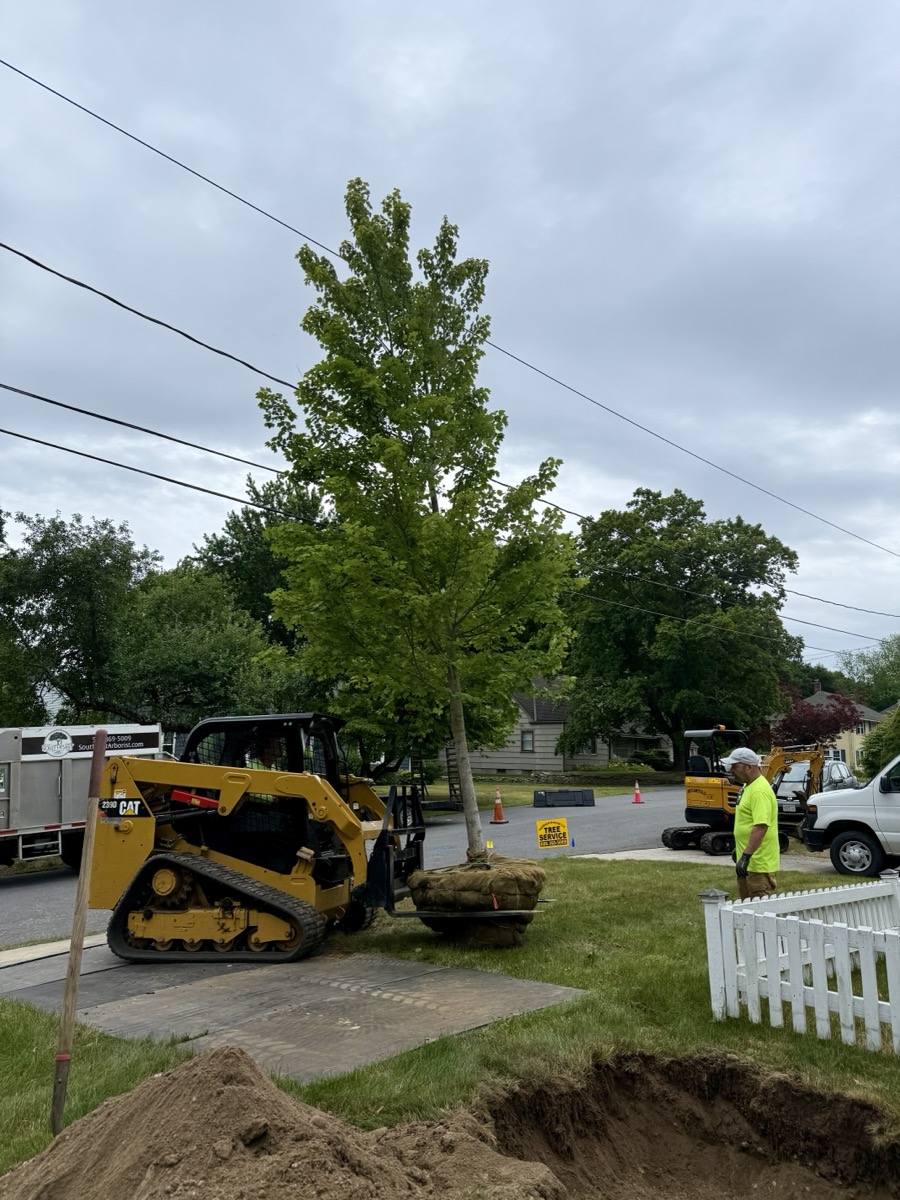
# Professional Tree Planting in Yarmouth, Massachusetts
If you're a homeowner in Yarmouth, MA 02664, maintaining the health and beauty of your property starts with selecting and planting the right trees. Southeast Arborist, LLC, your South Shore Massachusetts tree care experts based in Plymouth and Cohasset, specializes in professional tree planting services tailored to Barnstable County's unique coastal conditions. Our ISA Certified Arborists ensure every project follows "right tree, right place, right technique" principles, delivering long-term value for your landscape.
Yarmouth's position in the mid-Cape tourist corridor exposes properties to salt spray, sandy soils, and strong winds from Nantucket Sound and Cape Cod Bay. Neighborhoods like Yarmouth Port, South Yarmouth, West Yarmouth, Bass River, Bayberry Hills, and the Bass Hole Area face specific challenges: aging oaks weakened by winter moth defoliation, overcrowded pitch pine stands, and trees undermined by tidal erosion along Bass River. Whether you're replacing a declining red maple along Route 28 or adding salt-tolerant honey locust to your Bass Hole waterfront lot, our team handles site assessments, species selection, and precise installation.
Tree planting in Yarmouth MA isn't just about digging a hole—it's about ANSI A300 standards compliance, proper root flare exposure, and avoiding common pitfalls like volcano mulching that suffocate roots in the Cape's drought-prone sandy soils. We serve commercial properties with parking lot tree replacements and residential clients protecting homes from storm damage. Our free consultations reveal how eastern red cedar or American holly can thrive where pitch pines fail, enhancing property values in this 24,000-resident community.
Homeowners in Yarmouth Port's historic district around Captain Bangs Hallet House often seek us for plantings that match 18th- and 19th-century ornamental species, preserving the area's legacy. In contrast, Bayberry Hills residents call for structural pruning companions like black cherry to balance overcrowded scrub oaks. Southeast Arborist's safety protocols, including TCIA accreditation standards, protect your family and workers during every install.
Expect post-planting care guidance, from watering schedules adapted to Yarmouth's irregular rainfall to monitoring for emerald ash borer threats on nearby ash trees. Our salt-tolerant selections withstand the Route 28 corridor's commercial exposures, while interior neighborhoods benefit from white oak replacements that resist winter moth. Contact us at 508-369-5009 for a no-obligation site visit—your Yarmouth property deserves trees that endure Cape Cod's harsh environment for decades.
This comprehensive guide covers why tree planting matters in Yarmouth, our exact process, neighborhood-specific projects, costs, timing, and FAQs. discover how professional tree planting Yarmouth MA elevates your landscape resilience.
Why Yarmouth Properties Need Tree Planting
Yarmouth's coastal ecology demands strategic tree planting to combat environmental pressures unique to Barnstable County. Sandy, nutrient-poor soils with pH levels often exceeding 6.5 limit root establishment, while winter winds off Nantucket Sound dry out evergreens like pitch pine and eastern red cedar. Your property in South Yarmouth or Bass River likely deals with tidal erosion that topples black oaks, creating voids that invite invasive species if not addressed promptly.
Common tree issues drive the need for replanting. Winter moth caterpillars defoliate oak canopies—scrub oak, black oak, and white oak suffer most—weakening trees and increasing storm failure risk. In interior neighborhoods like Bayberry Hills, overcrowded pitch pine stands compete for water, leading to dieback. Route 28 commercial landscapes feature aging honey locust and red maples from the mid-20th-century tourism boom, now declining under salt spray and compacted soils from foot traffic.
Waterfront properties in the Bass Hole Area and Bass River face tidal surges that scour roots of sassafras and black cherry, especially during nor'easters. Yarmouth Port's historic district preserves rare ornamentals around landmarks like Captain Bangs Hallet House, but modern replacements must match: think salt-hardy American holly over susceptible exotics. Without proper planting, new trees repeat these failures—roots circling in undisturbed subsoil or mulched too deeply, starving in Yarmouth's 40-inch annual rainfall that's unevenly distributed.
Planting addresses these head-on. Select pitch pine successors like disease-resistant white oak for windbreaks in West Yarmouth, or red maple cultivars for Bass River's moist lowlands. Our ISA Certified Arborists analyze your microclimate: exposure in open Route 28 lots versus sheltered Yarmouth Port gardens. Soil tests reveal drainage issues—common in Bayberry Hills' glacial outwash sands—guiding amendments like organic matter without altering native pH.
Benefits extend beyond survival. New trees boost curb appeal in tourist-heavy areas, increasing property values by 7-15% per recent Barnstable County appraisals. They provide shade for energy savings in South Yarmouth homes, filter salt-laden air along Hyannis Road, and stabilize Bass Hole boardwalk edges transitioning from upland oak forest to salt marsh. For commercial sites, compliant plantings meet town zoning for Route 28 buffers.
Homeowners gain practical resilience: space red maples 40 feet from structures to avoid foundation cracks, plant eastern red cedar on south-facing exposures for wind protection. Ignore these, and your investment fails like the declining pitch pines dotting Bass River backyards. Southeast Arborist's track record in Yarmouth MA tree planting ensures replacements thrive, backed by post-install monitoring. Proactive planting prevents costly removals—save thousands by choosing site-specific species now.
Our Tree Planting Process in Yarmouth
Southeast Arborist follows a meticulous, ISA Certified process for tree planting in Yarmouth MA, adhering to ANSI A300 standards for long-term success. Start with your free consultation at 508-369-5009: we visit your Yarmouth Port property or Bass River lot, assessing soil via probe samples, measuring wind exposure with anemometers, and evaluating drainage with percolation tests suited to Barnstable County's sands.
Step 1: Site Analysis (1-2 hours). Our arborists map utilities with 811 calls, check for overhead lines common in West Yarmouth, and evaluate sun patterns—critical for honey locust in shaded Bayberry Hills. We recommend species from Yarmouth's palette: salt-tolerant American holly for Bass Hole tidal zones, drought-resistant scrub oak for Route 28 medians.
Step 2: Species Selection. Matching "right tree, right place," we prioritize natives: white oak for Yarmouth Port's historic scale, red maple for South Yarmouth wetlands. Avoid invasives; opt for cultivars like 'October Glory' red maple resisting verticillium wilt prevalent in Cape soils. Sizes range 6-12 feet balled-and-burlapped (B&B) for stability, container-grown for precision in tight Bass River yards.
Step 3: Preparation (Day of Install). Using John Deere 325G skid steers and Vermeer tree spades for large specimens, we excavate holes 2-3x root ball width, no deeper than the root flare. In Yarmouth's compacted sands, we break subsoil with augers, incorporating pine bark fines for aeration without volcano mulching—a mistake that traps moisture and invites rot in pitch pine replacements.
Step 4: Planting Technique. Hoist trees with custom slings and winches, ensuring root flare exposure 2-4 inches above grade to prevent girdling in fluctuating water tables. Backfill with native soil amended 20% compost, settle with 20 gallons water per inch caliper. Guying uses ductile iron stakes driven 3 feet, with flexible webbing—no wires that chafe eastern red cedar bark.
Step 5: Mulching and Protection. Apply 3-inch organic mulch rings extending to drip line, volcano-free to promote oxygen exchange in low-O2 Cape soils. Install 4-foot tree tubes in deer-heavy Bass Hole Area, wrapped burlap for winter moth deterrence on young oaks.
Step 6: Post-Planting Care. Provide your customized schedule: deep water weekly first year (Cape Cod's sandy soils hold 50% less moisture), fertilize spring with slow-release 10-10-10 avoiding burn on sassafras. We return at 3, 6, and 12 months for inspections, adjusting for Yarmouth's salt deposition.
Safety integrates throughout: ANSI Z133 harnesses for elevated work, traffic control for Route 28 sites, and PPE per OSHA. Equipment like Stihl augers minimizes site disturbance in historic Yarmouth Port. This process yields 95% survival rates versus DIY's 40%, per ISA data. Your black cherry in Bayberry Hills or black oak in West Yarmouth establishes roots reaching 20 feet wide in year one, storm-proofing your home.
Common Tree Planting Projects in Yarmouth Neighborhoods
Yarmouth's neighborhoods present distinct tree planting opportunities, all handled by Southeast Arborist's ISA experts. In Yarmouth Port, around Captain Bangs Hallet House historic district, we plant scale-appropriate white oaks and American holly to replace century-old ornamentals stressed by salt air. These match the 18th-century plantings, with root flares exposed to thrive in well-drained loams.
South Yarmouth homeowners along Route 28 seek commercial-style replacements: honey locust for parking lot shade, pruned to ANSI standards for pedestrian safety. After removing declining red maples, we install salt-tolerant cultivars spaced 30 feet, enhancing tourist appeal.
West Yarmouth's dense developments call for pitch pine successors like eastern red cedar windbreaks, protecting homes from Nantucket Sound gales. Projects here focus on structural integration—black cherry flanking driveways, avoiding overhang on power lines.
Bass River waterfronts demand erosion-resistant plantings: sassafras and scrub oak on berms to stabilize tidal banks. We select deep-rooted black oaks post-removal of undermined trees, with guy wires securing against surges.
Bayberry Hills interior lots feature overcrowded pine stands; we thin and replant with spaced red maples and white oaks, improving air flow and reducing fire risk in dry summers.
Bass Hole Area boardwalk properties transition oak forest to marsh—we plant hybrid poplars or native black cherry buffers, preserving ecology while opening views. Selective installs follow town permits for public edges.
Commercial Route 28 corridors generate steady work: post-storm replacements of aging landscape trees with low-branch honey locust, mulched properly for mower compatibility. Residential calls blend: crown cleaning companions like structural-pruned American holly in Yarmouth Port, dead pitch pine removals followed by oak in West Yarmouth.
Each project incorporates local context—Yarmouth's 50 mph winds guide staking, sandy soils dictate wider holes. Call 508-369-5009 to start your neighborhood-specific planting.
Tree Planting Costs in Yarmouth, MA
Tree planting costs in Yarmouth MA vary by project specifics, delivering strong ROI through longevity. Expect $500-$1,200 for a 2.5-inch caliper B&B tree install, including site prep and one-year warranty. Factors: species (pitch pine $600, white oak $900 due to size), size (6-foot container $400, 12-foot B&B $1,000), and access (Bass River waterfront adds $200 for erosion control).
Labor dominates at 60%: our ISA Certified crew bills $150/hour, efficient with skid steers versus hand-digging. Materials—mulch, stakes, tubes—add 20%. Travel from Plymouth base factors minimally in Yarmouth's proximity.
Yarmouth-specific premiums: tidal site prep in Bass Hole ($300 extra matting), historic district permits in Yarmouth Port ($150 filing). Route 28 commercial jobs scale: five-tree parking lot $4,000-$6,000, value in liability reduction.
Compare value: DIY risks 60% failure in Cape soils, costing $800/tree replacement. Our ANSI-compliant installs yield 30-year lifespans, shading South Yarmouth homes to save $200/year AC. Bayberry Hills red maple plantings boost appraisals 10%, per Barnstable data.
Bulk discounts: three+ trees drop 15% (e.g., West Yarmouth windbreak $2,200 for four eastern red cedars). Post-removal packages bundle 20% off, common after Bass River erosion losses.
Financing via tree funds or town rebates for natives like black oak—up to $500/tree. Long-tail savings: proper techniques prevent $2,000 removal in five years. Transparent quotes detail breakdowns; no surprises. Invest in Southeast Arborist for Yarmouth tree planting costs that prioritize durability over cheap installs—schedule at 508-369-5009.
When to Schedule Tree Planting in Yarmouth
Optimal timing for tree planting in Yarmouth MA aligns with dormancy: late fall (October-November) or early spring (March-April), before bud swell. Cool soils (50-60°F) and moist sands from off-season rains promote root growth without leaf stress—ideal for oaks in Yarmouth Port.
Avoid summer heat (July-August highs 80°F+ dry roots fast); winter freezes heave B&B balls in Bayberry Hills. Urgency signs: voids post-pitch pine removal in West Yarmouth, erosion gaps along Bass River now, or declining Route 28 trees before tourist season.
Act spring if winter moth hit your oaks—replant immediately for canopy recovery. Post-nor'easter (common March), secure Bass Hole lots before nesting season. Commercial properties schedule off-peak for minimal disruption.
Our calendar fills fast—book fall now for South Yarmouth shade by summer. Free consults confirm your window. Call 508-369-5009 today.
Frequently Asked Questions About Tree Planting in Yarmouth
**What makes Yarmouth soils challenging for tree planting?** Yarmouth's glacial sands drain rapidly, holding 1-2 inches water per foot depth, with high pH stressing red maples. We amend selectively, exposing root flares for pitch pine replacements.
**Which salt-tolerant trees suit Bass River properties?** Eastern red cedar, American holly, and black oak thrive; avoid sassafras near tides. Our ISA selections withstand 5% salt spray.
**How deep should planting holes be in Bayberry Hills?** No deeper than root flare—match grade exactly. Wider 3x ball diameter breaks compaction for white oak roots.
**Do you handle permits for Yarmouth Port historic plantings?** Yes, we file with Barnstable County, matching scales like Captain Bangs Hallet ornamentals.
**What's volcano mulching and why avoid it in West Yarmouth?** Piling mulch against trunk suffocates roots in dry sands; we ring 3 inches deep for oxygen.
**How often water new honey locust along Route 28?** Weekly 20 gallons/inch caliper year one, tapering as roots establish in commercial soils.
**Can you plant after scrub oak removal in Bass Hole?** Absolutely—immediate black cherry buffers stabilize marsh transitions.
**What's your warranty on South Yarmouth installs?** One-year survival guarantee, with free replacements.
Tree Planting Throughout Yarmouth
Southeast Arborist delivers tree planting across Yarmouth neighborhoods: Yarmouth Port historic lots, South Yarmouth tourist corridors, West Yarmouth developments, Bass River waterfronts, Bayberry Hills interiors, Bass Hole ecological edges. We extend to Dennis and Barnstable, covering South Shore MA.
From Plymouth/Cohasset, response times under 24 hours. ISA Certified, ANSI-compliant, safe. Call 508-369-5009 for your free Yarmouth MA tree planting consultation—right tree for your property today.