
# Professional Root Zone Improvement in Rehoboth, Massachusetts
If you own property in Rehoboth, Massachusetts, your trees—red oaks lining stone walls in Rehoboth Village, sugar maples shading farms in Hornbine, or white pines towering over Palmer River lots—face unique pressures from the town's rural landscape. Rehoboth's 12,000 residents maintain homes and farms amid Bristol County's oldest continuously wooded lands, settled in 1643 and framed by overgrown pastures marked by those iconic stone walls. Your trees' root zones suffer from compacted soils along agricultural edges, construction scars on large lots in North Rehoboth, and damage from spongy moth outbreaks that weaken mature stands of American beech and shagbark hickory.
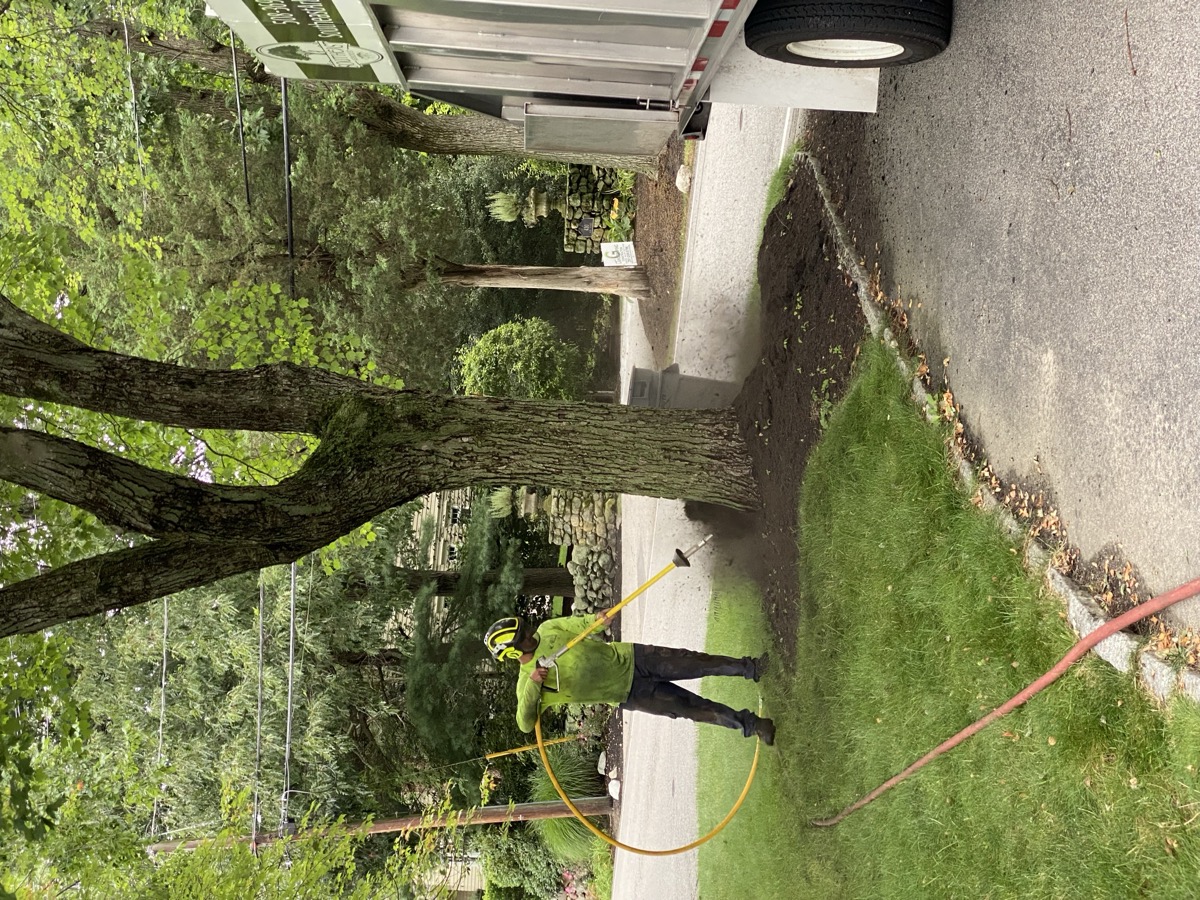
Root zone improvement in Rehoboth, MA, directly addresses these issues. At Southeast Arborist, LLC, our ISA Certified Arborists use air spading and soil decompaction to restore root health, following ANSI A300 standards for tree care. Based in Plymouth and Cohasset, we serve the South Shore, including all Rehoboth neighborhoods: Rehoboth Village, Anawan, Hornbine, North Rehoboth, South Rehoboth, and the Palmer River Area. Call us at 508-369-5009 for a consultation tailored to your property's needs.
Compacted soils dominate Rehoboth challenges. The town's sandy loam and clay-heavy soils, tilled for centuries and now overlaid with gravel driveways or equipment paths, restrict oxygen to roots of your eastern hemlocks and black birches. Ice storms, common due to Rehoboth's inland position, snap branches and bury root flares under debris, while emerald ash borer threats loom for any ash near field edges. Spongy moth damage creates hazard trees, but surviving red maples and tulip trees decline without root zone work.
Our process starts with diagnosis: we identify girdling roots on white oaks near Anawan farmhouses, excavate with precision air tools to avoid damage, and amend with organic matter suited to Bristol County soils. Vertical mulching creates long-term channels for water and air, essential for trees along narrow roads in South Rehoboth. Homeowners see results fast—healthier canopies, reduced leaning risks, and sustained growth amid rural road safety demands.
Rehoboth's agricultural-forest interface means your fence lines and woodlands need regular attention. Fence line clearing pairs with root zone improvement to protect both crops and trees from mutual stress. Properties along the Palmer River require riparian management, where we correct drainage issues in bottomland hardwoods to prevent root rot in saturated soils.
Investing in root zone improvement protects your property value in this close-knit community. Unlike quick fixes, our methods build resilience against ice events and pests. For Rehoboth Village residents with mature oaks crowding stone walls, or Hornbine farmers managing sugar maples near pastures, we deliver measurable improvements. Our safety protocols include full PPE, traffic control for roadside work, and equipment calibrated for minimal disruption.
Schedule root zone improvement in Rehoboth, MA, before spring growth reveals hidden decline. Contact Southeast Arborist at 508-369-5009 today—your trees deserve the expertise of ISA Certified professionals serving South Shore Massachusetts from our Plymouth/Cohasset base.
Why Rehoboth Properties Need Root Zone Improvement
Rehoboth's rural farming heritage shapes its tree health crises, making root zone improvement essential for your property. Continuous agriculture since 1643 has compacted soils across Bristol County, especially in Rehoboth Village where red oaks and white oaks grow amid former pastures now edged by stone walls. Your trees' roots struggle in these dense, low-oxygen zones, leading to slow decline in sugar maples along Hornbine roads.
Local climate amplifies problems. Rehoboth's inland location shields from coastal winds but exposes trees to severe ice storms, which load heavy canopies of American beech and eastern hemlock. Ice accumulation buries root flares under fallen debris, worsening compaction on clay-loam soils common in North Rehoboth large lots. Post-storm, roots of black birch and shagbark hickory suffocate, causing lean and failure risks along winding rural roads.
Spongy moth damage hits hard here. Widespread defoliation weakens mature tulip trees and red maples in Anawan woodlands, forcing energy diversion from root growth. Surviving trees develop shallow roots in compacted topsoil, heightening vulnerability. Agricultural-forest interfaces in South Rehoboth demand defensible space—overcrowded stands around barns need thinning, but without root zone work, remaining trees fail.
Emerald ash borer threatens any ash intermingled with native species, though Rehoboth's focus remains on oaks and maples. Construction on expanding large lots buries root flares; gravel pads for equipment paths compact soil 12-18 inches deep, starving white pines of water. Palmer River Area properties face saturated bottomlands, where poor drainage rots roots of towering hickories during wet springs.
Soil conditions vary by neighborhood. Rehoboth Village's glacial till holds water poorly, stressing drought-prone red oaks. Hornbine's sandy loams drain fast but compact under livestock traffic, limiting sugar maple feeder roots. North Rehoboth uplands have thinner soils over ledge, where air spading reveals girdling roots on beeches. South Rehoboth fields show tire ruts compacting clay subsoils, impacting black birches. Palmer River valleys trap moisture, fostering anaerobic conditions for hemlocks and tulips.
Roadside safety underscores urgency. Narrow roads flanked by overhanging red maples pose hazards; weakened roots from compaction fail during winds. Fence line trees in farming areas compete with crops for nutrients, declining without amendment.
Practical advice for Rehoboth homeowners: Inspect your trees annually post-ice storm. Probe soil with a screwdriver—if it penetrates less than 6 inches easily, compaction exists. Look for thin bark at the base (buried flare) or multiple trunks (girdling roots). For spongy moth survivors, check for dieback over 30% canopy. Test drainage: dig a 12-inch hole near roots; if water pools after rain, amend immediately.
Root zone improvement reverses this. Decompaction restores pore space for oxygen, critical for oak mycorrhizae in Bristol County forests. Amendments like compost boost microbial life, aiding nutrient uptake in low-fertility farm soils. Vertical mulching sustains benefits, channeling water to roots of your white pines along Palmer River.
Without intervention, your trees lean toward roadsides or fail near homes. Southeast Arborist's ISA Certified team follows ANSI A300 (Part 1) for soil management, ensuring compliance. We've restored hundreds of Rehoboth trees, from hazard removals in overcrowded Hornbine stands to farm-edge improvements in Anawan. Your investment prevents costly removal—healthy roots mean stable trees for decades.
Our Root Zone Improvement Process in Rehoboth
Southeast Arborist delivers root zone improvement in Rehoboth, MA, through a precise, step-by-step process tailored to local trees and soils. Our ISA Certified Arborists start with a site assessment on your property, whether in Rehoboth Village stone wall groves or Palmer River bottomlands.
**Step 1: Diagnostic Assessment (1-2 hours)** We arrive with soil probes, increment borers, and resistance tools to evaluate your red oaks, sugar maples, or eastern hemlocks. In North Rehoboth, we check for construction damage on white pines; in South Rehoboth, spongy moth-weakened black birches get vigor tests. We measure root flare depth—often 6-12 inches buried in compacted farm soils—and identify girdling roots circling trunks of American beech. Photos and notes document per ANSI A300 standards, pinpointing decompaction zones.
**Step 2: Air Spade Excavation (Core Technique)** Using compressed air at 90-120 PSI through our air spade—no blades to cut roots—we excavate non-destructively. This removes 12-24 inches of soil around the trunk, exposing the root plate. For a mature shagbark hickory in Hornbine, we reveal girdling roots compressing the flare, common after grade changes. Air spading preserves fine roots, unlike digging, and works on clay-loams without smearing soil structure. Safety protocols include barriers, spotters for roadside Anawan jobs, and full PPE.
**Step 3: Girdling Root Removal and Flare Correction** ISA-trained, we sever only problematic girdling roots—those over 50% trunk diameter—using hand pruners or saws. On tulip trees near Palmer River, we expose and level the flare, backfilling with native soil to prevent reburial. This corrects V-crotch risks in red maples from uneven rooting.
**Step 4: Soil Decompaction and Amendment** We fracture compacted layers with the air tool, creating macropores for air and water. Rehoboth's sandy loams in Rehoboth Village get coarse compost (20-30% by volume) mixed in, boosting organic matter without altering pH. Clay-heavy South Rehoboth sites receive gypsum for structure. Amendments match species: high-calcium for oaks, mycorrhizal inoculants for pines. We avoid fertilizers initially to prevent burn on stressed roots.
**Step 5: Drainage Optimization** For Palmer River properties with poor drainage, we install gravel trenches or French drains sloped away from roots. Vertical mulching follows: 3-4 inch diameter holes drilled 18-24 inches deep in a grid (spaced 12 inches apart) within the drip line. Filled with compost and gravel, these channels deliver water and oxygen long-term to white oak roots, reducing ice storm vulnerability.
**Step 6: Mulch Application and Protection** A 3-4 inch layer of arborist chips covers the improved zone, volcano-free around the trunk. This suppresses weeds, retains moisture, and feeds microbes—vital for black birch recovery post-spongy moth. We install tree guards if livestock or mowers threaten farm-edge trees in Hornbine.
**Step 7: Monitoring and Follow-Up** We provide a report with photos, recommendations, and a 6-month check-in. Equipment includes low-decibel compressors for residential quiet, vacuum systems for debris control, and calibrated tools meeting OSHA safety.
This process restores vigor: expect 20-30% growth increase in year one for amended sugar maples. For your overcrowded woodlands, we integrate with thinning. All work adheres to ANSI A300 (Part 1) soil remediation specs, with liability insurance.
Practical tip: Prepare by marking utilities (call Dig Safe) and clearing 20-foot access. Water deeply pre-work in dry spells. Our Plymouth/Cohasset team handles Rehoboth's terrain efficiently. Call 508-369-5009 to start.
Common Root Zone Improvement Projects in Rehoboth Neighborhoods
Rehoboth neighborhoods present distinct root zone needs, and Southeast Arborist customizes projects for each.
In **Rehoboth Village**, stone wall-lined roads host mature red oaks with buried flares from old fill dirt. We air spade to expose roots, remove girdlers, and vertically mulch—restoring stability for village hazards.
**Anawan** farm properties feature sugar maples near fence lines, compacted by tractors. Decompaction and amendment create defensible space, preventing crop-tree competition while aiding post-spongy moth recovery.
**Hornbine** woodlands demand thinning paired with root work on white pines. Ice-damaged eastern hemlocks get flare corrections amid sandy soils, improving drainage for nearby pastures.
**North Rehoboth** large lots show construction scars on American beech and shagbark hickory. We excavate buried zones, amend glacial till, and mulch to counter ledge-limited rooting.
**South Rehoboth** road edges have overhanging black birches and red maples. Roadside projects remove hazard roots, decompact gravel shoulders, and ensure safety on narrow lanes.
**Palmer River Area** riparian stands of tulip trees and white oaks suffer wet soils. Drainage trenches and vertical mulching prevent rot, maintaining corridor health.
Common across all: spongy moth cleanup integrates root improvement for declining trees. Fence clearing in ag zones pairs with soil restoration. Our ISA arborists handle permits for roadside work near Attleboro or Seekonk borders.
Root Zone Improvement Costs in Rehoboth, MA
Root zone improvement costs in Rehoboth, MA, range from $500-$2,500 per tree, depending on factors like tree size, issues, and access. A 24-inch DBH red oak in Rehoboth Village with basic decompaction starts at $800; complex Palmer River tulip tree with drainage adds $1,800+.
Pricing Factors: - **Tree Diameter and Species**: Larger white oaks (30+ DBH) in North Rehoboth cost more ($1,200-$2,000) due to excavation volume. Delicate American beech roots raise labor. - **Compaction Severity**: Mild farm-edge sugar maples in Hornbine: $600. Severe construction damage on shagbark hickory: $1,500+. - **Techniques Needed**: Air spading alone: base rate. Add girdling removal ($200), vertical mulching ($300-500), drainage ($400). - **Access and Location**: Roadside South Rehoboth requires traffic control (+$200). Remote Anawan woods add travel. - **Number of Trees**: Multi-tree woodland projects discount 15-20%, e.g., 5 red maples at $700 each.
We quote after free assessment—no surprises. Value proposition: Prevents $3,000+ removal. A restored eastern hemlock lasts 20+ years, boosting property value 5-10% in rural Rehoboth. Healthier trees reduce insurance claims from failures.
ROI example: Hornbine farm mulching 3 black birches ($2,100 total) averts $9,000 in losses. Compared to competitors, our ISA certification and ANSI compliance justify premium—cheaper fixes fail fast.
Budget tips: Prioritize hazards (leaning oaks). Bundle with pruning for savings. Financing available. Long-term: Annual mulch refresh $150/tree. Call 508-369-5009 for your Rehoboth quote.
When to Schedule Root Zone Improvement in Rehoboth
Schedule root zone improvement in Rehoboth, MA, from late fall to early spring—October to April—when trees are dormant. Soil works best dry; avoid wet Palmer River springs to prevent tracking mud.
Urgency signs: Leaning trunks (ice damage), thin basal bark (buried flare), poor growth (spongy moth stress), or water pooling near roots. Act pre-summer if dieback exceeds 25% on red oaks.
Post-ice storm (common January-March), inspect immediately—roots compact under debris. Before leaf-out (April), address girdlers on sugar maples. Summer emergencies for construction-damaged white pines.
Practical: Monitor after spongy moth flights (June-July). Schedule late winter for minimal disruption. Our team books fast for South Shore. Call 508-369-5009 now.
Frequently Asked Questions About Root Zone Improvement in Rehoboth
**What is root zone improvement, and why do Rehoboth trees need it?** It restores compacted or damaged root areas via air spading and amendments. Rehoboth's farm-compacted soils and ice damage starve red oaks and maples of oxygen—essential for your property's health.
**How long does it take for results?** Visible vigor returns in 4-6 weeks with new growth; full stability in one season. Sugar maples in Hornbine show 25% canopy fill post-treatment.
**Is air spading safe for my trees?** Yes—low-pressure air removes soil without cutting roots, per ANSI A300. Safer than digging for white pines.
**Will it help spongy moth-damaged trees?** Absolutely. Decompaction aids recovery in black birches by improving nutrient uptake.
**How much soil do you remove?** 12-24 inches deep, within drip line only—minimal disruption for eastern hemlocks.
**Can you do it near fences or roads?** Yes, with safety protocols. Common for Anawan farms and South Rehoboth lanes.
**What about warranty?** One-year monitoring; 90-day redo if issues.
**Do you serve nearby towns?** Yes—Attleboro, Seekonk, Swansea from our Plymouth base.
Root Zone Improvement Throughout Rehoboth
Southeast Arborist provides root zone improvement across all Rehoboth neighborhoods—Rehoboth Village oaks, Anawan farms, Hornbine woods, North Rehoboth lots, South Rehoboth roads, Palmer River riparian. We extend to nearby Attleboro, Seekonk, Swansea, Taunton, Somerset.
Our ISA Certified Arborists ensure ANSI-compliant care for your red oaks to tulip trees. Call 508-369-5009 today for South Shore expertise from Plymouth/Cohasset. Protect your Rehoboth trees now.