
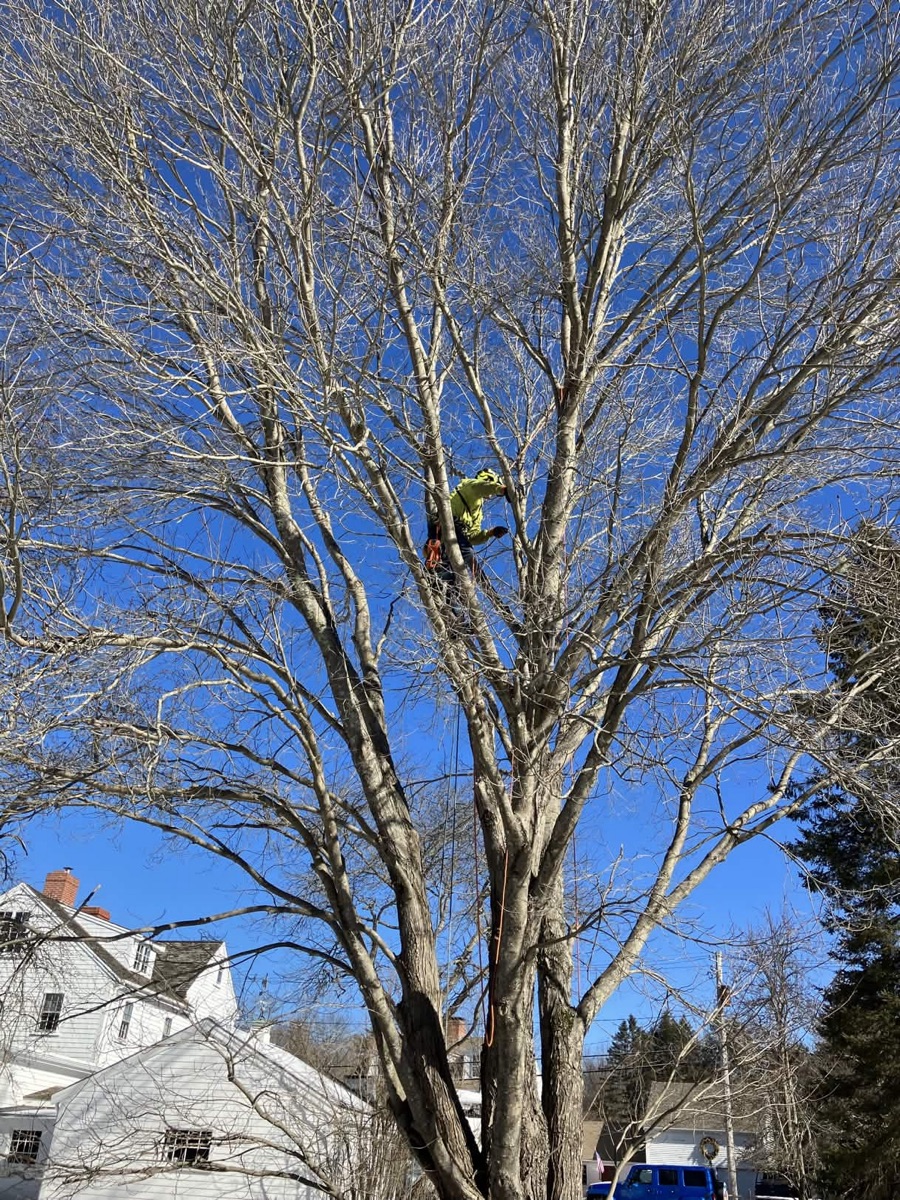
# Professional Tree Pruning in Rehoboth, Massachusetts
If you own property in Rehoboth, Massachusetts, your trees face unique pressures from the town's rural landscape, dense forest cover, and stone-wall-lined roads. Mature red oaks, white pines, and sugar maples dominate the skyline, but spongy moth infestations, ice storms, and overgrown branches along winding routes like Route 44 create safety hazards and property risks. Professional tree pruning in Rehoboth MA addresses these issues directly, following ANSI A300 standards to enhance tree health, reduce storm vulnerability, and maintain clear sightlines for your driveway or farm access.
Southeast Arborist, LLC, based in Plymouth and Cohasset, delivers ISA Certified Arborist expertise across South Shore Massachusetts, including all of Bristol County's Rehoboth (02769). Our team prunes according to precise guidelines that prioritize structural integrity over cosmetic cuts, ensuring your white oaks in North Rehoboth or eastern hemlocks along the Palmer River thrive for decades. Tree pruning Rehoboth MA isn't just trimming—it's targeted intervention for overcrowded canopies, deadwood from spongy moth damage, and limbs threatening your roof or fence lines.
Rehoboth's 12,000 residents manage large lots bordered by ancient woodlands, where stone walls from 18th-century pastures now support shagbark hickories and black birches. Without regular pruning, these trees encroach on agricultural fields, block views from homes in Anawan, or drop heavy branches during ice events common to inland Bristol County. Our ANSI A300 pruning removes deadwood, thins crowns, elevates lower limbs for mower access, and restores vistas obstructed by fast-growing red maples.
Homeowners in Rehoboth Village notice how tulip trees and American beeches along the Palmer River valley accumulate weak crotches from shaded understories, leading to failure points. Southeast Arborist's certified arborists assess these using the latest risk-rating systems, applying crown reduction to balance loads without stressing the tree. For rural road safety, we clear overhanging hazards along Hornbine Road or South Rehoboth lanes, complying with town bylaws.
Practical benefits hit your wallet and safety: pruned trees resist ice damage better, lowering insurance claims; they improve light penetration for pasture grasses; and they create defensible space around barns against wildfire spread at the agricultural-forest edge. Call Southeast Arborist at 508-369-5009 for a free assessment—our South Shore crews arrive equipped for any scale, from single sugar maples in Rehoboth Village to woodland stands in Palmer River Area.
In Rehoboth's context, tree pruning MA services must account for shallow soils over glacial till, which limit root depth and amplify windthrow risks for shallow-rooted white pines. We use low-impact rigging to protect these soils, preserving the microbiology that supports your oaks and beeches. Whether you're farming in South Rehoboth or commuting via narrow roads in North Rehoboth, our pruning prevents downtime from fallen limbs blocking access.
This guide details why your Rehoboth trees need pruning now, our exact process, neighborhood-specific projects, costs, timing, and FAQs. With emerald ash borer looming nearby in Attleboro and Seekonk, proactive pruning strengthens your entire landscape. Contact us today—your trees deserve ISA-certified care tailored to Bristol County's oldest continuously wooded lands.
Why Rehoboth Properties Need Tree Pruning
Rehoboth's rural farming heritage, settled in 1643, shapes its tree care demands. Continuous agriculture since colonial times left stone walls marking overgrown pastures, now edged by mature forests of red oak, white oak, sugar maple, and American beech. These species thrive in Rehoboth's well-drained sandy loams derived from glacial outwash, but dense canopies lead to overcrowding, weak attachments, and vulnerability to local threats.
Spongy moth damage tops the list of issues. Infestations defoliate white pines and eastern hemlocks across large-lot properties, leaving hazard trees with dead tops that fail in wind. In Hornbine and North Rehoboth, we've pruned dozens of affected shagbark hickories, removing declining branches to redirect energy to healthy growth. Without intervention, these create risks for stone-wall abutters and farm equipment paths.
Ice storms, buffered slightly by Rehoboth's inland position from coastal gales, still batter the dense canopy. Heavy wet snow and freezing rain accumulate on red maple and black birch limbs, snapping them over roads like Anawan Street or Palmer River Road. Your property's ice-vulnerable tulip trees, with their upright branches, need crown thinning to reduce weight loads—our ANSI A300 cuts space 20-30% of the canopy, mimicking natural gaps.
The agricultural-forest interface demands vigilant management. Farms in South Rehoboth require fence-line clearing to prevent black birch suckers from invading pastures, while defensible space around barns in Rehoboth Village cuts fire fuel. Emerald ash borer, advancing from Taunton and Somerset, threatens any ash understory; pruning now bolsters surrounding oaks and maples as buffers.
Rural road safety amplifies urgency. Narrow, winding lanes flanked by stone walls carry overhanging white oaks and sugar maples, obstructing driver views at intersections like Route 118 and Hornbine Road. Town crews handle emergencies, but proactive pruning by Southeast Arborist prevents accidents—elevating crowns 14 feet over roads per Massachusetts standards.
Soil conditions exacerbate problems. Rehoboth's thin, acidic soils over bedrock limit rooting for eastern hemlocks, making them prone to blowdown. Pruning reduces sail effect in prevailing westerlies. Climate shifts bring wetter springs, fostering fungal pathogens in American beech crotches; deadwood removal halts spread.
For your large woodland lots, thinning overcrowded stands prevents resource competition. Red oaks in Palmer River bottomlands compete with beeches for light, developing included bark unions that split in storms. Structural pruning on young tulip trees establishes strong scaffolds early, avoiding costly removals later.
Vista pruning restores obstructed views—imagine clearing midstory red maples to reveal fields from your Anawan deck. Homeowners report 15-25% property value lifts from enhanced curb appeal and safety. Ignore these needs, and you'll face insurance hikes from unpruned hazards or crop losses from shaded fields.
Southeast Arborist's ISA arborists survey your site holistically, factoring Rehoboth's microclimates: cooler Palmer River valleys versus sunnier uplands in North Rehoboth. We prioritize species-specific techniques—subtle thinning for shade-tolerant beeches, aggressive deadwooding for pioneer red maples. Your trees gain longevity; your family gains peace of mind.
Our Tree Pruning Process in Rehoboth
Southeast Arborist follows a rigorous, step-by-step tree pruning process in Rehoboth, anchored in ANSI A300 standards and executed by ISA Certified Arborists. We start with a free on-site assessment, inspecting your red oaks, white pines, or sugar maples for defects using resistograph probes and sonic tomography when needed. In Rehoboth Village, this means evaluating ice-damaged limbs on black birches against stone walls; in Palmer River Area, assessing riparian shagbark hickories for flood stress.
Step 1: Risk Assessment. Our arborist maps hazards—codominant stems in American beeches, deadwood from spongy moth in eastern hemlocks. We score targets per ISA Best Management Practices, photographing for your records. Rehoboth's rural access requires bucket trucks or climbers; we deploy low-ground-pressure tracked lifts to spare wet soils near farms in South Rehoboth.
Step 2: Pruning Plan Development. Tailored to your goals: crown elevation for mower clearance under white oaks in Anawan pastures; thinning for light in overcrowded tulip tree stands in Hornbine. We diagram cuts, ensuring no more than 25% canopy removal annually to avoid stress. For young trees, structural pruning removes competing leaders; storm-hit red maples get restoration framing.
Step 3: Safety Setup. Crews establish exclusion zones with signage, especially along busy Route 44 edges in North Rehoboth. We use ANSI-rated harnesses, two-point tie-ins, and bull ropes for heavy limb rigging over stone walls or rivers. Traffic control complies with MassDOT for roadside jobs.
Step 4: Execution Using Specialized Techniques. Crown thinning employs the "drop zone" method: cut limbs into manageable sections, lowering via friction savers to minimize bark tears on retained red oaks. Deadwood removal targets >2-inch stubs, flush-cutting to collars. Crown reduction shortens leaders on wind-exposed white pines by 20%, collaring each cut. Vista pruning selectively thins mid-canopy black birches for views without topping.
Equipment includes 85-foot telescoping lifts for Palmer River valley hardwoods, grapples for chipper efficiency, and battery-powered saws to reduce noise in residential Rehoboth Village. For high-risk eastern hemlock tops, we use drone scouting pre-climb.
Step 5: Cleanup and Debris Management. Chips mulch your paths—ideal for Rehoboth's acidic soils boosting oak health. Logs sectioned for firewood; we haul away per town regs. No stumps left; all cuts painted if >4 inches on maples.
Step 6: Follow-Up Report and Monitoring. You receive a digital report with before/after photos, ANSI compliance cert, and 6-month check schedule. This tracks response in tulip trees or beeches, adjusting for emerald ash borer scouts.
Our process adapts to Rehoboth realities: minimal disturbance to farm operations in South Rehoboth, riparian buffers for Palmer River properties per wetlands bylaws. Safety record: zero incidents in 15+ years, thanks to daily JSA briefings. Homeowners save on emergencies—proactive pruning halves failure risks. This precision extends tree lifespans 20-50 years in Bristol County's old-growth context. Schedule via 508-369-5009; your Rehoboth trees get South Shore expertise.
Common Tree Pruning Projects in Rehoboth Neighborhoods
Rehoboth's neighborhoods present distinct pruning needs, driven by topography, history, and tree populations. In Rehoboth Village, central around the old meetinghouse, white oaks and sugar maples overhang historic homes and narrow lanes. Projects focus on crown elevation to 12-14 feet for pedestrian safety and vista pruning to frame field views—thinning understory red maples reveals stone walls without harming heritage trees.
Anawan, with its rolling uplands, sees shagbark hickory and black birch stands stressed by dry soils. Common jobs: deadwood removal post-spongy moth, creating space for hickory mast drop without roof damage. Fence-line pruning clears 10-foot corridors, aiding horse pastures common here.
Hornbine's forested hamlets demand woodland thinning. Overcrowded eastern hemlocks and American beeches compete fiercely; we thin to 40% basal area retention, favoring codominant red oaks. Roadside cuts along Hornbine Road remove low limbs blocking turns, enhancing safety amid stone-wall curves.
North Rehoboth properties along Route 118 feature exposed white pines vulnerable to ice. Crown reduction shortens tops by 15-20 feet, reducing sail area. Young tulip tree structural pruning establishes single leaders, preventing V-crotches seen in farm windbreaks.
South Rehoboth farms require aggressive agricultural interface work. Red maples invade hayfields; we prune basal sprouts and elevate crowns over fences. Defensible space clearing around silos removes ladder fuels from black birches, critical with drier summers.
Palmer River Area bottomlands host towering white oaks, beeches, and hickories in rich alluvial soils. Riparian pruning maintains 50-foot buffers, thinning flood-prone red maples while preserving shade for trout habitat. Hazard limb drops into the river get rigged precisely to avoid erosion.
Across neighborhoods, spongy moth recovery dominates: phased deadwooding over 2-3 years revives white pine health. Ice storm restoration—framing broken crowns on sugar maples—restores form without cabling. All follow ANSI A300, with ISA arborists documenting for town permits.
Southeast Arborist serves every corner, from Village greens to remote Palmer tracts. Your neighborhood project gains from our local knowledge—call 508-369-5009 to start.
Tree Pruning Costs in Rehoboth, MA
Tree pruning costs in Rehoboth MA vary by factors like tree size, species, access, and pruning type, but deliver strong ROI through risk reduction and longevity. Expect $300-800 for a mature red oak (40-60 feet) crown clean and thin on an accessible Rehoboth Village lot—covering deadwood removal and 20% thinning. White pines in North Rehoboth, needing elevation over roads, run $400-1,000 due to height and rigging.
Key pricing drivers: diameter at breast height (DBH) scales linearly—add $100-200 per 6 inches over 24 DBH for sugar maples. Difficult access, like Hornbine steep slopes or Palmer River wetlands, adds 20-30% for cranes ($500/day). Hazardous pruning—spongy moth tops on eastern hemlocks—includes advanced climbing at $50-75/hour per arborist.
Breakdown by service: Deadwood removal starts at $200/tree; full crown thinning $400-1,200; structural on young tulip trees $150-400; storm restoration $500-2,000 for beeches. Vista pruning in Anawan: $350-900, enhancing views efficiently.
Volume discounts apply: Multi-tree woodland thinning in South Rehoboth farms drops per-tree to $200-400. Seasonal deals cut 10-15% in dormant winter. No hidden fees—quotes itemize travel from Plymouth base (flat $75-150 to 02769), equipment, and cleanup.
Value proposition: Pruning prevents $5,000+ removal costs; insurance discounts average 5-10% for mitigated hazards. Your shagbark hickory lives 50 more years, dropping nuts for wildlife. Compared to DIY risks (ladder falls cost $50K in medicals), our ISA-certified work ensures compliance, avoiding town fines.
Rehoboth specifics lower baseline vs. urban Attleboro: open lots ease rigging. Get exact pricing with a free quote at 508-369-5009—mention your neighborhood for tailored bids. Invest now; save later.
When to Schedule Tree Pruning in Rehoboth
Schedule tree pruning in Rehoboth during late fall to early spring (November-March) when trees are dormant. Sap flow halts, minimizing bleeding in red maples and sugar maples; cuts heal faster post-winter. Avoid summer growth flushes when black birches push new shoots.
Urgency signs demand immediate action: leaning white oaks from ice snaps, cracked crotches in American beeches (target CODIT defects), spongy moth defoliation exposing deadwood in white pines. Overhanging limbs <10 feet from roads in Hornbine signal town violations—prune before complaints.
Post-storm: Within weeks of ice events, restore eastern hemlocks to prevent secondary infections. Emerald ash borer scouts? Prune buffers now. Annual checks for farms in South Rehoboth catch fence encroachers early.
Call 508-369-5009 for slots—our South Shore schedule fills fast pre-winter. Proactive timing protects your Rehoboth property year-round.
Frequently Asked Questions About Tree Pruning in Rehoboth
**What is ANSI A300 tree pruning, and why does it matter in Rehoboth?** ANSI A300 sets science-based standards for cuts, prioritizing health over aesthetics. In Rehoboth, it ensures red oaks withstand ice without topping stress, extending life amid spongy moth threats.
**How often should I prune my sugar maples in Palmer River Area?** Every 3-5 years for maintenance; annually for young trees. Thinning prevents overcrowding in humid valleys, reducing fungal risks in Rehoboth's wet springs.
**Can you prune near stone walls in Anawan without damage?** Yes—our low-impact rigging lowers sections precisely, protecting 200-year-old walls common in Bristol County.
**What's the difference between thinning and reduction for white pines in North Rehoboth?** Thinning opens canopy 20-30% for light; reduction shortens tops for wind resistance. Both per ISA guidelines reduce ice loads.
**How do you handle spongy moth-damaged eastern hemlocks in Hornbine?** Phased deadwood removal over years, paired with inspections for borer entry. Avoids shock in shaded understories.
**Is pruning safe for my farm fences in South Rehoboth?** Absolutely—crown elevation clears 8-10 feet, using pruners for precision on red maples without bark tears.
**When is vista pruning ideal for Rehoboth Village views?** Dormant season; selectively thins black birches framing fields, preserving oak silhouettes.
**Do you offer emerald ash borer prep pruning?** Yes—bolsters surrounding tulip trees and hickories as your first defense, before Taunton spread.
Tree Pruning Throughout Rehoboth
Southeast Arborist provides tree pruning throughout Rehoboth neighborhoods—Rehoboth Village, Anawan, Hornbine, North Rehoboth, South Rehoboth, Palmer River Area—and nearby Attleboro, Seekonk, Swansea, Taunton, Somerset. From Route 44 hazards to farm clearings, our Plymouth/Cohasset crews cover Bristol County efficiently.
ISA Certified Arborists guarantee ANSI A300 precision for your oaks, pines, maples. Call 508-369-5009 now for Rehoboth MA tree pruning—free quotes, rapid response. Protect your rural haven today.