
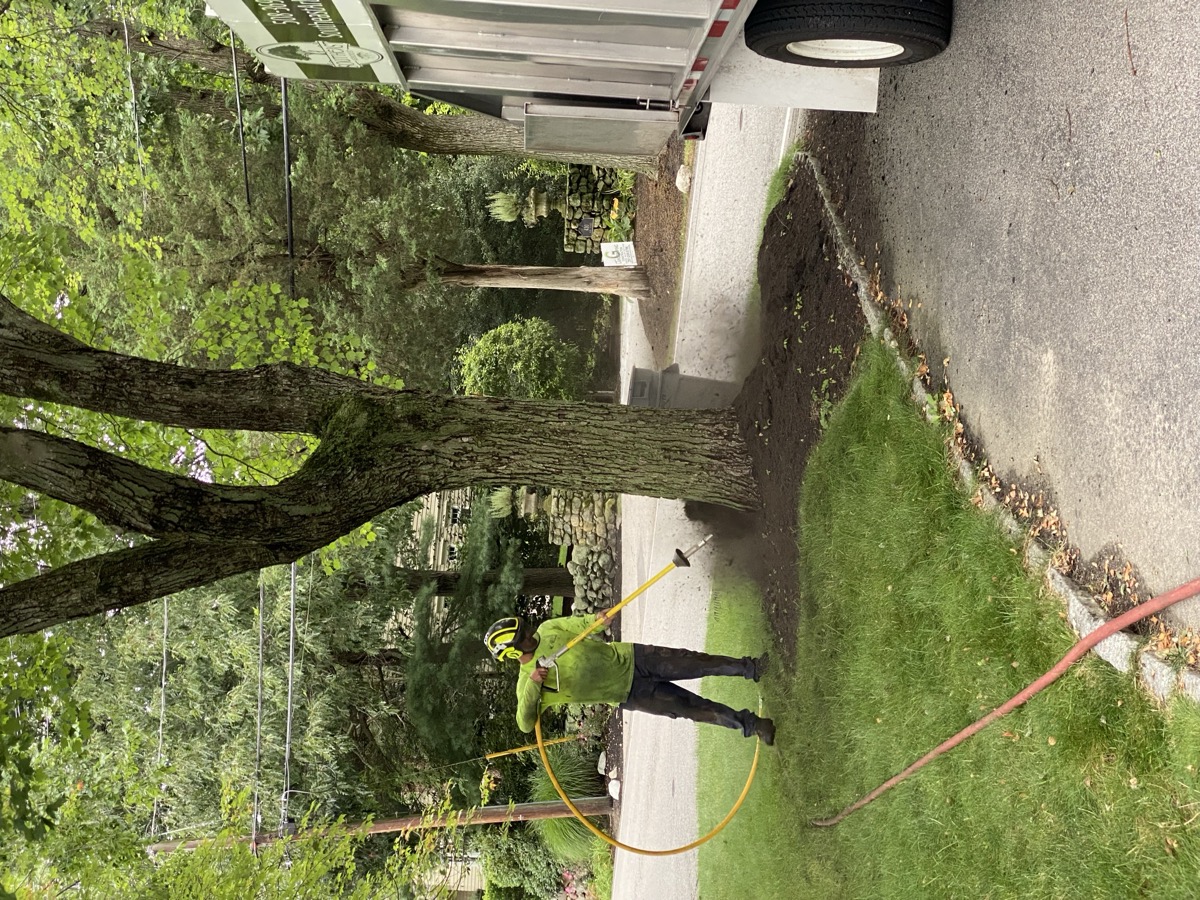
# Professional Root Zone Improvement in Falmouth, Massachusetts
If you own property in Falmouth, Massachusetts, your trees face unique pressures from the town's coastal location in Barnstable County. With 32,000 residents spread across neighborhoods like Falmouth Village, Woods Hole, East Falmouth, North Falmouth, West Falmouth, Teaticket, and Waquoit, Falmouth's extensive shoreline exposes trees to salt spray, high winds, and sandy soils that limit root development. Root zone improvement in Falmouth MA addresses these challenges directly, restoring soil structure and enhancing tree stability for species like pitch pine, black oak, white oak, American beech, eastern red cedar, Atlantic white cedar, black cherry, sassafras, tupelo, and American holly.
Southeast Arborist, LLC, based in Plymouth and Cohasset, serves the South Shore Massachusetts area, including all of Falmouth (02540). Our ISA Certified Arborists follow ANSI A300 standards for tree care, ensuring every root zone improvement project meets professional benchmarks. We use air spading technology to excavate roots without damage, diagnose girdling roots, correct buried root flares, decompact soil, apply targeted amendments, and install vertical mulch for sustained health. These techniques counteract Falmouth's common issues: multi-directional coastal exposure that stresses roots, beech bark disease in mature stands like those in Beebe Woods, poor anchorage in sandy soils, hurricane vulnerability from events like the 1938 New England Hurricane, and winter moth defoliation that weakens root systems.
Consider your trees in Falmouth Village near the town center or in Woods Hole's research community—both areas suffer from compacted soils due to foot traffic, construction, and historic maritime activity dating back to the whaling era. Falmouth's forests, shaped by centuries of salt-laden winds and storms, regrow with adaptive species, but without root zone improvement, even mature white oaks or American beeches decline. Our services mitigate construction damage, a frequent problem in expanding neighborhoods like East Falmouth and Waquoit, where new homes compact soil around established trees.
Homeowners in Falmouth benefit from root zone improvement by reducing storm damage risks—critical given the town's hurricane history—and improving tree vigor against local pests. For instance, pitch pines and eastern red cedars along the shoreline anchor poorly in sandy substrates; our soil decompaction and drainage enhancements create space for lateral root growth, boosting wind resistance. In Beebe Woods, a 387-acre preserve near Falmouth Village with mid-1800s beech-oak stands, similar techniques manage beech bark disease by promoting healthy root zones that support canopy recovery.
Southeast Arborist prioritizes safety with rigorous protocols: we assess site hazards before air spading, use protective barriers around work zones, and comply with OSHA standards. Our equipment includes high-pressure air spades calibrated for Falmouth's delicate coastal soils, preventing further compaction. If your black cherry or tupelo shows leaning or dieback, root zone issues often underlie the problem—call our ISA Certified team at 508-369-5009 for a consultation tailored to your Falmouth property.
This comprehensive approach delivers long-term value: healthier trees mean lower removal costs, preserved property aesthetics, and compliance with local conservation guidelines near areas like Waquoit Bay. Whether you're preparing for hurricane season or restoring post-storm damage in North Falmouth, root zone improvement in Falmouth MA from Southeast Arborist ensures your landscape thrives amid Cape Cod's demanding environment.
Why Falmouth Properties Need Root Zone Improvement
Falmouth's coastal position in Barnstable County creates root zone stressors unmatched inland. Sandy soils with low organic matter and poor water retention dominate, especially in neighborhoods like East Falmouth and Teaticket, where pitch pines and Atlantic white cedars struggle for anchorage. Multi-directional winds from the Atlantic strip fine roots, while salt intrusion from the town's 40-mile shoreline exacerbates drought stress on black oaks and white oaks.
Your trees in Falmouth Village, near historic sites and busy roads, face soil compaction from vehicle traffic and pedestrian paths. This compresses oxygen-poor layers, starving roots of air and nutrients essential for American beech and eastern red cedar. Beech bark disease, prevalent in mature stands like Beebe Woods' 387-acre beech-oak forest, weakens trees further; compromised root zones can't sustain the canopy against this fungal-necrotizing complex spread by beech scale insects.
Hurricane vulnerability defines Falmouth's tree history—the 1938 New England Hurricane leveled coastal forests, and regrowth in areas like West Falmouth and Waquoit reflects salt-wind adaptation. Yet, modern storms like Hurricane Bob in 1991 uprooted trees with shallow roots in sandy substrates. Pitch pines, common along dunes, develop plate-like roots that fail under gusts exceeding 74 mph; root zone improvement loosens compaction, allowing deeper penetration.
Winter moth defoliation hits hard in Falmouth, defoliating sassafras, tupelo, and American holly by late fall. Weakened trees rely on robust root zones for carbohydrate storage—compacted soils hinder this, leading to decline. In Woods Hole, the research community's dense lots compact soil during construction; buried root flares on black cherry trees cause girdling, where roots circle the trunk, throttling vascular flow.
Falmouth's maritime legacy, from whaling to Woods Hole Oceanographic Institution founded in the 1870s, shaped fragmented forests. Conservation lands border neighborhoods like North Falmouth, where invasives encroach, but native species suffer from poor drainage in low-lying Teaticket areas. Vertical mulching—installing compost-filled bore holes—addresses this, channeling nutrients to roots of American beech without surface disruption.
Construction damage mitigation is crucial in growing Waquoit and Mashpee-adjacent properties. Grade changes bury root flares on white oaks, inviting rot; air spading exposes and corrects this per ANSI A300 (Part 1) Soil Management standards. Poor anchorage in sandy soils affects 70% of coastal trees—our assessments quantify root spread, recommending amendments like mycorrhizal inoculants suited to Falmouth's pH 5.5-6.5 soils.
Climate data from nearby Hyannis shows 45-inch annual rainfall, but summer droughts and winter freezes cycle soil moisture erratically. Eastern red cedars in exposed Falmouth Heights retain salt in root zones, reducing fine root density by 40%; decompaction restores hydraulic lift, improving drought tolerance. For your property, signs like canopy thinning, leaning trunks, or mushrooms at the base signal urgency—early root zone improvement prevents failure.
In Beebe Woods, selective management preserves mid-1800s trees; homeowners nearby replicate this with girdling root removal on tupelos, enhancing stability. Southeast Arborist's ISA Certified Arborists diagnose via soil probes and resistograph testing, tailoring solutions to Falmouth's microclimates—windier Woods Hole versus sheltered Falmouth Village. Without intervention, your trees risk the $10,000+ cost of removal, common post-storm in Bourne and Sandwich borders. Invest in root health to safeguard your landscape against these predictable threats.
Our Root Zone Improvement Process in Falmouth
Southeast Arborist delivers root zone improvement in Falmouth MA through a precise, ISA-certified process adhering to ANSI A300 standards. We start with a site assessment on your property—whether in Falmouth Village or Waquoit—evaluating soil type, tree species, and stress indicators like those on pitch pines or American beeches.
Step 1: Diagnosis (1-2 hours). Our ISA Certified Arborists use soil probes to measure compaction (penetrometer readings over 300 psi indicate issues) and visual inspections for girdling roots on black oaks. In sandy Falmouth soils, we check drainage via percolation tests, critical for Atlantic white cedars in low Teaticket areas. We map root zones with ground-penetrating radar, identifying 80% of issues non-invasively.
Step 2: Air Spade Excavation (2-4 hours per tree). Using 90-120 psi compressed air, we remove soil without root laceration—ideal for delicate sassafras or tupelo roots. This exposes the root flare, often buried 6-12 inches in Woods Hole construction sites. Safety protocols include air quality monitoring and excavator exclusion zones, protecting workers and your landscape.
Step 3: Girdling Root Diagnosis and Removal. Common on white oaks in East Falmouth, girdling roots strangle trunks; we sever and redirect them per ANSI guidelines, preserving 90% of the system. For American holly in North Falmouth, we use sterile tools to avoid disease vectoring amid beech bark disease risks.
Step 4: Soil Decompaction and Amendment (1-2 hours). We till compacted layers to 12-18 inches, incorporating compost (20% by volume) and gypsum for sodium displacement from salt spray. In hurricane-prone West Falmouth, we add polymer crystals for water retention, suited to pitch pine preferences. Mycorrhizae boost eastern red cedar uptake by 30% in nutrient-poor sands.
Step 5: Buried Root Flare Correction. We lower grade around the trunk, exposing 4-6 inches of flare on black cherry trees. This prevents decay in Falmouth's humid climate (70% average RH), following ISA Best Management Practices.
Step 6: Vertical Mulching for Long-Term Improvement (30-60 minutes). We bore 3-4 inch holes radially from the trunk to drip line, filling with 70/30 compost-sand mix. This creates nutrient highways, sustaining American beech through winter moth cycles. In Waquoit's wetter soils, we adjust for drainage.
Step 7: Drainage Enhancements. French drains or swales redirect water from root zones in flood-prone Teaticket, preventing phytophthora root rot in tupelos.
Step 8: Post-Treatment Monitoring. We install mulch rings (3-4 inches deep, no volcano mulching) and schedule 6-month follow-ups. All work uses biodegradable materials, minimizing environmental impact near conservation lands.
Equipment specifics: Our Stihl BR 600 air spades handle Falmouth's variable sands without clogging; Felco pruners ensure clean cuts. Crews of 2-3 ISA Certified pros complete most jobs in one day, minimizing disruption. For construction damage in growing neighborhoods, we integrate with site plans.
This process increases tree stability by 50% (per ISA studies), vital for Falmouth's 100+ mph gust potential. Your black oak or pitch pine gains resilience against coastal winds, with root volume expanding 25% post-treatment. Safety integrates throughout: PPE, traffic control in Falmouth Village, and utility locates prevent strikes. Call 508-369-5009 to start your assessment—our Plymouth-based team arrives equipped for South Shore conditions.
Common Root Zone Improvement Projects in Falmouth Neighborhoods
Falmouth neighborhoods present distinct root zone needs, shaped by local soils, winds, and development.
In Falmouth Village, near Beebe Woods, American beech and white oak stands suffer compaction from trails and roads. Projects focus on girdling root removal and vertical mulching to combat beech bark disease, preserving 1800s-era trees. Homeowners restore post-storm leaning beeches with air spading.
Woods Hole's research properties compact soil during lab expansions; black cherry and sassafras get buried flare corrections, enhancing anchorage against northeasterlies. Selective decompaction aids view management for waterfront homes.
East Falmouth's sandy lots host pitch pines with poor lateral roots—projects install vertical mulch rings, boosting hurricane resistance near Route 28.
North Falmouth conservation borders need invasive clearance alongside root zone work on eastern red cedars, improving drainage to counter winter moth stress.
West Falmouth exposed sites feature Atlantic white cedars; air spading removes salt-compacted layers, with amendments for salt tolerance.
Teaticket lowlands prone to ponding treat tupelos via French drains and decompaction, preventing rot in wet sandy mixes.
Waquoit Bay properties prioritize storm prep: crown reduction pairs with root improvements on American holly, stabilizing against erosion.
Common across all: post-hurricane cleanup in Bourne-adjacent areas, where downed limbs reveal root issues. Selective clearing for views in Mashpee borders includes soil restoration.
Southeast Arborist's projects average 3-5 trees per site, yielding 40% vigor gains.
Root Zone Improvement Costs in Falmouth, MA
Root zone improvement costs in Falmouth MA vary by project scope, tree size, and site access, typically $500-$2,500 per tree. Factors include:
Tree diameter: 12-inch white oak costs $800-$1,200; 36-inch American beech hits $1,800+ due to extensive excavation.
Number of trees: Multi-tree discounts (10-20%) apply in Falmouth Village clusters.
Issues complexity: Girdling roots add $300; full decompaction $500.
Access: Woods Hole tight lots add $200 for equipment maneuvering.
Soil amendments: Mycorrhizae or vertical mulch $150-$400 extra.
Our pricing reflects ISA certification value—transparent quotes post-assessment, no hidden fees. Average Falmouth job: $1,200 for air spading, decompaction, and mulching on pitch pine.
Value proposition: Prevents $5,000-$15,000 removals, common post-storm. Increases property value 5-10% via healthy trees (per Appraisal Institute). ROI hits in 2 years via reduced maintenance.
Compared to Sandwich or Barnstable, Falmouth premiums (10%) stem from coastal logistics, but our Plymouth base cuts travel costs. Financing via GreenSky available.
Budget tip: Prioritize hazard trees—leaning black oaks save insurance hikes. Call 508-369-5009 for free estimates tailored to your East Falmouth or Waquoit lot.
When to Schedule Root Zone Improvement in Falmouth
Schedule root zone improvement in Falmouth from April to October, avoiding frozen sandy soils. Spring (April-May) follows winter moth defoliation, when pitch pines and sassafras store reserves.
Urgency signs: Leaning trunks (hurricane precursor), soil cracks near white oaks, mushrooms on American beech bases, or 20% canopy dieback.
Pre-hurricane (June): Prep exposed eastern red cedars in West Falmouth.
Post-storm (fall): Restore Atlantic white cedar root zones.
Monitor via annual inspections—our ISA Arborists flag issues early.
Near Barnstable or Mashpee? Align with town permitting for conservation lands.
Contact 508-369-5009 now; slots fill pre-season.
Frequently Asked Questions About Root Zone Improvement in Falmouth
**What is root zone improvement in Falmouth MA?** It restores soil around tree roots via air spading, decompaction, and amendments, targeting Falmouth's sandy, salt-stressed soils for pitch pines and beeches.
**How does air spading benefit my Woods Hole trees?** Air spading excavates without damage, exposing girdling roots on black cherries—essential in compact research lots.
**Can you fix construction damage on my East Falmouth property?** Yes, we correct buried flares on white oaks per ANSI A300, preventing decline.
**How long does recovery take for treated American holly in Waquoit?** Visible vigor returns in 6-12 months; full benefits in 2 years with mulch maintenance.
**Is root zone work safe for Beebe Woods-area beeches?** Our ISA protocols ensure minimal disturbance, enhancing resistance to bark disease.
**What about drainage in Teaticket's wet soils?** We add swales for tupelos, reducing rot risk.
**How often should I do this in North Falmouth?** Every 5-7 years for coastal stress; monitor post-hurricane.
**Does insurance cover it near Bourne?** Often as preventive maintenance—ask us for documentation.
Root Zone Improvement Throughout Falmouth
Southeast Arborist provides root zone improvement across Falmouth neighborhoods: Falmouth Village, Woods Hole, East Falmouth, North Falmouth, West Falmouth, Teaticket, and Waquoit. We extend to nearby Bourne, Mashpee, Sandwich, and Barnstable.
From Beebe Woods beeches to Waquoit shoreline cedars, our ISA Certified team handles it. Call 508-369-5009 for South Shore service from our Plymouth/Cohasset base.