
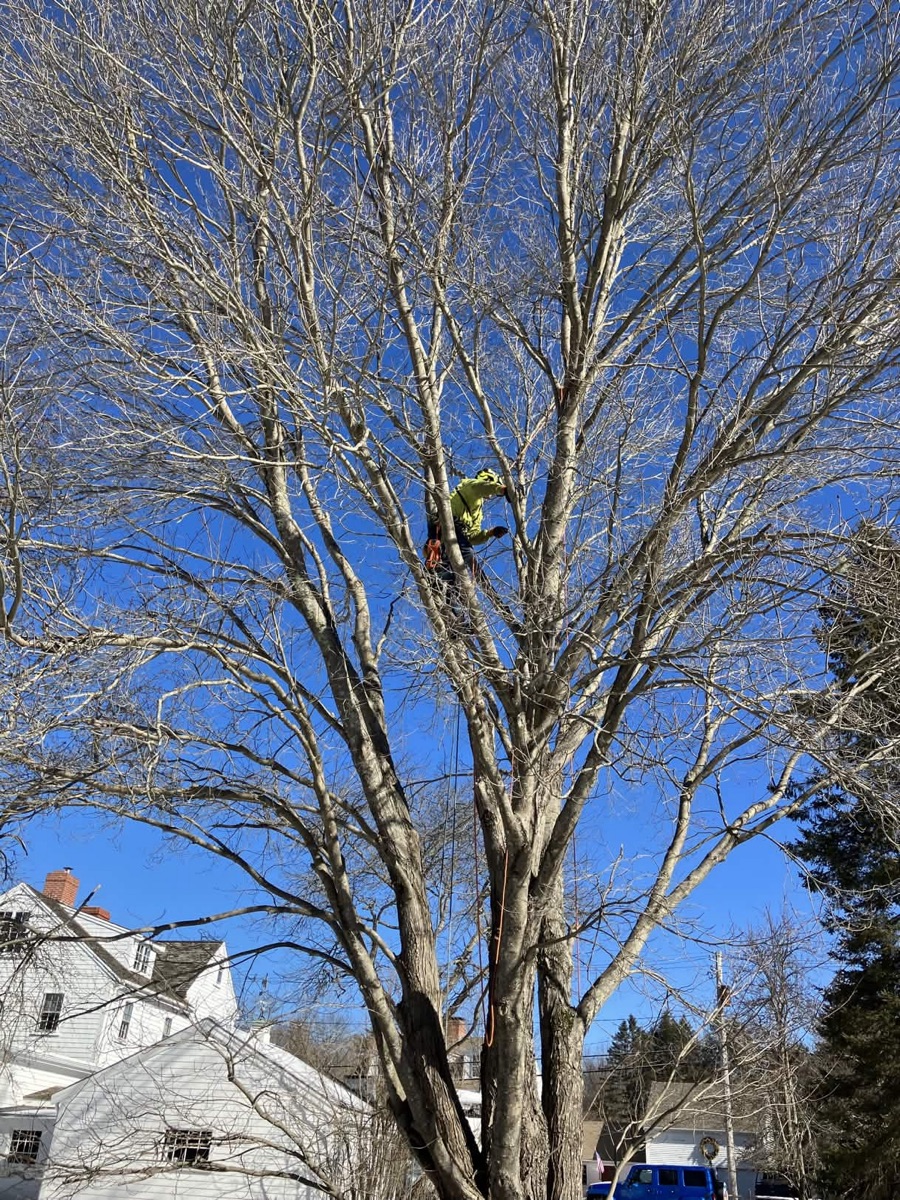
# Professional Tree Pruning in Falmouth, Massachusetts
As a homeowner in Falmouth, Massachusetts, you face unique challenges with your trees due to the town's extensive shoreline, sandy soils, and exposure to coastal winds. Tree pruning in Falmouth MA demands expertise to handle species like pitch pine, black oak, and American beech, which dominate local landscapes from Falmouth Village to Woods Hole. Southeast Arborist, LLC, your South Shore Massachusetts tree care specialists based in Plymouth and Cohasset, delivers ANSI A300-compliant pruning by ISA Certified Arborists. We serve all of Barnstable County, including Falmouth's 32,000 residents across neighborhoods like East Falmouth, North Falmouth, West Falmouth, Teaticket, and Waquoit.
Your trees endure multi-directional coastal exposure that stresses branches and weakens anchorage in sandy soils. Hurricanes, like the 1938 New England Hurricane that reshaped Falmouth's coastlines, highlight the need for proactive pruning to reduce wind resistance. Beech bark disease affects mature American beech stands in areas like Beebe Woods, a 387-acre preserve near Falmouth Village with trees from the mid-1800s. Winter moth defoliation hits black oak and white oak, while salt spray impacts eastern red cedar and Atlantic white cedar along shorelines.
Southeast Arborist specializes in tree pruning Falmouth MA homeowners rely on for safety and health. Our services include crown thinning to improve light penetration, deadwood removal to eliminate hazards, and crown reduction for storm preparation. In Woods Hole's research community, we perform vista pruning to clear views of Vineyard Sound without compromising tree structure. For young black cherry or sassafras on Waquoit properties, structural pruning builds strong frameworks resistant to hurricanes.
We follow ANSI A300 standards, ensuring every cut promotes tree health and longevity. Our ISA Certified Arborists assess your pitch pine in Teaticket or tupelo in North Falmouth for issues like poor anchorage, using rigging systems for safe limb removal near power lines. Unlike general landscapers, we prioritize science-based techniques tailored to Falmouth's maritime history, from whaling-era forests to modern conservation lands.
Homeowners in Falmouth Village often call us after nor'easters for restoration pruning on American holly damaged by salt-laden winds. Our process minimizes stress on trees recovering from events like these, restoring shape while preventing future failures. If your East Falmouth oaks show deadwood from beech bark disease spread or winter moth, our thinning reduces weight and disease progression.
Tree pruning in Falmouth MA extends property value—well-maintained trees boost curb appeal in this diverse coastal town. Sandy soils drain quickly, so pruning enhances root stability for species like eastern red cedar prone to tipping. We clear invasives along conservation borders in West Falmouth, maintaining native stands.
Contact Southeast Arborist at 508-369-5009 for a free assessment. Our team arrives with bucket trucks, cranes, and chippers suited for tight neighborhoods like Teaticket. Whether preparing for hurricane season or managing views on Mashpee borders, we deliver results that protect your investment. In Falmouth's hurricane-vulnerable zones, professional pruning saves lives and structures—don't wait for the next storm.
Why Falmouth Properties Need Tree Pruning
Falmouth's coastal location in Barnstable County exposes your trees to relentless challenges that make tree pruning Falmouth MA essential. Multi-directional winds from Vineyard Sound and Buzzards Bay whip branches on pitch pine and black oak, creating failure points. Sandy soils with poor anchorage affect white oak and American beech, leading to uprooting during hurricanes—recall the 1938 storm that defoliated coastal areas from Woods Hole to Waquoit.
Common tree species like eastern red cedar and Atlantic white cedar line shorelines in East Falmouth and Teaticket, where salt spray causes dieback. Pruning removes salt-damaged tips, improving vigor. American holly in North Falmouth suffers from winter moth defoliation, which weakens structure; crown thinning restores density without over-thinning. Black cherry and sassafras in Falmouth Village's inland spots face poor anchorage—selective pruning lowers crowns to match root depth.
Beech bark disease ravages mature American beech in Beebe Woods near Falmouth Village. Nectria fungus follows scale insect infestation, girdling stems. Pruning eliminates infected branches early, slowing spread in these mid-1800s stands shaped by maritime whaling. Tupelo in West Falmouth wetlands shows twisted growth from wind; elevation pruning lifts lower limbs for access and health.
Falmouth's forests reflect centuries of adaptation—post-1938 regrowth features resilient pitch pine barriers, but unchecked growth invites hazards. In Woods Hole, research properties near oceanographic institutions require vista pruning for unobstructed views, targeting black oak overgrowth without destabilizing roots in sandy soil. Hurricane vulnerability peaks here; crown reduction on exposed white oak reduces sail effect by 30-50%.
Winter moth caterpillars defoliate sassafras and oak in Waquoit, stressing trees already battling droughty sands. Pruning deadwood post-defoliation prevents secondary pests. Power lines along Route 28 in East Falmouth demand elevation pruning on eastern red cedar to avoid outages during nor'easters.
Your property's value hinges on tree health—overgrown limbs in Teaticket crash onto roofs, costing thousands. Pruning per ANSI A300 standards addresses these: thinning for wind flow, reduction for height control, and structural support for young trees. In conservation-adjacent North Falmouth, we manage invasives bordering native holly and cedar, preserving biodiversity.
Coastal exposure accelerates decay in black cherry heartwood; deadwood removal halts spore spread. Poor soils limit nutrients, so pruning directs energy to vital parts. Falmouth's 12 miles of shoreline amplify salt damage—Atlantic white cedar needles brown from exposure, requiring tip pruning.
Storm history underscores urgency: 1991's Perfect Storm downed trees across Bourne borders into Falmouth. Proactive pruning on pitch pine windbreaks prevents repeats. Beech bark disease management in Beebe Woods involves sanitation pruning, removing mummified twigs to break the cycle.
For Sandwich-adjacent properties in North Falmouth, pruning aligns with local regs, enhancing resilience. Homeowners gain peace of mind—pruned trees withstand 70+ mph gusts better. Southeast Arborist's ISA experts identify subtle signs like codominant stems in young oaks, pruning to avert splits.
Practical advice: Inspect your trees annually for cracks in black oak crotches or leaning pitch pine. In sandy soils, avoid topping— it invites decay. Target pruning now preserves Falmouth's unique forest legacy, from whaling ports to scientific hubs.
Our Tree Pruning Process in Falmouth
Southeast Arborist follows a precise, step-by-step tree pruning process in Falmouth MA, adhering to ANSI A300 standards with ISA Certified Arborists leading every job. We start with a site assessment on your Falmouth Village property, evaluating pitch pine for wind damage or American beech for bark disease. Using resistographs and sonic tomography, we detect internal decay in black oak without invasive drilling.
Step 1: Consultation and Planning. Call 508-369-5009 for your free evaluation. We map your trees in Woods Hole, noting coastal exposure and sandy soil impacts on white oak anchorage. Goals align—storm prep in East Falmouth means crown reduction; vista pruning in Waquoit clears Vineyard views.
Step 2: Risk Assessment. Our ISA arborists score hazards using TRAQ methodology. For eastern red cedar near Teaticket power lines, we prioritize deadwood removal. Drones survey tall American holly in North Falmouth, identifying failed unions.
Step 3: Gear Up with Specialized Equipment. Bucket trucks access Falmouth Village crowns without spikes, preserving bark on sassafras. Cranes handle heavy black cherry limbs in West Falmouth; rope-and-saddle climbers navigate tight Beebe Woods paths. Chippers process debris on-site, minimizing traffic in neighborhoods.
Step 4: Pruning Execution. We use sharp, sterilized saws for clean cuts. Crown thinning on pitch pine removes 15-20% of interior branches, improving airflow against winter moth. Deadwood drops via rigging—negative cuts prevent barber-chairing in oaks. For Atlantic white cedar in coastal Teaticket, we prune salt-burnt tips at branch collars.
Crown elevation lifts lower limbs on tupelo near roads in East Falmouth, meeting utility clearances. Reduction shortens leaders on exposed white oak by 25%, collaring cuts to heal. Structural pruning on young black cherry targets rubbing branches, fostering dominant stems.
Step 5: Safety Protocols. Traffic control in busy Waquoit, spotters for Woods Hole cranes, and PPE exceed OSHA standards. We secure zones near Mashpee borders, protecting research labs.
Step 6: Cleanup and Health Monitoring. Rake chips into biodegradable mulch for your sandy soils, enriching nutrients for beech recovery. Post-prune, we apply mycorrhizal inoculants to holly roots. Follow-up visits track healing in sassafras.
Techniques adapt to species: Beech bark disease in Beebe Woods gets sanitation pruning, excising cankers. Hurricane restoration on pitch pine involves weighted limb removal, balancing crowns. Vista pruning in Falmouth Village thins selectively for views, maintaining 60% foliage.
Our process minimizes stress—never more than 25% removal per session on oaks. In poor anchorage zones, cabling supplements pruning for cedar. Equipment like ETT (elevated tree trimmer) platforms speeds North Falmouth jobs safely.
Homeowners benefit: Pruned trees in coastal Falmouth live 20-30% longer. We document with photos, providing reports for insurance in hurricane-prone areas.
This methodical approach ensures your trees thrive amid Falmouth's winds and salt. Schedule with Southeast Arborist—your ISA experts deliver precision tree pruning Falmouth MA trusts.
Common Tree Pruning Projects in Falmouth Neighborhoods
Tree pruning projects in Falmouth MA vary by neighborhood, addressing local tree species and conditions. In Falmouth Village, near Beebe Woods, we manage beech bark disease on American beech with sanitation pruning, removing girdled stems to protect 1800s veterans. Crown thinning on adjacent black oak combats winter moth, preserving the preserve's oak-beech stands.
Woods Hole properties demand vista pruning on pitch pine and white oak overlooking the oceanographic institute. We reduce crowns to frame views of Vineyard Sound, thinning for wind resistance amid research community density. Deadwood removal from eastern red cedar prevents lab hazards.
East Falmouth's sandy lots feature Atlantic white cedar stressed by salt; we elevate crowns for Route 28 clearance and tip-prune spray damage. Storm response after nor'easters includes limb cleanup on black cherry, restoring shape.
North Falmouth homeowners near Bourne request structural pruning on young sassafras and tupelo, building codominant-free structures against poor anchorage. Hurricane prep involves reduction on American holly windbreaks.
West Falmouth's conservation edges need invasive clearing and selective thinning on oak-holly mixes, maintaining native borders. Deadwood from defoliation gets priority.
Teaticket's tight yards see hazard limb removal on pitch pine over roofs, using climbers for precision. Crown reduction prepares for hurricanes, matching sandy soil limits.
Waquoit waterfronts along Mashpee lines focus on view management—thinning black oak for Sound vistas, with elevation for dock access. Restoration post-storms revives tupelo.
Across neighborhoods, power line pruning on cedar dominates, per utility specs. Beebe Woods-area disease work extends to village edges, slowing beech decline.
These projects enhance safety—pruned trees in Falmouth Village withstood recent gales intact. Call 508-369-5009 for neighborhood-specific service.
Tree Pruning Costs in Falmouth, MA
Tree pruning costs in Falmouth MA depend on factors like tree size, species, location, and complexity, but Southeast Arborist provides transparent pricing for value-driven results. Small jobs—deadwood removal on a 30-foot pitch pine in Falmouth Village—start at $300-$500. Medium crowns, like black oak thinning in East Falmouth, range $600-$1,200, factoring sandy soil access.
Large projects, such as crown reduction on 60-foot American beech near Beebe Woods, cost $1,500-$3,000 due to height and disease. Coastal Woods Hole vista pruning on white oak adds $200-$500 for rigging near water. Hurricane restoration in Waquoit for multiple tupelo limbs: $800-$2,000 per tree.
Key factors: Access in Teaticket tight lots increases 20% via climbers ($150/hour minimum). Species matter—Atlantic white cedar salt pruning is quicker, undercutting oak disease work. Neighborhood impacts North Falmouth's rural ease vs. West Falmouth conservation permits ($100-$300 extra).
Hourly rates for ISA Certified Arborists: $150-$250, with 2-man crews standard. Bucket truck jobs in Falmouth Village add $500 mobilization from Plymouth. Full-site assessments for 5+ trees in East Falmouth bundle at 15% savings.
Value proposition: ANSI A300 pruning prevents $10,000 storm damage claims. Pruned pitch pine in hurricane zones lasts decades, boosting property values 5-10% in Barnstable County. Our mulch byproduct saves $200/yard on sandy soil amendments.
Compared to Barnstable or Sandwich, Falmouth costs align due to similar coasts, but our South Shore base cuts travel fees. Emergency post-nor'easter calls premium 50%, yet faster response protects power lines.
Practical budgeting: Annual maintenance for 3 oaks in North Falmouth: $900 total, vs. $5,000 removal. Insurance discounts up to 15% for documented pruning.
Get your quote at 508-369-5009—free estimates detail costs for your sassafras or holly.
When to Schedule Tree Pruning in Falmouth
Schedule tree pruning in Falmouth MA from late fall to early spring, when trees like pitch pine and black oak are dormant, minimizing sap loss and pest risks. November-February avoids summer heat stress on sandy soils, ideal for beech bark disease sanitation in Beebe Woods.
Urgency signs: Leaning white oak from poor anchorage in East Falmouth—prune immediately to avert falls. Deadwood in eastern red cedar over Teaticket roofs demands spring action post-winter moth checks.
Hurricane season (June-November) prep: Prune by May for crown reduction on Atlantic white cedar. Post-storm, within weeks for black cherry restoration before decay sets in.
Vista pruning in Woods Hole peaks spring for summer views. Young sassafras structural work anytime, but fall promotes healing.
Avoid summer—defoliation stresses tupelo. Watch for bark cracks in American holly or codominant stems in oak signaling now.
Annual checks align with Falmouth's nor'easters. Call 508-369-5009 to time your service.
Frequently Asked Questions About Tree Pruning in Falmouth
What is the best time for tree pruning in Falmouth MA? Late fall to early spring suits Falmouth's pitch pine and oak, reducing disease risk in dormant seasons. Avoid summer for beech to prevent beech bark disease spread.
How much does tree pruning cost in Falmouth neighborhoods? $300-$3,000 per tree, based on size and access. East Falmouth cedar jobs under $800; Waquoit waterfront oaks higher for rigging.
Why hire ISA Certified Arborists for Falmouth tree pruning? They apply ANSI A300 standards, spotting issues like winter moth in black oak or salt damage in holly specific to coastal Falmouth.
Does tree pruning help with hurricane preparation in Falmouth? Yes—crown reduction on pitch pine cuts wind resistance 30%, proven post-1938 regrowth. Essential for Teaticket and Woods Hole exposures.
Can you prune trees near power lines in North Falmouth? We coordinate with utilities for elevation pruning on cedar, using insulated tools for safety along Route 28A.
What are signs your Falmouth trees need pruning? Deadwood, rubbing branches, or leaning in sandy soils on white oak. Beech cankers in Falmouth Village signal urgency.
Is topping trees recommended in West Falmouth? No—it weakens sassafras and invites decay. We use reduction for safe height control.
How does Southeast Arborist handle cleanup in tight Waquoit yards? On-site chipping into mulch, hauled free, enriching your soils without trailers.
Tree Pruning Throughout Falmouth
Southeast Arborist provides tree pruning throughout Falmouth neighborhoods: Falmouth Village's Beebe Woods beeches, Woods Hole vistas, East Falmouth cedars, North Falmouth sassafras, West Falmouth hollies, Teaticket pines, and Waquoit oaks. We extend to nearby Bourne, Mashpee, Sandwich, and Barnstable from our Plymouth/Cohasset base.
Your coastal trees get expert care—call 508-369-5009 for service in South Shore MA.