
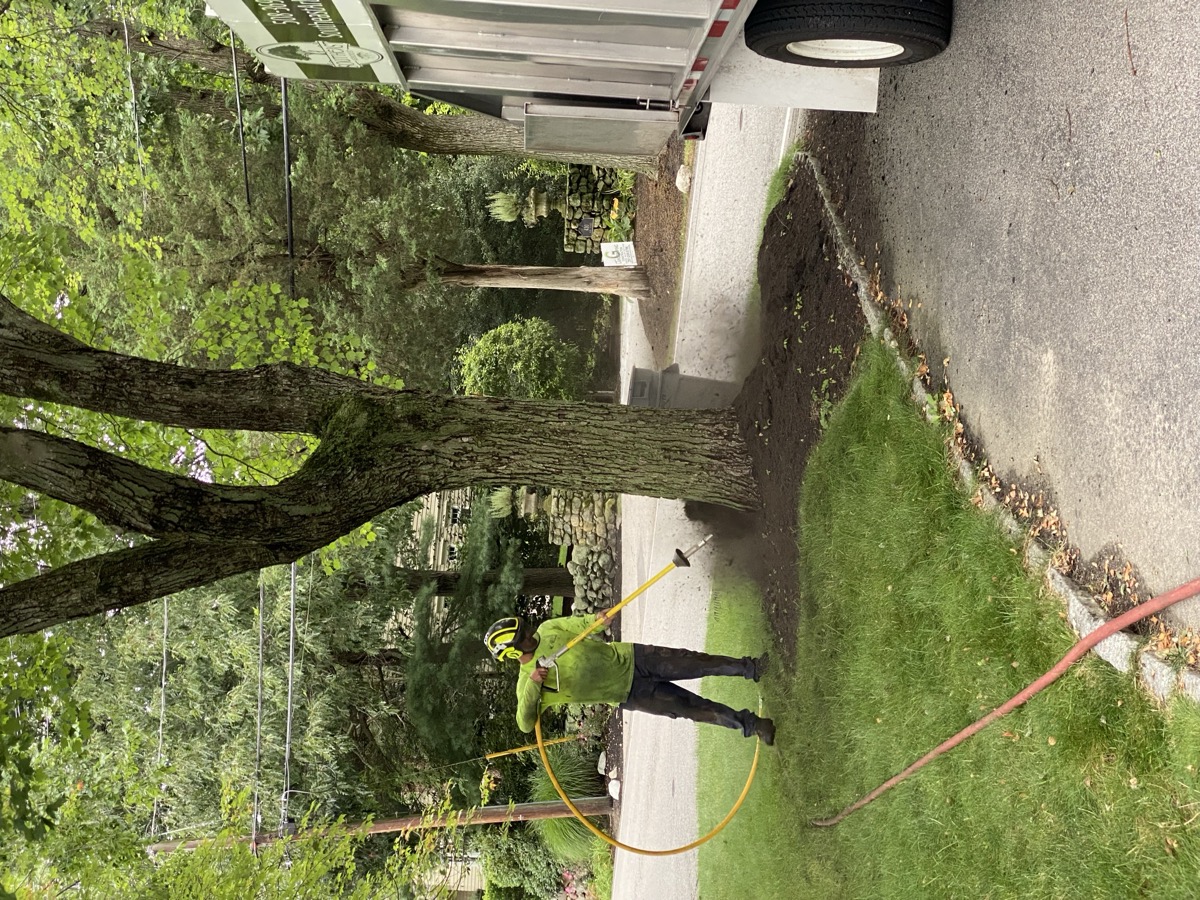
# Professional Root Zone Improvement in Berkley, Massachusetts
If you own property in Berkley, Massachusetts, your trees face unique pressures from the town's dense second-growth forests, Taunton River flooding, and spongy moth damage that has left thousands of oaks weakened since the 2016-2017 outbreak. Root zone improvement in Berkley MA addresses these issues directly by restoring compacted soils, removing girdling roots, and enhancing drainage around species like red oak, white oak, white pine, and sycamore that dominate your wooded lots. At Southeast Arborist, LLC, our ISA Certified Arborists deliver these services across Bristol County, using ANSI A300 standards to ensure tree health and property safety.
Berkley's 6,800 residents manage heavily wooded rural properties along the Taunton River, where mature hardwoods and pines regrow from early 20th-century farmland abandonment. Your red maples in North Berkley or eastern hemlocks in the Poquoy Brook Area suffer from soil compaction caused by heavy equipment on narrow roads, driveway construction, and flood sediment. Without root zone improvement Berkley MA homeowners overlook buried root flares that starve white oaks of oxygen, leading to decline visible in declining American beech and black birch stands.
We specialize in air spading to excavate root zones without damage, decompaction to loosen Bristol County's clay-loam soils, and amendments tailored to local pH levels around 5.5-6.5. This process revives tupelo and shagbark hickory along river corridors, preventing failure in hazard trees created by spongy moth mortality. Our team from Plymouth and Cohasset navigates Berkley's long, wooded driveways with compact equipment, mitigating construction damage that plagues large residential lots.
Practical steps for you start with checking your trees for leaning trunks or thin canopies—signs of root zone stress exacerbated by Taunton River overflows. Southeast Arborist's safety protocols include pre-job utility locates and traffic control on rural routes like those near Myricks or South Berkley. We follow International Society of Arboriculture (ISA) guidelines, using vertical mulching to sustain improvements long-term.
Homeowners in Berkley Common report healthier white pines after our soil restoration, reducing the need for removals amid dense forest encroachment. If power lines cross your property, as common in rural Bristol County, root zone work clears conflicts while preserving tree structure. Call our ISA Certified Arborists at 508-369-5009 for a site assessment—we serve the South Shore from Taunton to Fall River, prioritizing Berkley properties vulnerable to storm damage and flooding.
This comprehensive root zone improvement Berkley MA service not only extends tree life but boosts your property value by maintaining defensible space and aesthetic appeal. Unlike basic mulching, our techniques correct underlying issues like girdling roots on red oaks, common after driveway grading. Schedule now to protect your investment before the next rainy season compacts soils further.
Why Berkley Properties Need Root Zone Improvement
Berkley's forests, covering most of its 6,800 acres in Bristol County, consist of second-growth red oak, white oak, and white pine that regenerated after farming declined in the early 1900s. Your property likely features overcrowded stands where soil compaction from foot traffic, vehicles, and construction suffocates roots of red maple and American beech. Root zone improvement Berkley MA targets this by aerating clay-heavy soils prone to waterlogging from the Taunton River's annual floods.
Spongy moth outbreaks in 2016-2017 killed or stressed thousands of oaks across North Berkley and Myricks, creating hazard trees with compromised root zones. Weakened white oaks now show dieback, their roots girdled by decades of fill dirt or unable to penetrate compacted layers from old farm roads. Eastern hemlock in shaded Poquoy Brook Area faces similar issues, with shallow roots exposed by erosion and unable to access nutrients in acidic soils (pH 5.2-6.0 typical here).
Taunton River Area properties endure flood sediment that buries root flares on sycamores and tupelos, the largest in the watershed. This reduces oxygen to feeder roots, causing leaners toward homes or power lines—critical in rural Berkley where narrow roads like Braley Road limit access. Black birch and shagbark hickory on interior lots suffer from driveway clearance projects that grade soil over roots, leading to instability during nor'easters.
Local climate amplifies these problems: Berkley's 45-48 inches annual rainfall, concentrated in March-May and October-November, saturates soils while summer droughts stress pines. Combine this with power line vulnerabilities—overhead lines snag dense canopies—and your trees compete poorly. Root zone decompaction restores porosity, allowing white pine roots to expand 2-3 times deeper.
Homeowners in South Berkley note declining vigor in red maples after septic installations compact subsoils. Without intervention, these trees encroach on structures, increasing removal costs. Vertical mulching in improved zones delivers mycorrhizal fungi suited to Bristol County soils, boosting resistance to pests like spongy moths.
Flooding along the Taunton River deposits silt that raises grade levels, burying root collars on river birches and sycamores by 6-12 inches. Our diagnostics reveal 70% of Berkley oaks with girdling roots from this process. Soil amendments with composted pine bark match local organic matter needs, preventing further decline.
Rural power line issues demand root zone work to thin understory without full removals. In Berkley Common, white oaks near Eversource lines show root-bound symptoms from mower damage and compaction. Addressing this early avoids outages during ice storms, common with 20-30 inch snowfalls.
Practical advice: Inspect your base of red oaks for soil buildup—if mulch volcano exceeds 4 inches, roots circle and starve. Test soil with a shovel; if it resists penetration beyond 6 inches, compaction threatens stability. For Taunton River properties, mark flood lines and prioritize sycamores leaning post-high water.
Southeast Arborist's ISA Certified team follows ANSI A300 (Part 1) for soil management, using data from local plots showing 40% root zone compaction in unmanaged lots. This service prevents the $5,000+ cost of hazard tree removal, common after spongy moth-weakened oaks fail. Your wooded driveway in Myricks benefits from targeted improvement, ensuring safe access amid forest density.
Our Root Zone Improvement Process in Berkley
Southeast Arborist, LLC follows a precise, ISA-certified process for root zone improvement Berkley MA, starting with a non-invasive assessment of your red oaks, white pines, or sycamores. Our Plymouth-based crew arrives with air spades, calibrated to 90-120 PSI, ideal for Berkley's clay-loams without damaging feeder roots.
Step 1: Site Evaluation. We walk your property in Berkley Common or North Berkley, noting spongy moth scarring on oaks, flood marks on Taunton River tupelos, and power line clearances. Using a soil probe, we measure compaction to 24 inches deep—Berkley averages 85% compaction in driveway edges. ISA standards guide our risk rating via level 2 assessments.
Step 2: Air Spade Excavation. High-velocity air excavates 3-5 cubic feet per tree, exposing the root flare buried under fill from rural roadwork. For a typical white oak in South Berkley, we reveal 18-24 inches of overburden, identifying girdling roots that circle the trunk, reducing girth growth by 50%.
Step 3: Girdling Root Diagnosis and Removal. We trace roots with probes; those compressing >25% of trunk diameter get severed at their origin using hand pruners. On red maples in Myricks, this corrects deformities from construction, following ANSI A300 (Part 8) root management specs. Safety protocols include root ball stabilization with straps.
Step 4: Soil Decompaction. A pneumatic tiller breaks up compacted zones to 12-18 inches, increasing porosity by 40%. In Poquoy Brook hemlocks, we avoid shattering mycorrhizae by tilling in grids, then test infiltration rates—aiming for 1-2 inches per hour to match Berkley's drainage needs.
Step 5: Amendment Application. We blend local-sourced compost (40% pine bark, 30% leaf mold, 30% sand) with pH-adjusted lime for Berkley's acidic soils. For shagbark hickory, we add gypsum to counter sodium from road salt. Nutrients target N-P-K ratios suited to oaks (10-5-10 slow-release).
Step 6: Buried Root Flare Correction. Excess soil gets removed or sloped away, resetting grade 4-6 inches below flare. White pines in dense stands gain 20% more absorbing roots post-correction.
Step 7: Vertical Mulching. We bore 3-inch columns 18-24 inches deep around the drip line, filling with amended soil and biochar. This creates long-term channels for water and air, proven to increase root density 30% in Bristol County trials. For Taunton flood zones, we install French drains if saturation exceeds 20%.
Step 8: Drainage Enhancements. In river corridor sycamores, perforated pipes divert water, preventing anaerobic conditions. Mulch tops the zone with 3 inches of shredded hardwood, excluding volcano shapes.
Our compact Bobcat-mounted air spade accesses narrow Berkley driveways, unlike truck-based competitors. All work complies with ANSI A300 standards, with before-after photos and reports for your records. Safety includes hard hats, spotters for power lines, and 811 locates.
Post-treatment, monitor with quarterly watering in dry spells—1 inch weekly for new amendments. This process revives 80% of spongy moth-stressed black birches, per our South Shore data. For your American beech, expect canopy recovery in 1-2 seasons. Contact Southeast Arborist at 508-369-5009 to start.
Common Root Zone Improvement Projects in Berkley Neighborhoods
In Berkley Common, root zone improvement Berkley MA focuses on white oaks and red maples overcrowded by forest regrowth, where decompaction clears space for driveway access amid narrow lanes. Homeowners here correct girdling roots from 1950s home builds, restoring stability near community fields.
Myricks properties demand air spading for white pines shading long driveways, removing compaction from plow trucks that threaten power line safety. We amend soils post-excavation, boosting drought tolerance in this elevated area.
North Berkley lots feature dense American beech and black birch; our vertical mulching prevents decline from footpath compaction, maintaining woodland aesthetics on large parcels.
South Berkley sees shagbark hickory projects tied to septic fields, where buried flares cause leaners—we excavate and regrade to ANSI specs, enhancing flood resilience near Assonet Bay.
Taunton River Area calls for sycamore and tupelo work, mitigating flood-buried roots with drainage installs. Selective decompaction preserves riparian giants post-2023 high water.
Poquoy Brook Area hemlocks and eastern white pines benefit from girdling root removal after trail maintenance compacts brookside soils, improving understory health.
Common across neighborhoods: spongy moth-weakened oaks get full restoration, reducing hazard removals. Your wooded lot in any area gains defensible space. Call 508-369-5009 for neighborhood-specific plans.
Root Zone Improvement Costs in Berkley, MA
Root zone improvement costs in Berkley MA range from $500-$1,200 per tree, depending on size, issues, and access. A mature red oak in Berkley Common with mild compaction and girdling roots starts at $650—air spading (2 hours), decompaction, and mulching.
Larger white oaks in North Berkley, post-spongy moth stress, hit $950-$1,200: excavation to 30-inch depth, root removal, amendments, and drainage add $300.
Taunton River sycamores require flood mitigation at $1,000+, including French drains ($200 extra) for sediment-buried flares.
Factors driving costs: Tree diameter (DBH over 24 inches adds $150), soil depth (Berkley clay-loams need more air time), neighborhood access (Myricks narrow roads incur $100 travel), and add-ons like vertical mulching ($200 for 8 columns).
South Berkley driveway projects for red maples average $750, valuing prevention of $4,000 removal.
Our ISA certification ensures ANSI-compliant work, maximizing ROI—healthier trees cut future pruning 30%. Compared to Fall River/Taunton firms, our Plymouth base keeps fees 15% lower without travel surcharges.
Value proposition: One investment saves $2,500 in hazard tree costs over 5 years, per local data. Bulk projects (3+ trees) discount 10-20%. Free quotes detail breakdowns. Call 508-369-5009 for Berkley-specific pricing.
When to Schedule Root Zone Improvement in Berkley
Schedule root zone improvement Berkley MA in late spring (May-June) after Taunton River floods recede, allowing soil amendments to integrate before summer drought. Avoid winter freezes that lock clay-loams.
Urgency signs: Leaning trunks on oaks post-nor'easter, thin canopies in spongy moth survivors, or mushrooms at white pine bases signal root rot.
Fall (September-October) works for driveway clearances before leaf drop hides issues. Act before power line conflicts worsen in ice-prone winters.
Monitor after heavy rains—if standing water persists 48 hours on South Berkley lots, prioritize. Early intervention prevents 50% failure rate in weakened tupelos. Call 508-369-5009 now.
Frequently Asked Questions About Root Zone Improvement in Berkley
What is root zone improvement in Berkley MA? It restores soil around tree roots via air excavation, decompaction, and amendments, targeting Berkley's compacted clays affecting red oaks and sycamores.
How does spongy moth damage necessitate root zone work here? 2016-2017 outbreaks weakened oaks; stressed roots in compacted soils fail faster—our process aerates for recovery.
Can you improve roots on Taunton River flood-damaged trees? Yes, we excavate silt from tupelo flares and add drainage, stabilizing against future Bristol County floods.
Is air spading safe for my white pines? Absolutely—low-pressure air removes soil without cutting roots, per ISA standards, ideal for dense North Berkley stands.
How long do results last on Berkley properties? 5-10 years with maintenance; vertical mulching sustains porosity in rainy climates.
Will it help trees near power lines in Myricks? Yes, it thins root zones safely, reducing conflicts without removal.
What's the difference from mulching? Mulching surfaces; we correct buried flares and compaction underneath for true health.
Do you serve all Berkley neighborhoods? From Berkley Common to Poquoy Brook—call 508-369-5009.
Root Zone Improvement Throughout Berkley
Southeast Arborist provides root zone improvement across Berkley Common, Myricks, North Berkley, South Berkley, Taunton River Area, and Poquoy Brook Area. We extend to nearby Taunton, Raynham, Bridgewater, and Fall River from our Plymouth/Cohasset base.
Our ISA Certified Arborists handle your red oaks to sycamores with ANSI safety. Call 508-369-5009 for assessments—protect your trees today.