
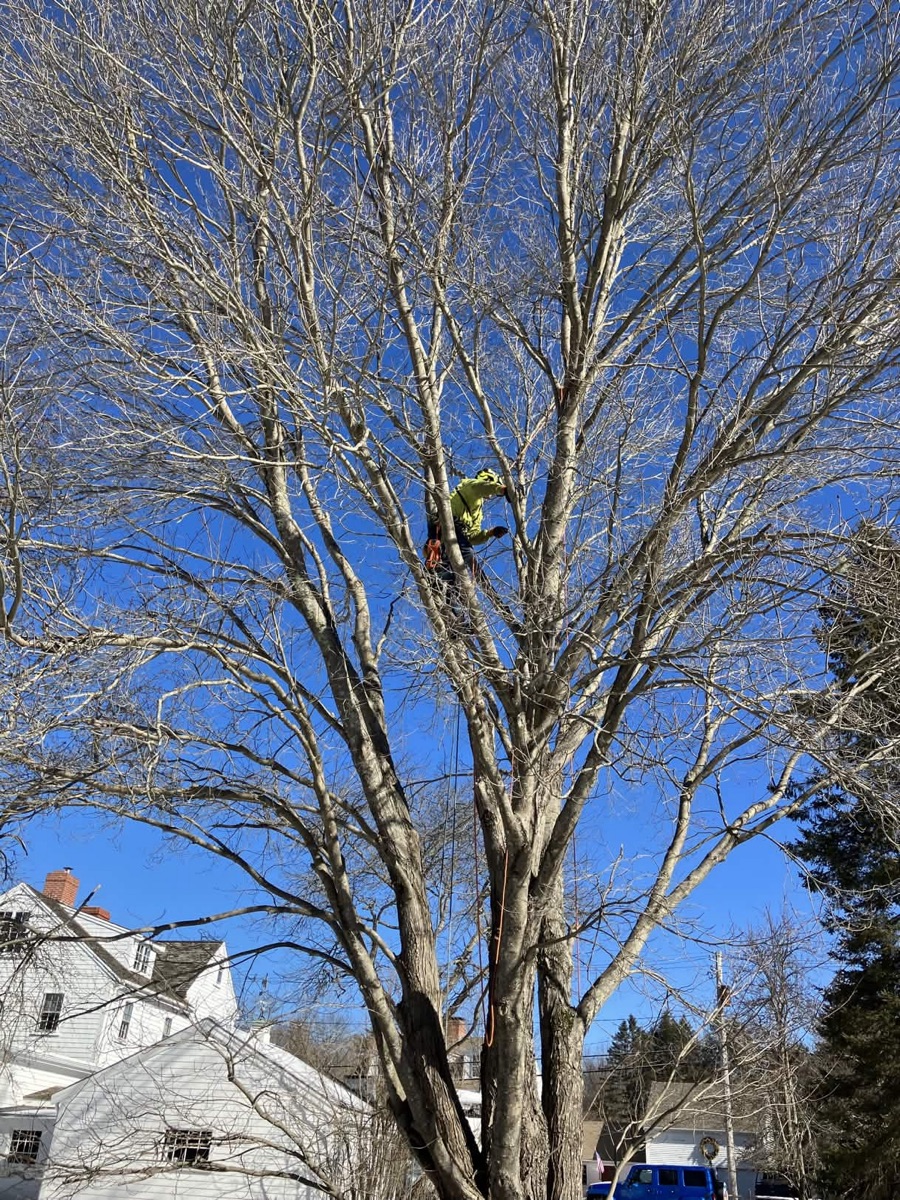
# Professional Tree Pruning in Berkley, Massachusetts
If you own property in Berkley, Massachusetts, your trees face unique pressures from the town's dense second-growth forests, Taunton River flooding, and spongy moth damage. Professional tree pruning in Berkley MA keeps your red oaks, white pines, and sycamores healthy while protecting your home from falling limbs during nor'easters. At Southeast Arborist, LLC, our ISA Certified Arborists deliver ANSI A300 pruning standards tailored to Berkley's rural wooded lots. We base our operations in Plymouth and Cohasset, serving the South Shore including your 02779 zip code with precision pruning that addresses local hazards like power line conflicts on narrow roads and encroaching forest stands around homes.
Berkley's 6,800 residents manage heavily wooded properties where mature hardwoods dominate. Since farming declined in the early 20th century, forests have regrown into thick canopies of red oak, white oak, white pine, red maple, American beech, black birch, eastern hemlock, shagbark hickory, tupelo, and massive sycamores along the Taunton River. These trees provide shade and wildlife habitat but create risks when unpruned—overcrowded branches rub against your roof in North Berkley, hazard oaks weakened by the 2016-2017 spongy moth outbreak drop limbs in Myricks, and flood-damaged tupelos lean toward driveways in the Taunton River Area.
Tree pruning in Berkley MA isn't just cosmetic; it's essential maintenance. Our crew uses aerial lift trucks and climbing gear suited to your long, narrow driveways, where large equipment often can't access. We perform crown thinning to reduce wind sail on white pines, deadwood removal from dying oaks, and crown elevation to clear Poquoy Brook Area sightlines. Homeowners in South Berkley call us after storms to restore structural integrity to American beeches battered by river winds.
Southeast Arborist follows strict safety protocols, including spotters for power line work near rural overhead lines common in Bristol County. Our ISA certification ensures every cut meets ANSI A300 Part 1 standards, promoting tree longevity and property safety. For your Berkley property, we customize pruning: vista pruning opens views of the Taunton River from waterside decks, while structural pruning guides young red maples away from foundations.
Expect visible results immediately—lighter crowns mean less storm damage risk, healthier growth on surviving oaks post-spongy moth, and cleared driveways free of low hemlock limbs. We handle everything from single hazard removals in Berkley Common to full woodland thinning on multi-acre lots. Pricing starts with a free on-site assessment, factoring in tree size, access challenges, and neighborhood specifics.
Contact Southeast Arborist today at 508-369-5009 for tree pruning in Berkley MA. Our South Shore team arrives promptly, equipped for your terrain, delivering pruning that safeguards your investment amid Berkley's evolving forest challenges. Whether you're in the dense interior woods or along the riparian corridor, professional care from certified experts prevents costly emergencies.
Why Berkley Properties Need Tree Pruning
Your Berkley property sits in Bristol County's rural heart, where 80% of land covers in second-growth forest regenerated after early 20th-century farm abandonment. This creates specific tree pruning needs driven by local climate, soils, species, and hazards. Berkley's humid continental climate brings 45-50 inches of annual rain, heavy snow loads up to 30 inches, and frequent nor'easters with 50+ mph winds. Sandy loams along the Taunton River hold moisture for sycamores and tupelos but flood repeatedly, weakening roots. Upland clay-loams stress red oaks and white pines during summer droughts, exacerbating spongy moth vulnerability.
Spongy moth outbreaks from 2016-2017 killed or declined thousands of oaks across Berkley, leaving hazard trees that drop branches years later. In North Berkley and Myricks, weakened red oaks and white oaks now pose risks to homes and power lines. Dense forest encroachment crowds residential lots—black birch and eastern hemlock saplings invade yards in Berkley Common, blocking sunlight and creating fire ladders. Taunton River flooding erodes banks in the Taunton River Area and Poquoy Brook Area, toppling river birches and leaning shagbark hickories toward properties.
Common tree species demand targeted pruning. Red oaks grow 80-100 feet tall with broad crowns; unpruned, they rub against South Berkley roofs during winds. White pines, reaching 120 feet, shed heavy branches under snow, endangering narrow rural roads to Taunton and Raynham. Red maples sucker aggressively in wet soils, requiring removal to prevent girdling. American beech smooth bark hides decay from spongy moth; deadwood pruning exposes issues early. Black birch multi-stems split in storms without thinning. Eastern hemlock shades brooks but drops limbs on flood-prone paths. Shagbark hickory's brittle wood snaps unpredictably. Tupelo's swollen bases crack in floods, needing reduction cuts. Sycamores along the river grow to 100 feet with massive limbs overhanging decks—pruning elevates crowns safely.
Rural power line vulnerability amplifies needs; overhead lines snake through wooded driveways, sparking outages when unpruned limbs contact them in Bridgewater-bordering areas. Limited equipment access on narrow roads like those in Myricks demands skilled climbers over bucket trucks. Woodland management defines services here: thinning overcrowded stands maintains defensible space, especially post-spongy moth.
Practical advice for Berkley homeowners: Inspect trees quarterly for codominant stems on young red maples—these V-crotches fail under snow. Check for spongy moth silk on oaks in spring; early pruning removes infested deadwood. After Taunton River floods, mark leaning tupelos for immediate elevation pruning to avert property damage. Clear 10-foot vertical clearance over driveways for white pines, reducing snag risks.
Without pruning, your trees shorten lifespan—oaks decline 20-30% faster post-outbreak, per local forestry data. Pruning boosts vigor: thinning increases diameter growth by 15-20% in hardwoods, per ISA studies. In Berkley, it prevents multimillion-dollar wildfire spread risks on large lots and cuts insurance claims from falling limbs.
Southeast Arborist's ISA Certified Arborists assess these Berkley-specific issues during free consultations, applying ANSI A300 techniques to extend tree life amid your local pressures.
Our Tree Pruning Process in Berkley
Southeast Arborist follows a meticulous, ANSI A300-compliant process for tree pruning in Berkley MA, adapted to your narrow roads, dense woods, and riverfront access limits. We start with a free on-site assessment by an ISA Certified Arborist, who evaluates your trees' health, structure, and hazards using binoculars, resistographs for internal decay in oaks, and sonic tomography for hemlocks.
Step 1: Consultation and Planning (1-2 hours). We walk your property—whether a wooded lot in North Berkley or riverfront in the Taunton River Area—mapping species like red oak, white pine, and sycamore. Discuss goals: crown thinning for wind resistance, deadwood removal for spongy moth casualties, or vista pruning for Taunton River views. We review Bristol County permitting if near wetlands and flag power line zones, coordinating with National Grid for de-energization if needed.
Step 2: Safety Setup (30 minutes). Our crew deploys traffic control on rural roads like those to Fall River, establishes exclusion zones with high-visibility barriers, and uses personal protective equipment including chainsaw chaps and helmets. Spotters monitor overhead lines, critical in power-vulnerable Myricks.
Step 3: Pre-Climb Inspection. Climbers ascend using throw lines and saddles, inspecting from treetops. For red maples, we identify included bark unions; white oaks get deadwood quantified by volume.
Step 4: Pruning Execution. We use Japanese pruning saws, Silky handsaws, and lightweight chainsaws for precision ANSI A300 cuts—never topping, which invites decay. Crown thinning removes 15-25% live foliage on dense black birches, spacing branches 12-18 inches apart. Crown elevation lifts low limbs on driveways to 14 feet, using reduction cuts on sycamores to preserve natural form. Deadwood removal targets >2-inch diameter stubs from spongy moth-killed oaks, collar cuts healing wounds. Structural pruning on young American beeches subordinates codominant leaders. Vista pruning selectively thins tupelos for river views without over-pruning.
Techniques vary by species and site: White pines get lateral reduction to shed snow loads; shagbark hickories receive hazard limb suppression. For flood-damaged eastern hemlocks in Poquoy Brook Area, restoration pruning removes broken ends at branch collars. We chip debris on-site with 20-inch drum chippers, grinding stumps if requested, and haul away via low-profile dump trucks fitting Berkley lanes.
Step 5: Cleanup and Quality Check (1 hour). Rake all areas, inspect cuts for proper angle (45 degrees outward), and apply no wound dressings—ISA standards show they trap moisture. Provide a digital report with before/after photos, pruning specs, and 1-year warranty.
Equipment suits Berkley's terrain: Teal telescoping lifts navigate tight driveways; 65-foot bucket trucks handle tall white pines; rope access for unclimbable river sycamores. All gear meets OSHA standards, with daily inspections.
Our process minimizes impact—drop zones avoid gardens, noise buffered for neighbors. In storm response, we prioritize leaning trees post-nor'easter, using port-a-wraps for rigging heavy oak limbs over homes.
This Berkley-tailored method ensures safety and science-backed results: Pruned trees withstand 30% higher wind speeds, per University of Massachusetts research. Homeowners see reduced gutter clogs from maple seeds and safer play areas.
Schedule your assessment with Southeast Arborist at 508-369-5009. Our Plymouth/Cohasset-based team brings this expertise to your door.
Common Tree Pruning Projects in Berkley Neighborhoods
Berkley neighborhoods present distinct pruning demands tied to topography, species, and hazards. In Berkley Common, central lots crowd with red oak and red maple; we thin overcrowded canopies to restore lawn sunlight, elevating crowns over porches to prevent ice dam feeders.
Myricks' rural edges feature long driveways lined by white pine and black birch. Driveway clearance pruning lifts limbs to 16 feet, thinning pines to reduce snow shedding on vehicles. Spongy moth-weakened oaks here demand deadwood removal, with suppression cuts on leaning leaders toward roads.
North Berkley's upland forests pack American beech and shagbark hickory. Woodland management thins dense stands for defensible space, subordinating beeches' multi-trunks to avert splits. Vista pruning opens fields toward Raynham.
South Berkley properties battle eastern hemlock encroachment and power lines. We perform line clearance pruning per utility specs, reducing hemlock crowns 20-30% while removing hickory deadwood near homes.
Taunton River Area homes hug ancient riparian forests with tupelo, sycamore, and river birch. Flood recovery pruning elevates flood-damaged crowns, cabling massive sycamore limbs overhanging decks. Selective thinning maintains shaded river paths.
Poquoy Brook Area sees wet-soil red maple suckering and white oak decline. Structural pruning guides maples, deadwooding oaks post-outbreak. Crown reduction on brookside hemlocks prevents stream blockages.
Across neighborhoods, storm damage response clears nor'easter debris from narrow roads to Bridgewater. Common projects include 5-10 tree thinnings on 2+ acre lots ($2,000-$5,000), hazard limb removals ($300-$800 per tree), and full crown reductions on 60-foot sycamores ($1,200+).
Southeast Arborist's ISA arborists customize for these sites, using ANSI A300 to boost health. Call 508-369-5009 for neighborhood-specific service.
Tree Pruning Costs in Berkley, MA
Tree pruning costs in Berkley MA range from $300 for a single hazard limb on a red maple to $4,000+ for woodland thinning on a 2-acre North Berkley lot. Factors include tree species, size, condition, access, and scope. A 40-foot white oak deadwood removal runs $450-$750; crown thinning a 70-foot sycamore along Taunton River hits $1,200-$2,000 due to height and rigging.
Access challenges drive 20-40% premiums—narrow Myricks driveways add $200 for rope access over trucks. Spongy moth oaks require extra inspection time, bumping fees 15%. Riverfront in Poquoy Brook Area incurs flood zone surcharges ($150) for erosion mats.
Pricing tiers: Basic deadwood/hazard removal ($250-$500/tree), crown thinning/elevation ($400-$1,000), structural/restoration ($500-$1,500), full woodland management ($1,500-$6,000 per acre). Travel within South Shore stays flat; Bristol County perks include no fuel surcharges.
Southeast Arborist quotes transparently post-assessment—no surprises. ISA certification ensures value: Proper ANSI A300 pruning cuts future removal costs by 50%, averting $10,000+ emergency jobs. Insurance discounts of 5-15% follow documented work.
Compare: DIY risks fines and damage; unqualified crews violate standards, shortening tree life. Our ROI: Thinned crowns save $500/year in storm cleanup, per local claims data.
Get your free Berkley quote at 508-369-5009—affordable protection for your property.
When to Schedule Tree Pruning in Berkley
Schedule tree pruning in Berkley MA from late fall to early spring—November to March—when trees dormancy minimizes sap loss and stress. Avoid summer droughts stressing sandy loams; spring bud break delays healing.
Urgency signs demand immediate action: Cracked bark on oaks signals spongy moth decay; leaning tupelos post-Taunton flood need emergency elevation; rubbing branches on South Berkley roofs precede failures. Deadwood >25% canopy volume flags hazards.
Annual maintenance suits healthy white pines; biennial for river sycamores. Post-nor'easter, prune within 48 hours to prevent decay.
Call Southeast Arborist at 508-369-5009 now for optimal timing—slots fill fast pre-storm season.
Frequently Asked Questions About Tree Pruning in Berkley
What is ANSI A300 pruning, and why does it matter for my Berkley trees? ANSI A300 sets science-based standards for pruning cuts, branch ratios, and volumes removed. For your spongy moth oaks, it ensures collar cuts heal without decay, extending life 20+ years versus topping.
How much does tree pruning cost in Berkley neighborhoods like Myricks? $300-$1,500 per tree, based on size/access. Myricks driveways add $200; free quotes from Southeast Arborist detail factors.
When is the best time for tree pruning in Berkley MA? Dormant season (Nov-Mar) for red maples/white pines. Urgent for hazard limbs anytime.
Will pruning hurt my mature sycamore along the Taunton River? No—ISA arborists limit removal to 25% canopy, using reduction cuts that promote strong regrowth on flood-stressed trees.
Do you handle power line pruning near North Berkley roads? Yes, with National Grid coordination. We clear 10-foot radii safely.
How do I spot spongy moth damage needing pruning on my oaks? Look for defoliation skeletons, dieback >20% canopy, or basal shoots. Early deadwooding prevents branch drop.
Can you prune on large wooded lots in Berkley Common? Absolutely—thinning services create defensible space, removing declining black birches selectively.
What's the difference between thinning and topping? Thinning spaces branches naturally (ANSI-approved); topping stubs invite decay/pests, illegal for certified crews.
Tree Pruning Throughout Berkley
Southeast Arborist provides tree pruning across all Berkley neighborhoods—Berkley Common, Myricks, North Berkley, South Berkley, Taunton River Area, Poquoy Brook Area—and nearby Taunton, Raynham, Bridgewater, Fall River. From Plymouth/Cohasset, we reach your 02779 properties same-week.
Our ISA Certified Arborists tackle local issues with ANSI A300 precision. Call 508-369-5009 for service—free assessments ensure your trees thrive amid Berkley's forests.