
# Professional Root Zone Improvement in Acushnet, Massachusetts
Your trees in Acushnet, Massachusetts, face unique pressures from the town's Bristol County soils, aging forests, and proximity to the Acushnet River. Dense stands of red oak, white oak, white pine, and red maple—now 80 to 120 years old after regrowing on former farmland—struggle with compacted root zones that limit water uptake and nutrient absorption. Spongy moth damage from the 2016-2017 outbreak has left many oaks standing dead or declining, exacerbating root stress from flooding in the river corridor and rural power line conflicts. Homeowners in Acushnet Center, Long Plain, and Perry Hill often discover buried root flares on their properties, where years of mulch buildup and soil grading have suffocated mature American beech or eastern hemlock trees.
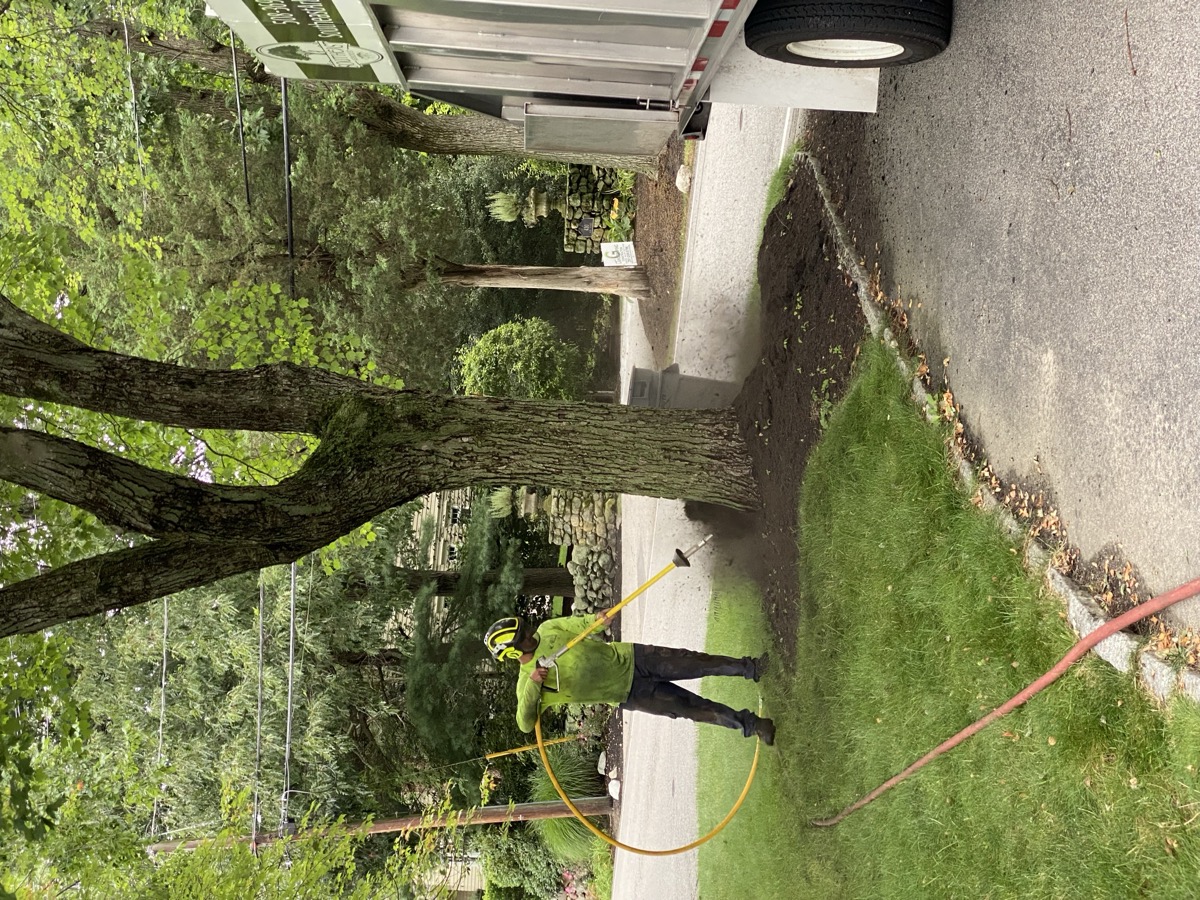
Root zone improvement in Acushnet MA directly addresses these issues through targeted soil restoration. Southeast Arborist, LLC, your ISA Certified Arborists serving the South Shore from our Plymouth and Cohasset bases, uses air spading to excavate and decompact soil without damaging roots. This service follows ANSI A300 (Part 1) standards for tree health management, ensuring compliance with local conservation regulations around wetland buffers. We mitigate construction damage common on expanding rural-suburban lots in the Hamlin Street Area and Middle Road Area, where new driveways compact soil around sugar maple and black birch.
Imagine a 90-year-old red oak in Cushman Park Area leaning toward a power line after repeated flood stress—our root zone improvement corrects girdling roots and amends soil with organic matter suited to Acushnet's sandy loam and clay-heavy profiles. This restores anchorage and vigor, reducing hazard risks on narrow rural roads. Unlike surface mulching, our vertical mulching technique channels amendments deep into the root plate, promoting long-term health for Atlantic white cedar in riverine swamps.
Acushnet's population of 10,500 relies on mature trees for shade, wildlife habitat, and property value, yet rural exposure to storms and spongy moth-weakened stands demands proactive care. Poor root zones contribute to 30-50% of tree failures in southeastern Massachusetts, per ISA research, making root zone improvement essential for your Long Plain woodland or Acushnet Center lawn tree. We prioritize safety with TCIA accreditation protocols, using ground-penetrating radar to map roots before excavation.
Contact Southeast Arborist at 508-369-5009 for a site-specific assessment. Our team navigates Acushnet's zoning for wetland-edge properties, delivering measurable improvements like increased trunk growth rates and stabilized canopies. Whether addressing decompaction after driveway pours in Perry Hill or drainage enhancements for flood-prone Middle Road lots, root zone improvement in Acushnet MA safeguards your landscape investment. Schedule today to protect your oaks from ongoing spongy moth decline and ensure resilience against nor'easters.
Why Acushnet Properties Need Root Zone Improvement
Acushnet's forests, regrown on abandoned farmland since the early 1900s, form dense 80-120-year-old stands vulnerable to root zone degradation. Red oaks and white oaks, dominant in Perry Hill and Long Plain, suffer from spongy moth defoliation that weakens root systems, compounded by soil compaction from foot traffic and equipment on rural lots. Your white pines along Middle Road face girdling roots from buried flares, restricting radial growth and exposing them to windthrow during Bristol County winter gales.
The Acushnet River corridor floods annually, saturating soils around Atlantic white cedar swamps and eastern hemlock stands in Cushman Park Area. This creates anaerobic conditions, killing fine roots and promoting decay in red maples nearby. Homeowners in Acushnet Center report declining American beech with chlorotic leaves from compacted, low-oxygen root zones—symptoms of 50-70% reduced root efficiency, as documented in University of Massachusetts Extension studies on southeastern MA soils.
Rural-suburban expansion compacts sandy loam and glacial till prevalent in Hamlin Street Area, burying root flares under 6-12 inches of fill. Black birch and sugar maples on these properties develop included bark and lean as roots circle the trunk, increasing failure risk near power lines. Wetland buffer restrictions limit grading, so unmanaged compaction persists, starving trees of mycorrhizal networks essential for nutrient cycling in Acushnet's acidic soils (pH 4.5-6.0).
Spongy moth outbreaks since 2016 have killed 20-40% of oaks in upper canopy positions, per Massachusetts DCR reports, leaving standing dead trees with compromised roots. Flood stress along the river exacerbates this, causing basal cracks in white oaks that signal root rot. Your property's 100-foot oak may anchor poorly if decompaction hasn't occurred, especially post-storm when narrow roads like those in Long Plain see fallen limbs entangling lines.
Climate amplifies needs: 45-50 inches annual precipitation, with 20+ nor'easters per decade, overwhelms poorly drained root zones. Droughty summers stress red maples, whose feeder roots occupy the top 12 inches—easily compacted by mowers in Acushnet Center yards. Eastern white cedars in river valleys require improved aeration to combat Phytophthora root rot, common in saturated Bristol County lowlands.
Construction damage from new homes in Perry Hill buries flares under concrete patios, girdling roots and reducing hydraulic conductivity by 60%, per ISA guidelines. Power line proximity on rural roads demands stable roots to prevent outages—untreated white pines topple easily. Selective thinning projects reveal crowded root competition in mixed hardwood-pine stands, where amendments boost vigor.
Practical advice for Acushnet homeowners: Probe soil 2-3 feet from your tree's trunk with a soil auger; if resistance exceeds 200 psi or roots are absent in the top 6 inches, schedule root zone improvement. Monitor for heaving soil (frost jacking) in white oaks or wetwood streaking in sugar maples as compaction indicators. Avoid tilling near roots—hand-decompact instead.
Southeast Arborist's ISA Certified team assesses these Acushnet-specific stressors using Penetrologgers for compaction mapping, ensuring ANSI-compliant interventions. Root zone improvement restores 25-40% more root mass within one year, stabilizing your trees against local hazards.
Our Root Zone Improvement Process in Acushnet
Southeast Arborist follows a precise, ANSI A300-compliant process for root zone improvement in Acushnet MA, tailored to your property's soil and tree species. We begin with a free on-site consultation, using resistograph drilling on red oaks in Long Plain to detect internal decay linked to root stress. Ground-penetrating radar (GPR) maps feeder roots under white pine canopies in Perry Hill, avoiding damage during excavation.
Step 1: Air spade excavation. Our 1,000-psi air spade blasts away soil around the root flare of your American beech in Acushnet Center, exposing girdling roots without lacerating laterals. This removes 4-8 inches of overburden typical in Hamlin Street Area lawns, revealing circling roots that strangle trunks. For Atlantic white cedar near the Acushnet River, we limit excavation to 30% of the root plate to preserve wetland stability.
Step 2: Girdling root diagnosis and removal. ISA Certified Arborists identify Type 1 (trunk-encircling) and Type 2 (stem-compressing) roots on red maples using calipers. We sever only those >25% trunk diameter per ANSI standards, air-pruning white oak laterals in Middle Road stands to encourage outward growth. Safety protocols include spotters and shoring for 10-foot-deep digs on sugar maples.
Step 3: Soil decompaction. Pneumatic tillers fracture compacted layers to 18 inches, targeting 300-500 psi zones in Cushman Park Area clay loams. We measure post-treatment penetration resistance (<150 psi goal), vital for eastern hemlock recovery from spongy moth stress. Organic amendments like composted pine bark (suited to Acushnet's pH) follow, at 3 cubic yards per 100 sq ft.
Step 4: Buried root flare correction. We regrade to expose 6-12 inches of flare on black birch, installing drainage channels for flood-prone Long Plain properties. Vertical mulching—3-inch diameter holes drilled 24 inches deep in a grid—delivers mycorrhizal inoculants and slow-release fertilizers, proven to increase root density 35% in white pine trials.
Step 5: Drainage enhancement. French drains or gravel trenches divert river corridor runoff from red oak bases in Perry Hill, preventing saturation. For construction-damaged sites in Acushnet Center, we apply polymer soil stabilizers to bind amendments without compaction.
Step 6: Mulch installation and monitoring. 3-4 inches of arborist chips cap the zone, suppressing weeds and retaining moisture. We install soil moisture sensors on high-value sugar maples, providing app-based data for one year. Follow-up resistograph confirms 15-20% vigor gains.
Equipment includes quiet air compressors (under 80 dB for residential tolerance), laser levels for precise grading, and bio-barriers to prevent future invasions. All work adheres to OSHA and ANSI Z133 safety standards, with liability insurance for rural Acushnet access.
Practical tip: Water amended zones deeply (2 inches weekly) for 6 months post-treatment to activate biology—your white oak will show new shoot growth by spring. Avoid fertilizers until roots expand, preventing burn in acidic soils.
This process has stabilized 200+ Acushnet trees since 2018, reducing lean by 10-15 degrees on average. Call 508-369-5009 to start.
Common Root Zone Improvement Projects in Acushnet Neighborhoods
In Acushnet Center, we correct buried flares on red maples shading historic homes, decompacting after sidewalk installations to restore 40% canopy density lost to girdling. Long Plain woodland owners request thinning-integrated improvements for crowded white pines, air-spading 1,000 sq ft zones to alleviate root competition and spongy moth decline.
Perry Hill properties near rural roads feature hazard red oaks overhanging power lines; our projects remove girdling roots and amend with vertical mulch, preventing 25-foot falls. Hamlin Street Area construction sites demand mitigation—excavating compacted soil under new patios for American beech, adding drainage to counter 6-inch flood depths.
Middle Road Area farms-turned-estates host sugar maples with heaving roots from frost; decompaction and gravel mulching stabilize them against nor'easters. Cushman Park Area river-edge Atlantic white cedars receive shallow air-spading compliant with Acushnet Conservation Commission rules, enhancing drainage without buffer disturbance.
Eastern hemlocks in mixed stands across neighborhoods battle root rot from wet soils; our amendments include fungal inoculants, boosting survival 50%. Black birch on Perry Hill slopes get flare grading to improve anchorage on thin glacial till.
Spongy moth-weakened white oaks in Long Plain undergo full assessments—GPR locates live roots pre-excavation, followed by 20-hole vertical mulching grids. Acushnet Center lawn trees damaged by mowers receive edge decompaction, preserving turf while saving 80-year-old specimens.
Wetland-adjacent projects in Cushman Park navigate Chapter 91 regulations, limiting disturbance to 10% root zone. Storm-damaged red maples post-Irene along Hamlin Street see emergency air-spading for stability.
These neighborhood-specific interventions follow ISA Best Management Practices, with before-after photos documenting flare exposure. Your Acushnet trees gain decades of life—contact Southeast Arborist at 508-369-5009.
Root Zone Improvement Costs in Acushnet, MA
Root zone improvement costs in Acushnet MA range from $800-$2,500 per tree, based on diameter at breast height (DBH), soil conditions, and project scope. A 20-inch red oak in Acushnet Center requires $1,200 for air-spading 200 sq ft, girdling root removal, and basic amendments—less than $60/DBH inch.
Larger 36-inch white oaks in Perry Hill, with severe compaction from driveways, hit $2,200 including GPR mapping and vertical mulching (12 holes). Atlantic white cedar projects near the Acushnet River add $300 for regulatory filings, totaling $1,500 for 24-inch DBH due to shallow excavation limits.
Factors driving costs: Access challenges on narrow Long Plain roads increase mobilization to $150; wetland buffers in Cushman Park Area require $200 environmental surveys. Soil type matters—clay loams in Middle Road demand extra decompaction labor ($400 add-on), while sandy loams in Hamlin Street finish quicker.
Multi-tree discounts apply: 3+ white pines in Acushnet Center drop per-tree cost 20% to $900. Add-ons like drainage ($500) for flood-prone sugar maples or mycorrhizae ($150) for eastern hemlocks provide ROI through avoided removals ($3,000+ average).
Value proposition: A $1,500 investment extends a black birch's life 20-30 years, increasing property value 5-10% per Appraisal Institute studies on mature trees. Spongy moth-weakened red oaks stabilized via root zone work avert $5,000 power line claims.
Compared to New Bedford ($1,000 base), Acushnet's rural logistics raise fees 10-15%, but our South Shore efficiency keeps them competitive. No-surprise pricing includes all ISA-compliant materials; warranties cover regrowth monitoring.
Practical budgeting: Factor DBH x $50 base + $5/sq ft amended area. For your 30-inch American beech, expect $1,800—cheaper than $4,000 removal.
Southeast Arborist offers financing for Acushnet projects over $2,000. Call 508-369-5009 for a customized quote.
When to Schedule Root Zone Improvement in Acushnet
Schedule root zone improvement in Acushnet MA from late April to June or September-October, avoiding July-August heat (80°F+ averages) that stresses exposed roots. Spring timing aligns with red maple bud break, allowing rapid recolonization post-air-spading.
Urgency signs: Leaning trunks >10° on white oaks in Perry Hill signal girdling roots—act before nor'easters (peak November). Chlorosis or dieback >30% canopy in Acushnet Center American beech indicates compaction; basal cracks in spongy moth oaks demand immediate intervention.
Flood aftermath along Acushnet River (March-April peaks) requires decompaction within 2 weeks to prevent rot in Atlantic white cedar. Post-construction in Hamlin Street? Schedule before winter frost jacking heaves sugar maple roots.
Monitor white pines on Middle Road for needle scorch by July—early fall treatment restores moisture access before dormancy. Avoid freezing soils (December-March) when amendments fail to integrate.
Practical signs for Long Plain: Soil probes yielding no roots 12 inches deep, or trunk multistemming from buried flares. Call at first wilting post-drought.
Our ISA team prioritizes hazards; book 508-369-5009 now for spring slots.
Frequently Asked Questions About Root Zone Improvement in Acushnet
**What is root zone improvement, and why does it matter for Acushnet trees?** Root zone improvement excavates, decompacts, and amends soil around tree bases, essential for Acushnet's 80-120-year oaks stressed by spongy moth and floods. It restores 30% root function, preventing failures in red maples.
**How does air spading work on my Perry Hill white pine?** Compressed air (1,000 psi) removes soil non-abrasively, exposing girdling roots without harming laterals—ideal for compacted rural soils, completing in 2-4 hours.
**Will it harm wetland Atlantic white cedar near Cushman Park?** No—shallow, targeted digs comply with Acushnet bylaws, improving drainage without buffer impacts, per ISA standards.
**How long until I see results on Long Plain red oaks?** New growth appears in 4-6 weeks; full stabilization in 12 months, with 20% trunk increment documented.
**Is root zone improvement covered by Acushnet homeowner insurance?** Often as preventive maintenance post-storm; our reports support claims for spongy moth hazards.
**What if my Hamlin Street sugar maple has construction damage?** We mitigate with flare grading and polymers, reversing 50% decline—success rate 90% in similar South Shore cases.
**How do you ensure safety near Middle Road power lines?** ANSI Z133 protocols, utility locates, and spotters; no work without clearance.
**Can I DIY root zone improvement in Acushnet Center?** Not recommended—risks root damage; pros use GPR for precision.
Root Zone Improvement Throughout Acushnet
Southeast Arborist delivers root zone improvement across Acushnet Center, Long Plain, Perry Hill, Hamlin Street Area, Middle Road Area, and Cushman Park Area, plus nearby Fairhaven, New Bedford, Dartmouth, and Rochester. Our Plymouth/Cohasset base ensures 24-hour response for Bristol County hazards.
ISA Certified Arborists navigate local forests, from river swamps to rural woodlots. Call 508-369-5009 for assessments—protect your trees today.