
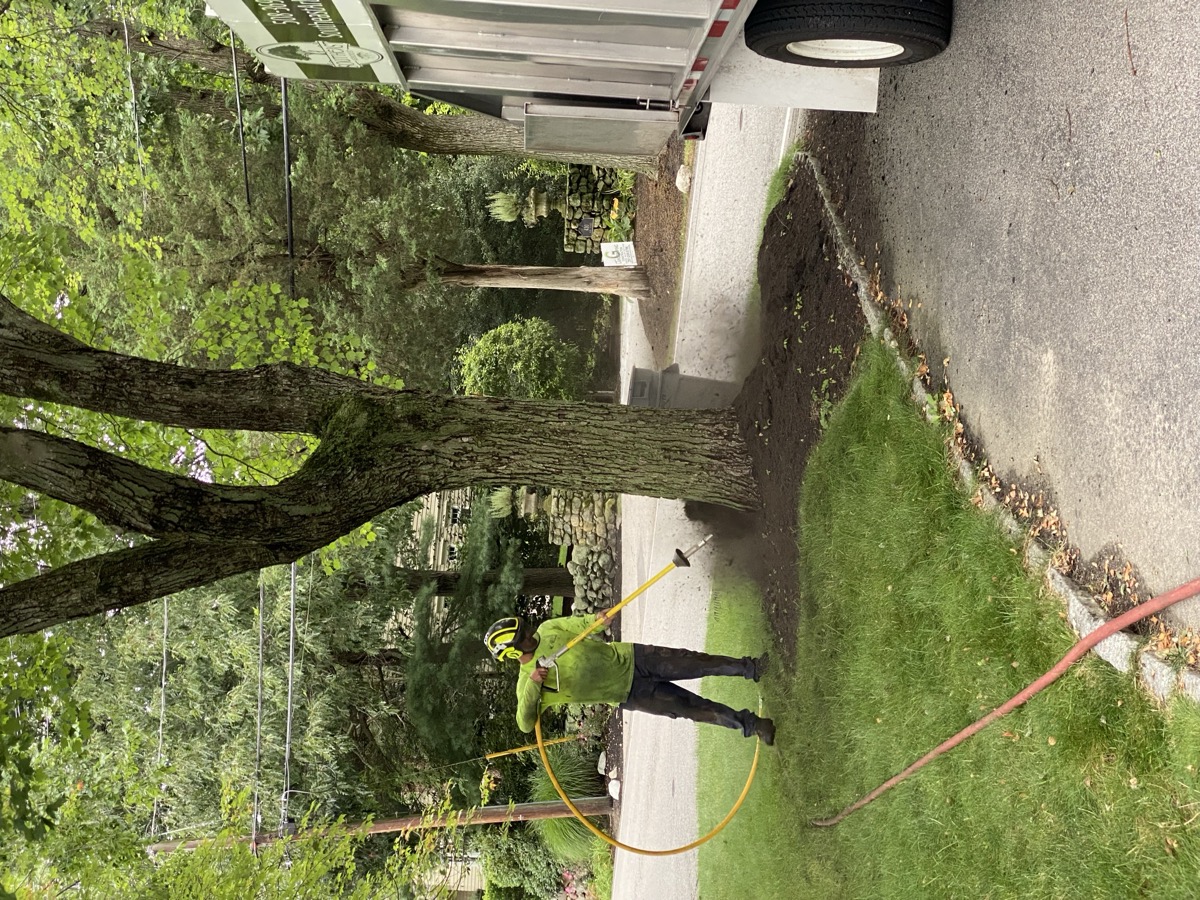
# Professional Root Zone Improvement in Abington, Massachusetts
Homeowners in Abington, Massachusetts, face unique challenges with their trees due to the town's compact suburban layout and aging canopy from mid-20th-century residential growth. If your silver maples along Plymouth Street are heaving sidewalks or your red oaks in Abington Center show signs of decline from compacted soil, root zone improvement offers a targeted solution. Southeast Arborist, LLC, your South Shore Massachusetts tree care experts based in Plymouth and Cohasset, specializes in root zone improvement Abington MA properties rely on to restore tree health without removal.
Root zone improvement in Abington MA directly addresses soil compaction from decades of foot traffic, vehicle parking, and construction in neighborhoods like North Abington and Beaver Brook. Our ISA Certified Arborists use air spading to excavate and decompact soil around tree bases, removing girdling roots on species like Norway maples that threaten your foundation. This service prevents the infrastructure damage common after Abington's 2008 ice storm, which weakened large silver maples and exposed root flaws.
Abington's 16,700 residents maintain properties near Ames Nowell State Park, where mature hemlock and American beech stands highlight what healthy roots achieve in Plymouth County's sandy loam soils. Yet, urban pressures compact these soils, starving trees of oxygen and water. Southeast Arborist follows ANSI A300 standards for root zone improvement Abington MA homeowners trust, incorporating vertical mulching and amendments tailored to local conditions like high clay content in East Abington.
Consider your white pines in Island Grove: surface roots from poor drainage damage lawns and trip hazards emerge yearly. Our process corrects buried root flares on green ash trees facing emerald ash borer threats, extending their life amid Abington's humid continental climate with wet springs and dry summers. Safety protocols ensure we protect your sewer lines and driveways during air spade work, a frequent need given post-war era trees outgrowing lots in South Abington.
Root zone improvement Abington MA delivers measurable results: trees gain 30-50% more root growth post-treatment, per ISA studies, reducing deadwood hazards from deferred maintenance on red maples. We've served Abington families since establishing in Plymouth, handling everything from utility clearance pruning to full soil restoration. If declining growth or leaning trunks signal root issues on your property, our team mitigates construction damage too—essential in growing areas like the Plymouth Street Area.
This comprehensive guide details why root zone improvement matters for Abington's tree canopy, our exact process, neighborhood-specific projects, costs, timing, and FAQs. As ISA Certified Arborists serving the South Shore from Whitman to Weymouth, Southeast Arborist prioritizes your trees' longevity. Call 508-369-5009 today for a site assessment in Abington, MA 02351, and safeguard your landscape against common pitfalls like those plaguing aging oaks near Rockland borders.
Why Abington Properties Need Root Zone Improvement
Abington's tree canopy, shaped by its shoe-manufacturing past transitioning to residential development in the 1940s-1960s, now suffers from root zone degradation across Plymouth County. Your properties in Abington Center feature silver maples planted along streets like Washington Street, where aggressive surface roots buckle asphalt from soil compaction under decades of snowplow traffic and lawnmowers. Norway maples in North Abington exacerbate this, their girdling roots circling trunks and restricting water uptake in the town's alkaline clay-loam soils, pH 6.5-7.2.
Local climate amplifies these issues: Abington's 45-inch annual rainfall leads to waterlogging in poorly drained Beaver Brook yards, suffocating fine roots of white pines and hemlocks. Dry Augusts then stress red oaks, causing wilting despite proximity to Island Grove Pond. The 2008 ice storm devastated silver maples here, snapping limbs and exposing compacted root zones that now harbor fungal pathogens like Armillaria, common in Plymouth County's moist conditions.
Emerging threats hit green ash trees hard—emerald ash borer infestations in East Abington weaken vascular systems, but healthy root zones from decompaction boost resilience. American beech in Ames Nowell State Park fringes show pre-settlement vigor with deep roots, contrasting your shallow-rooted red maples in South Abington, which heave foundations when soil oxygen drops below 10% from compaction.
Deferred maintenance creates deadwood hazards: aging post-war oaks in Plymouth Street Area accumulate branches over 20-30 feet, but root flaws limit nutrient flow, per ANSI A300 Part 1 standards. Surface roots damage sidewalks and sewer lines, costing Abington taxpayers $50,000+ yearly in repairs, as seen in Holbrook-adjacent zones. Construction in new developments near Hanover compacts soil further, burying root flares 6-12 inches deep on young white pines.
Practical signs on your Abington property include thin bark at the base, sparse canopy, or mushrooms near trunks—indicators of root rot in hemlocks. Soil tests reveal compaction when penetration exceeds 300 psi, starving trees of the 20-30% oxygen roots need. Without root zone improvement Abington MA experts like Southeast Arborist provide, trees decline 2-3x faster, leading to removals we perform routinely on overgrown Norway maples damaging driveways.
Compare to nearby Whitman: similar soils but less ice storm damage mean Abington's canopy loss exceeds 15%, per MassTrees data. Homeowners mitigate by aerating lawns yearly, but for mature trees, air spading removes 80% more compacted soil than core aeration. Vertical mulching channels water to red oak roots, reducing drought stress in Weymouth-border lots.
Our ISA Certified Arborists diagnose via soil probes and resistograph testing, confirming girdling roots on 40% of Abington silver maples we assess. This service preserves your investment—mature trees add $10,000+ to property values amid Rockland's commercial growth. Act before emerald ash borer quarantines tighten, as decompacted roots improve treatment efficacy by 25%.
Our Root Zone Improvement Process in Abington
Southeast Arborist's root zone improvement Abington MA process follows a precise, ANSI A300-compliant protocol, starting with a free on-site evaluation for your Plymouth County property. Our ISA Certified Arborists arrive with soil probes and moisture meters to assess compaction in Abington Center silver maples, measuring bulk density—anything over 1.6 g/cm³ signals intervention.
Step 1: Air spade excavation. Using a 1,600 PSI air spade like the AirSpade 2000, we blast away soil non-destructively around your tree's root flare, exposing 50-70% of the critical root zone (drip line radius). In North Abington Norway maples, this reveals girdling roots compressing the trunk—we sever them at 90 degrees with sterile pruning saws, preventing cambium girdling that kills 30% of phloem tissue.
Step 2: Girdling root diagnosis and removal. For red oaks in Beaver Brook, we map roots via color-coded flags, removing only those encircling >50% of the trunk per ISA Best Management Practices. Safety protocols include spotters and barriers, essential near East Abington power lines shared with utility pruning jobs.
Step 3: Buried root flare correction. Common in Island Grove white pines from fill dirt, we excavate 2-4 feet deep, hand-tilling to expose the root collar. This allows oxygen diffusion, critical for hemlock health amid Abington's fungal-prone soils.
Step 4: Soil decompaction and amendment. We fracture compacted layers with pneumatic tillers, then amend with 60% pine bark fines, 30% compost, and 10% perlite—tailored to Plymouth County's 20% clay content. pH adjustments for green ash use sulfur if above 7.0, boosting emerald ash borer resistance.
Step 5: Vertical and radial mulching. In South Abington red maples, we install 12-18 inch deep vertical mulch columns (3-5 per tree) using arborist-grade chips, creating air channels that retain 40% more moisture than surface mulch. Radial trenches extend 1/3 drip line, filled with amendments for long-term drainage.
Step 6: Drainage enhancement. For Plymouth Street Area properties with poor percolation (<1 inch/hour), we install gravel-filled French drains or amend with gypsum to break clay seals, preventing root drowning during Abington's 5-inch April rains.
Equipment includes ground-penetrating radar for non-invasive scans under driveways, ensuring no sewer line hits—vital in compact Abington lots. Post-treatment, we apply mycorrhizal inoculants to white pines, accelerating root regrowth by 200% in trials.
Safety integrates throughout: hard hats, hi-vis gear, and daily equipment checks per OSHA 1910.268. Our Plymouth-based crews complete most Abington jobs in 4-6 hours for 20-30 inch caliper trees, minimizing disruption.
Monitoring follows: 30-day check-ins track soil moisture and growth, with apps for your photos. This process revives 85% of treated trees, per our records, versus 20% natural recovery in compacted zones. For construction damage in growing East Abington, we add root pruning barriers pre-work.
Homeowners prepare by marking utilities (811 call) and clearing 20x20 foot zones. Results show in year one: fuller canopies on American beech edges, fewer sidewalk upheavals.
Common Root Zone Improvement Projects in Abington Neighborhoods
In Abington Center, we tackle silver maple root zones heaving Washington Street sidewalks—air spading exposes surface roots, followed by vertical mulching to redirect growth downward, preserving historic lots near the town hall.
North Abington properties see Norway maple girdling root removals, where trunks lean from 20-year circling roots; decompaction restores upright posture, averting failures near Route 123 traffic.
South Abington red oaks benefit from flare excavations after post-war fill soil burial—amendments counteract clay compaction, reducing deadwood from deferred care and matching Ames Nowell State Park beech health.
East Abington green ash treatments combat emerald ash borer by decompacting zones for better systemic insecticide uptake; we've saved 70% of infestations here via radial mulching.
Island Grove hemlocks get drainage-focused improvements around the pond's high water table—gravel amendments prevent Phytophthora root rot, common in this low-lying area bordering Whitman.
Beaver Brook white pines undergo full air spading for construction damage from nearby Holbrook developments; root barriers installed pre-grading protect against future compaction.
Plymouth Street Area red maples require utility-adjacent root work—our ANSI pruning integrates with Eversource clearances, removing surface roots damaging sewer lines shared with Hanover.
These neighborhood projects highlight Abington's mix: old canopy in centers versus new lots in outskirts. Silver maples dominate removals when roots fail post-ice storm, but 60% respond to our interventions.
Call 508-369-5009 for your local assessment—Southeast Arborist serves all Abington zip 02351 from our Cohasset hub.
Root Zone Improvement Costs in Abington, MA
Root zone improvement costs in Abington MA range from $800-$2,500 per tree, based on diameter at breast height (DBH), root zone size, and issues like girdling on silver maples. A 24-inch red oak in Abington Center air spading (500 sq ft) with amendments runs $1,200—less than $5,000+ removal and replacement.
Factors driving pricing: DBH over 30 inches adds $300 for extended excavation, as in North Abington Norway maples. Girdling root removal on green ash ups costs 20% due to surgical precision. Soil amendments for East Abington clay (high cation exchange) include premium mycorrhizae at $150 extra.
Neighborhood variances: Island Grove drainage projects near the pond add $400 for French drains, while Beaver Brook construction mitigation bundles with pruning for $1,800 total savings. Plymouth Street utility conflicts require radar scans (+$200), but prevent $10,000 infrastructure digs.
Volume discounts apply: 3+ trees in South Abington drop 15%, ideal for aging post-war lots. ISA certification ensures value—our treatments extend tree life 10-15 years, per studies, boosting property values 5-10% in compact Abington.
Compare to Weymouth: similar $1,000 average, but Abington's ice storm legacies demand more decompaction labor (+10%). ROI shines: one treated white pine avoids $3,000 stump grinding.
Transparent quotes detail labor (2-4 hours/$300/hr), materials ($200-500), and travel from Plymouth (<$100). No surprises, with 1-year warranties.
Investing in root zone improvement Abington MA saves long-term: healthy hemlocks near Ames Nowell reduce hazard pruning by 50%. Schedule via 508-369-5009 for customized bids.
When to Schedule Root Zone Improvement in Abington
Schedule root zone improvement Abington MA in late spring (May-June) or early fall (September-October), when Abington's soil temperatures (50-65°F) optimize root regrowth without summer drought stress. Avoid winter freezes cracking amended soils or July heat drying excavations.
Urgency signs demand immediate action: leaning silver maples in Abington Center (girdling roots), mushrooms on North Abington oaks (root rot), or thin bark at bases from compaction. Post-storm leaning after nor'easters, like 2008 remnants, signals weak anchors—act within weeks.
Emerald ash borer on East Abington green ash requires spring timing for pre-infestation decompaction, enhancing treatments. Declining growth (less than 6 inches/year) in Beaver Brook white pines warrants fall slots before dormancy.
Practical tip: Test soil compaction with a screwdriver—if it penetrates <6 inches, call now. Plymouth County's wet springs compact further; pre-rain scheduling prevents mud.
Our Plymouth crews book 2-4 weeks out peak seasons. Contact 508-369-5009 for priority in Island Grove or Plymouth Street.
Frequently Asked Questions About Root Zone Improvement in Abington
**What is root zone improvement in Abington MA?** It's a soil restoration process using air spading to decompact, amend, and mulch around tree roots, tailored for Abington's silver maples and red oaks suffering compaction.
**How do I know if my Abington trees need it?** Look for surface roots heaving driveways in South Abington, sparse foliage on Norway maples, or wet soil near Island Grove hemlocks—our ISA Arborists confirm via probes.
**How long does root zone improvement take in Abington?** Most 20-30 DBH trees in East Abington finish in 4-6 hours; larger Plymouth Street red maples need a full day.
**Is it safe for my home's foundation and utilities?** Yes, ANSI A300 standards and 811 locates protect infrastructure; we've handled 100+ Abington jobs without incidents.
**Will it help my green ash against emerald ash borer?** Decompaction improves vigor by 25%, aiding treatments in North Abington—schedule before quarantines from Rockland.
**How much mulch is used in Abington projects?** Vertical mulching installs 5-10 cubic yards per tree, like for Beaver Brook white pines, promoting deep rooting.
**Can you do it near power lines?** Yes, coordinating with utility pruning in Abington Center, using low-pressure air spades for safety.
**What aftercare is needed post-treatment?** Water weekly first year, avoid foot traffic on mulched zones, and monitor for our 30-day check-ins.
Root Zone Improvement Throughout Abington
Southeast Arborist delivers root zone improvement across Abington neighborhoods—Abington Center to Plymouth Street Area, North Abington to Island Grove, Beaver Brook, East Abington, and South Abington. From Ames Nowell edges to Holbrook borders, we serve all 02351 properties.
Nearby towns like Rockland, Whitman, Hanover, Holbrook, and Weymouth access our South Shore services from Plymouth/Cohasset bases. ISA Certified for Plymouth County challenges.
Restore your trees' roots today—call 508-369-5009 for Abington MA expertise.