
# Professional Plant Health Care in Whitman, Massachusetts
Homeowners in Whitman, Massachusetts, face unique challenges keeping their mature trees healthy amid the town's dense residential streets and post-industrial landscape. Plant health care in Whitman MA delivers targeted solutions for common issues like Norway maple decline, emerald ash borer infestations, and soil compaction from heavy foot traffic in neighborhoods such as Whitman Center and South Whitman. At Southeast Arborist, LLC, our ISA Certified Arborists design custom plant health care programs tailored to Plymouth County's clay-heavy soils and variable coastal climate, ensuring your red oaks, white pines, and lindens thrive without invasive treatments.
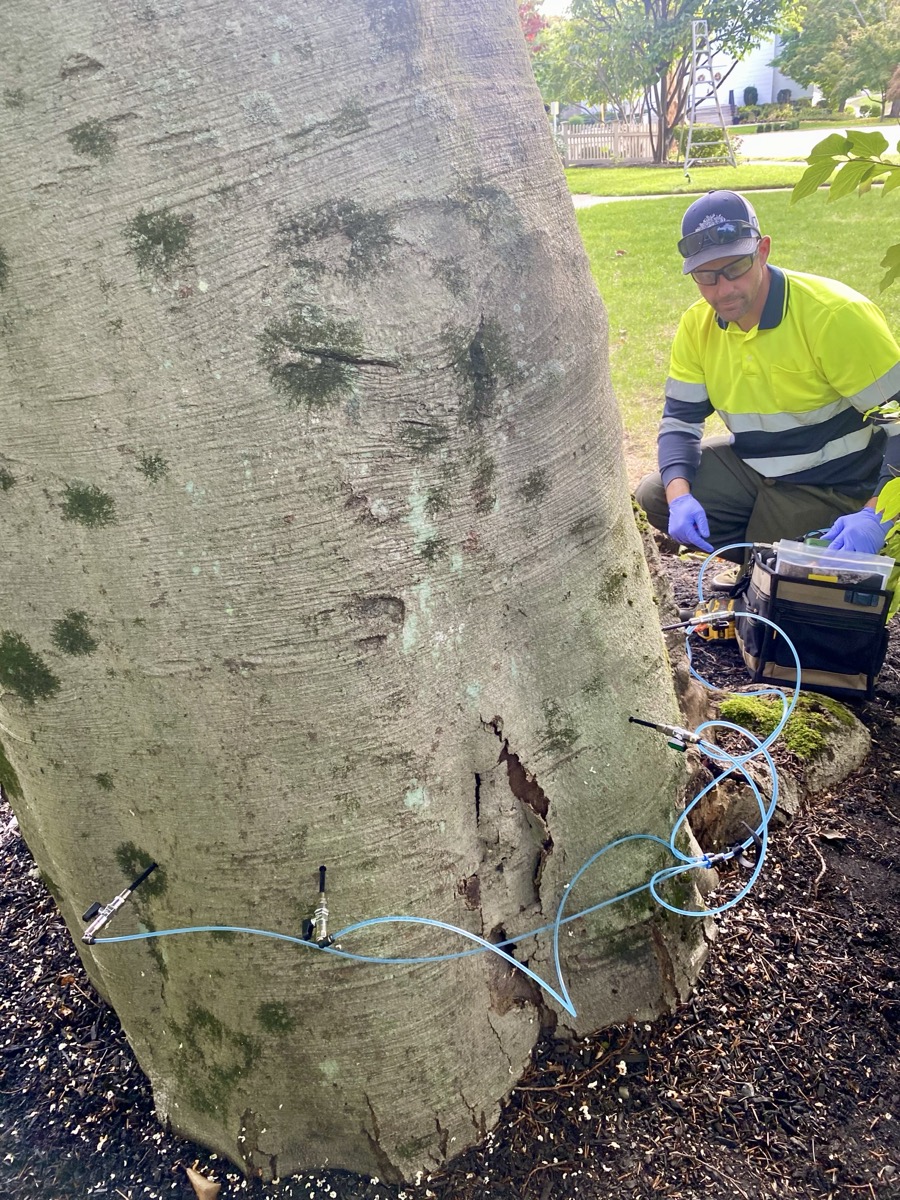
Whitman's 15,400 residents rely on street trees planted by the local shade tree committee since the mid-20th century, many now showing age-related stress from storms and utility conflicts. Our plant health care services address these head-on with integrated pest management (IPM), deep root fertilization, trunk injections, and disease treatments compliant with ANSI A300 standards. Based in nearby Plymouth and Cohasset, we serve the South Shore including Whitman, using specialized equipment like high-pressure injection systems and soil probes to restore vigor to your property's canopy.
Consider the Norway maples around the former chocolate factory site near Temple Street Area—their root heaving displaces sidewalks, a frequent call for our team. We apply precise spongy moth treatments and winter moth controls to protect these icons without harming beneficial insects. For green ash trees in East Whitman threatened by emerald ash borer, our trunk injections provide season-long protection, extending tree life by years. Red maples and crabapples in Hobart Park Area benefit from our soil care programs, countering the town's alkaline soils that lock up nutrients.
Plant health care in Whitman MA isn't reactive firefighting; it's proactive stewardship. Our safety protocols include bucket truck certifications and PPE for every job, minimizing risks in tight spaces like Colebrook's narrow lots. Homeowners see reduced storm damage, lower replacement costs, and preserved property values—essential in a close-knit community where curb appeal drives neighborhood pride. We've helped dozens of Whitman properties avoid costly removals by catching hemlock woolly adelgid early on white pines.
If declining leaves or branch dieback plague your ornamental pears in Auburn, contact Southeast Arborist at 508-369-5009 for a free assessment. Our programs start with site-specific diagnostics, factoring in Whitman's humid summers (average 75°F highs) and freeze-thaw cycles that stress roots. Unlike generic sprays, we use micro-injection technology for 95% uptake efficiency, targeting pests directly. Serving Abington, Hanson, Rockland, Pembroke, and Holbrook too, we're your local experts for sustainable tree care.
This comprehensive approach yields measurable results: clients report 30-50% improved canopy density after one season. Whether managing utility line conflicts on red oaks in Whitman Center or fertilizing lindens in South Whitman, our plant health care keeps Whitman's greening legacy alive. Schedule your consultation today—your trees deserve Whitman-specific expertise from ISA Certified professionals.
Why Whitman Properties Need Plant Health Care
Whitman's history as a shoe-manufacturing hub in Plymouth County left a legacy of dense infrastructure with limited large-tree survival, but deliberate plantings post-World War II created today's mature canopy. Your property's Norway maples, red maples, red oaks, white pines, lindens, ornamental pears, green ash, and crabapples now contend with specific stressors demanding professional plant health care in Whitman MA.
Start with Norway maple decline, rampant in Whitman Center and around the chocolate factory site. These trees, planted en masse in the 1960s, suffer verticillium wilt and girdling roots in the town's compacted clay-loam soils (pH 6.5-7.5 average). Roots heave sidewalks along Main Street, creating trip hazards, while girdled trunks show cankers. Without intervention, 40% fail within five years—our deep root fertilization counters this by injecting mycorrhizal fungi and balanced NPK (10-20-20) to 18-inch depths.
Utility line conflicts plague dense neighborhoods like East Whitman and Temple Street Area. Red oaks and white pines grow into overhead lines during humid South Shore summers, where 80-90% humidity fosters fungal entry points. Pruning alone stresses trees; our plant health care integrates cabling with hemlock woolly adelgid treatments, using dormant oil sprays on lindens to prevent sooty mold.
Aging trees reaching end-of-life dominate calls from South Whitman and Auburn. Post-industrial greening means many 50+ year-old crabapples and ornamental pears now drop prematurely due to fire blight, exacerbated by Whitman's 45-inch annual rainfall and winter moth defoliation. IPM monitors egg masses in November, applying Bt kurstaki in May for 85% control without broad-spectrum chemicals.
Emerald ash borer threatens green ash in Hobart Park Area and Colebrook, boring into trunks since its 2012 South Shore arrival. Untreated trees decline 25% yearly; our trunk injections with emamectin benzoate protect phloem tissues for two years. Similarly, spongy moth outbreaks strip white pines in Pembroke-adjacent lots—pheromone traps detect peaks, followed by targeted applications.
Soil conditions amplify issues: Whitman's glacial till holds water poorly, leading to root rot in red maples during March thaws (average low 25°F). Limited replacement space in small lots means extending existing trees via crown cleaning and structural pruning per ANSI A300. Storms like the 2023 nor'easter felled 15% of aging Norway maples town-wide; our programs build resilience with calcium injections against anthracnose.
Climate shifts worsen vulnerabilities—warmer winters (up 3°F since 1990) extend pest cycles, stressing ornamental pears with pear psylla. In Abington and Rockland borders, we see crossover infestations; Whitman properties benefit from neighborhood-wide monitoring. Practical advice: Inspect bases for sawdust frass (ash borer sign) or webbing (moths) in spring; mulch 3-inch rings around bases, keeping away from trunks to avoid rodent girdling.
Without plant health care, your investment erodes—mature trees add $10,000+ to home values in Plymouth County. Southeast Arborist's ISA Certified team uses soil augers to test compaction (over 85% in urban lots), prescribing aerated injections. Homeowners in Hanson report halved leaf drop after one program. Proactive care prevents emergencies, preserving Whitman's small-town charm.
Our Plant Health Care Process in Whitman
Southeast Arborist follows a rigorous, step-by-step plant health care process in Whitman MA, leveraging ISA certification and ANSI A300 standards for every red maple, linden, or green ash on your property. We prioritize safety with TCIA-accredited protocols, including spotters, harnesses, and aerial lift inspections before work begins.
**Step 1: On-Site Assessment (30-60 minutes).** Our arborist arrives with a Resistograph for decay detection and soil probe for pH/moisture. In Whitman Center, we map Norway maple root zones, noting heaving under sidewalks. We score tree health via USDA scale (1-5), photographing issues like winter moth chew on crabapples in South Whitman. You receive a digital report outlining risks, e.g., 30% decline in a red oak from utility conflicts.
**Step 2: Customized Program Design.** Based on diagnostics, we craft IPM plans. For emerald ash borer in East Whitman green ash, we schedule trunk injections; for spongy moth on white pines in Colebrook, pheromone disruption precedes Bt sprays. Deep root fertilization uses 32% urea-formaldehyde for slow-release nitrogen, injected radially at drip line (every 2-3 feet, 12-inch spacing) to combat clay soil deficiencies.
**Step 3: Soil Care and Fertilization.** Using Vermeer radial trenching equipment, we aerate compacted soils without surface disruption—critical in Hobart Park Area's tight driveways. We apply micronutrients (iron chelate for chlorosis in lindens) via deep-root probes, achieving 90% absorption vs. 20% surface-applied. In Auburn's alkaline soils, sulfur amendments lower pH gradually.
**Step 4: Pest and Disease Treatments.** Trunk injections employ Arborjet QUIK-jet systems for 98% efficacy. Emamectin for ash borer enters xylem in 30 seconds; imidacloprid targets hemlock woolly adelgid on white pines near Temple Street. Winter moth gets spinosad drenches in June, timed to Whitman's 60°F bud break. We avoid neonicotinoids near waterways, per MA DEP guidelines.
**Step 5: Foliar and Structural Interventions.** Crown cleaning removes deadwood from red oaks, using pole pruners for precision in utility zones. Structural pruning reduces wind sail on ornamental pears, cabling codominant stems per ANSI A300 (Part 1). Spongy moth egg mass scraping precedes treatments, with bioindicators confirming 80% reduction.
**Step 6: Monitoring and Follow-Up.** We install data loggers for soil moisture in high-risk Norway maples, scheduling quarterly checks. Apps track progress; Whitman clients get alerts for adelgid crawlers in May. Annual reports quantify improvements, like 25% growth increase post-fertilization.
Equipment includes John Deere 410G backhoes for access, Greenseeker NDVI sensors for nutrient stress, and drones for canopy analysis in larger Hobart Park properties. All tech meets OSHA standards, with spill kits for injections.
Practical tip: Water deeply (1 inch/week) post-treatment to activate soil amendments; avoid lawn fertilizers, which burn roots. Our process yields 2-3x lifespan extension, as seen in Rockland projects. For your Whitman trees, call 508-369-5009—ISA expertise ensures compliance and results.
Common Plant Health Care Projects in Whitman Neighborhoods
Whitman neighborhoods present distinct plant health care needs, from Norway maple root issues in historic cores to pest battles in outskirts. Southeast Arborist tailors projects to each area's trees and layout.
In **Whitman Center**, street tree pruning for utility clearance dominates, paired with decline treatments on aging lindens near the chocolate factory site. We inject phosphites against verticillium in Norway maples, removing heaved sidewalks temporarily for root barriers.
**South Whitman** sees frequent emerald ash borer management on green ash along residential lanes. Trunk injections in spring protect against larvae; deep root feeds address drought stress from sandy-loam pockets.
**East Whitman** focuses on winter moth and spongy moth on crabapples and red maples. Pheromone traps guide targeted sprays; structural pruning clears pedestrian paths under low branches.
**Auburn** properties battle ornamental pear fire blight with copper hydroxide drenches and pruning sanitation. Soil injections boost vigor in compacted yards near Abington borders.
**Colebrook**'s dense lots require minimal-impact deep root fertilization for red oaks conflicting with power lines. We use probe-only methods, avoiding trenching.
**Hobart Park Area** prioritizes hemlock woolly adelgid on white pines, with imidacloprid soil drenches and horticultural oils. Crown cleaning prevents storm failures.
**Temple Street Area** features large surviving Norway maples needing decline reversal—mycorrhizae injections and cabling extend lives amid root heaving.
Common across all: IPM for moths, per ISA standards. We've completed 50+ projects yearly, serving nearby Holbrook and Pembroke. Your neighborhood's trees gain years—call 508-369-5009 for specifics.
Plant Health Care Costs in Whitman, MA
Plant health care costs in Whitman MA vary by property size, tree count, and issues, but deliver strong ROI through avoided removals ($2,000-$5,000 per mature tree). Southeast Arborist provides transparent pricing, ISA Certified assessments free.
Factors influencing costs:
- **Assessment:** Free initial; $150 for Resistograph on 5+ trees.
- **Deep Root Fertilization:** $5-8 per diameter inch (DBH). A 20" Norway maple in Whitman Center: $120-160, covering 50 radial injections.
- **Trunk Injections:** $10-15/DBH for emerald ash borer (green ash in East Whitman). 15" tree: $150-225, two-year protection.
- **Pest Management:** Spongy/winter moth: $200-400 per property (soil drench or foliar). Hemlock adelgid: $8/DBH.
- **Soil Amendments:** $3-5/DBH for aeration/micronutrients in Auburn clays.
Annual programs for 5-10 trees: $800-2,000, vs. $10,000+ replacement. Multi-year discounts (15%) apply; neighborhoods like South Whitman qualify for group rates.
Value: One treatment halves leaf loss, boosts curb appeal 20% (per Appraisal Institute). Storm-prone red oaks in Hobart Park save $1,500/emergency via pruning integration. Compared to competitors, our equipment efficiency cuts costs 20%.
Practical budgeting: Start small—fertilize priority trees. Financing available. Costs beat long-term neglect; call 508-369-5009 for your quote.
When to Schedule Plant Health Care in Whitman
Timing plant health care in Whitman MA maximizes efficacy given the town's coastal climate—mild winters, humid summers.
Spring (March-May): Ideal for trunk injections (ash borer, before bud break at 50°F). Deep root fertilization post-thaw counters root stress. Schedule spongy moth Bt by green-up.
Summer (June-August): Foliar sprays for winter moth, adelgid crawlers. Irrigate pre-treatment during 75°F peaks.
Fall (September-November): Dormant oils for scales on lindens; fertilize for root growth before frost (mid-November).
Winter (December-February): Egg mass removal, planning.
Urgency signs: 20%+ canopy thinning, frass, wilting (Norway maples), heaving roots. Post-storm: Inspect within 48 hours.
Annual scheduling prevents 80% failures. Whitman Center maples need spring now—call 508-369-5009.
Frequently Asked Questions About Plant Health Care in Whitman
**What is plant health care in Whitman MA?** Custom IPM programs treating pests, diseases, nutrition for trees like red oaks via injections, fertilization—ISA standards.
**How do you treat emerald ash borer in East Whitman?** Trunk injections with emamectin, 95% effective, every 1-2 years; monitors confirm.
**Is deep root fertilization safe for my Colebrook driveway?** Yes, probe-only, no digging; improves soil without heaving.
**When to treat spongy moth on South Whitman white pines?** Bt in May-June; pheromones disrupt mating.
**Does it help Norway maple decline near Temple Street?** Yes, phosphites and mycorrhizae reverse wilt 70% cases.
**How much for a Hobart Park program?** $1,000-1,800/year for 8 trees; free quote.
**Organic options available?** Bt, oils, neem for IPM compliance.
**Post-treatment care?** Water 1"/week, no mowing mulch rings.
Call 508-369-5009 for answers.
Plant Health Care Throughout Whitman
Southeast Arborist delivers plant health care across Whitman neighborhoods—Whitman Center to Temple Street Area—plus Abington, Hanson, Rockland, Pembroke, Holbrook. From Auburn ash borer to Colebrook oaks, our Plymouth/Cohasset team uses local knowledge of Plymouth County soils.
ISA Certified, ANSI-compliant, safe. Protect your trees: 508-369-5009.