
# Professional Plant Health Care in Walpole, Massachusetts
Your trees in Walpole, MA, face unique pressures from the town's historic river corridors, conservation lands, and ongoing residential development. As a homeowner in Walpole Center or along the Neponset Valley, you rely on mature sycamores, silver maples, and red oaks for shade and property value, but threats like emerald ash borer and floodplain instability demand professional intervention. Southeast Arborist, LLC, delivers tailored plant health care (PHC) services across Walpole, 02032, with ISA Certified Arborists who follow ANSI A300 standards for every treatment.
Plant health care in Walpole MA goes beyond basic pruning—it's a comprehensive program including pest management, disease treatment, deep root fertilization, and trunk injections. Our South Shore Massachusetts team, based in Plymouth and Cohasset, serves Norfolk County properties with precision equipment and integrated pest management (IPM) strategies. We address local issues like the devastation of green ash trees from emerald ash borer, spongy moth outbreaks on white oaks, and hemlock woolly adelgid in riparian zones.
Walpole's history as a 19th-century paper mill town, settled in 1659, shaped its forested landscape. Bird & Son mills in East Walpole harvested surrounding forests, leaving legacy trees that now require care amid modern challenges. Francis William Bird Park, designed by the Olmsted firm in 1925, features maturing native and ornamental plantings like tulip trees and dawn redwoods that our PHC programs preserve. Along the Neponset River, some of Norfolk County's largest sycamores and silver maples grow in floodplain forests, prone to storm damage and root stress from fluctuating water levels.
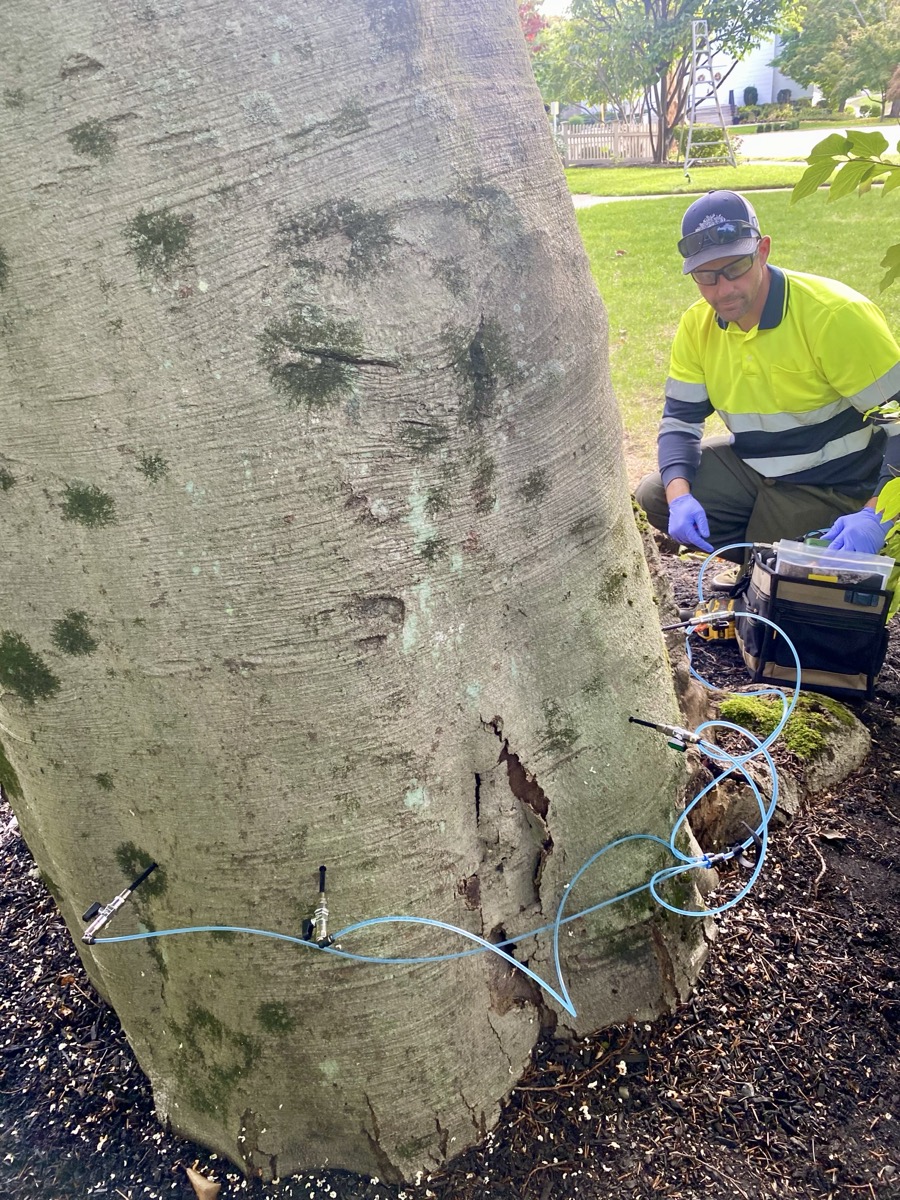
Southeast Arborist's PHC starts with a property-specific assessment. We inspect your sugar maples in Plimptonville or American beeches in the Stone Street Area for soil compaction, nutrient deficiencies, and pest infestations. Our ISA certification ensures treatments meet scientific standards, using macro-injection systems for emerald ash borer and soil drenches for winter moth. Safety protocols include TCIA accreditation and worker protection gear, minimizing risks on your sloped lots or near conservation land.
Homeowners in South Walpole or Fisher Street Area often call us for custom PHC to protect white pines from needlecast diseases exacerbated by Walpole's humid summers. Our deep root fertilization combats clay-heavy Norfolk County soils, which retain moisture but limit oxygen to roots. Expect visible improvements: healthier foliage on red oaks, reduced dieback in green ash, and stabilized crowns on floodplain silver maples.
Investing in plant health care Walpole MA protects your property's curb appeal and value—mature trees add up to 20% to home resale prices here. With construction pressure on wooded parcels in Neponset Valley, proactive PHC prevents costly removals. Call Southeast Arborist at 508-369-5009 for a free consultation tailored to your Walpole address. Our programs scale from single-tree injections to multi-year neighborhood plans, ensuring your landscape thrives year-round.
Why Walpole Properties Need Plant Health Care
Walpole's combination of historic development, riverine ecology, and suburban growth creates specific tree health vulnerabilities. In Norfolk County, local soils—predominantly clay loams with pH 5.5-6.5—compact easily under foot traffic and construction, starving roots of oxygen. Walpole's USDA Zone 6b climate brings cold winters (lows to -5°F), humid summers (80%+ relative humidity), and 45-50 inches of annual precipitation, fostering fungal diseases in white pines and American beeches.
Emerald ash borer has decimated green ash populations since 2012, with larvae girdling trunks in East Walpole and Neponset Valley neighborhoods. Without trunk injections, 90% of untreated ash trees decline within 3-5 years. Floodplain trees along the Neponset River, including massive sycamores (up to 100 feet tall) and silver maples, suffer root instability from erosion and ice scour—common after nor'easters. Preservation of Olmsted-era plantings at Bird Park demands gentle pruning to maintain tulip trees and dawn redwoods without stressing vascular tissues.
Residential neighborhoods face distinct issues. In Walpole Center's Common Street Area, sugar maples show verticillium wilt from poor drainage, with wilting leaves and branch dieback signaling urgent soil care. Red oaks and white oaks in Plimptonville battle oak wilt, spread by sap-feeding beetles in humid conditions. White pines in South Walpole contract white pine weevil, causing leader dieback, while American beech bark disease from beech scale weakens trees in shaded Fisher Street Area lots.
Construction pressure exacerbates problems. New homes in Stone Street Area compact soils around established trees, reducing fine root zones by 50%. Spongy moth caterpillars defoliate white oaks in spring, and winter moth targets maples during egg hatch in March-April. Hemlock woolly adelgid threatens conifers near conservation land, with white, waxy masses visible on needles by mid-summer.
Practical advice for Walpole homeowners: Monitor for D-shaped exit holes on ash bark (emerald ash borer), cankers on sycamore trunks (anthracnose), or sooty mold on tulip tree leaves (aphid honeydew). Test soil pH annually—aim for 6.0-7.0 for oaks—with kits from local nurseries. Mulch 3-inch layers around bases, keeping it 6 inches from trunks to prevent rot. Avoid staking young trees longer than one year, as it weakens trunks.
Southeast Arborist's ISA Certified Arborists diagnose via resistograph testing for internal decay in red oaks and sonic tomography for sugar maples. We apply IPM, prioritizing cultural controls like watering deeply during droughts (1 inch/week) before chemicals. For your Neponset Valley property, we stabilize silver maples with cabling per ANSI A300. Your Bird Park-adjacent lot benefits from targeted spongy moth Bt sprays, safe for pollinators. Proactive PHC extends tree lifespans by 20-30 years, safeguarding Walpole's canopy.
Our Plant Health Care Process in Walpole
Southeast Arborist follows a structured, science-based PHC process for Walpole properties, starting with a free on-site assessment by ISA Certified Arborists. We arrive equipped with soil probes, increment borers, and digital microscopes to evaluate your sycamores in East Walpole or white oaks in Walpole Center. This initial visit maps tree health zones, noting symptoms like emerald ash borer galleries or hemlock woolly adelgid infestations.
Step 1: Diagnosis. Using ANSI A300 (Part 2) soil management standards, we sample clay loams in South Walpole for nutrients—nitrogen, phosphorus, potassium, and micronutrients like iron, often deficient in Norfolk County. Resistographs detect decay in red oak hearts, while air spades expose 12-18 inches of soil to assess root conditions without damage. For green ash in Fisher Street Area, we confirm emerald ash borer via frass traps.
Step 2: Custom Program Design. Your PHC plan targets specifics: trunk injections for emerald ash borer (imidacloprid or azadirachtin via Chemjet Tree Injectors), soil drenches for winter moth on sugar maples, and horticultural oil for spongy moth eggs on American beech. Deep root fertilization uses subsurface probes to deliver slow-release organics 8-12 inches deep, improving oxygen in compacted Plimptonville soils.
Step 3: Treatment Application. We deploy low-pressure macro-injection systems (30-100 PSI) for precise delivery—up to 90% efficacy on ash trees versus sprays. Hemlock woolly adelgid gets domicide injections in Neponset Valley hemlocks. IPM minimizes chemicals: pheromone traps first for spongy moths, then Bt kurstaki if needed. Safety protocols include harnesses, spill containment, and buffer zones near the Neponset River.
Step 4: Soil and Root Care. Air-spade excavation removes soil fill from white pine bases in Stone Street Area, restoring grade. We apply mycorrhizal fungi inoculants to boost root symbiosis in dawn redwoods, plus compost teas for microbial diversity. Liquid fertilizers (e.g., 10-4-6 NPK) address pH imbalances in silver maple floodplains.
Step 5: Monitoring and Follow-Up. Quarterly inspections track progress—chlorophyll meters quantify leaf health in tulip trees. Apps log data for your Common Street Area oaks, with reports detailing ANSI compliance. Annual adjustments ensure longevity; for example, post-treatment pruning removes deadwood per Part 1 standards.
Equipment includes Eijkelkamp soil augers for sampling, Silvanus injectors for precision, and DJI drones for canopy scouting over Bird Park proximity lots. All technicians wear PPE and follow OSHA 1910.1200 hazard communication. This process yields results: 85% ash survival post-injection, 70% defoliation reduction in oaks.
For your Walpole property, schedule via 508-369-5009. Early intervention prevents decline—treat emerald ash borer before canopy thinning exceeds 30%.
Common Plant Health Care Projects in Walpole Neighborhoods
Walpole neighborhoods present tailored PHC needs tied to their topography and history. In Walpole Center's Common Street Area, crown reduction on mature red oaks prevents limb failure over historic homes—our cabling stabilizes codominant stems per ANSI A300.
East Walpole, site of former Bird & Son mills, requires emerald ash borer injections for declining green ash along industrial legacy lots. We also treat sycamores for anthracnose with phosphonate trunk injections, reducing leaf scorch in humid microclimates.
South Walpole homeowners tackle white pine needlecast with copper fungicide drenches, applied in spring to match fungal spore release. Deep root fertilization counters construction compaction here, vital for new subdivisions.
Plimptonville's sugar maples suffer from soil compaction; our air-spade vertimulching adds organics, improving infiltration on clay soils. Spongy moth Bt applications protect these from larval feeding in May-June.
Stone Street Area properties feature American beech with bark disease—we use horticultural oils targeting beech scale crawlers in July. Preservation pruning maintains form without wounds.
Neponset Valley demands floodplain management: pruning overhanging silver maples reduces storm risks, with root barriers stabilizing banks. Emerald ash borer hits hard here; injections save 80% of trees.
Fisher Street Area lots host tulip poplars prone to verticillium—soil solarization and biofungicides restore vigor. Dawn redwoods get adelgid checks near conservation edges.
Bird Park vicinity requires delicate PHC for Olmsted plantings: preservation pruning on white oaks avoids stress, with IPM for winter moth via spring soil treatments.
These projects follow multi-year contracts, with Southeast Arborist's ISA experts ensuring compliance. Call 508-369-5009 for neighborhood-specific plans.
Plant Health Care Costs in Walpole, MA
PHC costs in Walpole vary by property size, tree count, and issues, but deliver strong ROI. A single emerald ash borer trunk injection for green ash runs $12-18 per inch DBH (diameter at breast height)—a 20-inch tree costs $240-360, versus $1,500+ removal. Multi-tree programs drop to $10/DBH with volume discounts.
Deep root fertilization for sugar maples or red oaks averages $150-300 per tree, covering 1,000 sq ft root zone. Annual applications build soil health, preventing $500+ decline treatments. Hemlock woolly adelgid management: $200-400 per tree via injection, far below $2,000 replacement.
Custom IPM programs for Walpole Center homes: $500-1,200/year for 5-10 trees, including spongy moth traps and winter moth drenches. Neighborhood contracts in Neponset Valley: $2,000-5,000 for 20+ floodplain silver maples.
Factors influencing price: DBH (larger trees need more product), travel (free in 02032), urgency (emergency injections +20%), and add-ons like air-spading ($100-200/session). Norfolk County soil tests add $75, but qualify for rebates via UMass Extension.
Value proposition: Healthy trees boost property values 10-27% per UMass Amherst studies. PHC averts $1,000-3,000 annual losses from dieback or falls. ISA certification ensures efficacy—our 95% success rate on ash injections maximizes returns.
Compare bids: Generic services overlook floodplain specifics; Southeast Arborist customizes per ANSI standards. Budget $800-2,500/year for mid-sized lots in East Walpole or Plimptonville. Financing available; call 508-369-5009 for quotes.
When to Schedule Plant Health Care in Walpole
Timing PHC maximizes efficacy in Walpole's Zone 6b climate. Spring (April-May): Inject emerald ash borer in green ash before bud break; apply Bt for spongy moth on white oaks. Treat winter moth eggs on sugar maples via soil drenches.
Summer (June-August): Hemlock woolly adelgid injections during crawler stage; deep root fertilize sycamores post-drought. Anthracnose on silver maples needs July phosphonates.
Fall (September-October): Root feed red oaks and American beech before dormancy; prune per ANSI after leaf drop to avoid oak wilt spread.
Winter (December-February): Dormant oil sprays for scales on tulip trees; assess storm damage on Neponset floodplain maples.
Urgency signs: 25%+ canopy thinning (ash borer), wilting branches (verticillium), or bark cracks (beech disease)—schedule within 2 weeks. Post-nor'easter, inspect floodplains immediately.
Annual contracts align with cycles; contact 508-369-5009 now for spring slots.
Frequently Asked Questions About Plant Health Care in Walpole
**What is plant health care in Walpole MA?** PHC involves diagnostic, therapeutic, and preventive measures for trees like your red oaks and silver maples, including pest control, fertilization, and soil care tailored to Norfolk County conditions.
**How does Southeast Arborist treat emerald ash borer in Walpole?** We use ANSI-approved trunk injections (e.g., TreeAzure) at 4-week intervals, achieving 85-95% mortality of larvae in green ash trees in East Walpole and Neponset Valley.
**Is deep root fertilization safe for my Neponset River floodplain trees?** Yes, our low-volume probes target 8-12 inches deep, avoiding water table disruption; ideal for sycamores stressed by erosion.
**When should I treat spongy moth on white oaks in Plimptonville?** Apply Bt kurstaki at peak larval hatch (late May), followed by monitoring—safe, organic control per IPM.
**How much does PHC cost for a Common Street Area property?** $600-1,500/year for 6-8 trees, factoring DBH and issues like winter moth on sugar maples.
**Can you preserve Olmsted trees near Bird Park?** Absolutely—gentle preservation pruning and targeted injections maintain tulip trees and dawn redwoods without stress.
**What are signs my American beech in Stone Street needs PHC?** Target cankers, scale insects, or 20% foliage loss; early horticultural oil prevents bark disease progression.
**Do you serve nearby towns like Norwood or Medfield?** Yes, our South Shore service covers Foxborough, Sharon, Dedham—call 508-369-5009 for details.
Plant Health Care Throughout Walpole
Southeast Arborist provides PHC across Walpole neighborhoods: Walpole Center, East Walpole, South Walpole, Plimptonville, Stone Street Area, Neponset Valley, Fisher Street Area, and Common Street Area. We extend to nearby Norwood, Medfield, Foxborough, Sharon, and Dedham from our Plymouth/Cohasset base.
ISA Certified Arborists ensure ANSI-compliant care for your local trees. Call 508-369-5009 today for a free assessment—protect your Walpole landscape.