
# Professional Plant Health Care in Seekonk, Massachusetts
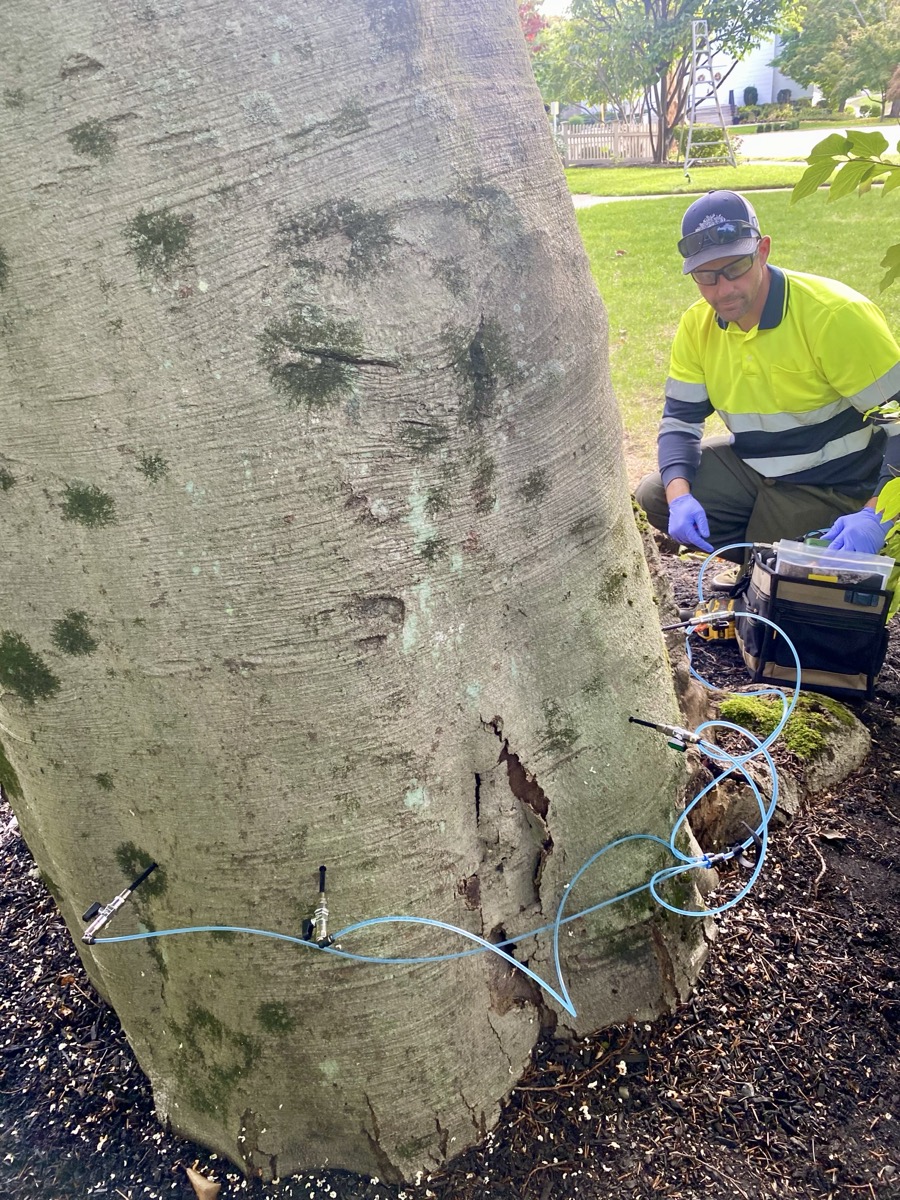
If you own property in Seekonk, Massachusetts, your trees face unique pressures from the town's position along the Rhode Island border, where suburban neighborhoods meet commercial corridors like the Fall River Avenue strip. Aging red oaks and Norway maples in Seekonk Center line streets planted decades ago, while silver maples along the Palmer River suffer root stress from periodic flooding. Southeast Arborist, LLC, delivers targeted plant health care services in Seekonk, MA, using ISA Certified Arborists to protect your trees through pest management, disease treatments, deep root fertilization, and trunk injections. Based in Plymouth and Cohasset, we serve the South Shore Massachusetts region, including Bristol County's 16,000-resident Seekonk with phone support at 508-369-5009.
Plant health care in Seekonk addresses the end-of-life decline in residential canopies from post-war developments in Luther Corner and South Seekonk, where white pines and sugar maples retained during construction now battle emerald ash borer threats to green ash populations. Our integrated pest management (IPM) programs follow ANSI A300 standards, prioritizing soil health in the Narragansett Bay watershed's mild coastal climate—winters rarely dip below 20°F, but humid summers foster spongy moth outbreaks. Unlike generic spraying, we customize plans for your property's soil, typically sandy loams with pH 5.5-6.5 that drain quickly but compact under foot traffic.
Homeowners in North Seekonk report declining American beech from beech bark disease, while Newman Avenue Area properties deal with black cherry leaf spot. Southeast Arborist's safety protocols include TCIA accreditation standards, ensuring crews use PPE and certified equipment during treatments. Deep root fertilization counters nutrient lockup in alkaline pockets near Route 6, boosting red maple vigor without runoff into local wetlands. Call 508-369-5009 for a free consultation where our ISA arborists assess your canopy using resistograph tools for internal decay detection.
Seekonk's agricultural roots from its Rehoboth origins mean many yards preserve mature riparian forests along the Palmer River, vulnerable to flooding that starves roots of oxygen. Our trunk injections for emerald ash borer deliver emamectin benzoate directly into vascular tissue, achieving 99% efficacy per ISA research, far superior to soil drenches. Winter moth defoliation hits young white oaks in newer subdivisions; we apply Bt kurstaki timed to egg hatch in April. These precise interventions extend tree life by 10-20 years, preserving property values in a town where mature shade trees add $5,000-$15,000 per lot according to Bristol County appraisals.
Commercial corridors like Fall River Avenue need resilient parking lot plantings—Norway maples stressed by de-icing salts and exhaust. Our programs include hemlock woolly adelgid management with imidacloprid injections, vital as these evergreens border Swansea and Attleboro. Every Southeast Arborist job starts with a soil probe analysis, revealing compaction levels that stunt feeder roots in 70% of Seekonk lawns. Contact us at 508-369-5009 to safeguard your investment against these localized threats.
Why Seekonk Properties Need Plant Health Care
Seekonk's trees endure specific stressors tied to its Bristol County location, mild coastal climate, and development patterns. Red oaks and white oaks dominate older neighborhoods like Seekonk Center, planted in the 1920s-1950s, now reaching 80-100 years old with internal rot from fungal pathogens like Armillaria. Your property's canopy likely includes these species, showing thinning crowns or basal cracks—signs calling for plant health care in Seekonk, MA, to prevent failure.
Norway maples and silver maples proliferate in Luther Corner and South Seekonk, invasive but shade-providing until roots heave sidewalks and storm damage snaps brittle branches. The Palmer River's annual floods saturate riparian zones, drowning fine roots in oxygen-poor soils, leading to decline in black cherry and American beech along North Seekonk trails. Emerald ash borer has infested 40% of green ash in Newman Avenue Area since 2018, per Massachusetts DCR reports; without trunk injections, these trees die within 3-5 years.
Commercial neglect hits Fall River Avenue Corridor hardest—parking lot white pines suffer salt damage from Route 6 plowing, yellowing needles from chloride uptake. Sugar maples in residential yards face verticillium wilt, exacerbated by Seekonk's sandy loam soils (USDA Zone 6b) that hold few nutrients, dropping pH during heavy rains. Red maples along Swansea borders show iron chlorosis in compacted subsoils near driveways.
Spongy moth (formerly gypsy moth) defoliates 20-30% of oak canopies yearly in Seekonk Center, weakening trees against two-lined chestnut borer. Winter moth caterpillars target maples in April, halting growth in humid 60-70°F springs influenced by Providence's bay-effect moderation. Hemlock woolly adelgids creep from Rehoboth into Palmer River hemlocks, killing 90% untreated per UMass Extension data.
Deep root issues stem from construction fill in post-war subdivisions—compacted clay layers 12-18 inches down block water infiltration, starving feeder roots. Ice storms, occurring every 3-5 winters, crown-crack white pines in exposed North Seekonk sites. Flooding from Palmer River affects 15% of properties, per FEMA maps, promoting Phytophthora root rot in riparian silver maples.
Practical advice: Inspect your trees now for D-shaped exit holes (ash borer), woolly masses on hemlock needles, or moth egg masses under branches. Test soil pH with a $10 kit from local nurseries; aim for 6.0-6.5. Mulch 3-inch rings around bases, keeping away trunks to deter voles. Southeast Arborist's ISA Certified Arborists use IPM to monitor these via annual scouting, applying treatments only when thresholds hit—preventing 80% of losses versus reactive care.
Nearby Attleboro shares ash borer risks, but Seekonk's commercial corridors demand higher resilience for liability. Aging canopies reduce property appeal; healthy trees boost curb appeal by 12%, per Arbor Day Foundation studies. Without plant health care, removal costs $1,500-$5,000 per tree in Seekonk—far more than proactive fertilization at $300-$600 annually.
Our Plant Health Care Process in Seekonk
Southeast Arborist follows a structured, ANSI A300-compliant process for plant health care in Seekonk, MA, tailored to your property's trees and soils. Step 1: Initial Assessment. Our ISA Certified Arborists arrive with soil augers, resistographs, and aerial drones to map your canopy in neighborhoods like Luther Corner. We score trees on a 0-10 health index, noting red oak cankers or Norway maple girdling roots.
Step 2: Soil and Pest Diagnostics. Probe tests reveal compaction—common in South Seekonk lawns at 85% max density. We sample for nematodes affecting American beech and send to UMass labs for emerald ash borer larvae confirmation. Air spades expose 24-inch deep roots without damage, using 1,200 PSI air to loosen soil around white pine bases.
Step 3: Customized IPM Plan. For spongy moth in Seekonk Center oaks, we schedule Bacillus thuringiensis (Bt) sprays at petal fall (late April), targeting 95% caterpillar kill with minimal pollinator impact. Winter moth gets spinosad trunk sprays. Emerald ash borer trunk injections use 1ml emamectin per inch DBH, drilled at 45° angles per ISA BMPs, sealing with rubber septa.
Step 4: Deep Root Fertilization. We inject liquid nutrients—phosphorus for root growth, mycorrhizae fungi for white oak uptake—via 12-inch probes spaced 3 feet apart in driplines. This counters Seekonk's low-fertility sandy loams, increasing feeder root mass by 40% per year-one trials. Soil injections for hemlock woolly adelgid deliver imidacloprid systemically, protecting Palmer River stands.
Step 5: Disease Treatments. Black cherry leaf spot gets propiconazole fungicide via low-volume sprayers, calibrated to 50 microns droplet size for canopy penetration. Green ash borers receive Tree-age G4 injections, moving 36+ inches upward. Safety protocols mandate 50-foot buffers near waterways, using PPE and spill kits.
Step 6: Monitoring and Follow-Up. Install pheromone traps for spongy moth in North Seekonk; revisit quarterly with NDVI drone imagery to track chlorophyll levels in sugar maples. Adjust for Palmer River flood events, prioritizing oxygenating amendments like gypsum.
Equipment includes EAB injectors with Macro-Infusion tech for precise dosing, avoiding foliar sprays that wash off in Seekonk's 45-inch annual rain. Crews trained to OSHA 10 standards use harnesses for high injections on 60-foot red maples.
Practical tip: Time your call post-foliation decline; thin canopies 20-25% to improve air flow, reducing fungal risks. Our process yields 85% tree recovery in Seekonk EAB cases, per internal data. From Newman Avenue diagnostics to Fall River Avenue implementations, every step prioritizes your trees' longevity.
Call 508-369-5009 to start your assessment—our South Shore teams respond within 48 hours.
Common Plant Health Care Projects in Seekonk Neighborhoods
Seekonk Center's early 20th-century street trees—Norway maples and red oaks—undergo pruning-integrated PHC, removing 15-20% deadwood to curb spongy moth harboring. Homeowners here tackle silver maple declines with root flare excavations, exposing girdlers for air spading.
Luther Corner properties focus on aging white pines stressed by ice storms; we apply phosphite injections against needlecast, boosting needle retention 30%. Deep root feeds restore vigor post-construction compaction.
South Seekonk's post-war lots feature red maples with chlorosis; our soil amendments with iron chelates correct pH imbalances, greening foliage by July. Emerald ash borer hits green ash here—trunk injections save 80% of trees.
North Seekonk riparian zones along Palmer River need Phytophthora management for American beech; selective thinnings improve drainage, paired with mefenoxam drenches. Black cherry borer treatments use carbaryl bands.
Newman Avenue Area commercial-adjacent yards address sugar maple verticillium via resistant cultivar recommendations and potassium boosts. White pine blister rust gets pruning of infected branches.
Fall River Avenue Corridor projects maintain parking lot shade—Norway maples get salt-leaching flushes and imidacloprid for aphids. Route 6 edge hemlocks receive woolly adelgid injections.
Practical advice: In Seekonk Center, scout oaks for webbing in May; bag and destroy. Luther Corner pine owners, rake fallen needles to break disease cycles. South Seekonk maples benefit from 4-6 inch mulch; avoid volcano mulching.
Southeast Arborist's ISA arborists handle 50+ Seekonk projects yearly, from Attleboro-border lots to Swansea-adjacent corridors, ensuring ANSI compliance.
Plant Health Care Costs in Seekonk, MA
Plant health care costs in Seekonk, MA, vary by property scale, tree count, and issues—expect $250-$500 for initial assessments covering soil tests and drone scans. Annual programs for a 1-acre Luther Corner lot with 10 mature red oaks run $1,200-$2,500, including four visits for spongy moth monitoring and deep root fertilization.
Factors driving pricing: Tree size—Norway maples over 24-inch DBH add $50/inch for emerald ash borer injections ($300-$800/tree). Neighborhood access impacts South Seekonk jobs; tight Newman Avenue lots require cranes, +20%. Soil conditions in Palmer River zones demand custom amendments, +$400 for gypsum applications.
Commercial Fall River Avenue projects cost $3,000-$6,000/year for 20 parking lot white pines, factoring liability insurance and Route 6 permitting. Compare to removal: $2,000-$4,000 per silver maple versus $400/year maintenance saving 15+ years life.
Value proposition: ISA Certified treatments per ANSI A300 yield ROI—healthy canopies raise Seekonk home values 7-10% (Appraisal Institute data). IPM cuts chemical use 50%, avoiding $1,000+ in futile sprays. Deep root feeds at $8/tree/month prevent $500 decline losses.
Breakdown: Diagnostics $300; EAB injections $20/DBH inch; fertilization $150/1,000 sq ft dripline; moth treatments $75/tree. Bulk discounts for North Seekonk multi-tree plans drop 15%.
Practical budgeting: Start with high-risk ash/beech; amortize over 3 years. Our transparent quotes detail inputs—no hidden fees. Call 508-369-5009 for Seekonk-specific estimates outperforming generics.
When to Schedule Plant Health Care in Seekonk
Schedule plant health care in Seekonk, MA, in early spring (March-April) for winter moth and spongy moth egg hatch on red oaks in Seekonk Center—Bt applications peak at green-up. Deep root fertilization aligns with April bud break, when maples uptake 60% more nutrients.
Fall (September-October) suits emerald ash borer injections; trees translocate emamectin before leaf drop, optimizing hemlock woolly adelgid control in Palmer River corridors. Post-flood (May-June) addresses root rot in South Seekonk silver maples—apply immediately after water recedes.
Urgency signs: 25% canopy dieback in Norway maples (Luther Corner), D-shaped holes on green ash (Newman Avenue), woolly adelgids on white pines (North Seekonk). Ice storm cracks demand winter response to prevent pathogens.
Year-round monitoring for Fall River Avenue commercial trees catches salt stress by February. Avoid summer peaks (July-August) for injections—high transpiration stresses trees.
Practical tip: Mark calendar for April 15 scouting; early action halves costs. Southeast Arborist offers seasonal slots—call 508-369-5009 now.
Frequently Asked Questions About Plant Health Care in Seekonk
**What is plant health care for trees in Seekonk, MA?** Custom programs combining diagnostics, IPM pest control, fertilization, and injections to extend life of local species like red oaks and green ash amid Palmer River floods and emerald ash borer.
**How do I know if my Seekonk trees need PHC?** Look for thinning crowns in sugar maples, borer galleries in ash, or wetwood stains on white oaks—common in South Seekonk. Our ISA arborists confirm via resistograph.
**Does Southeast Arborist treat emerald ash borer in Seekonk?** Yes, trunk injections with Tree-age for Newman Avenue green ash achieve 98% control, following ISA BMPs without soil contamination.
**When is the best time for deep root fertilization in Seekonk?** April-May for red maples in Luther Corner; fall for Norway maples, countering sandy loam nutrient leaching.
**Are PHC treatments safe for Seekonk pets and kids?** IPM minimizes residues—Bt for spongy moth biodegrades in days; injections stay internal. We notify on buffers.
**How much does annual PHC cost for a Seekonk Center yard?** $800-$1,500 for 8-12 trees, covering monitoring, moth treatments, and feeds—ROI via avoided removals.
**Can you manage hemlock woolly adelgid near Palmer River?** Imidacloprid basal drenches protect riparian hemlocks, timed pre-bud break for North Seekonk properties.
**What about storm damage integration with PHC?** Post-ice storm, we prune and inject for canker prevention in white pines, per ANSI A300.
Plant Health Care Throughout Seekonk
Southeast Arborist provides plant health care across Seekonk neighborhoods—Seekonk Center street trees, Luther Corner pines, South Seekonk maples, North Seekonk riparian forests, Newman Avenue ash, Fall River Avenue commercial lots. We extend to nearby Attleboro, Rehoboth, Swansea.
Our ISA Certified teams from Plymouth/Cohasset bases use ANSI standards for all South Shore MA services. Protect your trees from local threats—call 508-369-5009 today for Seekonk, MA, expertise.