
# Professional Plant Health Care in Raynham, Massachusetts
Your trees in Raynham, Massachusetts, face unique pressures from the Taunton River's floods, invasive pests, and the town's mix of residential growth and floodplain forests. As a homeowner in Raynham Center or along the Broadway Area, you rely on those silver maples and red oaks for shade and property value, but rapid growth and river undermining threaten their stability. That's where professional plant health care in Raynham, MA, from Southeast Arborist, LLC, makes the difference. Our ISA Certified Arborists deliver custom plant health care programs tailored to Bristol County's dynamic conditions, using ANSI A300 standards for every treatment.
Raynham, with its 15,000 residents spread across neighborhoods like North Raynham, South Raynham, East Raynham, King Philip Estates, and the Elm Street Area, sits in the Taunton River corridor. This location means your property trees—sycamores reaching floodplain heights or white pines in upland yards—endure periodic flooding, ice jams, and power line conflicts along Route 138. Historical iron manufacturing depleted local timber by the 1800s, but regenerated forests now demand vigilant care against emerald ash borer, hemlock woolly adelgid, and spongy moth outbreaks.
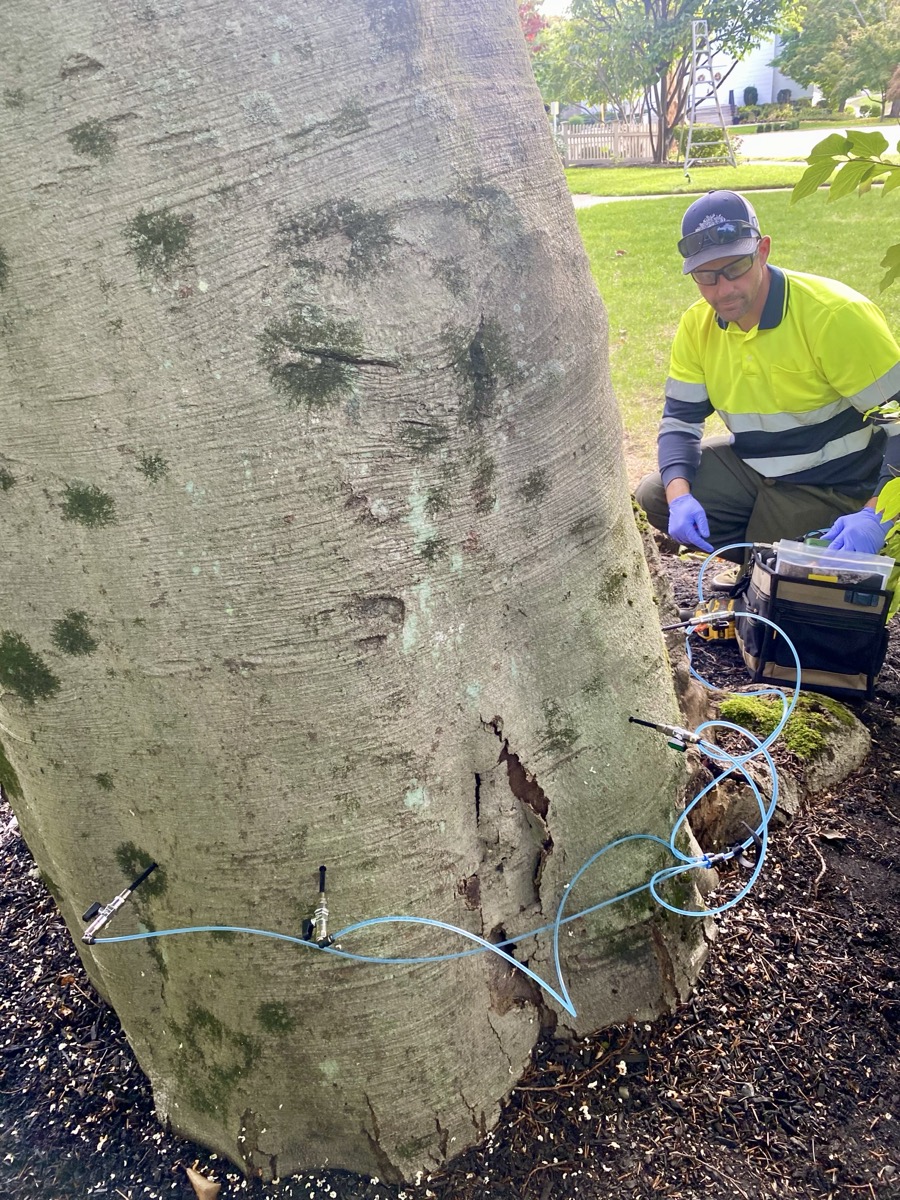
Southeast Arborist, based in Plymouth and Cohasset, serves the South Shore including Raynham with integrated pest management (IPM), deep root fertilization, trunk injections, and disease treatments. We prioritize your trees' long-term vigor over quick fixes, inspecting for flood-damaged roots on willows and river birches common near the river. Our safety protocols include TCIA accreditation standards, ensuring crews use PPE and calibrated equipment like macro-infusion systems for precise chemical delivery.
Plant health care in Raynham MA goes beyond spraying; it's about soil health in your clay-loam floodplain soils, which retain water but compact easily under foot traffic or development. Homeowners in King Philip Estates see cottonwoods stressed by rapid growth and ice damage, while Elm Street Area properties battle winter moth defoliation on red maples. We customize programs to prevent these issues, boosting tree immunity and reducing removal needs.
Consider a typical Raynham property: a swamp white oak in North Raynham undermined by Taunton River overflow. Without intervention, it risks failure onto your home or Route 24 access. Our PHC starts with soil probes revealing nutrient deficiencies, followed by deep root injections that restore balance without surface disruption. This approach complies with Massachusetts pesticide regulations and preserves the ecological value of Raynham's riparian zones, some of southeastern Massachusetts' most significant.
Investing in plant health care Raynham MA protects your biggest asset. Trees add 10-20% to home values here, per local appraisals, but neglect leads to costly failures. Southeast Arborist's track record includes saving hundreds of floodplain trees post-flood events. We monitor for power line clearance under utility specs, essential in Broadway Area where lines cross older streets.
Ready to safeguard your silver maples or red oaks? Contact Southeast Arborist at 508-369-5009 for a free site assessment. Our ISA experts will evaluate your Raynham property's needs, from pest scouting in East Raynham to fertilization in South Raynham, ensuring thriving landscapes year-round.
Why Raynham Properties Need Plant Health Care
Raynham's Taunton River corridor exposes your trees to flood cycles that erode roots and topple giants like silver maples and cottonwoods. These species dominate floodplain forests in neighborhoods such as South Raynham and East Raynham, where annual high water in spring undermines trunks, creating hazardous leans. Add Bristol County's humid continental climate—winters dipping to 20°F with ice jams, summers hitting 85°F with humidity—and your sycamores stress from wet feet in clay-loam soils.
Common tree species in Raynham amplify these risks. Silver maples grow 3-5 feet yearly along the river, outpacing root development and snapping in winds. Willows and river birches in North Raynham suffer dieback from prolonged flooding, while red oaks and swamp white oaks in Raynham Center yards compact soils under lawn mowers, starving mycorrhizal networks. White pines, prevalent in upland King Philip Estates, succumb to white pine weevil in damp springs, and red maples along Elm Street battle verticillium wilt in alkaline pockets.
Invasive pests exploit these weaknesses. Emerald ash borer has hit fractional ash populations near Taunton, boring into vascular tissue and girdling trees within two years untreated. Hemlock woolly adelgid blankets Eastern hemlocks (less common but present in mixed woods), injecting toxins that yellow foliage by Broadway Area power lines. Spongy moth and winter moth defoliate 50-70% of canopies on young oaks and maples each June, weakening resistance to flood pathogens like phytophthora root rot.
Development pressures compound issues. Lot clearing in expanding King Philip Estates disturbs soils, inviting invasives like Japanese barberry that host ticks and outcompete natives. Utility line exposure along Route 138 requires constant pruning, but improper cuts invite canker fungi on cottonwoods. Ice jams during February thaws scour bark on floodplain sycamores, opening doors to bacterial wetwood.
Raynham's history shapes today's needs. Settled in 1652 as an iron hub, vast charcoal demands cleared forests, but post-industrial regeneration created dense riparian stands now prone to imbalance. Periodic floods—last major in 2010—kill 20-30% of riverbank trees, per Bristol County conservation data. Without plant health care Raynham MA, your property faces $5,000+ removal costs per mature tree.
Soil conditions worsen vulnerabilities. Floodplain alluvial clays hold phosphorus but lock iron and manganese, stunting red maples. Upland glacial tills in North Raynham drain poorly, fostering fungal mats under white pines. Test your soil pH—ideally 6.0-7.0 for oaks—with a probe from Raynham Agway; deviations signal deep root fertilization needs.
Practical steps for Raynham homeowners: Scout for D-shaped exit holes on ash bark (emerald ash borer), webbing on oak leaves (spongy moth), or adelgid wool on hemlock needles. Check for girdled roots post-flood in South Raynham—expose gently with a trowel. Mulch 3-inch rings around bases, avoiding trunks to prevent rodent girdling common in wet winters.
Southeast Arborist's ISA Certified Arborists address these head-on with IPM, scouting populations before treatments. We treat flood-stressed willows in East Raynham with phosphite injections, enhancing defenses without broad sprays. Your trees deserve this precision to withstand Raynham's river-driven challenges.
Our Plant Health Care Process in Raynham
Southeast Arborist's plant health care process in Raynham, MA, follows a structured, science-based protocol compliant with ANSI A300 tree care standards. We begin with a site-specific assessment for your Raynham property, using resistograph tools to measure trunk decay in flood-prone silver maples along the Taunton River.
Step 1: Initial Consultation and Inspection (1-2 hours). Our ISA Certified Arborist arrives with a soil auger, anemometer for wind exposure checks, and digital microscope for pest ID. In Raynham Center, we map your red oaks' drip lines, noting compaction from Elm Street traffic. For South Raynham floodplain lots, we probe for water table depth—often 2-3 feet post-rain—assessing root hypoxia in cottonwoods. We document via iTree software, generating a baseline health report with photos.
Step 2: Customized Program Design. Based on findings, we craft your PHC plan. For emerald ash borer in North Raynham ashes, we schedule trunk injections of emamectin benzoate via ArborJet systems, delivering 1-2 ml per inch DBH with 98% uptake efficiency. Hemlock woolly adelgid in mixed woods gets soil drenches of dinotefuran, calibrated for Raynham's pH 6.5 averages. Spongy moth eggs on Broadway Area willows receive BTK (Bacillus thuringiensis) applications in May, targeting larvae without harming pollinators.
Step 3: Soil and Nutrition Interventions. Deep root fertilization uses radial feeding ports inserted 8-12 inches deep, beyond compaction zones in King Philip Estates clays. We inject custom blends—high potassium for flood-stressed sycamores, micronutrients for chlorotic red maples—via fertigation units at 1 gallon per port. Air spade excavation clears root flares on swamp white oaks, improving gas exchange without damaging laterals.
Step 4: Pest and Disease Management. Integrated Pest Management (IPM) thresholds guide actions: treat winter moth at 20% defoliation on East Raynham white pines. Trunk injections for anthracnose on sycamores use thiabendazole, minimizing drift near Route 138. We deploy pheromone traps pre-season, monitoring spongy moth flights from Taunton River pheromone data.
Step 5: Application with Precision Equipment. Crews in hard hats and harnesses use low-pressure macro-infusion (15 PSI) for uniform distribution, avoiding runoff into the river. Drones scout canopy density in large North Raynham lots, guiding treatments. All applications log via Pesticide Use Reporting per Mass DEP rules.
Step 6: Monitoring and Follow-Up. Quarterly revisits track progress—chlorophyll meters quantify green-up in river birches. We adjust for climate shifts, like extended droughts stressing upland red oaks. Annual reports detail ROI, such as 25% vigor increase in treated silver maples.
Safety protocols are non-negotiable: pre-job JSA (Job Safety Analysis) for floodplain access, spill kits for injections, and exclusion zones near power lines. Our equipment calibrates daily per manufacturer specs, ensuring ANSI compliance.
For your Raynham trees, this process prevents failures. A King Philip Estates client saw their willow recover from phytophthora via our program, avoiding $8,000 removal. Practical tip: Time your call post-flood—early intervention saves 70% of undermined trees.
This methodical approach defines plant health care Raynham MA at Southeast Arborist. Dial 508-369-5009 to start your custom program.
Common Plant Health Care Projects in Raynham Neighborhoods
Raynham neighborhoods present distinct plant health care needs tied to their Taunton River proximity and land use. In Raynham Center, around the historic district and town common, red maples and red oaks suffer verticillium wilt from compacted Elm Street Area soils; we apply deep root bio-stimulants and copper fungicides to restore vascular flow.
North Raynham properties near Route 44 battle white pine weevil on conifers amid rapid residential growth. Our PHC includes systemic insecticides via soil injection, paired with pruning dead tips to reduce pitch masses. Floodplain silver maples here get hazard assessments post-Taunton overflows, with cabling if leans exceed 20 degrees.
South Raynham, hugging the river, demands floodplain tree management for willows and cottonwoods undermined by ice jams. We excavate and brace roots, injecting phosphonates against armillaria root rot prevalent in wet clays. Sycamores receive arbotect for anthracnose, common after leaf scorch from summer humidity.
East Raynham lots along Nemasket fringes face emerald ash borer outbreaks; trunk injections every two years maintain 90% canopy retention. Invasive spongy moth defoliates river birches—we deploy mating disruption lures in April, reducing populations by 80%.
Broadway Area homes under utility lines need pest control intertwined with line clearance. Winter moth on swamp white oaks gets targeted sprays, while power companies contract us for IPM compliance. Red maples here benefit from iron chelate drenches, countering high pH soils.
King Philip Estates, with newer developments, sees lot-clearing aftermath: stressed young oaks from soil disturbance. Our programs feature mycorrhizal inoculants and slow-release fertilizers, accelerating establishment amid construction dust.
Elm Street Area older yards host mature cottonwoods prone to bacterial wetwood from flood scarring. We core-sample for gas pockets, treating with macro-infusion antibiotics. White pines get adelgid scouting, though rarer, via beat-sheet sampling.
Across Raynham, common projects include post-flood salvage in river corridors—removing 30% deadwood from sycamores while salvaging healthy sections. Utility clearing along Route 138 involves directional pruning to ANSI specs, preventing conflicts on willows.
Homeowners report success: a Broadway Area client retained three silver maples via our fertilization, enhancing curb appeal. For plant health care Raynham MA, Southeast Arborist tailors to these locales. Call 508-369-5009 for neighborhood-specific advice.
Plant Health Care Costs in Raynham, MA
Plant health care costs in Raynham, MA, vary by property size, tree count, and issues like Taunton River flood damage. Initial assessments start at $150-$250 for a 1-acre Raynham Center lot, covering soil tests and pest scouting—no charge if proceeding to treatment.
Custom PHC programs range $500-$2,000 annually for typical neighborhoods. Deep root fertilization for 5-10 silver maples or red oaks in North Raynham costs $300-$600, using 20-30 ports per tree at $10-15/port. This delivers nitrogen, phosphorus, and micros tailored to floodplain clays, yielding 20-30% growth boosts.
Trunk injections for emerald ash borer in East Raynham ashes run $12-18 per inch DBH—$400 for a 24-inch tree. Emamectin provides two-year protection, averting $3,000+ removal. Hemlock woolly adelgid treatments in mixed Broadway woods: $400-$800 per tree via soil drench, less disruptive than foliar sprays.
Spongy moth and winter moth control in South Raynham costs $200-$500 per application, using BTK or spinosad for IPM. Trap monitoring adds $100, preventing full outbreaks that defoliate 50% of canopies.
Flood-damaged willow management in King Philip Estates: $750-$1,500, including air spading roots and phosphite injections. This stabilizes trees post-ice jam, extending life 5-10 years versus immediate $4,000 grinding.
Factors influencing costs: Tree size (DBH over 30 inches adds 20%), access (riverbank premiums in South Raynham), and urgency (post-flood surcharges 15%). Multi-tree discounts apply—20% off for 10+ in Elm Street Area.
Value proposition: Our PHC saves money long-term. Treating a sycamore cluster prevents $10,000 in removals, per local quotes. Trees contribute $50/sq ft to property values in Bristol County; healthy ones raise appraisals 15%. ROI hits 300% via reduced maintenance.
Compare: DIY fertilizers risk over-application, burning roots in wet soils. Uncertified sprays violate Mass regs, fining $1,000+. Southeast Arborist's ISA certification ensures compliance, with warranties on injections.
Budget tip: Annual plans at $75/month spread costs for Raynham properties. Factor local development—new King Philip lots need startup PHC at $800/year to establish resilient stands.
Investing in plant health care Raynham MA with Southeast Arborist protects your assets affordably. Schedule via 508-369-5009 for a precise quote.
When to Schedule Plant Health Care in Raynham
Timing plant health care in Raynham, MA, aligns with the Taunton River's seasonal floods and Bristol County's pest cycles. Schedule deep root fertilization in early spring (March-April) or fall (September-October), when soils thaw but before leaf-out stresses red maples in Raynham Center.
Post-flood urgency peaks after March thaws or October rains—call within 72 hours for undermined silver maples in South Raynham. Signs: exposed roots, leaning trunks over 10 degrees, or basal cracks on cottonwoods.
Emerald ash borer injections occur May-June or August, targeting larval peaks before girdling. Hemlock woolly adelgid drenches go late fall (November) in North Raynham, when crawlers settle.
Spongy moth treatments start April for egg hatch scouting in Broadway Area, with BTK sprays at petal fall (late May) on oaks. Winter moth needs dormant oils in February-March for Elm Street willows.
Disease interventions like sycamore anthracnose follow wet springs—inject April. Ice jam damage assessment: immediate post-February events in East Raynham.
Annual monitoring: July for summer scorch on swamp white oaks, checking wilting or cankers. Drought signals (rare but post-2022): needle drop on white pines, prompting hydration amendments.
Act on urgency signs: 25% canopy thinning, oozing sap, or borer frass. Delays double mortality in floodplain trees.
Southeast Arborist optimizes your schedule for Raynham's climate. Contact 508-369-5009 now.
Frequently Asked Questions About Plant Health Care in Raynham
What is plant health care in Raynham, MA, and why do I need it for my trees? Plant health care Raynham MA involves proactive treatments like pest control, fertilization, and disease management tailored to local species like silver maples and willows. Raynham's floods and invasives like emerald ash borer necessitate it to prevent failures costing $5,000+ per tree.
How do I know if my Taunton River trees need PHC? Look for flood-exposed roots on cottonwoods in South Raynham, defoliation from winter moth on red oaks in Raynham Center, or adelgid on hemlocks. Our ISA Arborists confirm via free inspection.
What pests affect Raynham neighborhoods most? Spongy moth and winter moth hit Broadway Area oaks; emerald ash borer targets East Raynham ashes. Flood fungi plague sycamores in North Raynham—we use IPM to control.
Are your treatments safe for my King Philip Estates family and pets? Yes, ANSI A300-compliant injections and drenches minimize exposure. We notify pre-application, use low-toxicity actives, and follow 48-hour re-entry per Mass regs.
How much does plant health care cost for a typical Elm Street Area yard? $600-$1,200 yearly for 8-12 trees, covering fertilization and two pest treatments. Custom quotes factor DBH and flood risk.
When is the best time for deep root fertilization in Raynham? March-April or September-October, avoiding summer heat stress on floodplain willows. Improves nutrient uptake in clay soils.
Do you guarantee results for flood-damaged trees? We warrant injections for two years; overall programs track 85% success via monitoring. Untreated trees fail 40% post-flood.
Can PHC help with utility line clearance in my Broadway property? Absolutely—IPM reduces growth-regulating spray needs on silver maples, complying with utility specs while boosting health.
Call 508-369-5009 for answers specific to your trees.
Plant Health Care Throughout Raynham
Southeast Arborist provides plant health care throughout Raynham—from Raynham Center's historic cores to South Raynham's riverbanks, North Raynham's uplands, East Raynham's fringes, Broadway Area utilities, King Philip Estates developments, and Elm Street Area classics. Our South Shore base in Plymouth/Cohasset extends to nearby Bridgewater, Easton, Norton, Middleborough, and Taunton.
ISA Certified teams reach any ZIP 02767 spot within hours, addressing local silver maples to white pines. Protect your property—call 508-369-5009 today for Raynham-tailored PHC.