
# Professional Plant Health Care in Plymouth, Massachusetts
Your trees in Plymouth, Massachusetts, face unique pressures from coastal winds, salt spray, pine barrens wildfires, and rapid suburban expansion. As an ISA Certified Arborist company based in Plymouth and Cohasset, Southeast Arborist, LLC delivers tailored plant health care (PHC) programs to protect your property's trees and shrubs. Our services include pest management, disease treatment, deep root fertilization, and trunk injections, all following ANSI A300 standards for tree care.
Plymouth's 63,000 residents span coastal neighborhoods like Manomet and Ellisville to inland areas such as West Plymouth and Bournedale Pines. Common species like pitch pine, white pine, red oak, black oak, American beech, eastern red cedar, tupelo, and Atlantic white cedar dominate the landscape. These trees endure onshore gales from Cape Cod Bay, salt-laden air, and the sandy, acidic soils of Myles Standish State Forest's 15,000 acres of pine barrens—the Northeast's largest.
Plant health care in Plymouth MA goes beyond basic pruning. It addresses specific threats: spongy moth outbreaks defoliating oaks, winter moth caterpillars stripping beeches, emerald ash borer killing ash trees (though less common here), and hemlock woolly adelgid decimating eastern hemlocks near Chiltonville. Our integrated pest management (IPM) approach monitors your trees year-round, applying targeted treatments only when thresholds are met.
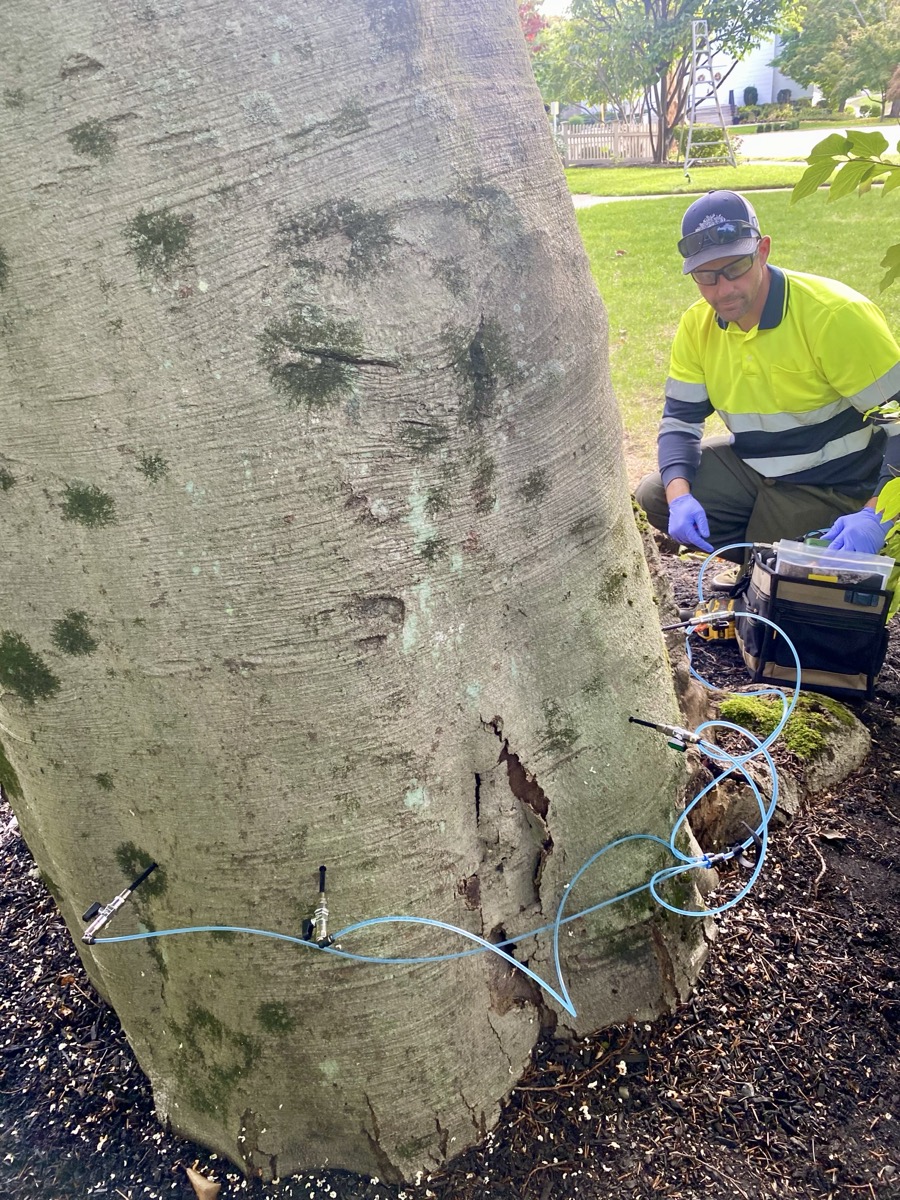
Deep root fertilization combats nutrient deficiencies in Plymouth's nutrient-poor coastal soils, injecting essential elements like nitrogen, phosphorus, and micronutrients directly into the root zone. Trunk injections deliver systemic pesticides or fungicides precisely, minimizing environmental impact compared to sprays. For your Plymouth Center home overlooking the harbor, we prune wind-damaged red oaks while treating salt-stressed white pines.
Safety remains paramount. Our team uses ANSI Z133 safety protocols, including personal protective equipment, traffic control, and rigging systems for high-risk work near Long Pond or Pinehills developments. We've served South Shore Massachusetts for years, from Carver to Duxbury, with proven results in hurricane recovery after nor'easters like the 2022 bomb cyclone.
Homeowners in North Plymouth or Cedarville notice declining vigor in their pitch pines from the 1957 wildfire legacy—scarred trunks prone to beetles. Our custom PHC programs reverse this, boosting tree health and property value. Expect annual inspections, soil tests, and treatments customized to your site's microclimate.
Investing in plant health care Plymouth MA saves thousands in removal costs. A mature red oak on your Manomet lot could cost $2,000-$5,000 to remove, but our $500-$1,500 annual PHC keeps it thriving. Call Southeast Arborist at 508-369-5009 for a free consultation. We'll assess your trees against Plymouth's coastal challenges and craft a plan.
This comprehensive approach ensures your landscape withstands Plymouth's dynamic environment, from salty breezes in Plymouth Center to dry pine barrens in Bournedale Pines.
Why Plymouth Properties Need Plant Health Care
Plymouth's coastal and inland forests create distinct tree health challenges that demand professional plant health care Plymouth MA. Your property in Plymouth Center endures constant onshore winds up to 50 mph from Cape Cod Bay, shearing branches from pitch pines and red oaks. Salt spray penetrates leaves of white pines and American beeches along the harbor, causing needle scorch and tip dieback.
In Manomet and Ellisville, Atlantic white cedars and tupelos in salt marshes suffer chlorosis from sodium buildup in sandy soils with pH levels often below 5.0. Inland toward West Plymouth and Myles Standish State Forest, pitch pine barrens—regrown after Pilgrim clearing and the 1957 wildfire—face drought stress and root rot in compacted, low-organic-matter soils.
Rapid development in Pinehills and Bournedale Pines pressures forested parcels. Construction compacts soil around black oaks and eastern red cedars, starving roots of oxygen. Your trees show early signs: wilting leaves, sparse canopies, or bark cracks inviting borers.
Common pests exploit these weaknesses. Spongy moths (formerly gypsy moths) erupt in oak-heavy Chiltonville, defoliating red and black oaks by June, reducing photosynthesis by 50-70%. Winter moths target beeches in North Plymouth, their inchworm larvae stripping buds in spring. Hemlock woolly adelgid infests rare hemlocks near Long Pond, coating needles with white wool and girdling stems.
Emerald ash borer, though rarer in Plymouth's pine-dominated landscape, threatens any ash imports. Eastern red cedars in Cedarville host bagworms, webbing foliage into unsightly masses. Fungal diseases thrive in humid nor'easters: beech bark disease scars American beeches, while pitch pines develop Diplodia tip blight from wet springs.
Climate amplifies risks. Plymouth averages 45 inches of rain yearly, but summer droughts parch inland sites. Hurricanes like Bob (1991) and nor'easters topple wind-weakened tupelos. Wildfire risk persists in pine barrens; insurers in Bournedale Pines mandate fuel reduction around homes.
Soil conditions exacerbate issues. Coastal areas have glacial till with low fertility; inland pine barrens feature nutrient-poor podzols. Deep root fertilization replenishes iron and manganese, preventing yellowing in oaks.
Without plant health care, your trees decline predictably. A salt-stressed white pine in Manomet drops 30% of needles annually, becoming hazardous. Proactive PHC—soil auger injections, IPM scouting—halts this. Southeast Arborist's ISA Certified Arborists use soil probes to measure compaction and pH on your property.
Local context matters: Myles Standish State Forest's pine barrens host rare species like pitch pine, vulnerable to southern pine beetle amid warming winters. Homeowners near the forest edge see invasions into neighborhoods like West Plymouth.
Practical advice: Inspect your trees monthly for silk tents (spongy moth), sticky honeydew (adelgids), or sawdust frass (borers). Test soil pH with a kit from Plymouth's Agway; if below 5.5, request fertilization. In wildfire-prone Ellisville, clear pine needle buildup within 30 feet of your home.
Our PHC programs have restored hundreds of Plymouth trees, from harbor-view lots to pine barren edges. Tailored to species and site, they prevent $10,000+ losses per mature tree.
Our Plant Health Care Process in Plymouth
Southeast Arborist follows a rigorous, step-by-step plant health care process in Plymouth MA, leveraging ISA certification and ANSI A300 standards. We start with a free on-site assessment for your Plymouth property.
**Step 1: Site Evaluation (1-2 hours).** Our ISA Certified Arborists arrive with resistograph drills, soil augers, and anemometers. In Plymouth Center, we measure wind exposure on red oaks; in Manomet, we probe salt accumulation in white pines. We map tree locations, species (pitch pine, black oak, etc.), and symptoms using GPS apps. Soil cores reveal compaction levels—often 80% in Pinehills developments—and pH.
**Step 2: Diagnostic Testing (Lab analysis, 1 week).** Samples go to our lab or university partners. We test for spongy moth egg masses, hemlock woolly adelgid via microscopy, and nutrient deficiencies. For emerald ash borer, we use acoustic detection on ash trunks. Fungal cultures identify beech bark disease pathogens.
**Step 3: Custom PHC Program Design.** Based on IPM thresholds, we outline treatments. Your Cedarville eastern red cedars might need Bacillus thuringiensis (Bt) for winter moth caterpillars, applied via mist blower at bud break. Hemlocks in Chiltonville get imidacloprid trunk injections. Deep root fertilization uses a 9-0-12 formula with iron chelate, injected 8-12 inches deep via grid pattern (1 gallon per tree DBH inch).
**Step 4: Treatment Application.** We use specialized equipment: Simplex tree injectors for systemic delivery (0.5 ml per inch DBH, no drilling wounds). Soil injectors with radial tines aerate roots without damage. For spongy moth in North Plymouth oaks, we deploy pheromone traps pre-season and azadirachtin sprays if defoliation exceeds 25%.
Safety protocols include harnesses for elevated work, spill containment for chemicals, and buffer zones near Long Pond water. All treatments comply with Massachusetts Pesticide Bureau regulations.
**Step 5: Monitoring and Follow-Up.** Quarterly inspections track progress. Drones survey canopy density in Bournedale Pines pine barrens. We adjust for Plymouth's climate—extra irrigation recommendations post-nor'easter.
Techniques shine in specifics. Trunk injections for emerald ash borer use Arborjet QUIK-jet, sealing ports to prevent decay. Deep root fert uses soil needle probes, avoiding surface disruption ideal for your West Plymouth lawn. IPM minimizes chemicals: beneficial nematodes for bagworms on tupelos.
For wildfire mitigation near Myles Standish, we thin pitch pines, reducing ladder fuels per state forestry guidelines.
Practical homeowner tips: Water deeply (1 inch weekly) during droughts to aid our fert programs. Mulch 3 inches deep around bases, keeping off trunks, to retain moisture in acidic soils.
Our process yields measurable results: 90% tree recovery in salt-stressed Ellisville cedars. From coastal pruning in Plymouth Center to IPM in inland forests, we protect your investment.
Common Plant Health Care Projects in Plymouth Neighborhoods
Plant health care projects in Plymouth MA vary by neighborhood, addressing local tree species and threats.
In **Plymouth Center**, harbor views demand pruning wind-damaged red oaks and salt treatment for white pines. We inject phosphites to boost resistance, clearing sightlines without over-thinning.
**North Plymouth** sees spongy moth defoliation on black oaks; our Bt applications and egg mass removal protect spring flush.
**Manomet** coastal lots feature Atlantic white cedars stressed by salt; deep root fert with potassium leaches sodium, paired with gypsy moth mating disruption.
**Cedarville** inland properties host eastern red cedars with bagworms; systemic insecticides via soil drench control infestations without foliar residue.
**Long Pond** areas treat American beeches for winter moth; targeted sprays at petal fall minimize bee impact.
**Chiltonville** historic homes have hemlocks ravaged by woolly adelgid; domiphenamide injections save mature specimens near the forest edge.
**West Plymouth**, bordering Myles Standish State Forest, requires pitch pine fire mitigation—thinning to 10-foot spacing—and Diplodia blight fungicides.
**Ellisville** marsh edges see tupelo root rot from flooding; aeration and mycorrhizal inoculants restore vigor.
**Bournedale Pines** pine barrens homes get comprehensive PHC: white pine needlecast treatments and emerald ash borer scouting for hybrids.
**Pinehills** developments face construction-damaged trees; we perform root zone renewal, injecting growth regulators.
Common across neighborhoods: annual soil tests for pH correction in podzols. Homeowners report 20-30% canopy improvement post-treatment.
Our ISA team handles these with precision, serving nearby Carver (pine barrens), Kingston (oaks), Plympton (beeches), Bourne (cedars), Wareham (pines), Duxbury (coastal species). Call 508-369-5009 to start your project.
Plant Health Care Costs in Plymouth, MA
Plant health care costs in Plymouth MA reflect property size, tree count, species, and issues. Expect $300-$800 for initial assessments covering up to 10 trees on a standard 1-acre lot in Plymouth Center.
Annual PHC programs range $500-$2,500. Basic monitoring and fertilization for five pitch pines in West Plymouth: $500. Add spongy moth treatment for oaks in Manomet: $800-$1,200, including traps and sprays.
Trunk injections cost $15-$25 per inch DBH. A 20-inch red oak emerald ash borer treatment: $300-$500. Hemlock woolly adelgid for five trees in Chiltonville: $750 total.
Deep root fertilization: $2-$4 per inch DBH, or $100-$400 per session. Soil care in nutrient-poor Ellisville sands adds $200 for amendments.
Factors driving costs: Accessibility—cranes for Long Pond tall pines add 20%. Neighborhood density—Pinehills traffic control ups fees. Urgency—post-nor'easter in North Plymouth doubles rates for rapid response.
Value proposition: Prevent $2,500-$6,000 tree removals. A healthy black oak boosts curb appeal 5-10%, per appraisals. IPM cuts long-term chemical costs 30-50%. Insurers in Bournedale Pines offer discounts for fire-mitigated properties.
ROI example: Your Cedarville lot with 15 white pines. $1,200 annual PHC averts $15,000 in replacements over 10 years.
We provide transparent quotes post-assessment, no hidden fees. Financing options ease multi-year programs. Compared to Duxbury or Wareham, Plymouth's coastal premiums are offset by our local base.
Practical budgeting: Prioritize hazard trees first. Group treatments—fert + pest for oaks—saves 15%. Schedule off-peak (fall) for 10% discounts.
Southeast Arborist's efficiency keeps costs competitive while delivering ANSI-compliant results.
When to Schedule Plant Health Care in Plymouth
Timing plant health care in Plymouth MA maximizes efficacy against seasonal threats.
Spring (March-May): Target winter moth on beeches in North Plymouth—apply Bt at bud swell. Scout spongy moth eggs by April. Fertilize post-frost when soils warm above 50°F.
Summer (June-August): Treat hemlock adelgids in Chiltonville with injections; drought-stress white pines in Manomet with deep watering aids.
Fall (September-November): Optimal for trunk injections (emerald ash borer) as sap flow slows. Deep root fert in sandy Ellisville soils before freeze.
Winter (December-February): Dormant oils for scale on eastern red cedars in Cedarville; assess nor'easter damage in Plymouth Center.
Urgency signs: 20% defoliation, branch dieback, frass, or leaning trunks—schedule within 48 hours to prevent spread. Post-hurricane, inspect within 72 hours for root plate uplift in West Plymouth pines.
Plymouth's climate—mild winters, wet springs—shifts timing. Avoid summer sprays during beach season fog.
Home tip: Flag issues after leaf drop. Annual fall checkups catch 80% problems early.
Contact us at 508-369-5009 year-round.
Frequently Asked Questions About Plant Health Care in Plymouth
**What is plant health care in Plymouth MA?** Custom programs monitoring pests, diseases, nutrition for trees like pitch pine and red oak, using IPM to maintain health amid salt and wind.
**How do I know if my trees need PHC?** Look for sparse canopies, dieback, pests like spongy moth webs, or soil compaction in your Pinehills yard—request our free inspection.
**Are your treatments safe for my family's Plymouth property?** Yes, ISA Certified applications follow EPA labels, with buffers near Long Pond. Trunk injections avoid drift.
**How effective is deep root fertilization for Manomet white pines?** 70-90% vigor improvement in salt-stressed trees, per soil tests showing pH-balanced roots.
**What about spongy moth or winter moth in Chiltonville?** Pheromone traps and Bt reduce populations 85%; we monitor thresholds.
**Do you handle hemlock woolly adelgid near Myles Standish?** Injections save 95% of infested trees in West Plymouth.
**How much does PHC cost for a Bournedale Pines lot?** $600-$1,500/year for 10 pines, preventing wildfire risks.
**Can you service nearby towns like Duxbury?** Yes, full South Shore coverage from our Plymouth base.
Plant Health Care Throughout Plymouth
Southeast Arborist provides plant health care across Plymouth neighborhoods: Plymouth Center's harbor oaks, North Plymouth beeches, Manomet cedars, Cedarville red pines, Long Pond tupelos, Chiltonville hemlocks, West Plymouth pitch pines, Ellisville marshes, Bournedale Pines barrens, Pinehills developments.
We extend to nearby Carver, Kingston, Plympton, Bourne, Wareham, Duxbury. ISA Certified, ANSI-compliant.
Call 508-369-5009 for your free assessment. Protect your trees today.