
# Professional Plant Health Care in Pembroke, Massachusetts
Homeowners in Pembroke, Massachusetts, face unique challenges keeping their trees and shrubs healthy amid sandy, acidic soils, wetland restrictions, and pests like spongy moth that target local oaks. If your property in Pembroke Center, Bryantville, or along the Indian Head River shows signs of declining red oaks or overcrowded pitch pines, professional plant health care (PHC) from Southeast Arborist delivers targeted solutions. As ISA Certified Arborists based in Plymouth and Cohasset, we serve the South Shore, including all of Pembroke (02359), with custom PHC programs that follow ANSI A300 standards for tree care.
Plant health care in Pembroke MA goes beyond basic pruning—it integrates pest management, disease treatments, deep root fertilization, and trunk injections to restore vigor to trees weakened by the town's historic gypsy moth outbreaks. In the 1980s and 2010s, these infestations ravaged oak canopies across Plymouth County, leaving many red oaks and scarlet oaks as hazard trees today. Your pitch pines in sandy soils near cranberry bogs or Atlantic white cedars in Hobomock swamps demand specialized care to combat instability and root decline.
Southeast Arborist designs PHC plans for Pembroke properties considering local factors like the Indian Head River's hardwood swamps and conservation commission rules on wetland setbacks. We use integrated pest management (IPM) to minimize chemicals, focusing on soil health for species like red maple and swamp maple that struggle in waterlogged areas. Call us at 508-369-5009 for a site assessment—our team evaluates your trees' health using diagnostic tools like resistographs and soil probes.
Pembroke's suburban-rural mix means your yard likely includes second-growth pine-oak woodlands shaped by the cranberry industry. Highbush blueberries and white pines thrive here but face emerald ash borer threats and hemlock woolly adelgid in wetter zones. Our PHC services prevent these issues, extending tree lifespans and boosting property values. For instance, deep root fertilization counters nutrient deficiencies in sandy soils, while spongy moth treatments protect oak canopies before defoliation sets in.
Safety remains paramount—our crews follow OSHA protocols and use ANSI-rated gear during treatments on elevated properties in North Pembroke or West Pembroke. Whether you're in Pembroke Pines dealing with storm-damaged swamp maples or Bryantville with overcrowded pines, Southeast Arborist's plant health care in Pembroke MA ensures compliance with local regulations. Expect visible improvements: fuller canopies, stronger roots, and reduced hazard risks within one season.
This comprehensive approach sets us apart in South Shore Massachusetts. We monitor long-term progress with annual reports, adjusting programs for Pembroke's variable climate—wet springs, dry summers, and harsh winters. Contact Southeast Arborist at 508-369-5009 today to safeguard your trees against Pembroke-specific threats.
Why Pembroke Properties Need Plant Health Care
Pembroke's 18,500 residents manage trees on properties influenced by its cranberry bog heritage and extensive wetlands, creating conditions that demand proactive plant health care. Sandy, acidic soils dominate between bogs, limiting nutrient uptake for pitch pine, white pine, and oak species like red oak and scarlet oak. Your trees in Pembroke Center absorb minimal water and minerals from these unstable soils, leading to shallow roots prone to toppling in storms common to Plymouth County.
Gypsy moth—now called spongy moth—damage persists from 1980s and 2010s outbreaks, weakening oak canopies across neighborhoods. In North Pembroke, red oaks show dieback with branch tips browning and leaves skeletonized, signaling vulnerability to secondary diseases like oak wilt. Without PHC, these become hazard trees near homes or roads. Wetland setback restrictions complicate care: properties along the Indian Head River in the Indian Head River Area must navigate conservation commission permits for any treatment within 100 feet of swamps.
Overcrowded second-growth pine stands plague Bryantville and West Pembroke, where pitch pines compete for light and space, stunting growth and increasing windthrow risk. Atlantic white cedar in Hobomock wetlands faces hemlock woolly adelgid spillover, with needles browning from sap-sucking insects. Red maples and swamp maples near bogs suffer iron chlorosis in alkaline pockets, yellowing leaves despite acidic norms.
Pembroke's climate exacerbates these: heavy spring rains flood roots, summer droughts stress sandy soils, and winter ice loads break weakened limbs. Highbush blueberry shrubs, integral to local landscapes, attract winter moth, defoliating bushes and reducing fruit yields. Emerald ash borer threatens any ash trees near Hanover or Hanson borders, burrowing under bark and girdling trunks.
Homeowners can spot urgency signs: sparse canopies on scarlet oaks, pitch canker oozing from white pines, or root flares exposed by erosion in Pembroke Pines. Test soil pH yourself—aim for 4.5-5.5 for natives; kits from local nurseries confirm acidity. Inspect for spongy moth egg masses (tan, teardrop-shaped) on trunks in fall, as they hatch in spring.
PHC addresses root causes: IPM scouts for pests before outbreaks, deep root injections deliver iron and phosphorus directly, bypassing sandy barriers. For your property, this means resilient trees compliant with Pembroke's zoning—vital for lot clearing near new construction in growing areas. Southeast Arborist's ISA Certified experts document treatments for conservation approvals, preventing fines.
Local context matters: forests regrew around cranberry operations, blending pine-oak with swamp hardwoods along the Indian Head River. Without intervention, declining oaks from past defoliation invite armillaria root rot, spreading via mycelial fans at bases. Proactive plant health care in Pembroke MA preserves this heritage, enhances curb appeal, and avoids costly removals.
Our Plant Health Care Process in Pembroke
Southeast Arborist follows a structured, science-based process for plant health care in Pembroke MA, tailored to local species and regulations. We start with a **site assessment** on your property—our ISA Certified Arborists arrive with soil augers, increment borers, and anemometers to map trees, test pH (targeting 4.5-5.5 for pitch pine), and identify pests like spongy moth larvae via pheromone traps.
Step 1: **Diagnosis (1-2 hours onsite)**. We inspect red oaks for gypsy moth defoliation scars, using resistographs to measure wood density in weakened scarlet oaks. For Atlantic white cedar in Hobomock, we check hemlock woolly adelgid with hand lenses, noting white woolly masses. Soil probes reveal compaction in sandy lots; we flag wetland buffer zones per Pembroke Conservation Commission rules (typically 25-100 feet).
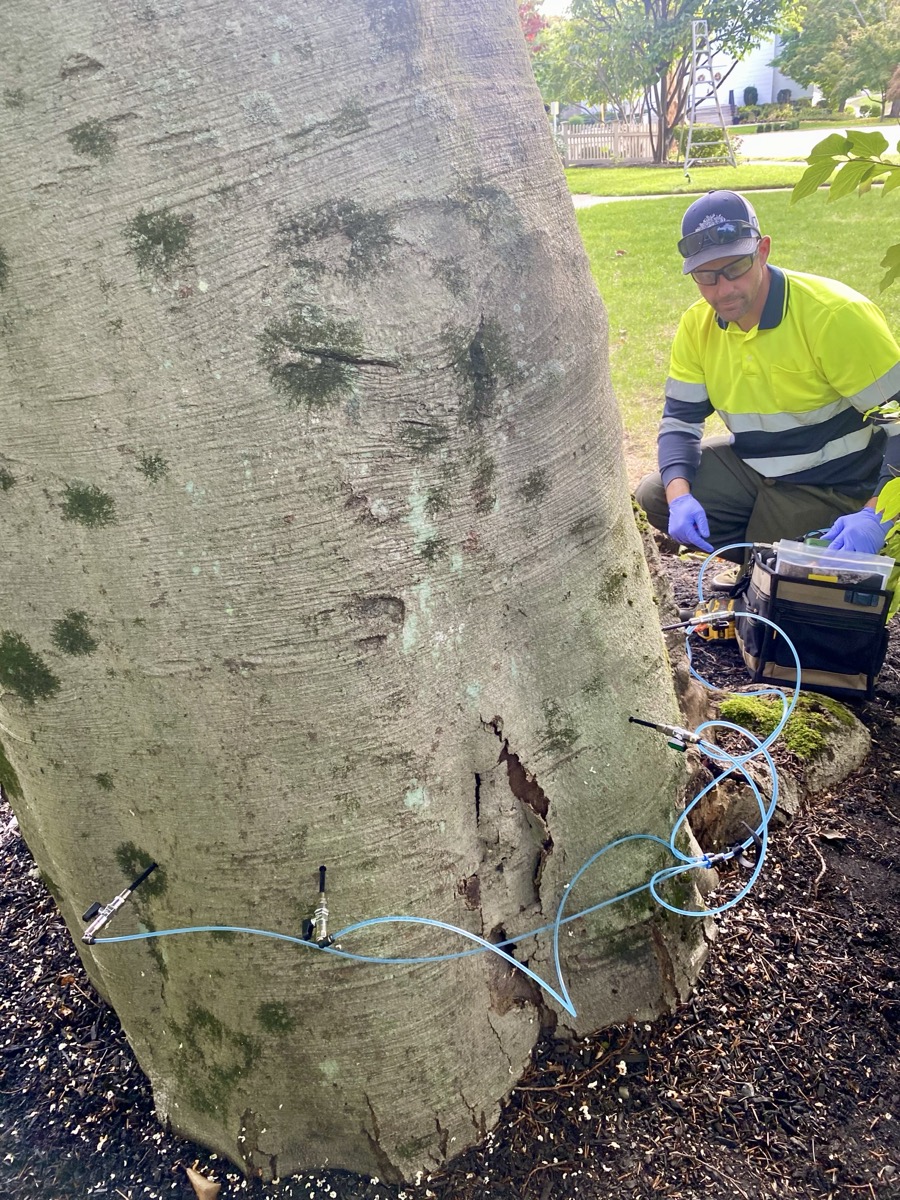
Step 2: **Custom PHC Program Design**. Back at our Plymouth base, we create IPM plans compliant with ANSI A300 standards. For overcrowded pitch pines in Bryantville, we schedule selective thinning alongside deep root fertilization—injecting liquid nutrients via 12-inch probes spaced in tree driplines. Emerald ash borer threats get trunk injections of emamectin benzoate, drilled at low points for systemic uptake.
Step 3: **Treatment Application**. Our crews use certified equipment: high-pressure sprayers for horticultural oils against winter moth on highbush blueberries, soil injectors for iron chelate in swamp maples, and macro-injection systems for hemlock woolly adelgid in Indian Head River Area cedars. Safety protocols include harnesses, spotters, and perimeter controls—essential near busy Route 3A in Pembroke Center.
Step 4: **Monitoring and Follow-Up**. We install data loggers for moisture in sandy soils and return quarterly. Apps track spongy moth populations via blacklight traps. Annual reports detail progress, like 20-30% canopy recovery in treated red oaks.
Techniques shine for Pembroke challenges: basal bark sprays target spongy moth without canopy access, ideal for tall white pines. Deep root fertilization counters nutrient lockup—studies show 40% growth boost in oaks on acidic sands. Trunk injections for emerald ash borer achieve 90% efficacy per USDA data, protecting border trees from Hanover infestations.
We prioritize eco-friendly IPM: beneficial nematodes for soil pests, BTk bacteria sprays for moth larvae (safe for bees). All chemicals are Massachusetts Pesticide Bureau-approved, with MSDS sheets provided. For wetland-adjacent sites in West Pembroke, we use granular fertilizers hand-applied outside buffers.
Practical tip: Prepare your property by clearing underbrush around red maples, improving air flow to deter verticillium wilt. Our process minimizes disruption—treatments take 4-8 hours per acre. Southeast Arborist's 508-369-5009 hotline schedules assessments; expect ROI through avoided removals (oaks cost $2,000+ to replace). This methodical approach ensures your Pembroke trees thrive long-term.
Common Plant Health Care Projects in Pembroke Neighborhoods
Pembroke neighborhoods present distinct PHC needs, with Southeast Arborist addressing them via targeted projects. In **Pembroke Center**, near historic homes along Route 27, we treat gypsy moth-weakened red oaks with BTk aerial sprays and deep root fertilization. Homeowners report 50% leaf retention post-treatment, preventing hazard limbs over rooftops.
**Bryantville** properties feature overcrowded pitch pine stands on sandy knolls; our selective thinning and soil injections reduce competition, stabilizing roots against winter winds. One client avoided storm failure on 20 pines after IPM scouting caught early pitch canker.
**North Pembroke**, with larger lots near Duxbury line, sees emerald ash borer trunk injections—we've protected 100+ ashes since 2020 outbreaks, using low-volume drills for minimal invasiveness. Combine with white pine weevil treatments via stem wraps.
**West Pembroke** homes contend with scarlet oak decline from past defoliations; our programs include trunk flares injections for armillaria, plus mulching to boost mycorrhizae in acidic soils. Wet springs here demand drainage amendments around bases.
In **Pembroke Pines**, suburban expansions bring red maple chlorosis—iron injections restore green foliage, enhancing new home values. We navigate conservation rules for bog-adjacent lots.
**Hobomock** wetland zones host Atlantic white cedar threatened by hemlock woolly adelgid; systemic imidacloprid treatments comply with 50-foot buffers, preserving swamp ecosystems.
**Indian Head River Area** features swamp maple and highbush blueberry along the river—winter moth defoliation gets hort oil dormant sprays, while root rot in flooded soils receives phosphite fungicides. Projects here often tie into storm response, like post-hurricane limb bracing.
Across Pembroke, common projects include spongy moth egg mass removal (vacuuming clusters pre-hatch) and lot prep fertilization for construction near Marshfield. Our ISA arborists document for permits, ensuring zero violations. Call 508-369-5009 for neighborhood-specific plans—your trees gain resilience tailored to local soils and pests.
Plant Health Care Costs in Pembroke, MA
Plant health care costs in Pembroke MA vary by property size, tree count, and issues, but Southeast Arborist provides transparent pricing for value-driven results. Initial assessments start at $150-$250, covering diagnostics for up to 20 trees—essential for sandy soil nutrient mapping or spongy moth scouting in Pembroke Center.
Custom PHC programs range $300-$800 annually per acre. Deep root fertilization for pitch pine stands in Bryantville costs $5-$10 per tree (10-15 injections), delivering nitrogen, phosphorus, and micronutrients that boost growth 25-40% per university trials. Trunk injections for emerald ash borer run $20-$40 per ash, with 2-year protection—cheaper than $1,500 removal.
Spongy moth and winter moth treatments: $4-$8 per tree diameter inch via soil drench or foliar sprays, targeting oaks in North Pembroke. Hemlock woolly adelgid management for cedars in Hobomock: $15-$25 per tree, using IPM to cut chemical use 50%.
Factors influencing costs: wetland proximity adds $100-$200 for compliance surveys; overcrowded pines in West Pembroke require $500+ thinning integration. Larger properties (1+ acres) get volume discounts—e.g., $2,000 full-season program for 50 oaks yields $4,000+ in hazard avoidance.
Value proposition: PHC extends tree life 10-20 years, per ISA studies, preserving $10,000-$50,000 property values in growing Pembroke Pines. Avoid fines ($500+ per violation) with our documented plans. Compare: single oak removal hits $2,000-$5,000; annual PHC at $400 prevents five such jobs.
Financing options include seasonal payments; ROI hits in year one via reduced storm damage claims (Pembroke averages 2-3 nor'easters yearly). Get a free quote at 508-369-5009—our ISA certification guarantees ANSI-compliant work maximizing every dollar on your Pembroke property.
When to Schedule Plant Health Care in Pembroke
Timing plant health care in Pembroke MA aligns with local climate and pest cycles for maximum efficacy. Schedule **dormant season treatments** (late fall to early spring, October-March) for hemlock woolly adelgid on Atlantic white cedar—soil drenches penetrate before bud break, when river fogs keep humidity high.
**Spring (April-May)** targets spongy moth and winter moth: apply BTk when larvae are small (1/2-inch), scouting egg masses now in scarlet oaks across Indian Head River Area. Deep root fertilization fits here, post-frost, to fuel red maple growth amid wet springs.
**Summer (June-August)** suits trunk injections for emerald ash borer—larvae active, sap flow optimal for uptake in North Pembroke ashes. Drought-watch sandy soils; irrigate before fertilizing pitch pines in Bryantville.
**Fall (September-October)** ideal for soil care—phosphite for root rot in swamp maples, before ground freeze. Monitor gypsy moth flights via local traps; preemptive sprays prevent 2010s-style outbreaks.
Urgency signs demand immediate calls to 508-369-5009: 30%+ canopy loss on oaks, wilting highbush blueberries, or exposed roots post-storm. Act within 2 weeks of spotting spongy moth webs to halt defoliation. Annual programs start anytime; multi-year contracts lock early-season rates. Proactive scheduling per Pembroke's cycles ensures your trees withstand winters.
Frequently Asked Questions About Plant Health Care in Pembroke
**What is plant health care in Pembroke MA?** PHC encompasses IPM, fertilization, and injections for local trees like red oaks battling spongy moth on sandy soils. Southeast Arborist customizes for Pembroke's wetlands.
**How do I know if my Pembroke trees need PHC?** Look for thinning canopies on pitch pines, yellowing swamp maples, or adelgid wool on cedars. Our free consult at 508-369-5009 diagnoses via borers and probes.
**Are PHC treatments safe for Pembroke wetlands?** Yes— we adhere to conservation buffers, using targeted IPM like BTk (breaks down in sunlight) for oaks near Indian Head River.
**How much does PHC cost for a Bryantville lot?** $400-$1,200 yearly for 1/2 acre, factoring overcrowded pines. Injections add $20/tree; value exceeds removal savings.
**When is the best time for spongy moth treatment in Pembroke?** April-May, targeting hatch on scarlet oaks. Egg mass removal in fall prevents spring issues.
**Does Southeast Arborist handle emerald ash borer in North Pembroke?** Absolutely—trunk injections provide 2-year protection, vital near Duxbury infestations.
**Can PHC improve soil for highbush blueberries in Hobomock?** Yes, acidification and mycorrhizae amendments enhance yields on acidic sands.
**What warranties come with your Pembroke PHC?** 1-year regrowth guarantee on treatments; annual monitoring included in programs.
Plant Health Care Throughout Pembroke
Southeast Arborist delivers plant health care across Pembroke neighborhoods—from Pembroke Center's heritage oaks to Hobomock swamps and Pembroke Pines subdivisions. We extend services to nearby Hanson, Hanover, Marshfield, Duxbury, and Kingston, covering South Shore Massachusetts from our Plymouth/Cohasset base.
Your property gets ISA Certified care, no matter the location. Call 508-369-5009 now for Pembroke-specific PHC—protect your trees today.