
# Professional Plant Health Care in Norwood, Massachusetts
Homeowners in Norwood, Massachusetts, face unique challenges keeping their mature trees healthy amid dense urban conditions and an aging canopy. Plant health care in Norwood MA goes beyond basic pruning—it's a targeted approach to pest management, disease treatment, soil nutrition, and preventive care that preserves your property's landscape value. Southeast Arborist, LLC, your South Shore Massachusetts tree care experts based in Plymouth and Cohasset, delivers ISA Certified arborist services tailored to Norwood's 30,500 residents across Norfolk County.
Norwood's street trees, many planted in the 1890s along Washington, Nahatan, and Walpole Streets, include Norway maples, red oaks, and sycamores that now contend with utility conflicts and decline. Your residential lots in neighborhoods like Norwood Center or South Norwood often feature pin oaks, white pines, honey locusts, red maples, London planes, and lindens squeezed between narrow driveways and overhead lines from the town's municipal electric utility. These conditions demand professional plant health care Norwood MA homeowners can trust.
Southeast Arborist's plant health care programs address Norwood-specific issues like emerald ash borer threats, spongy moth outbreaks, winter moth defoliation, and hemlock woolly adelgid infestations. We use ANSI A300 standards for all treatments, ensuring compliance with industry best practices. Our ISA Certified arborists conduct site-specific assessments, considering Norwood's clay-heavy soils, which compact easily under foot traffic near Ellis Pond or Pellana Road Area homes, and the local climate of humid summers (average 75°F highs) and cold winters (lows to 20°F) that stress tree roots.
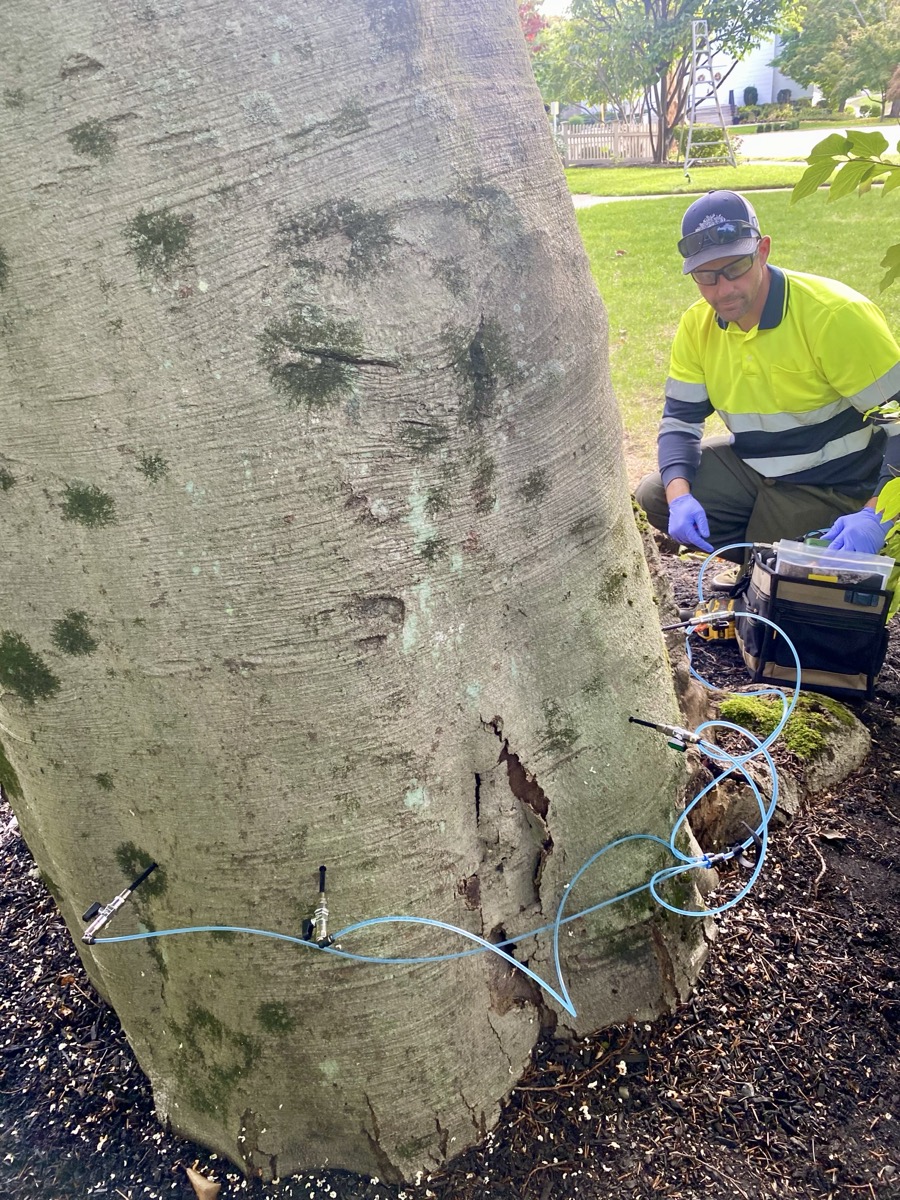
Deep root fertilization combats nutrient deficiencies in your compacted soils, while trunk injections deliver precise pest controls without broad spraying. Integrated Pest Management (IPM) minimizes environmental impact, scouting for issues before they escalate. For instance, in Forbes Hill properties with aging red maples showing verticillium wilt symptoms, we apply soil drenches and monitor progress quarterly.
Plant health care in Norwood MA prevents costly removals—large Norway maples declining near homes often require cranes, driving up expenses. Our custom programs start with a free consultation, evaluating your trees' vigor using tools like resistographs for internal decay detection. Safety protocols include rigging for overhead work near power lines, a constant in Norwood due to the dense municipal grid.
Residents in Balch School Area or Shattuck Park Area benefit from our experience with root heaving sidewalks—white pines and honey locusts often lift concrete due to girdling roots in alkaline Norfolk County soils (pH 6.5-7.5). We deploy air-spade tools to expose and alleviate root issues without harming the tree.
Southeast Arborist's track record includes treating hundreds of Norwood trees annually, from utility line clearance-integrated PHC to full-season monitoring. Call our ISA Certified team at 508-369-5009 for plant health care Norwood MA that protects your investment. Early intervention keeps your sycamores shading patios and lindens blooming vibrantly, avoiding the decline seen in the town's post-Dutch elm replacements from the 1960s.
This comprehensive service extends to nearby Dedham, Walpole, Canton, Stoughton, and Sharon, but our Norwood expertise shines in addressing your local electric utility's pruning mandates alongside health treatments.
Why Norwood Properties Need Plant Health Care
Norwood's dense settlement pattern, with narrow lots and mature street trees, amplifies tree stress factors that necessitate plant health care Norwood MA. Incorporated from Dedham in 1872, the town boomed industrially, planting Norway maples, red oaks, and sycamores in the 1890s that now line Washington Street. These 130-year-old trees enter decline, showing dieback and cankers, while 1960s elm replacements—now 60 years old—succumb to similar fates.
Your property's trees face constant utility line conflicts from Norwood Municipal Light's overhead network. Honey locusts and London planes in Norwood Center grow rapidly into wires, requiring integrated health care with clearance pruning to prevent die-off from repeated topping. Red maples and pin oaks in South Norwood exhibit iron chlorosis in clay-loam soils, yellowing leaves from pH imbalances (local soils average 6.8).
Climate plays a role: Norwood's Zone 6b winters bring freeze-thaw cycles that heave roots under sidewalks in Forbes Hill, where white pines dominate. Summers' high humidity fosters fungal diseases like anthracnose on sycamores along Nahatan Street Area, causing leaf blotches and twig dieback. Limited equipment access on narrow lots near Ellis Pond complicates care—your lindens may suffer from soil compaction, reducing oxygen to roots.
Common pests hit hard: Spongy moths defoliate oaks in Balch School Area, while winter moths caterpillarize red maples in Shattuck Park Area, timing crawlers for March bud break. Emerald ash borer threatens any ash remnants post-elm losses, boring larvally under bark. Hemlock woolly adelgids infest white pines near Pellana Road Area, coating needles with white wool.
Root heaving sidewalks and driveways signals trouble—Norway maples' surface roots expand in compacted soil, lifting concrete by inches annually. Aging street trees decline from verticillium wilt (red oaks) and powdery mildew (lindens), exacerbated by drought stress; Norwood's 45-inch annual rainfall unevenly distributes, with July-August dry spells.
Without plant health care Norwood MA, these issues cascade: Declining Norway maples in residential lots fail structurally, risking property damage near homes. Sycamores drop twig blights, creating hazards under utility lines. Practical advice: Inspect your trees now for D-shaped exit holes (emerald ash borer) or sooty mold (adelgids). Test soil pH with a home kit—below 6.5, add lime; above 7.5, use sulfur.
Southeast Arborist's ISA Certified arborists identify these Norwood-specific stressors during assessments. We use IPM to target spongy moth egg masses in July, applying BTK bacteria sprays safe for bees. For winter moth, soil drenches in fall kill pupae. Deep root fertilization injects nitrogen, phosphorus, and micronutrients via soil probes, reaching 24-inch depths inaccessible to surface roots.
In Norfolk County's urban forest, your trees compete for resources—street trees shade lawns, stunting turf and tree understories. Our PHC restores balance, injecting iron chelates for chlorotic pin oaks. Safety protocols ensure treatments near wires comply with ANSI A300 utility pruning standards.
Homeowners in Norwood see value: Healthy trees boost curb appeal by 10-20%, per local appraisals, and avoid $5,000+ removal costs for large declining maples. Monitor for urgency signs like 20% canopy loss or oozing cankers—call 508-369-5009 promptly.
Our Plant Health Care Process in Norwood
Southeast Arborist follows a rigorous, step-by-step plant health care process in Norwood MA, customized to your property's trees and microconditions. Our ISA Certified arborists begin with **Site Assessment**, arriving in marked trucks equipped with resistographs, sonic tomographs, and soil augers. In Norwood Center, we map Norway maples' decline stages, noting utility conflicts via drone imagery for overhead views without climbing.
Step 1: **Diagnosis**. We visually inspect for pests—spongy moth frass under red oaks in South Norwood—and sample tissues for lab analysis (e.g., verticillium in pin oaks). Soil cores from Forbes Hill lawns reveal compaction; pH meters confirm alkalinity stressing lindens. ANSI A300 Part 4 standards guide pest risk assessments.
Step 2: **Custom Program Design**. Your plan details treatments: Trunk injections for emerald ash borer use emamectin benzoate, drilled at 1-inch spacing into sapwood, sealing with rubber plugs. Hemlock woolly adelgid gets imidacloprid soil drenches near Ellis Pond conifers. We prioritize IPM—scouting thresholds before chemical use.
Step 3: **Deep Root Fertilization**. Using hydro-injection rigs, we inject liquid fertilizers 12-18 inches deep around drip lines. For sycamores on Nahatan Street Area, this delivers mycorrhizal fungi to enhance root uptake in clay soils. White pines in Pellana Road Area receive phosphite for root rot prevention.
Step 4: **Pest and Disease Treatments**. Spongy moth control involves egg mass removal and BTK aerial sprays in June, timed for larval hatch. Winter moth treatments apply acephate drenches in October, targeting soil pupae. Safety protocols include PPE and buffer zones near water like Ellis Pond.
Step 5: **Monitoring and Follow-Up**. Quarterly visits track progress—chlorophyll meters quantify leaf health in honey locusts. Apps log data for your review. In Balch School Area, we adjust for school proximity, using low-drift nozzles.
Equipment sets us apart: Air-spades excavate roots non-destructively for heaving issues under Shattuck Park Area driveways. ArborJet systems enable macro-infusion trunk injections, systemic delivery without foliar residue. Rigging gear ensures safe access on narrow Norwood lots.
Techniques adhere to ISA Best Management Practices: Mulch basins around London planes retain moisture, reducing drought stress. We avoid wounding—incision sites heal via compartmentalization.
Practical advice for your Norwood trees: Water deeply (1 inch/week) during dry spells; avoid salt near streets in winter, as de-icers burn red maple roots. Fertilize only post-assessment to prevent lush growth inviting pests.
Our process minimizes disruption—treatments take 1-4 hours per tree, with no ladders near wires. Post-treatment, we provide reports detailing BTU (tree health units) improvements.
For Norwood's aging canopy, this process extends tree life by 10-20 years. Southeast Arborist's 20+ years serving South Shore MA ensure reliable execution. Schedule your assessment at 508-369-5009.
Common Plant Health Care Projects in Norwood Neighborhoods
Plant health care projects in Norwood MA vary by neighborhood, reflecting local tree populations and site constraints. In **Norwood Center**, Norway maples along Washington Street receive utility-integrated PHC: Trunk injections for scale insects and deep root feeds to combat decline, preventing dieback near shops.
**South Norwood** homes feature red oaks battling anthracnose—our IPM includes phosphorous acid sprays in spring, reducing leaf spot by 70%. Pin oaks here get iron injections for chlorosis, restoring green canopies over narrow driveways.
**Forbes Hill** properties demand root pruning for heaving sidewalks under white pines; air-spading exposes girdling roots, followed by flexible barriers. Honey locusts receive spongy moth treatments, with egg mass scraping before BTK application.
In **Balch School Area**, proximity to schools requires low-impact PHC for lindens showing powdery mildew—horticultural oils smother fungi without drift. Red maples get winter moth soil drenches, protecting spring buds.
**Shattuck Park Area** sycamores along park edges undergo anthracnose management and root fertilization, using probes to navigate dense turf. London planes here face plane tree scale; systemic insecticides via soil injection control crawlers.
**Nahatan Street Area** boasts historic street trees—Norway maples and oaks declining from age get vigor assessments and micronutrient boosts. Utility clearance pairs with PHC to maintain form.
Near **Ellis Pond**, white pines and hemlocks fight woolly adelgids; we apply merit systemic drenches, monitoring water quality. Limited access lots use portable injection units.
**Pellana Road Area** residential red maples show verticillium—trunk flares are probed, treated with fungicide drenches if confirmed.
Across Norwood, common projects include crane-assisted health evals for large declining trees near wires, stump grinding post-removal, and replanting with disease-resistant cultivars like green vase green ash. Practical tip: Space new trees 40 feet from utilities to avoid future conflicts.
Southeast Arborist's ISA Certified team handles these with ANSI-compliant safety, serving Norwood's unique layout.
Plant Health Care Costs in Norwood, MA
Plant health care costs in Norwood MA depend on tree size, issue complexity, and treatment scope, but deliver strong ROI by averting $3,000-$10,000 removals. Initial assessments start at $150-$250, covering up to 5 trees—essential for diagnosing Norwood-specific woes like Norway maple decline.
Deep root fertilization runs $10-$20 per diameter inch (DBH); a 24-inch red oak in South Norwood costs $240-$480 annually, injecting custom blends for clay soil deficiencies. Trunk injections for emerald ash borer or hemlock adelgids: $15-$25/DBH, systemic protection lasting 2 years.
Spongy moth or winter moth treatments: $200-$500 per property, scaling with canopy size—IPM scouting included. Multi-tree programs bundle services, dropping per-tree costs 20-30%.
Factors influencing pricing: Access challenges in narrow Norwood lots add $100-$200 for rigging. Utility proximity requires certified line-clearance arborists, premium but non-negotiable. Soil sampling labs add $50.
Neighborhood variances: Norwood Center's street trees may qualify for town rebates via Municipal Light, offsetting 20%. Ellis Pond wetlands demand eco-compliant treatments, +10% for buffers.
Value proposition: Healthy trees increase property values 5-15% in Norfolk County, per assessor data. Prevented heaving saves $2,000+ in sidewalk repairs. Annual PHC extends life 15 years, vs. $5,000 crane removal.
Our tiered plans: Basic ($400/year, fertilization + monitoring), Standard ($800, +pest control), Premium ($1,500+, full IPM + injections). Free quotes detail breakdowns.
Practical budgeting: Start with assessment; multi-year contracts save 15%. Compare: Untreated trees fail faster in Norwood's stressed environment.
Southeast Arborist prices transparently, no hidden fees. Call 508-369-5009 for your Norwood PHC quote.
When to Schedule Plant Health Care in Norwood
Timing plant health care in Norwood MA maximizes efficacy against local cycles. Schedule deep root fertilization in early spring (March-April) or fall (September-October), post-frost, when roots absorb best amid 45-inch rainfall patterns.
Pest treatments peak seasonally: Spongy moth egg masses in July-August; BTK sprays at larval hatch (June). Winter moth soil drenches by mid-October, before soil freeze.
Emerald ash borer injections in May-June, during active sap flow. Hemlock adelgids year-round, optimal May for soil uptake.
Urgency signs demand immediate calls: 25% canopy thinning, wilting branches, oozing cankers, or heaving roots—hallmarks of decline in Norwood's aging oaks and maples. Spongy moth tents or adelgid wool signal outbreaks.
Annual programs start with winter assessments (January-February), scouting dormant trees. Avoid summer peaks (July-August drought) for non-emergencies.
Practical advice: Monitor post-winter thaw for heaving; test soil moisture weekly. Schedule around Norwood's leaf collection (October) to integrate debris management.
Southeast Arborist's calendars fill fast—book 4-6 weeks ahead. Call 508-369-5009 now for spring slots.
Frequently Asked Questions About Plant Health Care in Norwood
**What is plant health care in Norwood MA?** Custom programs including pest control, disease treatment, fertilization, and monitoring, tailored to Norwood's Norway maples, oaks, and pines facing utility conflicts and soil compaction.
**How do I know if my Norwood trees need PHC?** Look for yellowing leaves (chlorosis in pin oaks), defoliation (spongy moth on red oaks), or root heaving (white pines in Forbes Hill). Our free assessment confirms.
**Are your treatments safe near Norwood's power lines?** Yes, ISA Certified arborists follow ANSI A300 and utility protocols, using non-conductive tools and spotter coordination.
**How much does PHC cost for a South Norwood red maple?** $200-$400 annually for a 20-inch DBH tree, covering fertilization and pests—far less than $4,000 removal.
**Can PHC prevent sidewalk damage from my Ellis Pond honey locust?** Air-spading redirects roots; combined with fertilization, it stabilizes 80% of cases without removal.
**What's the best time for emerald ash borer treatment in Norwood?** May-June injections; early detection via D-shaped holes saves trees.
**Do you serve all Norwood neighborhoods?** Yes, from Norwood Center to Pellana Road, plus Dedham, Walpole, Canton.
**How does IPM work for winter moth in Shattuck Park Area?** Scout buds in March, drench soil in fall—targets 95% without broad sprays.
**Is replanting included after PHC failures?** We recommend species like disease-resistant lindens, with stump grinding at $150-$300.
Call 508-369-5009 for answers.
Plant Health Care Throughout Norwood
Southeast Arborist provides plant health care across Norwood neighborhoods—Norwood Center's historic maples, South Norwood's oaks, Forbes Hill pines, Balch School lindens, Shattuck Park sycamores, Nahatan Street London planes, Ellis Pond hemlocks, and Pellana Road red maples. We extend to nearby Dedham, Walpole, Canton, Stoughton, and Sharon from our Plymouth/Cohasset base.
ISA Certified, ANSI-compliant services ensure your trees thrive. Contact us at 508-369-5009 for a consultation—protect your Norwood landscape today.