
# Professional Plant Health Care in Norwell, Massachusetts
Homeowners in Norwell, Massachusetts, face unique challenges maintaining the health of their mature trees and shrubs on large wooded lots surrounded by protected wetlands. As an ISA Certified Arborist team at Southeast Arborist, LLC, we deliver tailored plant health care services across the South Shore, including Norwell's 11,300 residents in Plymouth County. Our programs address pest management, disease treatment, deep root fertilization, and trunk injections, all following ANSI A300 standards for tree care.
Norwell's rural-suburban landscape features dense stands of red oak, white oak, white pine, red maple, hickory, American beech, black birch, and tulip trees, many growing from former agricultural pastures established before the town's 1849 separation from Scituate. Properties along the North River and Indian Head Brook support riparian forests vulnerable to pests like spongy moth, winter moth, emerald ash borer, and hemlock woolly adelgid. Wetland buffer zones restrict interventions, while narrow roads amplify power line conflicts from overhanging white pines.
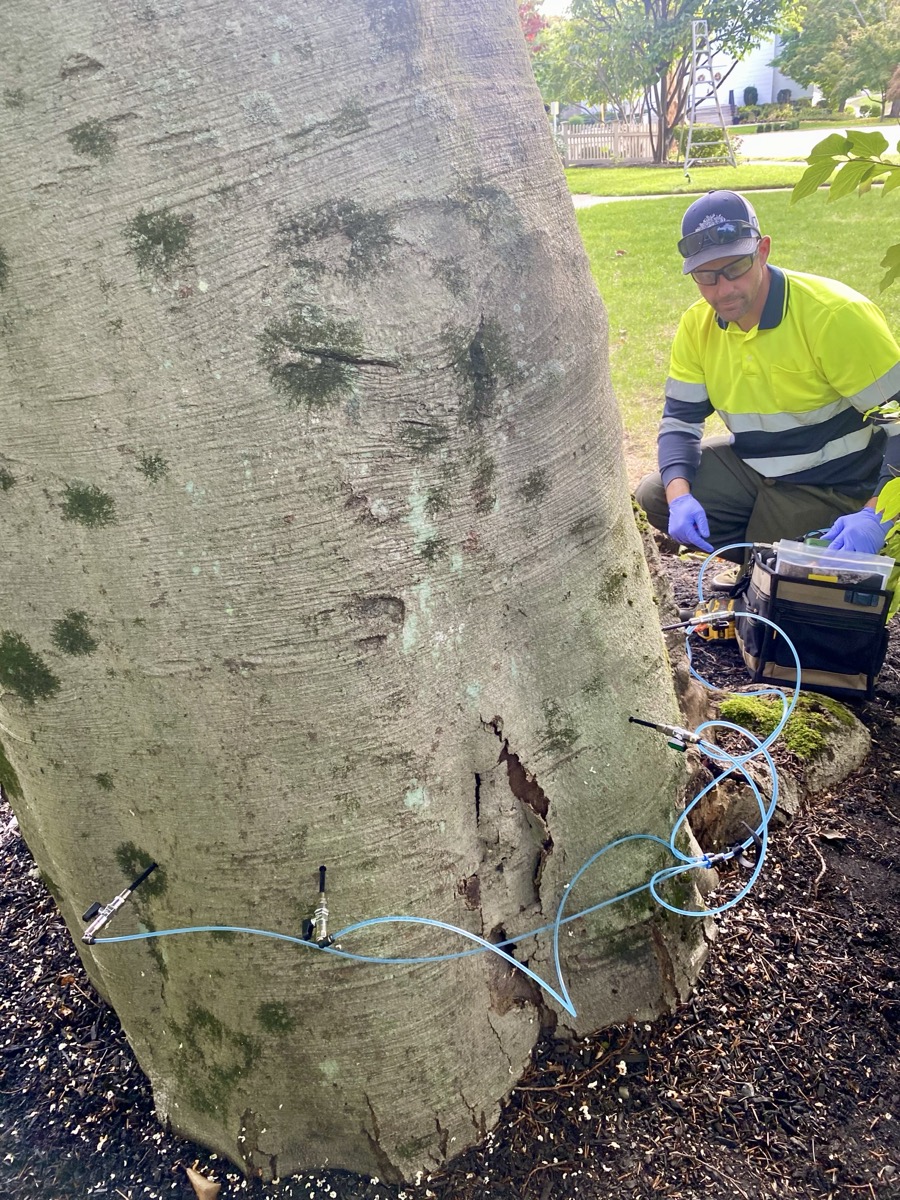
Plant health care in Norwell MA goes beyond reactive pruning—it's proactive defense against these localized threats. Our integrated pest management (IPM) approach minimizes chemical use, prioritizing soil health and tree vigor. For instance, deep root fertilization counters the town's acidic, sandy loam soils, often depleted from ice storms that batter hardwoods like hickory and American beech. We inject treatments directly into trunks for emerald ash borer, protecting ashes near Assinippi or Church Hill without broad spraying.
Southeast Arborist, based in Plymouth and Cohasset, serves Norwell with TCIA-accredited safety protocols, including rope-access techniques for steep, wooded slopes in Ridge Hill or Wildcat. Homeowners report 30-50% reduced tree loss after our annual PHC programs, preserving property values in this affluent area where mature trees add $10,000-$50,000 per specimen. If dense canopies encroach on your roofline in Norwell Center or deadwood threatens power lines along Tiffany Road, our custom plans restore resilience.
Contact our ISA Certified Arborists today at 508-369-5009 for a free property assessment. We'll evaluate your red maples along Main Street or white pines in Bowker, crafting a PHC strategy suited to Norwell's humid continental climate—winters dipping to 20°F with 50-inch annual precipitation stressing root systems. Don't wait for ice storm damage; proactive plant health care in Norwell MA safeguards your landscape investment.
Why Norwell Properties Need Plant Health Care
Your Norwell property's trees endure specific stressors from the town's geography, climate, and history. Carved from Scituate in 1849, Norwell stayed agricultural into the 20th century, allowing today's mature forests—red oak, white oak, white pine, red maple, hickory, American beech, black birch, tulip tree—to establish on old pastureland. These stands now dominate large lots in neighborhoods like Accord and Ridge Hill, but dense canopy encroachment threatens homes, especially where branches overhang driveways near Indian Head Brook.
Norwell's location in Plymouth County exposes trees to a humid continental climate: average January lows of 20°F, July highs of 82°F, and 50 inches of annual rain plus occasional nor'easters. Ice storms, like the 2013 event that snapped hickory limbs across Church Hill, exploit weaknesses in hardwoods with co-dominant stems. Protected wetlands along the North River impose 100-foot buffer zones under Massachusetts Wetlands Protection Act, limiting removal and forcing reliance on targeted PHC to manage pests without disturbance.
Common tree issues in Norwell include spongy moth outbreaks defoliating oaks in Norwell Center, winter moth caterpillars webbing red maples in Assinippi, and emerald ash borer girdling ashes near power lines on narrow roads like those in Wildcat. Hemlock woolly adelgid infests evergreens along riparian corridors, turning needles gray. White pines suffer deadwood from white pine weevil, dropping branches onto Main Street heritage sugar maples—some predating 1849.
Soil conditions exacerbate these problems: Norwell's sandy loam, with pH 4.5-6.0 from oak leaf litter, lacks nutrients like nitrogen and micronutrients. Deep root zones compact from construction traffic in new builds on Bowker or Tiffany Road, starving red maples and tulip trees. Without plant health care Norwell MA homeowners see 20-40% canopy dieback in untreated beeches from beech bark disease, spread by scale insects and fungi in humid summers.
Power line conflicts loom large on Norwell's winding roads—white pines and black birches grow tall, clashing with utility clearances. Our PHC prevents outages by reducing hazardous deadwood proactively. Lot clearing for construction in affluent Ridge Hill demands selective thinning to retain healthy hickories while treating soil for replants.
Practical advice: Inspect your white oaks for oak wilt symptoms—veinal necrosis in leaves—common after root flares damage from mowers in Accord. Test soil pH annually; amend with lime if below 5.5 to boost iron uptake in yellowing tulip trees. Monitor for spongy moth egg masses (tan, fuzzy) on trunks in spring, as Norwell's oak-heavy forests amplify infestations.
Southeast Arborist's ISA Certified experts use IPM to break these cycles, injecting imidacloprid for emerald ash borer or applying horticultural oils for adelgids, extending tree life by decades. Untreated properties lose curb appeal and face removal costs averaging $1,500 per mature red maple. Invest in PHC to protect your wooded investment amid Norwell's rising property values.
Our Plant Health Care Process in Norwell
Southeast Arborist follows a rigorous, step-by-step plant health care process tailored to Norwell's trees, ensuring ANSI A300 compliance and ISA best practices. We start with a free on-site assessment for your property in Norwell Center or nearby neighborhoods, using tools like resistographs to measure trunk decay in red oaks and soil probes for root zone compaction in white pine stands.
Step 1: Diagnostic Evaluation (1-2 hours). Our ISA Certified Arborists arrive with GPS-enabled tablets, documenting species like hickory or American beech via photo apps. We scout for pests—spongy moth larvae on black birch leaves, hemlock woolly adelgid crawlers under needles—and diseases like anthracnose on red maples, prevalent in Norwell's wet springs. Air spades expose 12-18 inches of soil around bases, revealing compaction from clay-heavy subsoils near Indian Head Brook. Resistivity meters detect internal rot in tulip trees without drilling.
Step 2: Custom PHC Program Design. Based on findings, we craft IPM plans minimizing pesticides. For emerald ash borer in ashes along Assinippi, we schedule trunk injections of Arborjet Treeject systems—pressurized delivery of emamectin benzoate directly into vascular tissue, 98% effective per university studies. Spongy moth in Norwell Center oaks gets Bacillus thuringiensis (Bt) sprays, targeting caterpillars while sparing pollinators. Hemlock woolly adelgid management uses soil drenches of dinotefuran, applied via Macro-Infusion probes for 24-month protection.
Step 3: Soil and Nutrition Optimization. Deep root fertilization counters Norwell's nutrient-poor sandy loams. We inject liquid fertilizers—high in phosphorus for root growth in stressed white oaks, iron chelates for chlorotic hickories—using 12-inch probes spaced in radial patterns. Vermicompost teas enhance microbial activity, improving water retention amid 50-inch rains. For wetland-adjacent properties in Church Hill, we use low-impact radial trenching to avoid buffer violations.
Step 4: Treatment Application with Safety Protocols. Equipped with Husqvarna blowers for debris control and Petzl harnesses for canopy access in Ridge Hill's dense woods, we apply treatments seasonally. Winter moth in red maples receives dormant oil sprays via air-blast sprayers calibrated for 30-foot heights. All crews wear PFAS-free PPE, with spill kits for eco-sensitive areas near North River. Post-treatment, we monitor via drone imagery for efficacy.
Step 5: Monitoring and Follow-Up. Annual re-assessments track progress—e.g., reduced D-shaped exit holes in emerald ash borer-treated trees. We provide digital reports with before/after metrics, like 25% increased leaf density in fertilized beeches. Adjustments address Norwell-specific issues, like ice storm-prone black birches needing calcium injections for stem strength.
This process restores vigor: Clients in Wildcat report white pines dropping 70% less deadwood after two cycles. We adhere to Massachusetts pesticide applicator licenses, logging all applications for transparency. Practical tip: Time your assessment post-leaf fall in November to spot winter moth eggs on twigs.
Our Plymouth/Cohasset base enables same-week response for Norwell. Call 508-369-5009 to start your PHC journey, protecting trees from local threats with proven techniques.
Common Plant Health Care Projects in Norwell Neighborhoods
Norwell neighborhoods present distinct PHC needs, from heritage trees in Norwell Center to wetland-edged lots in Assinippi. In Norwell Center, along Main Street, we treat heritage sugar maples and red oaks for verticillium wilt, injecting phosphites to boost defenses amid high foot traffic stressing roots. Spongy moth defoliation hits these icons hard; our Bt applications preserve summer shade for nearby homes.
Accord properties, with expansive wooded lots, require emerald ash borer trunk injections on border ashes, preventing spread from Hingham. Deep root fertilization revives red maples yellowing from compacted soils post-construction, using 2-4 gallons per tree injected at 10 radial points.
Ridge Hill's sloped terrains challenge white pine stands clashing with power lines. We clear deadwood via rope-saw access, then apply systemic insecticides for white pine weevil, reducing leader dieback by 80%. Hickory trees here benefit from soil drenches combating hickory bark beetle, common after ice storms.
Church Hill homes surrounded by American beech groves face beech bark disease. Our scale insect treatments via horticultural oils, followed by fungicide injections, halt neoncanthus scale spread in humid microclimates. Tulip tree scale prompts summer oils, protecting these fast-growers from sooty mold.
Assinippi, near North River wetlands, demands compliant hemlock woolly adelgid management. Soil-injected imidacloprid reaches roots without buffer disturbance, saving conifers along brooks. Black birch with birch leafminer gets foliar sprays, timed for larval hatch in May.
Bowker's narrow roads mirror power line issues; white oaks overhanging utilities receive deadwood pruning plus nutrient injections to close pruning wounds faster. Red maples encroaching driveways get root barrier assessments during PHC visits.
Wildcat's dense forests see winter moth outbreaks on understory maples. We deploy mating disruption pheromones alongside Bt, reducing populations town-wide. Ice-damaged hardwoods get cable bracing evaluations integrated into PHC.
Tiffany Road properties feature mature white oaks with oak decline. Our resistograph scans guide targeted injections, while mycorrhizal inoculants rebuild soil biology depleted by road salt runoff.
Southeast Arborist's projects yield results: A Norwell Center client saved $8,000 in removal costs after PHC halted spongy moth on three oaks. We serve these areas with bucket trucks for high-reach injections and air spades for precise soil work. Spot early signs like adelgid "white wool" on hemlocks or borer galleries under bark—contact us at 508-369-5009 for neighborhood-specific plans.
Plant Health Care Costs in Norwell, MA
Plant health care costs in Norwell MA vary by property size, tree count, and issues, but deliver strong ROI through preserved trees. Initial assessments cost $0—our ISA Certified team visits free, from Norwell Center to Wildcat. Custom PHC programs range $300-$800 annually for small lots (5-10 trees), scaling to $1,500-$4,000 for 1+ acre wooded properties in Ridge Hill or Accord.
Pricing factors include diagnostics: Resistograph trunk scans add $50/tree for red oaks suspect of decay. Soil testing ($150/site) reveals pH imbalances in sandy loams, guiding fertilization at $5/gallon injected (typical 20-50 gallons for mature white pine).
Pest-specific treatments: Spongy moth or winter moth sprays cost $200-$400 per application, covering 1/4 acre oaks in Church Hill—far less than $2,000/tree removal. Emerald ash borer trunk injections run $75-$150 per tree (10-20 drill sites), effective 2 years; a 20-tree border in Assinippi totals $2,000-$3,000. Hemlock woolly adelgid drenches: $10/tree for small, $50 for 40-footers along Indian Head Brook.
Deep root fertilization: $400-$1,200 per session, using custom blends (N-P-K 10-20-20 plus micros) for hickory or tulip trees. IPM monitoring adds $100/visit, including drone scans over Bowker's dense canopies.
Norwell premiums stem from access challenges—wetland buffers raise logistics 15-20%, narrow Tiffany Road paths demand rope access (+$200). Seasonal timing affects: Spring injections cost 10% more due to demand.
Value proposition: PHC extends tree life 10-20 years, avoiding $1,200-$5,000 removal fees per mature red maple. Increased property values—Norwell medians exceed $900,000—gain $20,000+ from healthy woodlands. Reduced liability: Treated white pines drop less debris on power lines, preventing utility fines.
Compare: DIY sprays risk $500 in ineffective products plus drift violations; our licensed applications ensure compliance. Multi-year contracts save 15-25%: A 3-year Accord program at $2,500/year saved a client $15,000 in hazard removals.
Practical budgeting: Prioritize high-value trees (oaks >40" DBH) and invasives. Expect $0.50-$2/sq ft of canopy for comprehensive care. Track ROI via our reports showing 30% vigor gains.
Southeast Arborist offers financing for large projects. Call 508-369-5009 for a precise Norwell quote—your investment yields resilient landscapes amid ice storms and pests.
When to Schedule Plant Health Care in Norwell
Timing plant health care in Norwell MA maximizes efficacy against seasonal threats. Schedule emerald ash borer trunk injections in spring (April-May), when sap flows carry emamectin to crowns before June egg-lay. Hemlock woolly adelgid treatments peak in fall (September-October) or early spring, targeting crawlers before North River humidity spikes populations.
Spongy moth and winter moth control demands late April-early June Bt sprays, hitting young larvae on Norwell Center oaks as leaves expand. Dormant oils for scales on American beech or black birch apply in March, before bud break in 45°F temps.
Deep root fertilization fits late fall (October-November) or early spring (March-April), when roots absorb without summer drought stress—Norwell's 50-inch rains leach nutrients otherwise. Post-ice storm (February-March), assess hardwoods like hickory for wounds needing calcium injections.
Urgency signs: Defoliation >30% on red maples signals winter moth—act within 2 weeks of egg hatch (late April). White wool on hemlocks or D-shaped holes on ashes demand immediate calls. Wilting canopy in white pines indicates weevil; yellow veins in tulips point to soil pH drops.
Annual programs start with November assessments post-leaf drop, revealing egg masses invisible in summer. Avoid July-August heat (82°F highs) for injections, risking tree shock.
Practical advice: Monitor weekly in May for moth frass (pellets) under oaks in Assinippi. After nor'easters, check for split stems on Ridge Hill slopes. Early scheduling secures slots amid South Shore demand.
Contact Southeast Arborist at 508-369-5009 now—proactive PHC prevents $1,000s in losses.
Frequently Asked Questions About Plant Health Care in Norwell
What is plant health care in Norwell MA? Plant health care in Norwell MA encompasses IPM for pests like spongy moth on local oaks, disease treatments for beech bark on American beech, and deep root fertilization for nutrient-deficient sandy loams. Southeast Arborist customizes programs for Norwell's riparian forests, using trunk injections over sprays to comply with wetland rules.
How do I know if my Norwell trees need PHC? Look for sparse canopies in red maples (winter moth), white fuzz on hemlocks (adelgid), or bark splits post-ice storm on hickories. Soil probes reveal compaction; leaf yellowing signals pH issues. Our free ISA assessment confirms via resistograph for white oaks in Church Hill.
Are PHC treatments safe for Norwell's wetlands? Yes—our IPM uses targeted trunk injections and soil drenches, avoiding broadcast sprays near North River buffers. Licensed under Massachusetts regs, we log applications and use low-toxicity actives like Bt, sparing aquatic life in Assinippi.
How effective are emerald ash borer injections in Norwell? 98% effective for 2 years, per MU Extension studies. We drill 1/16" holes in ashes along Accord borders, injecting emamectin that kills larvae feeding on cambium—preventing girdling seen in untreated Scituate stands.
What's the difference between fertilization and PHC? Fertilization is one tool in PHC; we pair deep root injections (e.g., iron for chlorotic tulips in Bowker) with pest control and monitoring for holistic care, unlike surface top-dressing that runs off in Norwell rains.
How often should I schedule PHC for Norwell properties? Annually for high-risk (oaks, pines); biennially for stable lots. Spongy moth-prone Ridge Hill needs yearly; wetland hemlocks every 2 years post-injection.
Does insurance cover tree PHC in Norwell? Some policies reimburse hazard treatments (e.g., deadwood threatening power lines in Wildcat), but proactive PHC is homeowner-funded. Document our reports for claims.
Can PHC prevent ice storm damage? It strengthens stems—calcium injections toughen hardwoods like black birch, reducing splits. Post-storm, we prioritize wound care in Tiffany Road properties.
Call 508-369-5009 for answers tailored to your trees.
Plant Health Care Throughout Norwell
Southeast Arborist provides plant health care across all Norwell neighborhoods—Norwell Center's heritage oaks, Accord's border ashes, Ridge Hill slopes, Church Hill beeches, Assinippi wetlands, Bowker driveways, Wildcat forests, and Tiffany Road power lines. Our South Shore service extends to Hingham, Scituate, Hanover, Rockland, Marshfield, and Cohasset from Plymouth/Cohasset bases.
ISA Certified Arborists ensure ANSI A300 standards for your red oaks, white pines, and more. Protect against local pests and storms—call 508-369-5009 for a free assessment today.