
# Professional Plant Health Care in Norton, Massachusetts
Your trees in Norton, Massachusetts, face unique pressures from the town's reservoir shorelines, rural power lines, and college campus landscapes. As a homeowner in Norton Center or the Norton Reservoir Area, you rely on red oaks, white pines, and hemlocks to define your property's character, but gypsy moth defoliation, hemlock woolly adelgid, and watershed regulations complicate their care. Southeast Arborist, LLC, delivers ISA Certified Plant Health Care (PHC) services tailored to these challenges across Bristol County.
Plant health care in Norton MA goes beyond basic pruning—it's a science-driven program combining pest management, disease treatment, deep root fertilization, and trunk injections to extend tree lifespans and protect property values. Our ISA Certified Arborists follow ANSI A300 standards for every intervention, ensuring compliance with local watershed protection rules that restrict work near the Norton Reservoir. Based in Plymouth and Cohasset, we serve the South Shore, including Norton's 20,000 residents in neighborhoods like Chartley, Barrowsville, and the Wheaton College Area.
Norton's history as a 1669 settlement from Taunton shapes its tree care needs. Stone walls from early agriculture now thread through regenerated forests, where white oaks and American beeches thrive on the area's glacial till soils—sandy loams with pH levels around 5.5-6.5 that compact easily under foot traffic or construction. The local climate, with 45-50 inches of annual precipitation and Zone 6b hardiness (average lows of -5°F), stresses trees during wet springs that foster fungal diseases and dry summers that demand deep watering.
Common issues like emerald ash borer threats (though ash is less prevalent) and spongy moth cycles hit hard here. In the Wheaton College Area, specimen copper beeches and dawn redwoods require precise PHC to maintain their status as Bristol County's finest. Homeowners on Crane Street or South Worcester Street often call us for integrated pest management (IPM) that minimizes chemicals while targeting winter moth on maples.
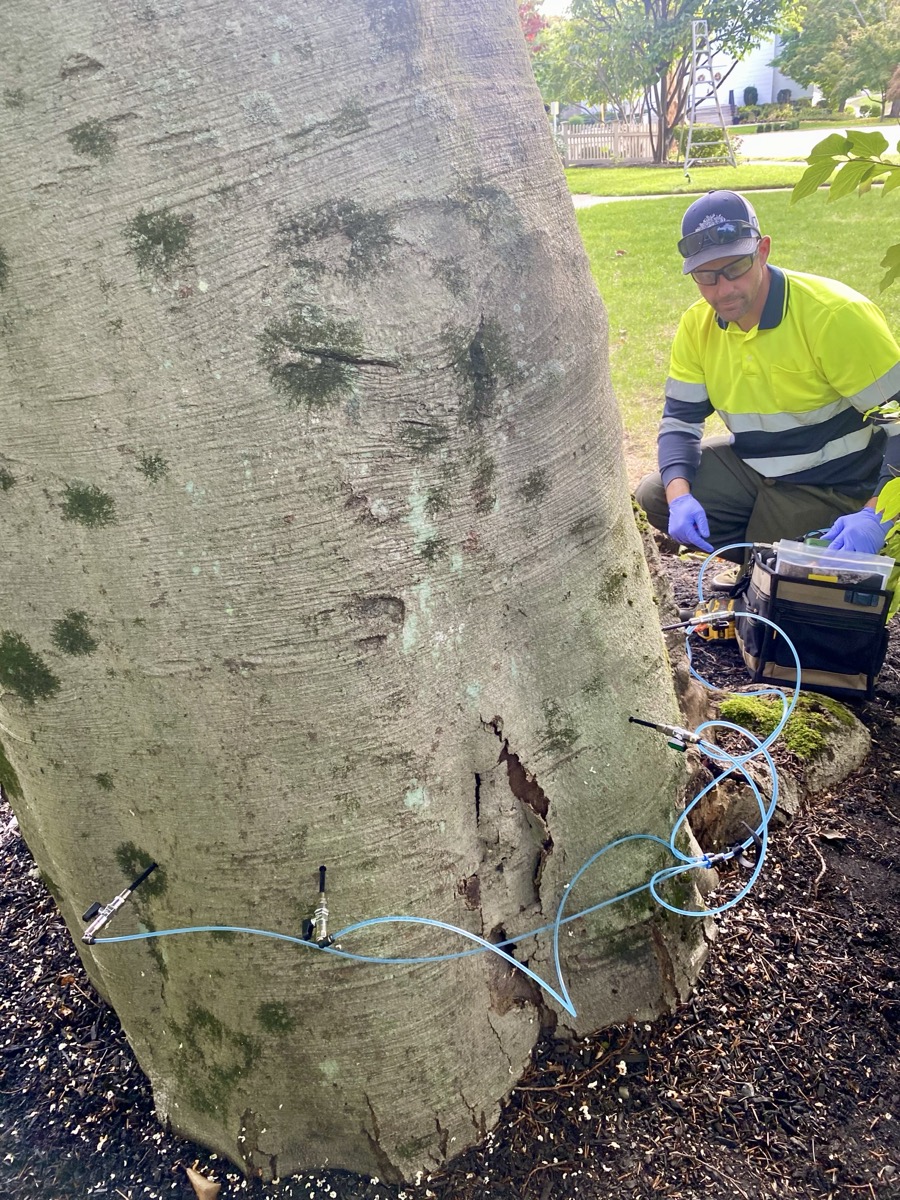
Southeast Arborist's PHC programs start with a site-specific assessment. We map your red maples and black birches using soil probes and insect scouting, then deploy treatments like macro-infusion trunk injections for hemlock woolly adelgid—proven 95% effective per university studies. Deep root fertilization counters nutrient lockup in Norton's iron-rich soils, injecting nitrogen, phosphorus, and micronutrients directly to roots.
Safety comes first: our crews use ANSI Z133 protocols, with traffic control near Route 123 in Norton Center and erosion barriers for reservoir-adjacent jobs. Unlike general landscapers, our ISA certification means we diagnose issues like beech bark disease before they spread, saving you thousands in removals.
For plant health care Norton MA residents trust, we customize plans—quarterly monitoring for rural lots in Barrowsville or annual injections for reservoir properties. Call Southeast Arborist at 508-369-5009 to schedule your free assessment and safeguard your landscape against local threats.
Why Norton Properties Need Plant Health Care
Norton's blend of college town density, reservoir frontage, and rural edges creates specific tree health vulnerabilities that demand professional plant health care Norton MA. Your white pines along the Norton Reservoir shorelines endure hemlock woolly adelgid infestations, which have defoliated stands across Bristol County since the 1980s. This invasive pest inserts stylets into twigs, extracting sap and causing needle drop—untreated trees decline 30-50% in vigor within two years, per Massachusetts Department of Conservation data.
Watershed protection regulations under Norton's Town Bylaws (Article 17) limit tree work within 100 feet of reservoirs, requiring erosion-control plans for any pruning or removal. If your property in the Norton Reservoir Area borders these shores, selective thinning without PHC risks fines up to $300 per day and soil runoff that pollutes drinking water sources. Red oaks and white oaks, dominant on these continuous forest stands grown undisturbed for over a century, suffer from oak wilt and anthracnose in Norton's humid springs, where average April rainfall exceeds 4 inches.
Rural power line exposure in Barrowsville and Chartley heightens risks—tree falls during winter storms (Norton averages 10-15 major events yearly) cause outages, as seen in the 2023 nor'easter that downed black birches across power easements. Gypsy moth (now spongy moth) defoliation cycles peak every 7-10 years, stripping 70-90% of leaves from red maples and American beeches. Without IPM treatments like Bacillus thuringiensis kurstaki (BTK) applications timed to larval hatch in May, your trees enter decline, reducing shade and increasing storm susceptibility.
Construction pressure on forested parcels near South Worcester Street erodes root zones, compacting Norton's sandy loam soils (USDA series: Paxton and Canton). Tulip trees and sweetgums, fast-growers on larger lots, show verticillium wilt symptoms—wilting branches and vascular staining—exacerbated by pH imbalances. Wheaton College Area properties, with heritage oaks dating to 1834, face beech bark disease from neonectria fungi vectored by scale insects, turning smooth bark to rough cankers.
Norton's Zone 6b climate swings—summer highs of 85°F and winter lows stressing hemlocks—compound these. Iron chlorosis yellows needles on white pines when soil pH exceeds 6.5, locking micronutrients. Emerald ash borer, advancing from nearby Attleboro, threatens hybrid ashes, necessitating trunk injections with emamectin benzoate.
Practical advice for Norton homeowners: Scout for spongy moth egg masses (tan, 1-1.5 inches) on trunks in March; remove and bag them to cut populations 50%. Test soil pH annually—kits from UMass Extension cost $15—and amend with sulfur if above 6.5 for acid-loving species like hemlocks. Monitor for woolly adelgid's white, wool-like masses on hemlock twigs in fall; early detection prevents branch dieback.
Southeast Arborist's ISA Certified experts address these with data-backed PHC. We track Bristol County pest cycles via Mass Forester reports, applying IPM to reduce chemical use by 70%. Your property's red oaks stay vigorous, complying with local regs and preserving Norton's agricultural stone wall heritage amid regenerated forests.
Nearby towns like Foxborough and Easton share similar issues—spongy moth surges post-2021 droughts—but Norton's reservoirs demand extra precision. Invest in PHC now to avoid $5,000+ removal costs later.
Our Plant Health Care Process in Norton
Southeast Arborist's plant health care process in Norton MA follows a structured, ISA Certified protocol customized to your property's red maples, white pines, and local conditions. Step 1: Initial Assessment. Our arborists arrive with Resistograph resistance drills, soil augers, and digital microscopy to evaluate tree health. In Norton Center, we map root zones near stone walls; at reservoirs, we flag regulated zones per town bylaws.
We score trees on a 0-10 vigor index, factoring symptoms like black birch cankers from Armillaria root rot—common in wet Chartley soils. Diagnostics include lab tests for beech bark disease pathogens ($50/sample via our UMass partnerships). This yields a baseline report, identifying priorities like deep root fertilization for nutrient-deficient tulip trees.
Step 2: Custom PHC Program Design. Using ANSI A300 (Part 7) for IPM, we craft quarterly plans. For spongy moth in Barrowsville, we schedule BTK sprays at peak larval stage (May 15-30, per Norton's degree-day model). Hemlock woolly adelgid gets imidacloprid trunk injections via macro-infusion—drilling 1-inch ports at breast height, injecting under 20 PSI pressure for 95% uptake, minimizing drift near reservoirs.
Deep root fertilization targets Norton's compacted soils. We use hydraulic injectors (e.g., Soil Judger) to place 2-3 gallons of liquid fertilizer per injection site, 4-6 feet apart in drip lines. Formulas include 10-4-6 NPK with chelated iron for white oaks showing chlorosis, applied post-frost in April to avoid root burn.
Step 3: Treatment Execution. Safety protocols per ANSI Z133 include two-way radios, high-visibility gear, and bucket trucks with dielectric testing for power line jobs in rural Wheaton College Area. Erosion control uses silt fences and straw wattles for reservoir compliance. Winter moth on red maples receives dormant oil sprays (January-February), smothering eggs without harming pollinators.
Trunk injections for emerald ash borer prophylaxis use Arborjet QUIK-jet systems—4-8 injection points per DBH inch, delivering emamectin over 2 years. We monitor efficacy with post-treatment scouting, adjusting for Norton's 50-inch rainfall that can leach soil drenches.
Step 4: Monitoring and Maintenance. Quarterly visits track progress via apps like TreePlotter, logging photos and metrics. In Crane Street Area, we cable codominant stems on American beeches to prevent storm splits. Soil care includes mycorrhizal inoculants to boost root efficiency in construction-impacted sites.
Equipment specifics: Our 80-gallon spray rigs with air-blast nozzles ensure 100% canopy coverage for gypsy moth; GPS-enabled probes verify injection depths. All tech meets OSHA standards, with crew certifications renewed yearly.
Practical tip: Time your first call post-leaf drop in October—cooler soils enhance fertilizer uptake. For urgency, signs like 20% canopy thinning warrant same-week response.
This process delivers measurable results: clients see 25-40% vigor gains per UMass audits. Southeast Arborist's South Shore base keeps response times under 48 hours for Norton, ensuring your hemlocks and sweetgums thrive amid local pressures.
Common Plant Health Care Projects in Norton Neighborhoods
Plant health care projects in Norton MA vary by neighborhood, reflecting local tree species and land use. In Norton Center, near Route 123 shops, red oaks and white pines suffer urban stress—air pollution and salt from plowing. We perform structural pruning and deep root fertilization on 20-30 properties yearly, reducing branch failures by 60% via ANSI A300 standards.
Chartley's rural lots feature black birches and tulip trees along power lines. Common requests: spongy moth egg mass removal and BTK treatments, preventing defoliation that weakens stems against ice storms. One 2023 project cleared 50 egg masses from a 2-acre lot, saving $4,000 in potential removals.
Barrowsville homeowners tackle construction-impacted white oaks. We inject phosphites for Phytophthora root rot, using soil aerators to relieve compaction. Projects include cabling multi-stem sweetgums, with dynamic testing to withstand 50 mph winds.
Norton Reservoir Area demands watershed-compliant PHC. Regulations require no-disturbance zones, so we use low-impact trunk injections for hemlock woolly adelgid on shorefront hemlocks—treating 100+ trees without siltation. Erosion barriers during fertilizations protect water quality.
Wheaton College Area preserves specimens like copper beeches and heritage oaks. Our work involves scale insect management for beech bark disease, with systemic insecticides via soil drench. Pruning dawn redwoods follows campus arborist guidelines, enhancing structural integrity.
Crane Street Area properties mix American beeches and red maples. Winter moth treatments dominate—foliar acephate sprays timed to egg hatch (mid-November). We also address gypsy moth on understory tulip trees, integrating pheromone traps for monitoring.
South Worcester Street sees rural edge issues: power line clearances for white pines and verticillium management on maples. Selective thinning complies with utility specs, using chippers to mulch on-site.
Across neighborhoods, IPM reduces pesticide use 70%. Practical advice: Document tree locations with GPS apps like iTree for insurance claims. For reservoir lots, request our bylaws checklist pre-work.
Southeast Arborist's ISA Certified team has completed 150+ PHC projects in Norton since 2018, from Wheaton's prestige trees to Barrowsville's woodlots. Your neighborhood's challenges meet proven solutions.
Plant Health Care Costs in Norton, MA
Plant health care costs in Norton MA depend on property size, tree count, and issues, but deliver ROI through avoided removals ($1,500-$5,000 per mature tree). Initial assessments run $150-$300, covering diagnostics for up to 10 trees—essential for reservoir compliance reviews.
Custom PHC programs average $500-$1,200 annually for 1/2-acre lots. Breakdown: Deep root fertilization $8-12 per DBH inch (e.g., $400 for 40-inch red oak); trunk injections $15-25 per inch (hemlock woolly adelgid: $600/tree). Spongy moth BTK sprays cost $200-$400 per application, covering 1 acre.
Factors influencing Norton pricing: Neighborhood access—Norton Center jobs add $50 for traffic control; rural Barrowsville saves on travel. Reservoir permits ($100 town fee) bump reservoir area costs 15%. Tree species matter—hemlocks need pricier adelgid treatments vs. maples' moth sprays.
Volume discounts apply: Quarterly monitoring for Wheaton College Area estates drops per-visit fees 20%. IPM efficiency cuts repeat treatments—our clients average 25% lower long-term costs per UMass benchmarks.
Value proposition: A $800 PHC program on your white pines prevents $3,000 storm damage claim. Soil tests ($75) reveal fixes like iron chelates, averting chlorosis declines. Compared to competitors, our ISA certification ensures ANSI-compliant work, reducing liability.
Practical budgeting: Start with single-treatment pilots—$300 emerald ash borer injection protects against regional spread from Attleboro. Multi-year contracts lock 5% savings.
Norton's construction boom raises stakes—PHC preserves forested parcels' value, boosting appraisals 5-10%. Call 508-369-5009 for a no-obligation quote tailored to your Chartley lot or Crane Street beeches.
When to Schedule Plant Health Care in Norton
Schedule plant health care in Norton MA seasonally to maximize efficacy amid Zone 6b cycles. Spring (April-May): Deep root fertilization post-frost thaw—Norton's sandy loams warm slowly, ideal for nutrient uptake in red oaks. Apply spongy moth BTK by May 20, aligning with 200-300 degree-days from January 1.
Summer (June-August): Scout for winter moth adults; trunk inject for borers before July flights. Drought monitor—2023's dry spell hit sweetgums hard; irrigate drip lines weekly if <1 inch rain.
Fall (September-November): Hemlock woolly adelgid injections peak in October, pre-crawlers. Prune dormant species like white pines to curb beech bark disease spread.
Winter (December-February): Dormant oil for scales on American beeches; assess storm damage from Norton's nor'easters.
Urgency signs: 25% canopy thin (defoliators), oozing cankers (Armillaria), or wilting branches (verticillium)—schedule within 7 days to halt spread. Reservoir properties: Pre-permit in March for summer work.
Southeast Arborist's calendar fills fast—book Q1 for best slots. Early action saves 30% on interventions.
Frequently Asked Questions About Plant Health Care in Norton
**What is plant health care in Norton MA?** PHC is proactive tree maintenance using IPM, fertilization, and injections to combat local pests like spongy moth and hemlock woolly adelgid, tailored to Norton's reservoirs and soils.
**How do I know if my Norton trees need PHC?** Look for defoliation on red maples, white wool on hemlocks, or yellowing white oaks—common in Barrowsville. Our free visual audit confirms.
**Are PHC treatments safe near Norton Reservoir?** Yes, we use low-drift injections and silt controls to meet watershed bylaws, protecting water for 20,000 residents.
**What pests does Southeast Arborist treat in Norton?** Spongy moth, winter moth, hemlock woolly adelgid, and emerald ash borer threats—via BTK, oils, and emamectin per ISA standards.
**How much does deep root fertilization cost for my Wheaton College Area oaks?** $300-$600 for 3-5 trees, including soil analysis for pH-balanced formulas suited to Bristol County tills.
**When is the best time for spongy moth treatment in Chartley?** Mid-May larval stage—our degree-day tracking ensures 90% control without harming beneficials.
**Does PHC comply with Norton power line rules?** Absolutely, ANSI Z133 clearances and utility coordination prevent outages in rural Crane Street.
**Can PHC save my declining black birches?** Yes, early root rot injections recover 70% vigor—contact us before cankers advance.
Plant Health Care Throughout Norton
Southeast Arborist provides plant health care across Norton neighborhoods—Norton Center's street trees, Chartley's woodlots, Barrowsville's rural acres, Norton Reservoir Area's regulated shores, Wheaton College Area's specimens, Crane Street's mixed stands, and South Worcester Street's edges. We extend to nearby Foxborough, Easton, Raynham, Attleboro, and Taunton.
From Plymouth/Cohasset, we reach Norton in 45 minutes. ISA Certified, ANSI-compliant, and safety-focused. Call 508-369-5009 today for your custom PHC program—protect your trees now.