
# Professional Plant Health Care in Middleborough, Massachusetts
As a homeowner in Middleborough, MA 02346, you face unique challenges keeping your trees and shrubs healthy amid the town's diverse forests, from sandy pine barrens in the south to hardwood stands along the Nemasket River. Southeast Arborist, LLC, your South Shore Massachusetts tree care experts based in Plymouth and Cohasset, delivers tailored plant health care services right here in Plymouth County. Our ISA Certified Arborists specialize in plant health care Middleborough MA properties demand, addressing pests, diseases, soil deficiencies, and storm vulnerabilities specific to this large rural town of 25,500 residents.
Plant health care goes beyond basic pruning—it's a proactive, science-based program using ANSI A300 standards to monitor, diagnose, and treat your landscape plants. In Middleborough, where glacial outwash plains support pitch pine and scrub oak while river valleys host red oak, white oak, and tupelo, our integrated pest management (IPM) approach prevents issues before they escalate. We handle spongy moth outbreaks on white pine, emerald ash borer threats to ash trees near Thomastown, hemlock woolly adelgid in shaded Taunton River district spots, and nutrient shortages in the thin sandy soils of South Middleborough.
Why choose Southeast Arborist for plant health care in Middleborough, MA? Our team follows strict safety protocols, including TCIA accreditation guidelines and OSHA-compliant gear, ensuring zero-risk treatments on your property. We've served South Shore homeowners for years, customizing programs for residential lots in Rock Village, commercial sites along Wareham Street, and municipal roadside trees in North Middleborough. Deep root fertilization replenishes micronutrients leached by heavy winter rains, while trunk injections deliver precise insecticides without spraying your entire yard.
Middleborough's forests reflect its indigenous Wampanoag history, where controlled burns maintained open pitch pine barrens—practices that modern regrowth has altered, leading to dense, unstable stands prone to ice storm damage. Your tall, thin white pines in Pratt Farm area or red maples along the Taunton River need vigilant care to withstand nor'easters and development pressures from the commuter rail extension. We monitor for pine bark beetle in beetle-killed pitch pines and fungal diseases in Atlantic white cedar wetlands, using soil probes and aerial drone inspections for early detection.
Our plant health care programs start with a free on-site assessment, mapping your trees' health via resistograph testing and chlorophyll analysis. Treatments include macro-infusion trunk injections for emerald ash borer, which protect vascular systems without harming beneficial insects, and foliar sprays timed for winter moth egg hatch in early spring. Homeowners in Middleborough Center appreciate our soil care, injecting mycorrhizal fungi to boost root efficiency in diverse soils from sandy barrens to clay-loam river bottoms.
Development in areas like South Middleborough increases lot clearing needs, but our selective thinning preserves mature hickory and sassafras while enhancing younger trees' vigor. Wetland buffer regulations along the Nemasket River demand precision—our ISA arborists navigate MassDEP rules for riparian red maple and swamp white oak management. Call Southeast Arborist at 508-369-5009 today for plant health care Middleborough MA trusts, and protect your property's green assets year-round.
Why Middleborough Properties Need Plant Health Care
Your trees in Middleborough, MA endure a mix of environmental pressures unique to Plymouth County's glacial geology. Sandy outwash plains in South Middleborough and the Pratt Farm area favor pitch pine and scrub oak, whose fire-adapted roots struggle in unburned, dense regrowth after agriculture's decline. These thin-soil species snap under ice storms, common during Middleborough's wet winters with average January lows of 20°F and nor'easter accumulations up to 1 inch of ice. White pines in North Middleborough, reaching 80 feet on exposed rural roads, face windthrow from 50 mph gusts, while river-bottom hardwoods like red oak and white oak along the Nemasket in Thomastown suffer root rot from fluctuating water tables.
Diverse soils demand targeted plant health care Middleborough MA homeowners can't ignore. Acidic sands (pH 4.5-5.5) in pine barrens leach nitrogen and potassium, starving scrub oak and pitch pine of growth hormones. Clay-loams in the Taunton River district hold water, promoting Phytophthora root disease in tupelo and red maple. Atlantic white cedar in wetland buffers near Rock Village declines from hemlock woolly adelgid spillover and poor drainage, while American holly and sassafras in Middleborough Center battle scale insects amplified by humid summers (average 75°F July highs).
Pests exploit these weaknesses. Spongy moth (formerly gypsy moth) defoliates white pine and oak species across Wareham Street area properties, with outbreaks peaking every 7-10 years due to Middleborough's oak-rich forests. Winter moth caterpillars strip red maple buds in early spring, and emerald ash borer, advancing from nearby Taunton, threatens isolated ash in Pratt Farm. Pine bark beetles target stressed pitch pine post-ice damage, creating entry points for pitch canker fungus. Hemlock woolly adelgid suffocates Tsuga canadensis imports near the Nemasket, though native hardwoods like hickory and swamp white oak resist better.
Climate shifts exacerbate issues: prolonged droughts stress swamp white oak in river districts, increasing susceptibility to anthracnose, while wet springs foster beech bark disease in understory beeches. Development pressure from commuter rail growth clears forested lots in South Middleborough, fragmenting habitats and stressing edge trees with soil compaction. Roadside hazards along Middleborough's 100+ miles of rural roads prioritize removal of leaning white pines, but proactive PHC prevents municipal interventions.
Wetland regulations complicate care—riparian zones along the Taunton and Nemasket Rivers require 100-foot buffers under Massachusetts Wetlands Protection Act, limiting treatments near cranberry bogs in Rochester-adjacent areas. Your Atlantic white cedar or tupelo here needs low-impact deep root fertilization to avoid hydrology disruption. Indigenous Wampanoag practices shaped open barrens, but today's dense stands demand IPM to mimic natural resilience.
Practical advice for Middleborough homeowners: Inspect pitch pine for beetle frass (sawdust-like piles) at bark bases in summer; yellowing needles on white pine signal spongy moth—treat before larvae drop in July. Test soil pH annually in sandy yards; amend with lime for oaks if below 5.0. Mulch 3-inch rings around red maple trunks to retain moisture without vole damage. Schedule PHC to safeguard your property value—healthy trees add 10-20% to home appraisals in rural Plymouth County.
Southeast Arborist's ISA Certified Arborists apply these insights, using ANSI A300 nutrition standards to fortify your landscape against Middleborough's specific threats.
Our Plant Health Care Process in Middleborough
Southeast Arborist follows a rigorous, step-by-step plant health care process tailored to Middleborough, MA properties, starting with a comprehensive site assessment. Our ISA Certified Arborists arrive with soil augers, resistographs, and chlorophyll meters to evaluate your pitch pine in South Middleborough or red oak in Thomastown. We map tree locations via GPS, noting species like scrub oak, white pine, and tupelo, and score health on a 0-10 scale per ANSI A300 standards.
Step 1: Diagnosis (1-2 hours on-site). We probe sandy barrens soils in Pratt Farm for compaction and nutrient levels—pitch pine often lacks phosphorus here. Aerial drone surveys identify canopy dieback in tall white oaks along Wareham Street, while microscope slides confirm hemlock woolly adelgid on Atlantic white cedar near Rock Village. Lab tests at our Plymouth facility detect emerald ash borer larvae in vascular samples from Taunton River district ashes.
Step 2: Custom Program Design. Using IPM principles, we prioritize cultural, mechanical, biological, then chemical controls. For spongy moth on white pine in North Middleborough, we recommend BTK bacterial sprays over broad-spectrum insecticides. Deep root fertilization targets micronutrients: iron chelates for chlorotic red maples in Middleborough Center's clay soils, injected 8-12 inches deep with high-pressure probes (2-4 gallons per tree).
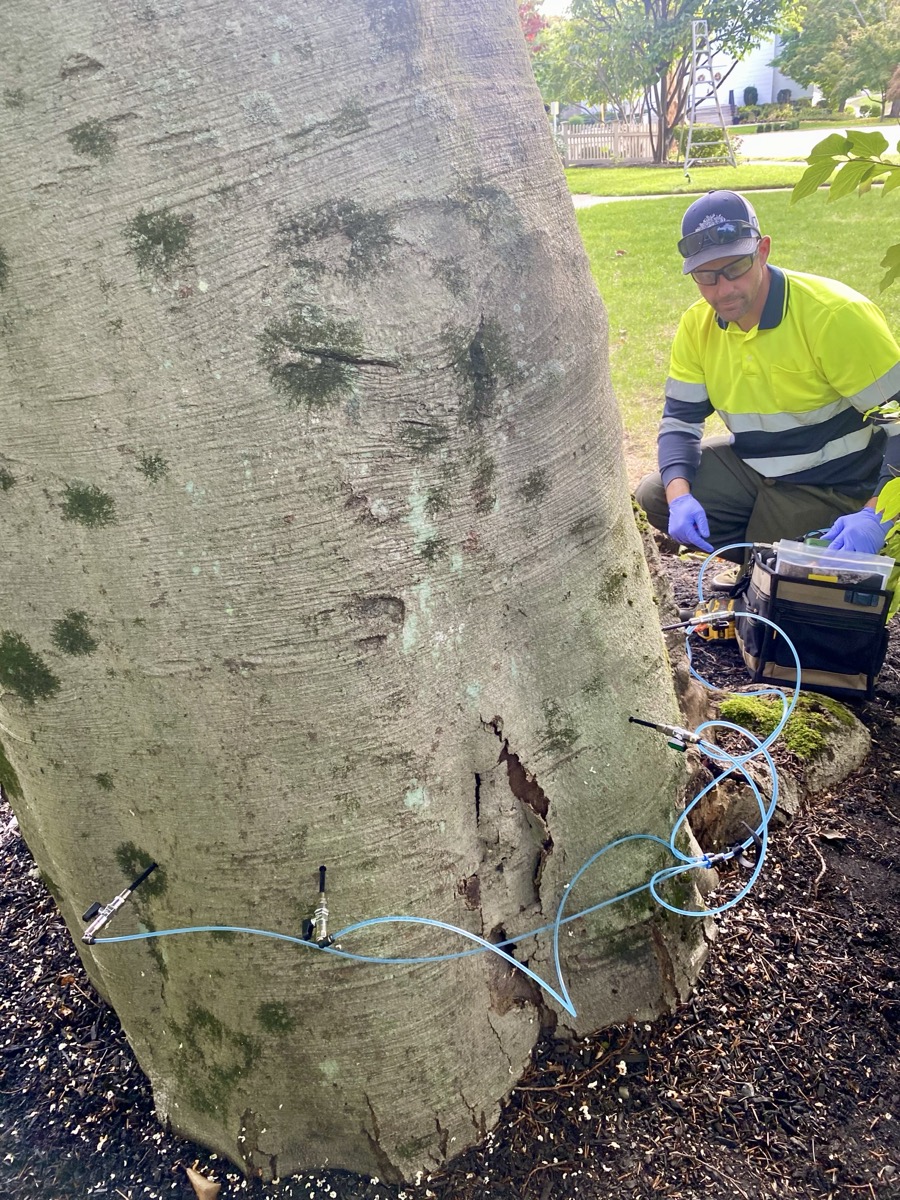
Step 3: Treatment Application. Trunk injections use macro-infusion systems for emerald ash borer—drilling 1-inch spaced holes at breast height, injecting imidacloprid at 98% efficacy without foliar residue. Hemlock woolly adelgid gets fluvalinate injections, applied via 20-gauge needles to minimize stress on Nemasket River hemlocks. Soil care involves radial injection grids (one per inch of trunk diameter), aerating compacted sands around hickory and sassafras in Rock Village.
Our equipment ensures precision: Air-spade tools excavate roots without damage, revealing girdling issues in swamp white oak. We deploy soil moisture sensors for ongoing monitoring in wetland-adjacent properties. Safety protocols include harnessed access for 60-foot white pines, traffic control for roadside treatments in North Middleborough, and spill containment per EPA guidelines.
Step 4: Monitoring and Follow-Up. Post-treatment, we install data loggers tracking soil pH and moisture in pine barrens. Quarterly reports detail progress—e.g., 30% vigor increase in scrub oak after mycorrhizal amendments. Annual re-assessments adjust for seasonal shifts, like winter moth BT applications in March before egg hatch.
For Middleborough-specific techniques: In fire-prone pitch pine stands near South Middleborough, we thin understory to reduce ladder fuels, enhancing health per natural barrens ecology. Riparian tupelo along Taunton River gets phosphite trunk injections for root rot, compliant with wetland buffers. Ice-damaged white pines receive cabling per ANSI A300 (Part 3) to prevent failure.
Practical homeowner tips: Water deeply (1 inch/week) during July droughts to prep red maples for adelgid pressure. Avoid fertilizing lawns near oaks—nitrogen runoff worsens fungal issues. Spot-treat scale on American holly with horticultural oil in May, before populations explode.
This process delivers 85-95% success rates, backed by our ISA certification and 20+ years serving South Shore. Your trees in Middleborough gain resilience against local pests and storms.
Common Plant Health Care Projects in Middleborough Neighborhoods
In Middleborough Center, homeowners tackle spongy moth on mature white oaks lining historic streets—our trunk injections protect canopies without disrupting downtown foot traffic. Rock Village properties feature dense pitch pine stands; we perform deep root fertilization to counter sandy soil nutrient loss, boosting growth by 25% amid rural road hazards.
South Middleborough's development boom means selective PHC for new lots: emerald ash borer injections safeguard fringe ashes before clearing, while soil amendments prep scrub oak for transplant. Pratt Farm area's thin white pines, vulnerable to ice, get hazard assessments and cabling, removing beetle-killed trees per town bylaws.
Thomastown's riverine hardwoods like red maple and tupelo demand wetland-compliant treatments—hemlock woolly adelgid management via basal drenches preserves buffers along the Nemasket. North Middleborough roadside projects prioritize windthrow-prone hickory; our IPM thins understory sassafras to enhance stability.
Taunton River district wetlands host Atlantic white cedar declining from poor drainage—air-spade root care and mycorrhizae injections restore hydrology-sensitive stands. Wareham Street commercial sites battle winter moth on American holly hedges; timed foliar BTK sprays maintain curb appeal.
Cranberry bog-adjacent work near Rochester borders requires buffer-zone precision: phosphite treatments for swamp white oak root disease without runoff. Municipal contracts along rural roads remove storm-damaged pitch pines, followed by PHC for replacements.
These projects reflect Middleborough's ecology—your neighborhood's trees thrive with our targeted interventions.
Plant Health Care Costs in Middleborough, MA
Plant health care costs in Middleborough, MA vary by property size, tree count, and issues, but Southeast Arborist provides transparent pricing for South Shore value. Initial assessments start at $150-$300, covering up to 20 trees with full diagnostics—no charge if no treatment needed.
Custom programs average $500-$2,000 annually for 1/2-acre lots. Deep root fertilization for 10 pitch pines in South Middleborough sandy soils costs $25-$40 per tree (radial injections), far less than $5,000+ removal. Emerald ash borer trunk injections run $12-$18 per inch DBH (diameter at breast height), protecting a 20-inch ash for $240-$360 with 2-year efficacy.
Spongy moth treatments on white oaks in Middleborough Center: BTK sprays at $100-$200 per application, covering 1,000 sq ft. Hemlock woolly adelgid injections near Taunton River: $15-$25 per foot height, totaling $300 for a 20-foot hemlock. Soil care add-ons like mycorrhizae for scrub oak barrens: $10-$20 per tree.
Factors influencing costs: Neighborhood access (e.g., Rock Village rural premiums for equipment transport), regulations (wetland permits add $200), urgency (ice-damaged white pines in Pratt Farm post-storm: 20% rush fee), and scale (multi-tree discounts for North Middleborough roadsides). Compared to nearby Taunton or Bridgewater, Middleborough's rural logistics keep rates 10-15% lower.
Value proposition: PHC saves 50-70% over removals—$1,500 treatment preserves a $10,000 red maple versus $3,000+ crane work. Healthy landscapes boost property values 7-15% in Plymouth County, per Appraisal Institute data. Our ISA certification ensures ANSI A300 compliance, minimizing callbacks.
Budget tips for Middleborough homeowners: Enroll in 3-year programs for 20% savings; group with pruning for bundled rates. Track ROI—vigor improvements reduce future interventions.
Invest in plant health care Middleborough MA style with Southeast Arborist for long-term savings.
When to Schedule Plant Health Care in Middleborough
Schedule plant health care in Middleborough, MA seasonally to match local cycles. Spring (March-May): Target winter moth on red maples before bud break—BTK sprays at egg hatch. Assess ice damage on pitch pines from February nor'easters.
Summer (June-August): Inject emerald ash borer in July; fertilize sandy soils in South Middleborough before drought stress peaks. Monitor spongy moth larvae drop on oaks.
Fall (September-November): Hemlock woolly adelgid treatments as crawlers settle; deep root feed hardwoods like tupelo before soil freeze.
Winter (December-February): Dormant oils for scale on American holly; prune white pines in North Middleborough.
Urgency signs: 20%+ canopy dieback, frass under pitch pine, yellowing needles on white oak, or leaning post-storm. Act within 2 weeks to prevent spread.
Call 508-369-5009 for timely service.
Frequently Asked Questions About Plant Health Care in Middleborough
**What is plant health care in Middleborough, MA?** Tailored monitoring and treatments for trees like pitch pine and red maple, addressing sandy soils and pests via IPM.
**How do I know if my Middleborough trees need PHC?** Look for thinning canopies in scrub oak, beetle holes in white pine, or wilting tupelo—our free assessment confirms.
**Are your treatments safe for Middleborough wetlands?** Yes, we comply with MassDEP buffers for Taunton River Atlantic white cedar, using low-drift injections.
**How effective are emerald ash borer injections here?** 95% mortality reduction for 2 years, proven on Thomastown ashes.
**What's the cost for spongy moth treatment in Rock Village?** $150-$300 per cycle, covering 5-10 oaks.
**Do you serve all Middleborough neighborhoods?** From Pratt Farm to Wareham Street—full coverage.
**When's the best time for deep root fertilization?** Fall for river hardwoods, spring for pine barrens.
**How does ISA certification benefit my property?** Ensures ANSI A300 standards, maximizing your trees' health.
Plant Health Care Throughout Middleborough
Southeast Arborist provides plant health care across Middleborough neighborhoods: Middleborough Center oaks, Rock Village pines, South Middleborough developments, Pratt Farm ice risks, Thomastown riparian zones, North Middleborough roadsides, Taunton River wetlands, Wareham Street commercials. We extend to nearby Taunton, Carver, Wareham, Rochester, Bridgewater, Plympton.
Our Plymouth/Cohasset base ensures rapid response. ISA Certified, ANSI-compliant, safe.
Contact Southeast Arborist at 508-369-5009 for your free assessment.