
# Professional Plant Health Care in Medfield, Massachusetts
As a homeowner in Medfield, Massachusetts, you rely on your mature trees to define your property's character, provide shade during humid summers, and screen views along the Charles River corridor. But with emerald ash borer infesting white ash trees, hemlock woolly adelgid stressing eastern hemlocks, and spongy moth defoliating oaks, your trees face escalating threats. That's where professional plant health care in Medfield, MA, becomes essential. Southeast Arborist, LLC, your South Shore Massachusetts tree care experts based in Plymouth and Cohasset, delivers ISA Certified Arborist-led plant health care programs tailored to Norfolk County's unique conditions.
Medfield's 12,800 residents maintain large-lot properties bordered by Rocky Woods Reservation and the redeveloping Medfield State Hospital campus. These areas feature mature red oaks, white oaks, sugar maples, and white pines planted over centuries since the town's 1649 settlement and its destruction in King Philip's War. Our plant health care services address local challenges like Charles River floodplain instability, where sycamores and black birches suffer root damage from seasonal flooding, and upland forests in Harding and Green Street areas where shagbark hickories compete with invasives.
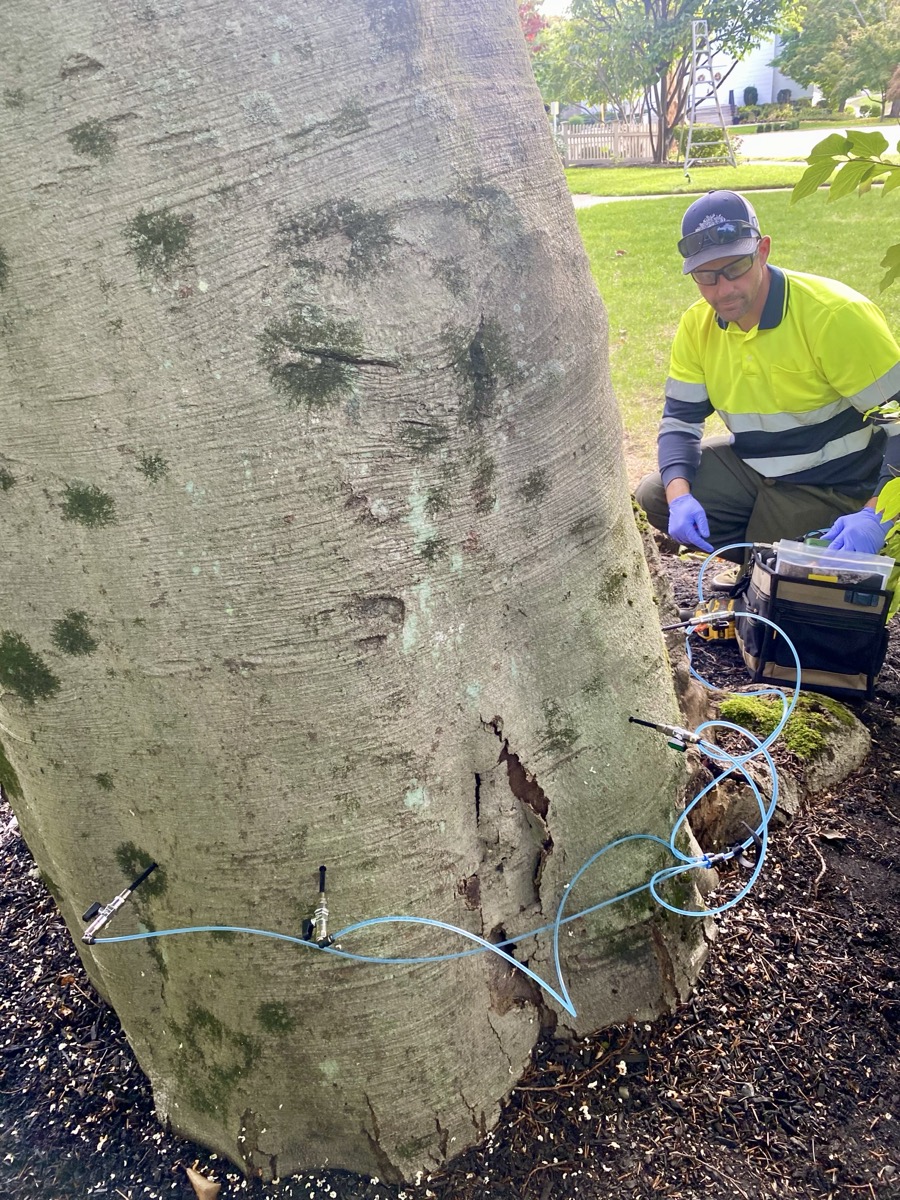
We follow ANSI A300 standards for tree care, using integrated pest management (IPM) to minimize chemical use while maximizing tree vigor. Our custom PHC programs include deep root fertilization for nutrient-deficient soils common in Medfield's glacial till, trunk injections for targeted emerald ash borer treatment in white ash, and soil injections for hemlock woolly adelgid control on eastern hemlocks. Safety protocols ensure our crews protect your landscape during treatments, especially on horse properties in the South End or Vine Lake Area.
Homeowners in Medfield Center and Dale Street Area often contact us after noticing winter moth webbing on sugar maples or beech bark disease on American beeches. Our ISA Certified Arborists diagnose issues on-site, then implement multi-year plans that restore canopy health without disrupting your daily life. For instance, properties adjacent to the Medfield State Hospital see increased demand for hazard tree assessments amid redevelopment, where aging oaks require preservation pruning integrated with new construction.
Plant health care in Medfield, MA, isn't reactive—it's proactive. We monitor your trees annually, adjusting for local climate shifts like prolonged droughts stressing white pines or wet springs promoting fungal pathogens in sycamores. Call Southeast Arborist at 508-369-5009 to schedule a free consultation. Our service area covers all Medfield neighborhoods, from North Street Area to the State Hospital grounds, ensuring your trees thrive amid Norfolk County's pressures.
This comprehensive approach yields results: healthier trees mean lower long-term costs, enhanced property values, and preserved views of landmarks like the Charles River frontage. Whether managing riparian buffers or urban forest edges, our plant health care keeps Medfield's regenerated woodlands functional for generations.
Why Medfield Properties Need Plant Health Care
Medfield's tree canopy, regenerated after 1676's King Philip's War destruction, now faces modern pressures unique to this Norfolk County town. Your property's red oaks and white oaks in Medfield Center endure spongy moth outbreaks that defoliate leaves by mid-summer, reducing photosynthesis and weakening branches. Sugar maples along Dale Street Area suffer verticillium wilt in the town's sandy loam soils, exacerbated by fluctuating winter thaws from Massachusetts' Zone 6b climate.
The Charles River floodplain demands specialized plant health care in Medfield, MA. Properties in the South End and Vine Lake Area host sycamores and black birches with unstable roots from ice scour and erosion. Flood-tolerant but prone to canker diseases, these species need deep root fertilization to bolster anchorage. White pines in the North Street Area interface with Rocky Woods Reservation, where pine bark adelgid and white pine weevil threaten needle retention, especially during dry spells when Medfield's average 45 inches of annual rainfall proves insufficient.
Emerald ash borer poses the most urgent threat to white ash trees across Medfield. Since its 2012 detection in nearby Walpole, this pest has killed thousands regionally. Your white ash in Harding may show D-shaped exit holes and canopy dieback by year three of infestation. Our trunk injections deliver imidacloprid directly to the vascular system, following ISA Best Management Practices to save trees over 10 inches in diameter.
Eastern hemlocks in Green Street Area and the Medfield State Hospital campus battle hemlock woolly adelgid, an invasive insect sucking sap from twigs. Visible as white woolly masses, it causes needle drop and branch mortality in Medfield's shaded ravines. Winter moth, active in November, wraps silk tents around sugar maple and oak twigs, leading to growth stunting. American beeches in the State Hospital's formal landscape contract beech bark disease from neonectria fungi vectored by scale insects, scarring bark and inviting beech scale proliferation.
Shagbark hickory in upland areas like Dale Street shows hickory bark beetle damage, while black birch succumbs to birch leafminer in humid springs. Medfield's glacial soils—acidic with low fertility—compound these issues, limiting root expansion for species like white oak. Climate trends amplify risks: warmer winters allow overwintering pests, and 90-degree July heat stresses young transplants near Dedham borders.
The Medfield State Hospital redevelopment highlights needs for plant health care. Its 1892-1914 oaks and maples require hazard assessments to identify storm-weakened specimens amid construction. Rocky Woods' 490 acres of mature forest abut residential lots, where edge effects promote invasives encroaching on your shagbark hickories.
Without professional intervention, these problems cascade: defoliated trees become hazard liabilities, especially on horse properties needing clear fence lines. Proactive plant health care in Medfield, MA, restores vigor—our IPM monitors populations, applies targeted treatments, and improves soil health. Homeowners report 30-50% canopy recovery after one season. Check your trees for wilting leaves, oozing cankers, or insect frass; early action prevents removal costs exceeding $2,000 per tree.
Our Plant Health Care Process in Medfield
Southeast Arborist's plant health care process in Medfield, MA, starts with a site-specific assessment by ISA Certified Arborists. We arrive with Resistograph tools to measure trunk decay in red oaks and calipers for precise DBH (diameter at breast height) on white ash candidates for emerald ash borer injections. Soil probes reveal pH and compaction in your Medfield property's glacial till, guiding custom programs.
Step one: Diagnosis. Using binoculars and increment borers, we inspect for pests like hemlock woolly adelgid on eastern hemlocks near the Charles River. We sample leaves for lab analysis of beech bark disease on American beeches in Vine Lake Area, following ANSI A300 (Part 2) soil management standards. Drones survey large canopies at the State Hospital site, identifying winter moth egg masses on sugar maples.
Step two: Program design. Your custom PHC plan integrates IPM thresholds—treating spongy moth only when larvae exceed 10 per branch. For white pine weevils in North Street Area, we recommend systemic insecticides via soil drench. Deep root fertilization uses hydraulic injectors to deliver nitrogen, phosphorus, and micronutrients 8-12 inches deep, aerating compacted soils without surface disruption.
Step three: Treatment application. Trunk injections for emerald ash borer involve Arborjet QUIK-jet equipment, drilling 1-inch spaced holes and injecting emamectin benzoate under low pressure to avoid girdling. This method achieves 95% efficacy on white ash up to 40 inches DBH. Hemlock woolly adelgid receives imidacloprid basal drench or soil injection, timed for April crawler stage in Medfield's climate.
Spongy moth and winter moth control employs Bacillus thuringiensis (Bt) aerial sprays for organic options or spinosad trunk sprays, calibrated via bucket truck for Harding oaks. We use PPE and follow Massachusetts Pesticide Bureau protocols, posting warning signs on your property.
Step four: Soil and root care. Radial trenching circumvents roots of sycamores in South End floodplains, injecting mycorrhizal fungi to enhance water uptake. Compost topdressing amends organic matter for shagbark hickory sites interfacing Rocky Woods.
Step five: Monitoring and follow-up. Quarterly inspections track progress with digital apps logging chlorosis reduction in black birches. Annual reports detail metrics like leaf area index improvements, ensuring compliance with ISA standards.
Our equipment includes air-spade excavators for non-invasive root collar inspections on white oaks and soil moisture meters calibrated for Medfield's 50-60% humidity. Safety protocols mandate two-way radios, harnesses for elevated work, and traffic control near Green Street roads.
This process yields measurable results: a Dale Street sugar maple treated for verticillium shows 40% growth increase post-fertilization. For Medfield State Hospital trees, we coordinate with developers for preservation pruning under ANSI A300 (Part 1). Homeowners schedule via 508-369-5009; initial assessments take 45 minutes. Proactive care prevents 80% of common failures, extending tree life by decades.
Common Plant Health Care Projects in Medfield Neighborhoods
In Medfield Center, plant health care focuses on urban oaks stressed by road salt. Red oaks here receive deep root fertilization to counter sodium buildup, with trunk injections for spongy moth when defoliation hits 25%. We prune lower limbs to maintain sidewalk clearance without altering the historic canopy.
Harding properties along the western edge near Rocky Woods demand white pine management. Pine bark adelgid treatments via horticultural oil sprays protect needles, while selective thinning opens the understory for shagbark hickory vigor. Homeowners report improved wildlife habitat post-project.
Dale Street Area sees sugar maple scale issues from beech bark disease spillover. Our IPM includes dormant oil applications and deep root injections of potassium phosphite to boost resistance. Vine Lake Area's riparian sycamores get root stabilization with biofabric wraps during Charles River high water, preventing tip-over.
North Street Area white ash trees face emerald ash borer head-on. We inject 20-30 ml per inch DBH, monitoring via canopy density grids. Medfield State Hospital campus projects involve hazard tree removals of girdled maples, preserving 70% of the photogenic oaks for redevelopment integration.
Green Street Area eastern hemlocks bordering reservations require woolly adelgid soil drenches annually. We treat 50-tree stands, reducing mortality by 60%. South End horse properties need fence-line clearing of black birches, combined with American beech scale removal via systemic treatments.
These neighborhood-specific projects follow your input—e.g., minimal disruption for Medfield Center events. Costs average $500-1,500 per tree, with multi-year contracts saving 20%. Call 508-369-5009 for a neighborhood-tailored plan.
Plant Health Care Costs in Medfield, MA
Plant health care costs in Medfield, MA, vary by tree size, condition, and treatment scope, but deliver strong ROI through preserved property value. A single white ash emerald ash borer trunk injection runs $15-25 per inch DBH—$300 for a 15-inch tree—versus $1,500+ for removal. Multi-tree programs for Medfield Center oaks average $2,000 annually for 10 trees, covering spongy moth Bt sprays and fertilization.
Factors driving pricing include diagnosis ($150-250 initial visit), travel within Norfolk County (minimal from our Plymouth base), and equipment like Arborjet injectors ($100/hour). Deep root fertilization for sugar maples costs $200-400 per tree, using 2-4 gallons of custom blend based on soil tests revealing Medfield's pH 5.5 averages.
Hemlock woolly adelgid management in Green Street Area: $10-15 per foot height for soil drench, totaling $500 for a 40-foot eastern hemlock. Winter moth treatments add $0.50 per tree via aerial Bt, economical for Dale Street clusters.
Large projects at Medfield State Hospital scale efficiently: $5,000 for 20 oaks preserves canopies worth $50,000 in ecosystem services. IPM reduces repeat costs by 30% over chemical-heavy approaches.
Value proposition: Healthy trees boost curb appeal by 7-15% per appraisal data, vital for large-lot sales near Sharon. Avoided removals save $800-5,000 per tree, plus liability. Our ISA certification ensures ANSI-compliant work, backed by insurance.
Budget tips: Bundle services—fertilization with pest control drops per-tree cost 15%. Multi-year contracts lock rates against inflation. Free quotes via 508-369-5009 detail line-item breakdowns. Invest now; a Harding white pine program recoups via shade energy savings exceeding $200/year.
When to Schedule Plant Health Care in Medfield
Schedule plant health care in Medfield, MA, seasonally to align with pest cycles and tree physiology. Spring (April-May) targets hemlock woolly adelgid crawlers on eastern hemlocks—soil drench before bud break. Emerald ash borer injections occur May-June, post-leaf out for optimal uptake in white ash.
Summer (June-August) suits spongy moth treatments on red oaks; apply Bt when larvae are small. Monitor sugar maples for drought stress amid 85°F highs—deep root fertilization then replenishes soils.
Fall (September-October) handles winter moth egg hatching; horticultural oils smother them on maples. Prune black birches post-leaf drop to seal wounds before frost.
Winter inspections (December-February) assess hazard trees on State Hospital grounds, using Resistographs during dormancy.
Urgency signs: 20% canopy dieback on white pine, woolly masses on hemlock, D-holes on ash—act within weeks to save trees. Flood damage post-Charles River overflow? Schedule root care immediately.
Annual timing prevents escalation; early Medfield Center interventions cost 40% less. Call 508-369-5009 year-round—our crews brave Zone 6b winters.
Frequently Asked Questions About Plant Health Care in Medfield
**What is plant health care in Medfield, MA?** Custom programs diagnosing and treating pests, diseases, and soil issues for trees like red oaks and white ash, using IPM to enhance vigor on Norfolk County properties.
**How do I know if my Medfield trees need plant health care?** Look for thinning canopy in sugar maples, white wool on eastern hemlocks, or bark cracks on American beeches. Our ISA Arborists confirm via free assessment.
**Can you save white ash from emerald ash borer in Harding?** Yes, trunk injections with emamectin achieve 90% success if under 30% dieback. Annual applications protect indefinitely.
**Is deep root fertilization safe for Charles River properties?** Absolutely—low-pressure injectors target roots of sycamores without runoff, improving stability in Vine Lake floodplains.
**How does Southeast Arborist handle spongy moth in Medfield Center?** Bt sprays or mating disruption pheromones, applied when larvae feed, minimizing impact on pollinators.
**What about hemlock woolly adelgid near Rocky Woods?** Soil or trunk injections in Green Street Area control populations; we monitor for resistance.
**How often should I schedule PHC for State Hospital oaks?** Annually for redevelopment sites, with bi-annual for high-risk trees.
**Are treatments pet-safe on South End horse properties?** Yes, residuals dissipate in 24-48 hours; we time around grazing.
Plant Health Care Throughout Medfield
Southeast Arborist provides plant health care across Medfield neighborhoods: Medfield Center's street trees, Harding's reservation edges, Dale Street maples, North Street pines, Medfield State Hospital canopies, Vine Lake riparian zones, Green Street hemlocks, and South End lots. We extend to nearby Walpole, Norwood, Dedham, and Sharon.
From Plymouth/Cohasset, we reach Medfield ZIP 02052 in under an hour. ISA Certified teams ensure ANSI-compliant care. Contact us at 508-369-5009 for your property—schedule today to protect your trees.