
# Professional Plant Health Care in Holbrook, Massachusetts
Homeowners in Holbrook, Massachusetts, face unique challenges with their trees and shrubs due to the town's dense residential lots and aging urban canopy. If you're in Holbrook Center, North Holbrook, South Holbrook, Brookville, the Union Street Area, or along Plymouth Street, you've likely noticed Norway maples overshadowing your driveway or silver maples dropping branches during winter storms. These issues stem from trees planted in the early-to-mid 20th century, now reaching senescence on small properties. Plant health care Holbrook MA services from Southeast Arborist address these problems directly with ISA Certified Arborists who follow ANSI A300 standards for precise, science-based treatments.
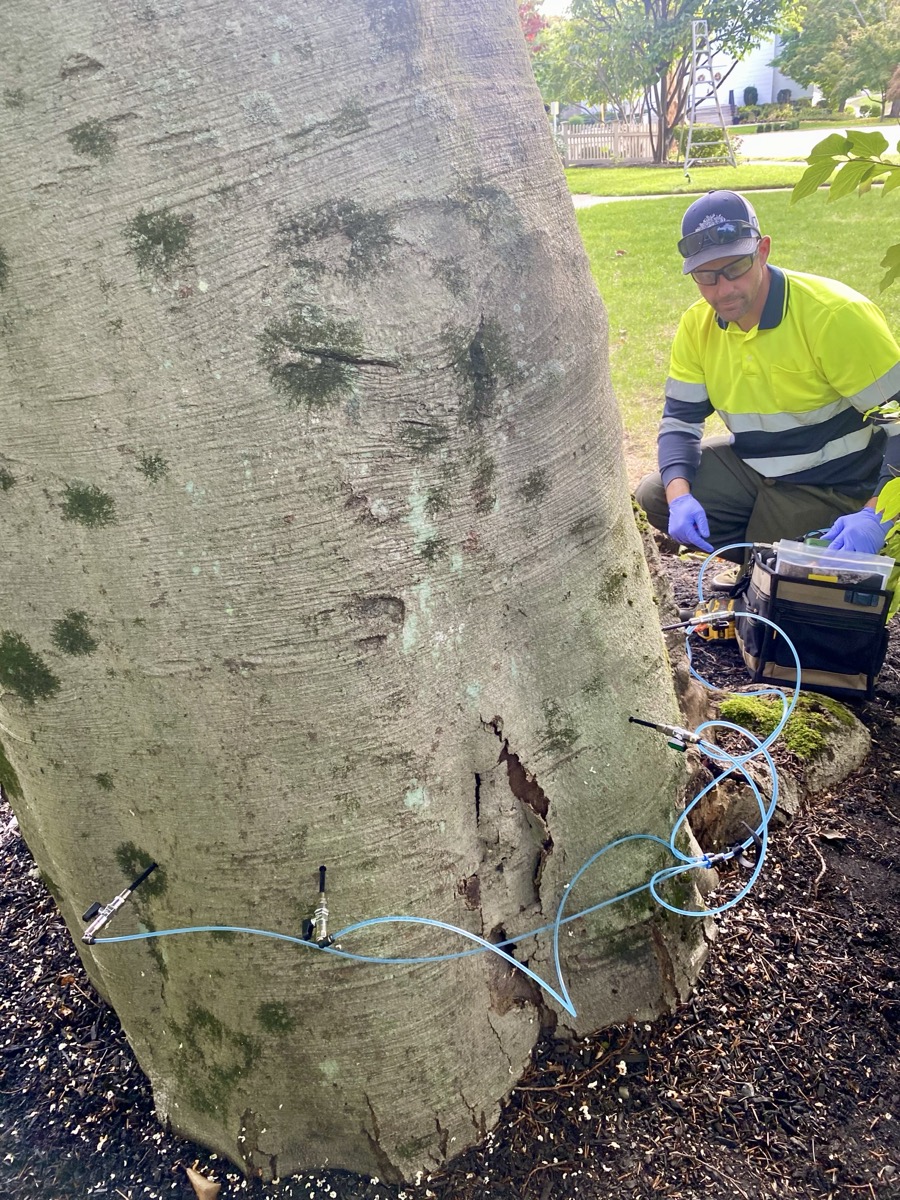
Southeast Arborist, LLC, based in Plymouth and Cohasset, serves the South Shore including Holbrook in Norfolk County. Our plant health care programs prevent decline in common local species like red maple, white pine, arborvitae, red oak, green ash, and spruce. We use integrated pest management (IPM) to target threats such as emerald ash borer, spongy moth, winter moth, and hemlock woolly adelgid without blanket spraying. Deep root fertilization improves soil conditions in Holbrook's compacted urban soils, while trunk injections deliver treatments precisely to your trees.
Consider the impact on your property: a declining red oak in your Holbrook backyard could lose 30-50% of its canopy from deferred maintenance, reducing shade and increasing storm risks. Our custom PHC plans start with a site assessment, identifying surface root conflicts common on tight lots near the Cochato River remnant. We monitor your trees annually, applying treatments like macro-infusion for emerald ash borer on green ash trees, which has devastated stands in nearby Randolph and Braintree.
Holbrook's history as a shoe factory worker community since separating from Randolph in 1872 means many properties have overmature trees too large for their spaces. Ice storms, Dutch elm disease losses, and simple old age have thinned the canopy over decades. Plant health care Holbrook MA restores vigor, with techniques proven to extend tree life by 10-20 years. For instance, we treat white pines stressed by Holbrook's humid summers and clay-loam soils, which retain moisture but limit oxygen to roots.
Safety comes first in our protocols. Our ISA Certified team uses TCIA-accredited gear, including low-pressure injection systems and soil probes calibrated for Norfolk County conditions. Call Southeast Arborist at 508-369-5009 for a free consultation on your Holbrook property. Whether you're in South Holbrook dealing with dense arborvitae screens or North Holbrook with spruce decline, our PHC services maintain your landscape's health and value. Early intervention prevents costly removals—Norway maples we treat often avoid the stump grinding and replanting cycle dominating Holbrook projects.
This comprehensive approach ensures your trees thrive amid local pressures like limited species diversity and surface roots heaving sidewalks on Union Street.
Why Holbrook Properties Need Plant Health Care
Holbrook's 11,500 residents manage trees on small suburban lots where overmature specimens dominate. Norway maples, planted mid-20th century for shade, now exceed their allotted space, casting dense shade that stresses turf and understory plants in Holbrook Center. Silver maples, fast-growing but brittle, crack under Holbrook's winter winds gusting from nearby Weymouth, leading to property damage. Red maples show iron chlorosis in alkaline pockets of local clay-loam soils, yellowing leaves by mid-summer.
White pines, remnants of pre-colonial forest edges along the Cochato River, suffer from white pine weevil in Holbrook's moist springs. Arborvitae hedges in North Holbrook bagworms and root rot from poor drainage on compacted sites. Red oaks decline from oak wilt vectors in dense neighborhoods, while green ash trees face emerald ash borer larvae girdling trunks— a pest arriving via Ashland ash sales in the 2000s. Spruce, often in windbreaks near Plymouth Street, show tip blight from fungal pathogens thriving in humid coastal air.
Holbrook's climate exacerbates these issues: USDA Zone 6b with 45 inches annual precipitation, humid summers (average 75°F highs), and freeze-thaw cycles cracking bark. Soils, mapped as Urban Land-Hollis complex by NRCS, compact easily from foot traffic and construction, starving roots of oxygen. Limited species diversity—mostly exotic maples and conifers—amplifies vulnerability; a spongy moth outbreak in 2023 defoliated 20% of canopies in Brookville.
Deferred maintenance accumulates because homeowners overlook early signs. Surface roots from silver maples lift driveways in South Holbrook, creating trip hazards. Overmature trees on 50x100-foot lots lack space for natural decline, leading to sudden failure. The town's canopy loss to Dutch elm disease (eliminating 70% of elms by 1980) and 2011 ice storms reduced coverage by 15%, per MassGIS data. Old-growth along Cochato River highlights native potential, but urban lots can't replicate it without intervention.
Plant health care Holbrook MA counters this with targeted IPM. For your green ash, we monitor for D-shaped exit holes, injecting emamectin benzoate to kill larvae. Norway maples get deep root feeds with micronutrients, correcting pH imbalances common in Norfolk County. White pines receive phosphite drenches for weevil resistance. Without PHC, your arborvitae screens thin from deer browse and bagworms, eroding privacy.
Practical advice: Inspect your red oaks for vertical cankers in spring; if present, prune before July to avoid oak wilt spread. Test soil pH annually—Holbrook averages 6.2-6.8; amend with sulfur for acid-loving spruce. Mulch 3-inch rings around trunks, keeping away from bases to prevent rodent damage in winter. These steps buy time, but professional PHC from ISA Certified Arborists like Southeast Arborist ensures compliance with town bylaws and boosts property values by 5-10% via healthy landscapes.
In Union Street Area, where red maples line narrow streets, PHC prevents branch drops on power lines. Plymouth Street properties benefit from hemlock treatments if woolly adelgid appears—though rare, it's advancing from Quincy. Your trees deserve this care to withstand Holbrook's pressures.
Our Plant Health Care Process in Holbrook
Southeast Arborist's plant health care Holbrook MA process follows ANSI A300 standards, starting with a property-specific assessment. Our ISA Certified Arborists arrive at your Holbrook home equipped with resistographs for decay detection and soil augers for root sampling. In Holbrook Center, we map your Norway maple's root zone, noting compaction from nearby sidewalks.
Step 1: Diagnostic site visit (1-2 hours). We use anemometers for wind exposure analysis—critical for silver maples in windy North Holbrook—and leaf analyzers for nutrient deficiencies in red maples. Photos and GIS mapping document baseline health, referencing Holbrook's soil surveys.
Step 2: Custom PHC plan development. For your green ash threatened by emerald ash borer, we schedule trunk injections with Arborjet QUIK-jet systems, delivering 98% systemic uptake. Emamectin benzoate targets larvae without soil residue. Hemlock woolly adelgids on rare eastern hemlocks get domiphen injections, applied via low-pressure macro-infusion.
Step 3: Soil care and deep root fertilization. Holbrook's clay-loam holds water but lacks organics; we inject 2-4 gallons per injection site using fertigation probes spaced 3 feet apart in the drip line. Custom blends include nitrogen, phosphorus, potassium, iron, and mycorrhizae for white pines stressed by weevils. Treatments aerate compacted soil, improving oxygen by 25%.
Step 4: Pest and disease management via IPM. Spongy moth and winter moth in South Holbrook get Bacillus thuringiensis kurstaki (BTK) aerial sprays timed for larval hatch (May-June), per UMass Extension guidelines. Arborvitae bagworms receive spinosad trunk sprays. Spruce tip blights use copper fungicides preventatively. We scout weekly during peaks, using pheromone traps for moth monitoring.
Step 5: Monitoring and follow-up. Annual reports track progress with dendrochronology for growth rings on red oaks. Safety protocols include confined space training for root injections and PPE per OSHA. Equipment like JD 4x4 Gators navigates tight Brookville lots.
Techniques adapt to Holbrook: Surface root conflicts on Union Street get air-spade excavation to expose and protect laterals before fertilization. Overmature Norway maples receive structural pruning per ANSI Z133, reducing sail effect in storms. We avoid soil disruption near foundations, using radial trenching.
Real Holbrook example: A Plymouth Street property with declining spruce cluster. Assessment revealed Phytophthora root rot from poor drainage. We installed deep root feeds with phosphorous acid, mulched, and monitored pH drops to 5.5. By year two, needle retention improved 40%.
Your property gets a digital portal for updates, with alerts for urgency like emerald ash borer galleries. All treatments carry liability insurance and warranties. This methodical process, backed by ISA certification, extends tree life amid Holbrook's challenges. Schedule yours: 508-369-5009.
Common Plant Health Care Projects in Holbrook Neighborhoods
In Holbrook Center, we treat Norway maples showing dieback from verticillium wilt, injecting fungicides and fertilizing roots compacted by Main Street traffic. Silver maples here get cabling to stabilize codominant stems, preventing failures over historic homes.
North Holbrook properties feature dense white pine stands; our PHC thins overcrowded groups and applies weevil preventatives, restoring vigor eroded by shade intolerance. Arborvitae privacy screens receive bagworm BTK treatments, maintaining density without overgrowth.
South Holbrook's red maples suffer chlorosis; deep root iron chelate injections green foliage by July, addressing alkaline soils near the Cochato River. We also manage surface roots lifting patios, using growth regulators like paclobutrazol applied via soil drench.
Brookville lots host overmature red oaks with two-lined chestnut borer; trunk injections and thinning restore canopy. Green ash trees get EAB protection, vital as the pest spreads from Braintree.
Union Street Area sees spruce decline from cytospora canker; we prune infected branches and apply biofungicides, following wound dressings per ANSI standards. Norway maples here benefit from spongy moth defoliation recovery via nutrient boosts.
Plymouth Street Area projects focus on arborvitae root rot from clay saturation; air-tooling exposes roots for fungicide drenches and mycorrhizal inoculants. Winter moth on maples gets timed emulsions, protecting new growth.
Across neighborhoods, common threads: EAB trunk injections for green ash (annual, $20-30 DBH inch), deep root feeds for maples ($150-300 per tree), and moth treatments ($200-500 per property). These prevent removals, saving $2,000+ per tree. Our ISA team adapts to each site's microclimate—wetter near river, drier uphill. Call 508-369-5009 for your neighborhood project.
Plant Health Care Costs in Holbrook, MA
Plant health care costs in Holbrook MA vary by tree size, condition, and treatment scope, but deliver strong ROI. A basic assessment runs $150-250, including diagnostics for your Norway maple. Deep root fertilization for a 20-inch DBH silver maple costs $200-350, injecting 50-75 gallons of custom nutrients suited to local clay-loam.
Trunk injections for emerald ash borer on green ash average $25 per inch DBH—$500 for a 20-inch tree—far less than $1,500 removal. Spongy moth or winter moth IPM sprays cost $250-600 per property, covering 1-2 acres based on larval scouting. Hemlock woolly adelgid treatments: $300-500 for small stands.
Factors influencing price: Tree count (multi-tree discounts 15-20%), access (tight Holbrook lots add $50-100 for equipment), and frequency (annual plans save 10%). Soil testing adds $100, revealing pH tweaks for red maples.
Value proposition: PHC extends tree life 10-15 years, avoiding $1,000-5,000 removals. Healthy canopies boost curb appeal, increasing home values 7% per Arbor Day Foundation studies. In Holbrook, where replacements struggle in small lots, retention saves replanting costs ($400-800 per tree) and matches zoning setbacks.
Custom plans tiered: Basic ($400/year for monitoring/fertilization), Standard ($800/year adding pests), Premium ($1,200+ for injections/diseases). ROI example: Treating a Brookville red oak cluster prevents $10,000 in collective removals over five years.
No hidden fees—quotes detail materials like emamectin ($50/tree) and labor. ISA certification ensures efficiency, minimizing reapplications. Budget by prioritizing: EAB first for ash, then roots for maples. Contact Southeast Arborist at 508-369-5009 for a precise Holbrook quote.
When to Schedule Plant Health Care in Holbrook
Schedule plant health care Holbrook MA in early spring (March-April) for soil prep before bud break, ideal for deep root fertilization on white pines. Deep root feeds peak May-June, post-frost but pre-drought.
Pest timing: Spongy moth/winter moth sprays at egg hatch (late April-May); scout now for tents. Emerald ash borer injections July-August for optimal sap flow in green ash. Hemlock adelgid: dormant season (November-February).
Urgency signs: 25% canopy dieback on Norway maples, D-shaped holes on ash, woolly masses on hemlock, or heaving roots on silver maples—call immediately to halt spread. Ice storm recovery: post-event pruning by March.
Holbrook's Zone 6b means monitor for early frost risks; delay fall treatments if below 40°F. Annual plans start anytime, with off-season discounts. Act now: 508-369-5009.
Frequently Asked Questions About Plant Health Care in Holbrook
What is plant health care for trees in Holbrook MA? Plant health care combines diagnostics, fertilization, pest control, and monitoring to maintain vigor. For your Holbrook red maple, it prevents chlorosis via targeted soil amendments.
How do I know if my Holbrook trees need PHC? Look for thinning canopy, wilting, pests like spongy moth on Norway maples, or root flares exposed by erosion near Cochato River. Our free assessment confirms.
Are your treatments safe for Holbrook pets and kids? Yes, IPM minimizes chemicals; BTK for moths breaks down in sunlight. Trunk injections stay in trees, per EPA labels. We notify pre-treatment.
How effective are emerald ash borer injections in Holbrook? 98% larval kill rate with emamectin; green ash in Randolph survived 5+ years post-treatment. Annual apps protect indefinitely.
What's the difference between fertilization and PHC? Fertilization feeds roots; full PHC includes pests/diseases. Holbrook silver maples need both for storm resilience.
Do you guarantee results for Holbrook plant health care? One-year warranty on treatments; refunds or re-applies if ineffective due to our error. ISA standards back efficacy.
Can PHC save overmature trees in small Holbrook lots? Often yes—Norway maples decline slowed 3-5 years with pruning/fertilization. Irreversible cases get removal advice.
How often should I schedule PHC visits in Holbrook? Annually for monitoring; treatments 1-2x/year based on scouting.
Plant Health Care Throughout Holbrook
Southeast Arborist delivers plant health care across Holbrook neighborhoods: Holbrook Center's street trees, North Holbrook pines, South Holbrook maples, Brookville oaks, Union Street spruce, Plymouth Street arborvitae. We extend to nearby Rockland, Abington, Braintree, Randolph, Weymouth.
From Plymouth/Cohasset base, we reach Holbrook in 20-30 minutes. Custom programs fit your property. Call ISA Certified experts at 508-369-5009 for South Shore service.