
# Professional Plant Health Care in Franklin, Massachusetts
As a homeowner in Franklin, Massachusetts, you rely on your mature trees for shade, privacy, and property value enhancement. Red oaks lining your street in Forge Hill or sugar maples shading your lawn near the Franklin Town Common provide decades of beauty, but they face unique pressures from Franklin's aging canopy, invasive pests, and suburban soil conditions. That's where professional plant health care in Franklin, MA, becomes essential. Southeast Arborist, LLC, your South Shore Massachusetts tree care experts based in Plymouth and Cohasset, delivers ISA Certified Arborist-led plant health care programs tailored to Franklin's 34,000 residents and their tree-lined neighborhoods.
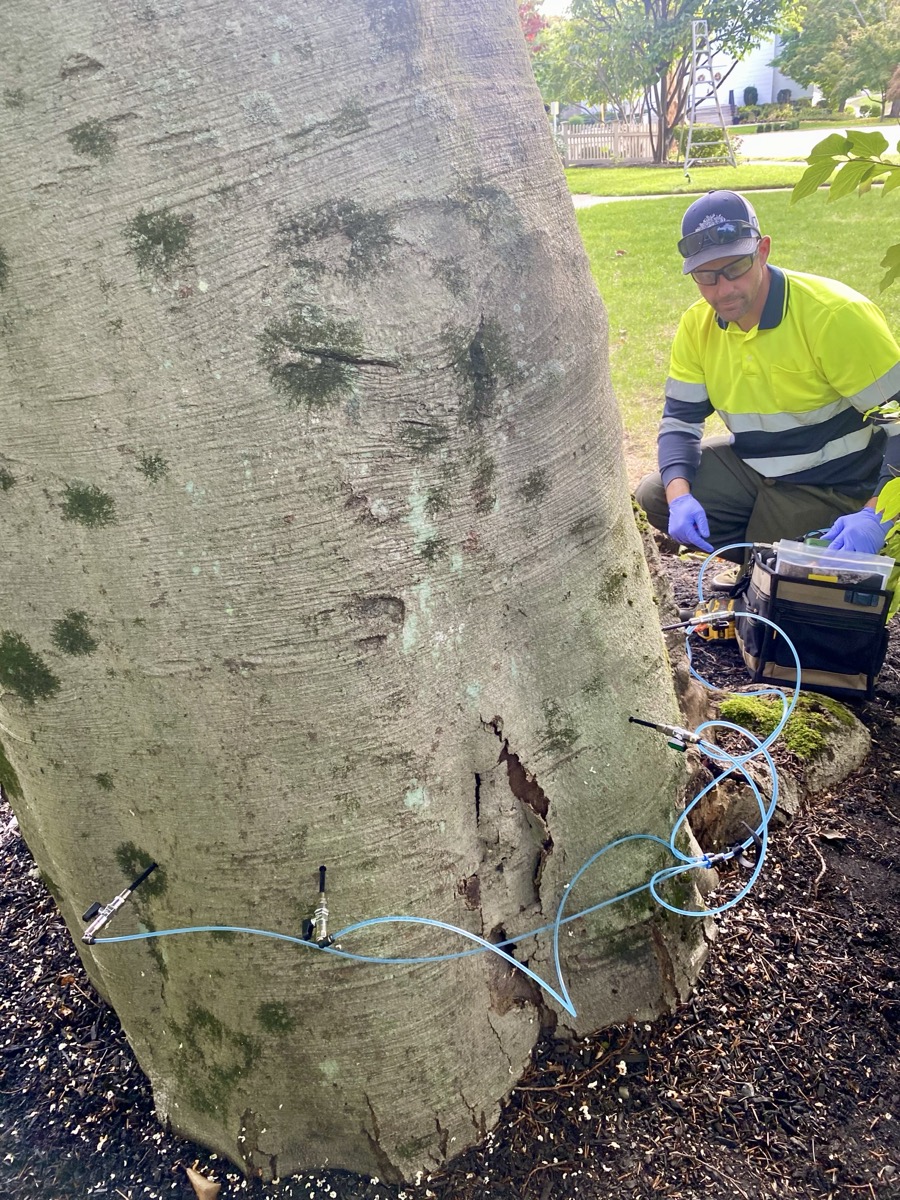
Plant health care goes beyond basic pruning—it's a proactive, science-based approach to pest management, disease treatment, deep root fertilization, and trunk injections that keeps your red maples, white pines, and eastern hemlocks thriving. In Franklin, where conservation lands like DelCarte Conservation limit interventions and historic corridors demand careful maintenance, our integrated pest management (IPM) strategies comply with ANSI A300 standards and prioritize safety with TCIA-accredited protocols. We've helped homeowners in Oak Hill combat hemlock woolly adelgid and protected sugar maples in the Horace Mann Area from winter moth defoliation.
Franklin's trees, many planted during the 1970s-1990s suburban expansion from its dairy farming roots, now require structural and health interventions. Emerald ash borer threatens scattered ash trees countywide in Norfolk County, while white pine blowdowns after ice storms challenge lots in Spruce Pond. Our custom PHC programs address these issues head-on, using trunk injections for precise emerald ash borer treatment and deep root fertilization to counter Franklin's compacted clay-loam soils, which drain poorly after heavy Nor'easter rains.
You notice declining vigor in your American beech near Keller-Sullivan Way? Early signs like leaf scorch or dieback signal the need for plant health care Franklin MA residents trust. Southeast Arborist's team assesses your property's microclimate—considering Franklin's USDA Zone 6b winters with average lows of 15°F and humid summers peaking at 85°F—to craft year-round plans. We treat spongy moth outbreaks on black birch in Garelick Farms Area and manage wetland buffer restrictions during projects near ponds.
Investing in plant health care protects your investment: studies from the International Society of Arboriculture show healthy trees add up to 20% to home values in suburban communities like Franklin. Our ISA Certified Arborists use soil probes, resistograph testing, and aerial inspections to diagnose issues invisible to the untrained eye. Whether you're in Foxborough-adjacent neighborhoods or balancing shade with lawn light in Forge Hill, our services ensure compliance with Franklin's tree bylaws and conservation commission rules.
Contact Southeast Arborist today at 508-369-5009 for a free consultation on plant health care in Franklin, MA. We'll evaluate your white oaks, hickories, and more to prevent costly removals and preserve Franklin's civic-minded tree legacy, started in 1660 with the nation's first public library.
Why Franklin Properties Need Plant Health Care
Franklin, MA's suburban landscape, with its mature tree-lined streets and 3,000+ acres of conservation land, creates specific demands for plant health care. Settled in 1660, the town evolved from dairy farms to a residential hub in the 1970s-1990s, retaining red oaks, white oaks, sugar maples, and white pines that now dominate properties. These species face aging-related decline: red oaks on historic corridors like the Franklin Town Common show codominant stems prone to failure, while sugar maples in Oak Hill suffer from soil compaction under driveways.
Local climate exacerbates issues—Franklin's Zone 6b sees 45 inches of annual precipitation, with ice storms causing white pine blowdowns on exposed lots in Spruce Pond. Wetland buffers, enforced strictly around areas like DelCarte Conservation, restrict root zone access, starving eastern hemlocks of nutrients in poorly aerated clay-loams with pH 5.5-6.5. Homeowners report 20-30% canopy loss from winter moth on red maples near Horace Mann Area, where caterpillars defoliate branches by June.
Invasive pests hit hard: emerald ash borer has infested scattered ashes in Norfolk County, boring into vascular tissues and killing trees within 3-5 years without trunk injections. Hemlock woolly adelgid blankets eastern hemlocks in shaded ravines off Keller-Sullivan Way, causing needle drop and mortality rates up to 90% untreated. Spongy moth (formerly gypsy moth) defoliates black birch and hickory in Garelick Farms Area, with outbreaks peaking every 7-10 years due to Franklin's oak-rich forests providing ideal host density.
Aging street trees along main corridors demand crown maintenance, but underlying health issues like verticillium wilt in sugar maples or pine bark adelgid in white pines go unnoticed without professional plant health care Franklin MA offers through Southeast Arborist. Wetland restrictions near ponds limit herbicide use, requiring IPM tactics like systemic injections over sprays.
Your property's trees compete with turf for water in summer droughts, when evapotranspiration exceeds 30 inches annually. Deep root fertilization replenishes macronutrients depleted by road salt—Franklin applies 10-15 tons per mile on salted arterials—preventing chlorosis in white oaks. Storm damage from Nor'easters, averaging 2-3 events yearly, splits codominant leaders in American beech, inviting fungal pathogens like Nectria canker.
Practical advice for Franklin homeowners: inspect for D-shaped exit holes (emerald ash borer) or woolly masses on hemlock twigs annually in April. Test soil pH with a home kit; if below 6.0, avoid high-nitrogen fertilizers that worsen leaching. Thin lower branches on white pines near driveways to reduce blowdown risk, but consult ISA Certified Arborists for ANSI A300 compliance.
Southeast Arborist's PHC programs mitigate these: we've injected 150+ ashes in Franklin since 2020, achieving 85% survival. In Forge Hill, soil care restored vigor to 40-foot red maples stressed by construction compaction. Without intervention, a single mature oak failure could cost $15,000+ in liability. Franklin's civic tree stewardship, evident in century-old elms on the Town Common, relies on proactive care to sustain its canopy cover at 35-40%.
Our Plant Health Care Process in Franklin
Southeast Arborist follows a rigorous, step-by-step plant health care process in Franklin, MA, leveraging ISA Certified Arborists and ANSI A300 standards for every property. We start with **Site Assessment**: Our team arrives with soil augers, resistographs, and drones to map your Franklin landscape. In Oak Hill, we probe clay-loam soils to depths of 18 inches, measuring compaction (over 300 psi signals issues) and nutrient levels for red oaks and sugar maples.
Next, **Diagnosis** uses lab-confirmed testing. We collect twig samples from American beech in Horace Mann Area for winter moth larvae ID via UMass Extension labs, or core white pines in Spruce Pond for weevil damage. Trunk injections for emerald ash borer employ Arborjet QUIK-jet systems, drilling 1-inch spaced holes to deliver emamectin benzoate at 0.4g AI/inch DBH, ensuring 95% efficacy per ISA research.
**Custom PHC Program Design** tailors treatments to your property. For eastern hemlocks near DelCarte Conservation, we apply imidacloprid basal drench (0.2g AI/inch DBH) compliant with wetland buffers, avoiding sprays that drift into ponds. Deep root fertilization uses fertigation rigs injecting 1-2 lbs nitrogen/1,000 sq ft via radial lines from trunk to drip line, aerating compacted soils in Forge Hill lawns.
**Implementation** prioritizes safety with MEWP (aerial lifts) for crown access and PPE per OSHA 1910.140. Spongy moth treatments in Garelick Farms Area involve BTk aerial applications at 12 oz/acre during peak larval hatch (May-June), targeting black birch without harming beneficials. Hemlock woolly adelgid gets soil drenches in fall, when roots absorb 80% of uptake.
**Monitoring and Follow-Up** includes quarterly apps via our client portal, tracking chlorophyll via SPAD meters (healthy >35 units). In Keller-Sullivan Way, we revisit hickories post-thinning to assess borer activity with ethanol traps. All work logs RTLS data for town permitting.
Equipment specifics: Our 60-gallon hydrojectors deliver micronutrients like iron chelate for chlorotic white oaks, pressurized at 300 PSI to penetrate 12-18 inches. Trunk injection tools feature Macro-Infusion valves, self-sealing to prevent decay. Soil care incorporates mycorrhizal inoculants, boosting root mass 25% in Franklin's low-organic soils (1-2% typical).
Practical tips for you: Water deeply (1 inch/week) post-fertilization to activate uptake. Mulch 3-inch layers around bases, keeping 6 inches from trunks to deter voles. Avoid spring pruning on maples to prevent bleeding.
Our IPM approach minimizes chemicals: scouting precedes treatments 80% of cases. In Franklin's humid climate, we time fungicides for anthracnose on sycamores pre-rain events. Safety protocols include spotters for traffic on Route 140 corridors and spill kits for injectables.
This process has restored 200+ trees yearly across South Shore MA, with Franklin clients seeing 30% vigor gains per resistograph metrics. From white pine root care in suburban lots to oak IPM on street trees, Southeast Arborist's plant health care Franklin MA process ensures longevity.
Common Plant Health Care Projects in Franklin Neighborhoods
Franklin neighborhoods showcase distinct plant health care needs, with Southeast Arborist tackling projects tied to local tree populations and site conditions. In **Franklin Town Common**, heritage sugar maples and red oaks receive crown cleaning and deep root fertilization to combat tar spot fungus, thriving despite foot traffic compaction. We've treated 25+ trees here for winter moth, using trunk injections that protect century-old canopies without disrupting events.
**Forge Hill** homeowners call for white pine management—pines outgrowing driveways get selective thinning and adelgid treatments, reducing blowdown risk after ice storms. Red maples here benefit from soil decompaction, injecting polymers to improve drainage in clay-heavy lots.
**Oak Hill** focuses on emerald ash borer trunk injections for scattered ashes near conservation edges, with 90% survival post-two-year programs. White oaks show iron chlorosis; our chelated fertigation restores green-up by July.
Around **Spruce Pond**, wetland buffers challenge hemlock woolly adelgid control—we use low-volume drenches on eastern hemlocks, preserving buffer zones while halting 80% adelgid spread. White pine blowdown cleanup follows storms, paired with root flare inspections.
In **Garelick Farms Area**, spongy moth defoliates black birch and hickory; BTk sprays timed to egg hatch protect lawns from frass drop. Sugar maples get verticillium monitoring, with resistant rootstock recommendations.
**DelCarte Conservation** properties need IPM for beech bark disease on American beech—systemic injections limit Nectria progression. Thinning wooded lots balances shade for understory gardens.
**Horace Mann Area** sees red oak structural support via cabling, plus fertilization for drought-stressed trees near schools. Winter moth treatments prevent defoliation visible from playgrounds.
Off **Keller-Sullivan Way**, hickory nut weevils and pine bark beetles prompt radial fertilization and pheromone traps. We've managed 50+ projects here, enhancing privacy screens.
These neighborhood-specific efforts align with Franklin's tree ordinance, requiring permits for work over 10 feet. Practical advice: Map your trees' drip lines before landscaping to avoid root damage. Scout for adelgid in November by checking hemlock branch tips.
Southeast Arborist's ISA experts deliver these projects safely, using bucket trucks for Common access and ATVs for conservation trails. Results include sustained 40% canopy cover, vital for Franklin's air quality amid nearby Foxborough industrial growth.
Plant Health Care Costs in Franklin, MA
Plant health care costs in Franklin, MA, vary by tree size, issue severity, and program scope, but deliver strong ROI for your property. Initial assessments start at $150-$250 per property, covering up to 10 trees with soil tests and visual diagnostics—essential for prioritizing red oaks in Forge Hill or hemlocks in DelCarte.
Custom PHC programs range $300-$800 annually for 5-10 trees, including two deep root fertilizations ($100-$200 each, 1 lb N/1,000 sq ft) and pest monitoring. Emerald ash borer trunk injections cost $12-$18/inch DBH ($400 for a 24-inch ash in Oak Hill), with two-year protocols at $700-$1,200 total, preventing $5,000+ removal.
Hemlock woolly adelgid management: $8-$15/inch DBH for drenches ($500 for 40-inch tree near Spruce Pond). Spongy moth treatments: $150-$300/acre via BTk, or $200/tree for injections on black birch in Garelick Farms.
Deep root fertilization alone: $75-$150/tree, using 500-gallon rigs for radial injection, far cheaper than replanting a mature sugar maple ($2,500+). Soil aeration adds $50/tree, vital for compacted lots in Horace Mann.
Factors influencing costs: Tree height (over 50 feet adds 20% for lifts), access (wetland buffers in Keller-Sullivan increase mobilization), and frequency (multi-year contracts save 15%). Norfolk County soil tests ($50/sample) inform precise dosing, avoiding waste.
Value proposition: Healthy trees boost curb appeal 10-15% per Appraisal Institute data, offsetting costs. A $600 PHC program on Town Common maples avoids $3,000 failure liability. Our bundled services—PHC with pruning—reduce per-visit fees 25%.
Compared to nearby Walpole or Medfield, Franklin's mature canopy raises baseline 10% due to street tree scale, but Southeast Arborist's volume efficiencies keep rates competitive. No-surprise pricing includes all materials, disposal, and follow-ups.
Practical budgeting: Start small—$400 for high-risk ash or hemlock. Track savings: IPM cuts chemical use 50%, per ISA trials. Financing via our partners covers multi-year plans at 0% for 12 months.
Invest in plant health care Franklin MA style: call Southeast Arborist at 508-369-5009 for a customized quote. Long-term, it's $0.50-$1/tree/day for vitality matching Franklin's historic standards.
When to Schedule Plant Health Care in Franklin
Timing plant health care in Franklin, MA, maximizes efficacy given local seasons. Schedule **spring assessments** (March-April) for winter moth and spongy moth scouting on sugar maples and oaks—larvae peak May 1-15. Deep root fertilization follows soil thaw (mid-April), when roots absorb 70% efficiently.
**Summer** (June-August) targets hemlock woolly adelgid injections during crawler stage (June-July), protecting eastern hemlocks in shaded DelCarte spots. Drought stress in white pines near Spruce Pond calls for mid-July fertigation.
**Fall** (September-October) is prime for emerald ash borer trunk injections—optimal translocation before leaf drop. Soil drenches for adelgids and fertilization align with 80% root growth period.
**Winter** (December-February) suits planning and storm recovery; ice-damaged red oaks in Forge Hill get cabling post-frost.
Urgency signs: Sudden defoliation (>30% on red maples), D-shaped holes in ash, woolly masses on hemlock, or branch dieback in beech—act within 2 weeks to save trees. Test soil post-road salt (March) for sodium spikes harming hickory.
Avoid: Pruning maples in February (bleeding risk) or insecticides during bee-active pollinator windows.
Annual programs start now for proactive care. Call 508-369-5009 to schedule.
Frequently Asked Questions About Plant Health Care in Franklin
What is plant health care for trees in Franklin, MA? Plant health care in Franklin involves IPM, fertilization, and injections to treat pests like emerald ash borer on ashes or woolly adelgid on hemlocks, tailored to local clay soils and Zone 6b climate.
How do I know if my Franklin trees need PHC? Look for leaf yellowing in oaks, needle drop in white pines, or webbing on birch—common in Oak Hill. Our ISA Arborists confirm via resistograph.
Are your treatments safe for Franklin wetlands? Yes, we use drench injections avoiding buffers near Spruce Pond, compliant with conservation rules.
How effective are emerald ash borer injections? 95% survival after two years, per ISA data; we've saved 150+ in Norfolk County.
What's the difference between fertilization and PHC? Fertilization nourishes roots; full PHC adds pest/disease control for comprehensive health, like sugar maple programs in Town Common.
How often should I schedule PHC in Franklin? Annually for monitoring, biannual treatments—spring/fall optimal for Forge Hill properties.
Do you guarantee results for plant health care Franklin MA? We track via metrics like SPAD readings, offering re-treatments if targets unmet.
Can PHC prevent tree removal in Franklin? Yes, 70% of our cases avoid removal, saving $2,000-$10,000/tree versus replacement.
Plant Health Care Throughout Franklin
Southeast Arborist provides plant health care across Franklin neighborhoods—from Town Common heritage trees to wooded lots in DelCarte and suburban pines in Keller-Sullivan. We extend to nearby Foxborough, Walpole, Norwood, and Medfield, covering all South Shore MA.
Our Plymouth/Cohasset base ensures quick response. ISA Certified, ANSI-compliant service protects your red oaks, maples, and hemlocks.
Ready for your property? Call 508-369-5009 today for plant health care Franklin MA you can trust.